 Seattle Exterior
 Exterior Work Built for How Capitol Hill Actually Weathers
Capitol Hill is one of Seattle's oldest and densest neighborhoods, and that shows in its housing stock: a mix of early-1900s Craftsman bungalows, older Victorians, brick apartment conversions, and infill construction squeezed onto narrow lots. Many of these homes have gone through several rounds of remodeling, re-siding, and re-roofing over the decades, and the exterior often reflects whatever era it was last touched. That variety means there's no single "right" fix for every house here — but the climate every one of those houses is fighting is the same.
Seattle sits in a marine climate zone, and King County's proximity to Puget Sound means homes throughout the city, including on the Hill, deal with a steady mix of salt-tinged air, long stretches of driving rain, and short winter days that don't give damp surfaces much chance to dry out. Add in the tree canopy that gives many Capitol Hill blocks their character, and you get a near year-round moss season on roofs, fences, and north-facing siding. None of this is unique to one street — it's the baseline every exterior on the Hill has to handle.
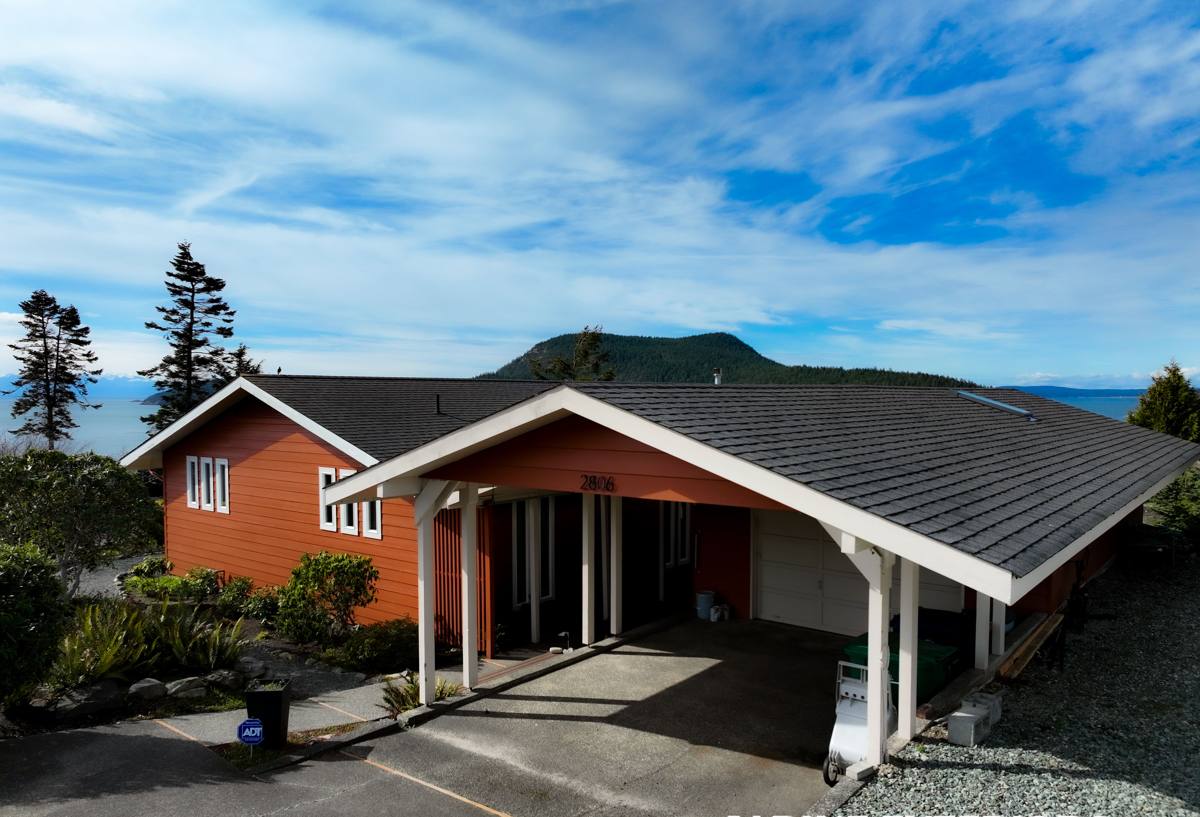
What the Climate Does to Siding, Roofs, Windows, and Decks Here
Siding
Older homes on the Hill were often sided in cedar, and many have since been covered in vinyl or, in some remodels, engineered wood products. Cedar looks good when it's maintained, but it needs regular refinishing to keep moisture out of the wood grain — skip a cycle or two and you start seeing cupping, soft spots, and paint failure, especially on shaded, north- or west-facing walls that don't get much drying sun. Vinyl doesn't rot, but it can warp under sustained damp-cold cycling and it telegraphs waviness in older wall framing rather than hiding it. Engineered wood products are moisture-sensitive at the core, so caulking, flashing, and paint maintenance have to stay on schedule or water finds its way into the substrate.
Roofing
Moss is the signature roofing problem in this part of Seattle. It doesn't just look bad — moss mats hold water against roofing material, work into shingle laps, and accelerate granule loss on asphalt roofs. On the shaded, tree-heavy lots common on Capitol Hill, a roof that isn't cleaned or treated periodically can develop moss cover within a couple of seasons. Combined with near-constant rain exposure, flashing details around chimneys, dormers, and roof-to-wall transitions matter more here than in drier climates — a marginal flashing job might not show a leak for a year or two, but it will eventually.
Windows
Many Capitol Hill homes still have original or early-replacement window units, and older wood or aluminum-frame windows lose their seal over time. On a house exposed to driving, wind-blown rain, a failed seal doesn't just mean drafts — it means water finding its way behind trim and into wall cavities. Condensation between panes is usually the first visible sign that a unit's seal has given out.
Decks
Decks and porches — common on the Hill's older homes — take a beating from the same rain-and-shade combination. Ledger boards where a deck attaches to the house are a common trouble spot if flashing wasn't done correctly, and horizontal surfaces without enough pitch to shed water develop rot and moss buildup faster than homeowners expect.
Our Approach to Exterior Work on Capitol Hill
Because the housing stock here is so mixed, we don't treat every project as a template job. A century-old Craftsman with original trim details needs a different siding and flashing approach than a 1990s infill build. What stays consistent is the standard we hold every job to: proper moisture management first, then the finish material. That means flashing details at every horizontal joint, window, and roof transition; correct fastening for the substrate we're working with; and a finish system that's engineered for a wet climate rather than one that just happens to be sold here.
We handle siding, roofing, windows, and decks, which matters on a neighborhood like this because those four systems interact. A window replaced without attention to the siding flashing around it just moves the leak point. A deck ledger reattached without checking the wall siding behind it can trap water against the house. Coordinating all four means fewer gaps where water gets a foothold.
Why We Install Only James Hardie Fiber Cement Siding
We made a deliberate call to install James Hardie fiber cement exclusively, and we don't install vinyl, LP SmartSide, Cemplank, Allura, primed spruce, or cedar. That's not a knock on every homeowner's existing siding — plenty of those materials perform fine when they're maintained on schedule. It's a statement about what we're willing to warranty and stand behind on a climate like Seattle's.
Cedar and primed wood siding can look excellent, but they demand a maintenance commitment — refinishing every few years — that a lot of busy homeowners don't keep up with, and in a climate this wet, falling behind shows up fast as rot and paint failure. Engineered wood products like LP SmartSide use treated wood-strand cores that resist moisture better than raw lumber, but the core material is still wood-based, so seams, cut edges, and fastener penetrations need consistent caulk and paint maintenance to keep water out over the long run. Vinyl is low-maintenance and inexpensive, but it's a thin material that can warp with temperature swings, fades over time, and simply snaps on rigid seams rather than flexing with a house.
James Hardie fiber cement is non-combustible, holds its shape and paint line far longer than wood-based sidings, and comes pre-finished with a factory ColorPlus finish that's baked on and warrantied against fading — no repainting cycle to fall behind on. Hardie also engineers specific product lines (HZ5, HZ10) for different climate zones, so what goes on a Seattle house is built for sustained damp exposure rather than a one-size-fits-all product. The transferable warranty is also meaningfully stronger than what we could offer backing a product we didn't fully trust in this climate.
Siding Option Comparison
| Material | Moisture Behavior | Maintenance | Typical Lifespan |
|---|---|---|---|
| Cedar | Absorbs moisture; prone to cupping if finish lapses | Refinish every 3-5 years | 15-25 years with upkeep |
| Vinyl | Doesn't rot, but can warp/crack in temperature swings | Low, but panels aren't repairable individually in most cases | 20-30 years, fades over time |
| Engineered wood (LP SmartSide) | Treated core resists moisture better than raw wood, but seams/edges need sealing | Recaulk and repaint on a schedule | 20-30 years with upkeep |
| James Hardie fiber cement | Non-combustible, dimensionally stable, engineered for wet climates | Occasional wash; factory finish reduces repaint cycle | 30+ years, strong transferable warranty |
Roofing, Windows, and Decks: What We Actually Do
On roofing, our work centers on getting flashing right the first time — at chimneys, valleys, skylights, and wall transitions — because that's where Seattle's rain finds the weak points, not usually in the field of the shingles themselves. For homes under tree cover, we also talk through moss prevention options so a new roof doesn't lose years of life to something preventable.
Window replacement work focuses on the flashing and sill pan details around each opening, not just the unit itself — a high-efficiency window installed without proper flashing can still leak. For decks, we pay particular attention to ledger board attachment and flashing where the deck meets the house, plus decking material and spacing that actually sheds water instead of holding it against the joists.
Why a Local Crew Matters Here
Capitol Hill's lots are tight, parking is limited, and a lot of the housing stock has quirks — additions, unpermitted work from decades past, and load-bearing details that aren't always obvious until a wall is opened up. A crew that works across King County regularly has seen these patterns before and knows what questions to ask before starting, rather than discovering surprises mid-project. Local crews are also simply more available for the kind of follow-up visit — a callback on a flashing detail, a warranty question — that out-of-area contractors are less likely to prioritize.
What to Check Before Hiring an Exterior Contractor
- Washington state contractor license, in good standing, and proof of liability insurance
- A clear explanation of what siding, roofing, or window material they use and why — not just a price
- Specifics on flashing and moisture-barrier details, not just "we'll match what's there"
- A written scope and warranty that names the manufacturer's warranty separately from the workmanship warranty
- Willingness to walk your specific property and point out real issues, not a generic sales pitch
- References or examples of work on homes of a similar age or style to yours
Planning an Exterior Project on Capitol Hill
Whether you're dealing with a moss-covered roof, siding that's finally past its refinishing window, windows that fog between the panes, or a deck that's starting to feel soft underfoot, the starting point is the same: an honest look at what's actually happening behind the surface, not just what's visible from the sidewalk. Given how much Capitol Hill's housing stock varies block to block, that walk-through is worth doing in person rather than guessing from a photo or a square-footage estimate.
If you'd like a straightforward, no-pressure look at your home's siding, roofing, windows, or deck, we're happy to walk the property with you and lay out what we see — no obligation, just a clear picture of where things stand. Use the form below to request a free estimate.