 Seattle Exterior
 Two Very Different Materials, One Wet Climate
If you're re-siding a home in Seattle, you've almost certainly narrowed things down to two finalists: vinyl siding and fiber cement siding. Both are widely available, both have been installed on thousands of homes around King County, and both have real advocates. But they behave very differently once they're exposed to years of Pacific Northwest weather — the driving rain off the Sound, the long gray stretches where nothing fully dries out, and the moss and algae that creep across anything that stays damp too long. This page walks through the honest differences: what each material is, how it holds up here specifically, what it costs to own over time, and why we standardized our own installation work on fiber cement rather than vinyl.
We're not going to tell you vinyl is garbage. It isn't — it's a reasonable, inexpensive product that works fine in a lot of climates and a lot of budgets. But "reasonable everywhere" and "right for a Seattle roofline under six months of rain" are two different questions, and we want to answer the second one honestly.
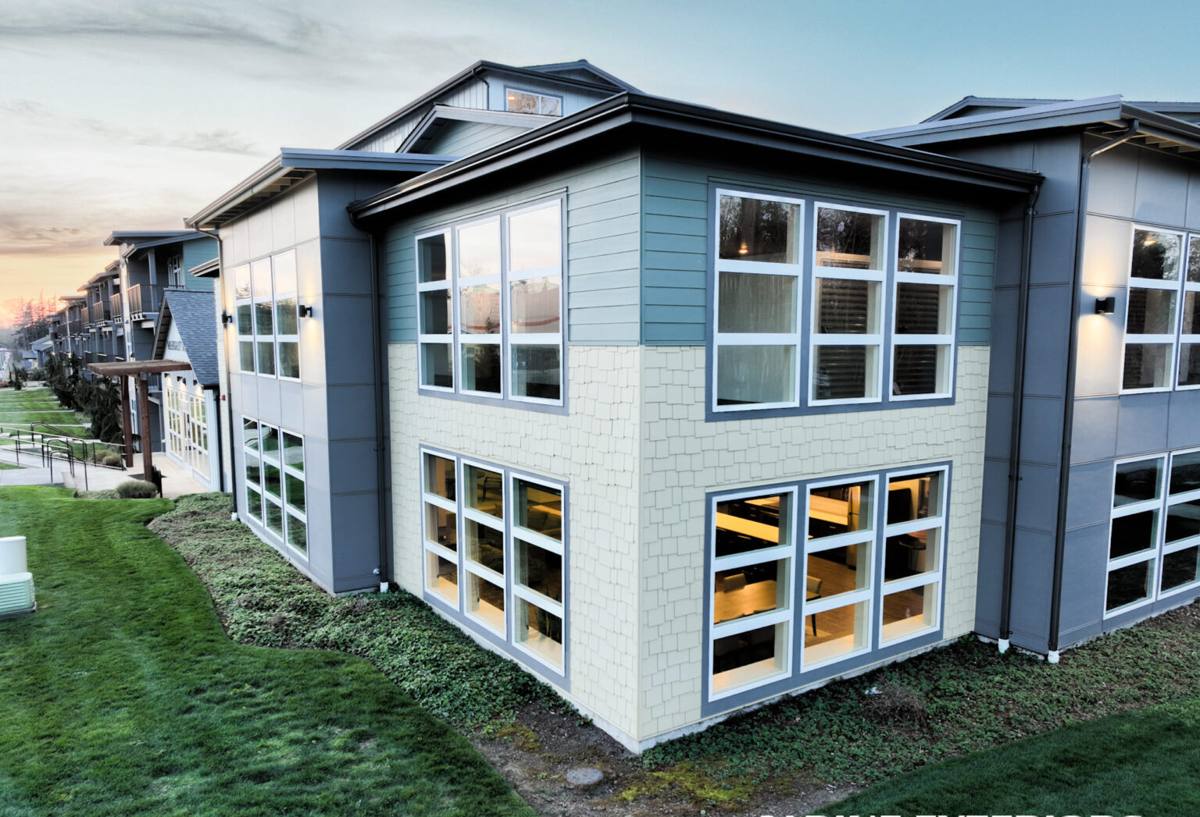
What Vinyl Siding Actually Is
Vinyl siding is an extruded PVC plastic panel, usually manufactured in a wood-grain or smooth-lap profile, that snaps onto the house over a course of overlapping strips. It's popular nationally because it's inexpensive to produce, lightweight, and quick to install. It never needs painting, and manufacturers offer color-through panels so scratches don't show bare substrate.
Where vinyl genuinely performs well
- Lowest material and labor cost of the common siding options
- No paint maintenance — the color is molded into the panel
- Lightweight, which simplifies installation over most wall assemblies
- Wide availability of parts, trim, and accessories from big-box suppliers
Where it struggles in a marine climate
Vinyl is a floating cladding — it's hung loosely on nailing flanges to allow for thermal expansion and contraction, which means the panels themselves aren't a tight moisture barrier. In a drier climate that's rarely an issue. In Seattle, where wind-driven rain off Puget Sound and Elliott Bay can push water sideways into wall assemblies for days at a stretch, the water management underneath the vinyl — the house wrap, flashing, and drainage plane — is doing almost all of the real work. The siding itself is more of a rain screen than a seal. That's fine when it's installed by someone who understands drainage details. It's a problem when it isn't, because vinyl hides evidence of a leak far longer than a painted product would.
Vinyl also softens and can visibly warp or buckle in sustained heat — not a huge factor in Seattle's mild summers, but the flip side matters more here: in real cold snaps, vinyl becomes brittle and can crack on impact. King County doesn't see extreme cold often, but when an arctic outflow event does come through, older vinyl panels are the first thing we get calls about.
What Fiber Cement Actually Is
Fiber cement siding is a composite of Portland cement, sand, and cellulose fiber, cured into a rigid plank or panel. It's heavier and denser than vinyl by a wide margin, which is precisely why it behaves differently in wet, wind-exposed conditions. It doesn't flex, warp, or billow in wind gusts, and because it's a rigid, nailed-on plank rather than a floating panel, the lap joints and caulk lines hold their geometry over decades instead of shifting.
Why we only install James Hardie specifically
Fiber cement is a category, not a single product — but we don't install every brand in that category. We install James Hardie exclusively, for a few concrete reasons: Hardie manufactures HZ5 product specifically engineered for climates with significant moisture exposure, which describes Seattle about as well as any city in the country. The ColorPlus factory finish is baked on and cured under controlled conditions rather than field-painted, which matters enormously here — a field-painted product needs a real dry window to cure properly, and Seattle's rain calendar doesn't hand out many of those between October and May. And Hardie backs the product with a long, transferable warranty structure that we can stand behind because we've seen how the material performs when installed to their specifications.
Moisture and Moss: The Seattle-Specific Test
This is really the heart of the comparison for our area. Seattle doesn't get the heaviest rainfall in the country, but it gets some of the most persistent — long stretches of low-intensity rain and near-constant humidity that keep exterior surfaces damp for days on end. That's exactly the condition that grows moss and black algae streaking on siding, especially on north-facing walls and anything shaded by mature trees, which describes a lot of King County lots.
Vinyl's textured, low-gloss finish gives moss and algae a slightly easier surface to grip, and because vinyl can't be repainted (or repaints poorly), a homeowner's only real fix once staining sets in is pressure washing — done carefully, since aggressive washing can crack aged, brittle panels. Fiber cement with a factory finish sheds moss growth more easily and, because it can be properly repainted decades down the road if a homeowner ever wants a color change, it has a maintenance path that vinyl doesn't.
Salt air is a smaller factor here than in a coastal town further out on the Peninsula, but homes closer to the Sound do see some of that corrosive, moisture-laden air, and it accelerates wear on fasteners and trim regardless of which cladding sits over them. Rigid fiber cement paired with corrosion-resistant fasteners handles that better over a 30-plus year horizon than a lightweight panel system does.
Impact, Wind, and Physical Durability
Seattle doesn't see hail the way the Midwest does, but wind events off the Sound and falling branches from mature Douglas firs and cedars are a real and recurring cause of siding damage here. Vinyl panels crack on hard impact, and matching an exact panel color years later — after sun fading — is often impossible, leaving a visibly mismatched patch. Fiber cement is far more impact-resistant and, being non-combustible, carries an additional practical benefit for anyone thinking about wildfire smoke season exposure or simple fire safety near decks and grills — vinyl can melt or deform from surprisingly modest heat sources.
Cost Comparison, Honestly
We're not going to pretend fiber cement is the cheaper option up front — it isn't. It costs more in both material and labor, partly because it's heavier to handle and requires specific cutting and fastening techniques to install correctly. The honest comparison has to include the whole ownership period, not just the invoice for the install.
| Factor | Vinyl Siding | James Hardie Fiber Cement |
|---|---|---|
| Upfront material + install cost | Lower | Higher |
| Repainting needed | Not designed to be repainted | Factory finish lasts years; can be repainted decades later if desired |
| Moss/algae resistance | Moderate; textured surface holds growth | Better; smoother factory finish sheds growth more easily |
| Impact resistance | Cracks under hard impact, especially when cold | Rigid, resists cracking and denting |
| Fire performance | Combustible, can melt/deform from heat | Non-combustible |
| Typical warranty structure | Prorated, often non-transferable | Long-term, transferable to a future owner |
| Color/style changeability | Fixed color, replace panel to change look | Can be repainted for a full color change |
Run the math over 20-30 years — the realistic lifespan window homeowners actually care about — and the gap narrows or reverses, especially once you factor in that a vinyl re-side often happens on a shorter cycle than a well-installed Hardie system.
Installation Sensitivity: Why the Installer Matters As Much As the Material
Both products can fail early if installed poorly, but they fail in different ways. Vinyl installed too tightly (not allowing for expansion) will buckle and pop off in temperature swings. Fiber cement installed without proper clearances, flashing, or caulking at butt joints can wick moisture and delaminate at the edges over time. The manufacturer's installation instructions for Hardie products are detailed and specific — proper fastener spacing, minimum ground clearance, correct flashing at every penetration, and specific caulking requirements at joints. Skipping those steps is the single biggest reason any fiber cement job underperforms, and it's also the reason we treat certification and correct technique as non-negotiable on every crew we run.
Questions worth asking any siding contractor, regardless of material
- What ground clearance and flashing details will you use at the foundation line?
- How will you handle expansion joints and butt joint caulking?
- Is your crew factory-trained or certified on this specific product line?
- What's included in the manufacturer's warranty versus your own labor warranty?
- How will you protect existing landscaping, windows, and trim during tear-off?
Which One Makes Sense for Your Home
If your top priority is the lowest possible upfront cost and you're comfortable with a shorter realistic lifespan and no repainting option down the road, vinyl is a legitimate choice — we're not going to tell a homeowner it's an unreasonable decision on a tight budget. But if you're planning to be in your home for the long haul, want a product engineered for a wet marine climate rather than a national average, and want the option to change color or refresh the finish decades from now instead of tearing off and starting over, fiber cement is the more durable investment. That combination of reasons is exactly why our company made the call to install James Hardie exclusively rather than carrying multiple product lines.
Every home is a little different — roofline exposure, tree cover, which direction the prevailing weather hits your walls — and the right answer sometimes depends on details specific to your lot. If you'd like a second, no-pressure opinion on your home specifically, we're glad to walk the property with you and talk through what we'd actually recommend, free of charge, using the form below.