 Seattle Exterior
 Every Seattle homeowner asking about a roof replacement wants the same thing first: a number. The honest answer is that there isn't one number — there's a range, and the range is wide because a handful of specific factors do most of the work in setting the final price. This page walks through what actually moves the needle on cost, so you can look at any quote you get and understand why it landed where it did.
Why Roof Quotes Vary So Much
It's common for a homeowner to get three bids on the same roof and see numbers that differ by thousands of dollars. That's not necessarily a sign that someone is overcharging or lowballing — roofing bids vary because contractors make different assumptions about scope, materials, and what's underneath the existing roof until they actually open it up. A careful contractor who plans for rot repair, proper ventilation, and code-compliant underlayment will usually quote higher than one who's planning to do the minimum and hope for the best.
In King County specifically, the age of the housing stock matters. A lot of Seattle neighborhoods have homes built between the 1940s and 1980s, and roofs on those homes often have layers of history — old cedar shake decking under later asphalt layovers, minimal soffit venting, or flashing details that were adequate decades ago but don't meet current expectations for a wet climate.
The Big Cost Drivers, Ranked
If you strip away the noise, most of the price difference between roofing jobs comes down to a short list of factors:
- Roof size and pitch — more square footage and steeper slopes mean more material, more labor time, and more safety equipment.
- Number of layers to tear off — one layer versus two or three changes both labor and disposal cost significantly.
- Decking condition — rotted or delaminated plywood/sheathing found during tear-off has to be replaced, and you often can't know the full extent until the old roofing is off.
- Material choice — architectural asphalt shingles, metal, and premium synthetic or composite products all sit at different price points.
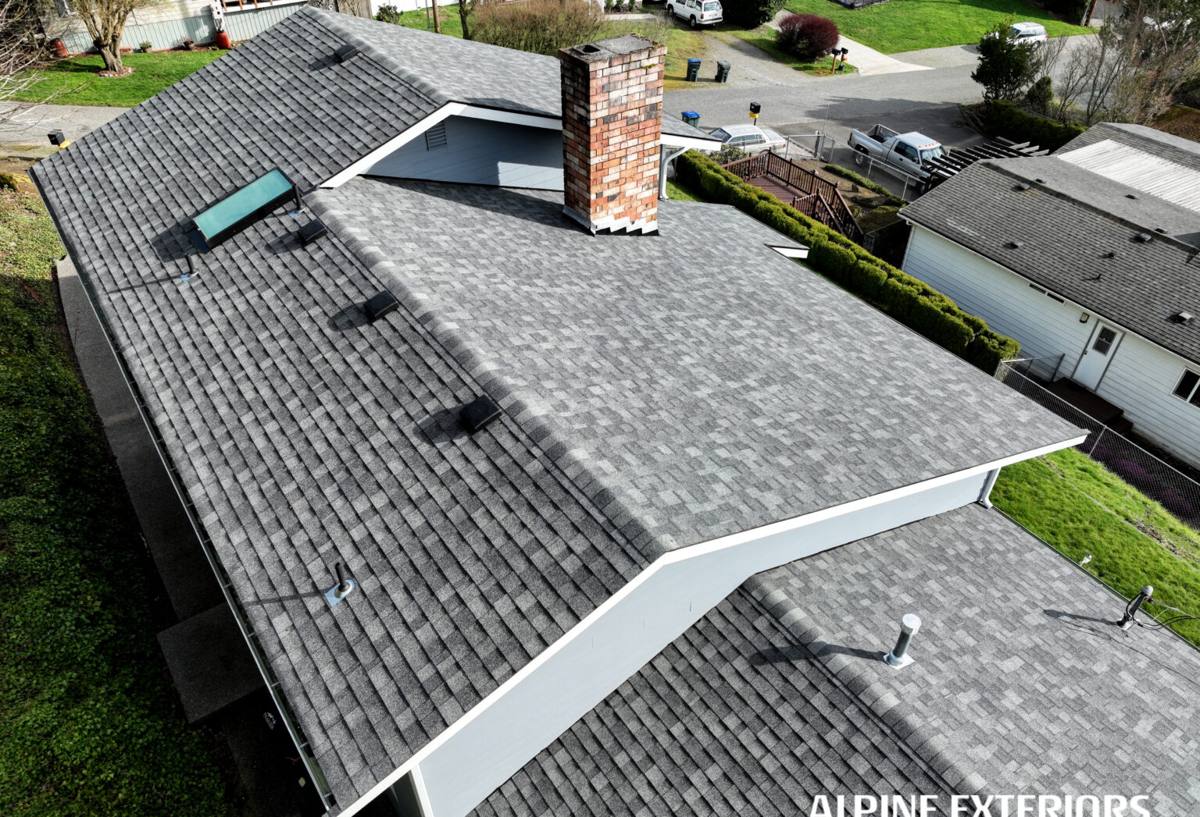
- Roof complexity — valleys, dormers, chimneys, skylights, and multiple roof planes all add flashing work and labor hours.
- Access and site conditions — steep lots, mature trees overhanging the roof, and tight driveways all slow a crew down.
Materials: Where the Money Actually Goes
Material cost is usually less than half the total project cost on a typical asphalt shingle roof — labor, tear-off, disposal, and permitting make up the rest. That said, the material tier you choose still matters, both for upfront cost and for how the roof performs over 20-30 years in a wet marine climate.
| Material | Typical Lifespan | Relative Cost | Notes for Seattle Climate |
|---|---|---|---|
| 3-tab asphalt shingles | 15-20 years | Lowest | Budget option; shorter life in constant moisture and moss exposure |
| Architectural asphalt shingles | 25-30 years | Moderate | Most common choice; better wind and algae resistance than 3-tab |
| Metal (standing seam or panel) | 40-50+ years | High | Sheds moss and moisture well; higher upfront cost, low long-term maintenance |
| Synthetic/composite shakes | 30-50 years | High | Mimics cedar look without the same moisture and rot vulnerability |
Labor and Crew Time
Labor is the largest single line item on most roofing invoices, and it's driven by how long a job takes, not just how big the roof is. A steep, cut-up roof with five valleys and two dormers can take a crew twice as long as a simple gable roof of the same square footage. Safety requirements for steep-slope work — harnesses, roof jacks, extra staging — also add time and cost, and a contractor who's quoting those properly should be charging for them.
Tear-off is its own labor category. Removing one layer of shingles is straightforward; removing two or three layers, especially if the old roofing is nailed through multiple generations of material, takes meaningfully longer and generates more debris to haul and dispose of.
What's Underneath Matters More Than People Expect
Decking and Sheathing
You can't fully assess decking condition from the ground or even from a walk on the existing roof — soft spots, delamination, and water staining often only become obvious once the old roofing is stripped off. A contractor who tells you "we won't know the exact decking repair cost until tear-off" isn't dodging the question; they're being accurate. What you want is a clear per-sheet replacement price built into the contract up front, so there's no surprise negotiation mid-project.
Ventilation
Older homes across King County were often built with minimal attic ventilation by today's standards. Poor ventilation traps moisture in the attic, which shortens the life of the new roof from underneath and can contribute to condensation issues in the living space below. Adding or upgrading ridge and soffit venting during a re-roof is a relatively small incremental cost compared to redoing the whole roof, but it's easy to skip if a bid is trying to hit a lower number.
Underlayment and Ice/Water Protection
In a region with driving rain and long stretches of damp weather, underlayment quality is not a place to cut corners. Synthetic underlayments generally outperform old-style felt paper for water resistance and durability during the install process, and self-adhered ice-and-water membrane at eaves, valleys, and penetrations adds a meaningful layer of protection against wind-driven rain finding its way under the shingles.
Roof Complexity and Design
Two roofs with identical square footage can cost very differently depending on shape. A simple rectangular gable roof is the cheapest configuration to install per square foot. Every valley, hip, dormer, chimney, skylight, and roof-to-wall intersection adds flashing detail work, and flashing is where roofs actually leak — so this is not an area to shortcut for savings. A quote for a complex roof should reflect real time spent on these details, not just a flat per-square rate.
Local Factors That Push Costs in Seattle
Salt air near Puget Sound, driving rain off the Sound, and a moss season that can run most of the year all shape what a roof needs to hold up here. Moss retains moisture against roofing material, and over years that speeds up granule loss on asphalt shingles and can work its way under laps if a roof isn't cleaned or doesn't shed well. That's part of why pitch, material choice, and proper flashing details matter more here than they might in a drier climate — a roof that's marginal on those points in Phoenix might fail years sooner in Seattle.
Permitting is another local variable. King County and City of Seattle permit requirements and inspection scheduling can affect project timeline, and a contractor who's not pulling permits properly is passing risk to you, the homeowner, not saving you money.
How Roofing Connects to Your Siding and Exterior
Roof replacement is a good moment to look at the rest of the exterior envelope, because water problems rarely respect the boundary between roof and wall. Roof-to-wall flashing, kickout flashing at roofline intersections, and gutter placement all interact directly with whatever siding is on the house. If your siding has moisture-related issues at those transition points, a roof job is the cheapest time to fix them, since the flashing is already being reworked.
This is also where material choice below the roofline matters. We install only James Hardie fiber cement siding — not vinyl, not LP SmartSide, not cedar or primed spruce — specifically because fiber cement handles the wet, moss-prone conditions common in this region without the moisture absorption and maintenance demands that wood-based and some engineered products carry. A new roof paired with siding that traps moisture at the wall line just relocates the problem rather than solving it.
A Practical Checklist Before You Sign Anything
- Get an itemized bid, not just a lump-sum number — material brand and line, layers to remove, decking repair rate per sheet, ventilation scope, and underlayment type should all be spelled out.
- Confirm the contractor is pulling the required local permit and scheduling the inspection.
- Ask specifically how flashing at valleys, chimneys, and roof-to-wall intersections will be handled.
- Check whether ridge and soffit ventilation is included or being added if the current attic is under-vented.
- Ask what the workmanship warranty covers and for how long, separate from the manufacturer's material warranty.
- Verify licensing, bonding, and insurance directly rather than taking a business card's word for it.
Getting a Number You Can Trust
The fastest way to get an apples-to-apples comparison between bids is to ask every contractor to break out the same categories: material and line, tear-off layers, estimated decking repair allowance, ventilation work, underlayment, and flashing detail. When bids are itemized the same way, the real differences in scope and quality become obvious, and the lowest number on the page stops being automatically the best deal.
If you'd like a clear, itemized look at what your roof actually needs — and how any flashing or moisture issues at the wall line might tie into your siding — we're happy to walk your roof and put together a straightforward estimate. No pressure, no upsell script, just an honest assessment you can use to compare against other bids.