 Seattle Exterior
 Queen Anne sits on one of Seattle's highest hills, which is exactly what makes it such a desirable place to live — and exactly what makes its homes work harder than most against the weather. Elevation means wind exposure. Proximity to Puget Sound and Elliott Bay means salt-laden air moving across rooftops and siding. Mature tree canopy on the quieter streets means shade, damp soil, and moss that never really goes dormant. Add in a housing stock that spans early-1900s Craftsman and Victorian homes, mid-century construction, and newer infill, and you get an exterior contracting job that has to account for a lot of variables on a single block, sometimes on a single house.
We work throughout King County, but a neighborhood like Queen Anne rewards a crew that actually understands its terrain and its weather pattern rather than treating it like generic "Seattle work." Siding, roofing, windows, and decks all behave differently on a windswept hillside lot than they do a few miles inland, and the difference shows up in how a house ages over ten or twenty years.
What Queen Anne's Climate Actually Does to a House
The regional description is simple — salt air, driving rain, and a long moss season — but each of those shows up differently depending on where a house sits on the hill and which direction it faces.
Salt Air and Corrosion
Homes with unobstructed views toward the Sound or the bay get more than the view — they get airborne salt that settles on siding, trim, roofing fasteners, and window hardware. Over years, that accelerates corrosion on lower-quality metal components and can degrade certain finishes faster than the same product would wear a few miles from open water.
Driving, Wind-Driven Rain
Queen Anne's elevation and exposure mean rain doesn't just fall here, it gets pushed sideways. West- and south-facing walls take the brunt of it, especially on hillside lots with nothing to break the wind. That kind of wind-driven rain finds every weak seam, every under-caulked joint, and every place where flashing was installed as an afterthought rather than as part of the plan.
Moss, Shade, and Slow Drying
Streets with heavier tree cover hold moisture longer. North-facing roof slopes and siding that sits in shade for most of the day don't get the sun exposure needed to dry out between storms, which is exactly the environment moss and algae need to take hold. Once moss establishes itself on a roof or in siding seams, it holds even more water against the material, which is where slow, hidden damage starts.
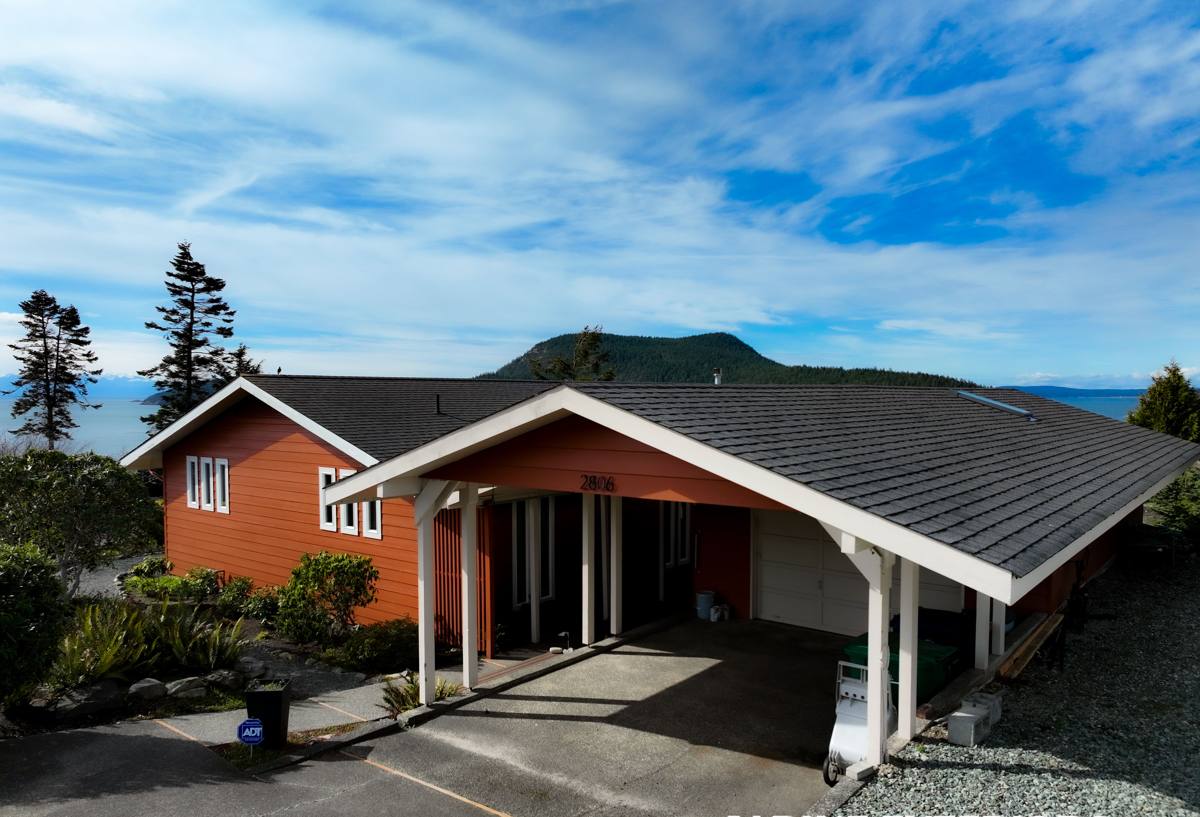
Siding: Built for This, Not Just Sold Here
We install James Hardie fiber cement siding exclusively. That's not a marketing preference — it's a decision we made after weighing what actually holds up against a climate like this one over the long haul.
Hardie's HZ5 product line is engineered specifically for climates with freeze-thaw cycles, sustained moisture, and temperature swings — conditions the Pacific Northwest delivers reliably from October through May. Fiber cement doesn't absorb water the way wood-based products can, it won't support the kind of rot that shows up in caulk joints and butt seams after a few wet seasons, and it's non-combustible, which matters more each year given regional wildfire smoke and ember exposure during dry summer stretches.
The factory-applied ColorPlus finish is also worth understanding on a house like this. Because the color and protective coating are baked on at the factory rather than field-applied, you get more consistent coverage and better resistance to fading and moisture intrusion than a job-site paint job can typically match — which matters on a house that's going to see a lot of gray, wet months between recoats.
Why We Don't Install Everything
We get asked why we don't offer vinyl, LP SmartSide, or cedar. The honest answer: each of those products has real advantages somewhere, but none of them held up to our standard for this specific climate once we weighed moisture behavior, long-term maintenance burden, and warranty structure. Wood-based composite siding is more sensitive to installation detail and moisture exposure than fiber cement. Vinyl can look fine for a while but doesn't offer the same fire performance or dimensional stability in temperature swings. Cedar is a beautiful, honest material, but it demands a maintenance commitment that most homeowners underestimate when they're comparing products side by side. We'd rather install one product well than several products with caveats attached.
Roofing: The First Line of Defense on a Windy Hill
Queen Anne's exposure makes roofing details — flashing, underlayment, ventilation, and fastening — more important than the shingle brand printed on the wrapper. A roof that's correctly flashed at valleys, chimneys, and wall transitions is what actually keeps wind-driven rain out, not just the field material. We also pay close attention to attic and roof ventilation, since poor airflow traps moisture underneath the roof deck and accelerates both rot and moss growth from the inside out.
Moss removal and prevention matter here more than in drier parts of the county. We look at tree cover, roof slope, and sun exposure as part of any roofing evaluation, not just the age of the material.
Windows: Sealing Out Wind and Moisture, Not Just Drafts
On a hillside home taking direct wind-driven rain, a window is only as good as its flashing and installation, regardless of how well-rated the unit itself is. We install and integrate windows with the same moisture-management approach we use on siding — proper flashing tie-in, correct sealant placement, and attention to how water is meant to shed away from the opening rather than pool at the sill. Older Queen Anne homes with original single-pane windows also see real gains in comfort and noise reduction (useful on busier streets) when windows are replaced as part of a broader exterior project.
Decks: Built for a Wet Climate, Not Just a Sunny Photo
Outdoor living matters in this neighborhood, and a lot of Queen Anne lots have the elevation for genuinely good views. But a deck here spends more months wet than dry. That changes what matters in construction: proper ledger flashing, gapped decking for drainage and airflow, corrosion-resistant fasteners given the salt air, and structural connections that account for how long the wood framing stays damp during the rainy season. A deck built for a drier climate and simply installed here will show its age faster.
Exposure and Risk by Orientation
Not every wall or roof slope on a Queen Anne home ages the same way. Here's the general pattern we see across the neighborhood:
| Exposure | Typical Issue | What It Means for Maintenance |
|---|---|---|
| West and southwest walls | Direct wind-driven rain | Higher risk of water intrusion at seams and trim; needs solid flashing and sealant detail |
| North-facing walls and roof slopes | Extended shade, slow drying | Higher moss and algae growth; benefits from more frequent inspection |
| Hillside, view-facing homes | Elevated wind exposure | Greater stress on siding fasteners, roofing edges, and deck connections |
| Tree-covered interior streets | Shade, debris, moisture retention | Gutter and roof valley buildup; increased moss risk |
Siding Material Comparison for This Climate
| Material | Moisture Performance | Maintenance | Fire Performance |
|---|---|---|---|
| James Hardie fiber cement | Resists moisture absorption; engineered for PNW climate zones | Low; factory finish holds color and protection | Non-combustible |
| Cedar | Naturally moisture-tolerant but needs consistent sealing | High; regular staining/sealing required | Combustible |
| Vinyl | Doesn't absorb water but can warp with temperature swings | Low, but limited repair options if damaged | Combustible, can deform under heat |
| LP SmartSide / composite | Wood-based core is sensitive to sustained moisture exposure | Moderate; installation quality is critical | Combustible |
Why a Local Crew Matters Here
Queen Anne isn't a neighborhood where a generic exterior job translates well. Steep, narrow streets affect how materials get staged and how crews access a roof or a hillside deck safely. Older housing stock often means original framing, trim profiles, and roof lines that need to be matched or thoughtfully updated, not just covered over. And King County and City of Seattle permitting requirements apply differently depending on the scope of work and, in some cases, a home's age or location — something a crew unfamiliar with the area can easily get wrong or overlook.
A local crew also understands the practical scheduling reality: the dry-enough window for tear-off roofing or siding replacement is real but not unlimited here, and planning around it reduces the chance of a project getting stretched out by weather delays.
What to Watch For on Your Own Exterior
- Moss or dark streaking building up on north-facing roof slopes or siding
- Soft spots, bubbling, or discoloration near trim, window corners, or seams
- Gutters overflowing or holding debris after storms, especially on tree-covered lots
- Visible gaps or cracked caulk at siding joints, especially on west-facing walls
- Deck boards that stay damp long after rain has stopped, or soft spots near the ledger board
- Rust streaks around fasteners or metal flashing, more common on view-facing homes near the water
How We Approach a Queen Anne Project
Every exterior job starts with actually walking the property and looking at how it sits relative to wind, shade, and water runoff — not just measuring square footage. From there we talk through what's driving the project, whether that's an aging roof, siding that's showing its age, single-pane windows, or a deck that needs to be rebuilt correctly rather than patched again. We explain what we'd do and why, including where we think a full replacement makes more sense than a repair, and where it doesn't.
If you're weighing options for your home in Queen Anne, we're happy to take a look and give you a straightforward, no-pressure estimate — no inflated urgency, just an honest read on where your exterior actually stands and what it would take to get it right for this climate.