 Seattle Exterior
 Every homeowner asking about siding replacement wants the same thing first: a number. The honest answer is that there isn't one number — there's a range, and where your project lands in that range depends on a handful of specific, identifiable factors. This page walks through what actually moves the price on a Seattle-area siding job, so you can read a quote and understand why it says what it says.
Why Seattle Siding Quotes Vary So Much
Get three bids on the same house and you can end up with three very different totals. That's not necessarily a sign that someone is overcharging or underbidding — it usually means the estimators are pricing different scopes of work, different materials, or different assumptions about what's under your existing siding. A cheap number often means less tear-off, less repair, or a cheaper material system. Understanding the cost drivers below lets you compare bids on their actual merits instead of just the bottom line.
The Big Three Variables
Almost every cost difference between bids traces back to three things: how much of the house is being covered (square footage and complexity), what condition the wall assembly is in once the old siding comes off, and what material you're putting back up. We'll take these in order.
House Size and Complexity
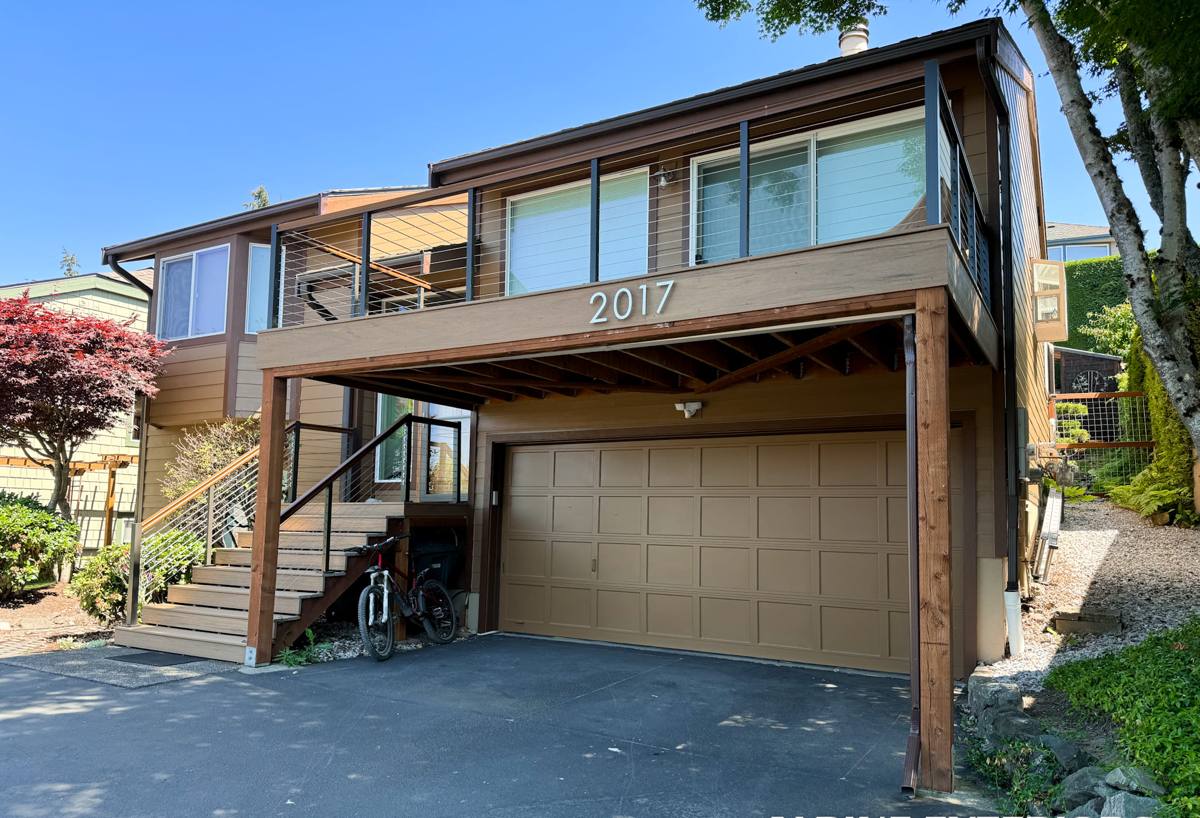
Square footage is the obvious starting point — more wall area means more material, more labor hours, and more disposal. But raw square footage isn't the whole story. Two 2,200 square foot homes can price very differently based on shape.
- Stories: A two-story home needs staging, ladders, or lift equipment that a single-story ranch doesn't. Labor time per square foot goes up with height.
- Cutouts and corners: Dormers, bump-outs, bay windows, and multiple roof planes all add cutting, fitting, and flashing detail that a simple rectangular box doesn't require.
- Trim density: Homes with a lot of window and door trim, corner boards, and fascia detail take longer to finish correctly than a plain elevation.
- Access: Tight side yards, fences, decks built close to the wall, or steep King County lots can slow down material staging and add labor hours before a single piece of siding goes up.
What's Under the Old Siding
This is the factor that surprises homeowners most, and it's the one estimators genuinely can't price with full certainty from a walk-around. Seattle's wet climate — the driving rain off the Sound, the long stretch of moss season on north-facing walls, salt-tinged air near the water — means moisture has had decades to find its way behind aging siding, especially on older homes with outdated or failed weather barriers.
Once the old siding is off, a legitimate contractor should be checking the sheathing, house wrap, and framing underneath before closing the wall back up. Common findings include:
- Soft or delaminated OSB/plywood sheathing that needs to be replaced, not just covered
- Water-damaged framing around windows, at corners, or near roof-to-wall transitions
- Missing or degraded weather-resistive barrier that needs to be redone to code
- Old flashing details around windows and doors that need to be corrected, not repeated
A quote that includes an allowance for sheathing repair is being honest with you. A quote that doesn't mention it at all is either assuming your walls are perfect (rarely true on a home more than 15-20 years old in this climate) or planning to charge you for surprises later as a change order. Ask directly how rot and sheathing repair are handled before you sign anything.
Material Choice
This is where the biggest long-term cost decision gets made, and it's worth slowing down on. We install James Hardie fiber cement siding exclusively, and that choice shapes both the upfront number and what you're not paying for later.
Why We Don't Price Alternatives
Vinyl siding is the cheapest option on the shelf, and it's cheap for a reason: it's a thin plastic product that expands and contracts with temperature swings, can warp or crack in impacts, and offers no real fire resistance. Engineered wood products like LP SmartSide use wood fiber with a resin coating — they perform reasonably when installed and maintained precisely to spec, but they're wood-based, which means they're more sensitive to the moisture exposure a Puget Sound exterior sees than a cement-based product. Cemplank and Allura are other fiber cement brands, and while fiber cement as a category is the right call for this climate, we've standardized on one manufacturer so our crews install one system, warranty one product, and can stand behind it without caveats. Primed spruce or raw cedar look great initially but need active maintenance — recoating, caulking, and monitoring — that most homeowners underestimate until they're a decade in.
None of these are scams. They're reasonable products with real trade-offs. Our position is simply that after years of doing this work in Seattle's specific climate — moss, driving rain, salt air, and long wet stretches with little drying time — fiber cement earns its keep, and Hardie is the fiber cement manufacturer we trust to back it.
What Hardie Costs and Why
James Hardie siding costs more per square foot installed than vinyl and is generally comparable to or slightly above engineered wood, depending on the product line and finish you choose. That premium buys you a non-combustible material, a factory-applied ColorPlus finish that resists fading and doesn't need repainting on the same schedule as field-painted products, and HZ5 engineering built for exactly the wet, moderate-freeze conditions we get in King County. It also carries a strong, transferable manufacturer warranty — a real asset if you sell the home before you're done owning it.
Cost Factor Summary
| Factor | What Drives the Cost | What to Ask About |
|---|---|---|
| Square footage & height | More wall area, more stories = more labor and staging | How many stories, is a lift or staging needed |
| Home complexity | Dormers, corners, trim detail slow installation | Is trim work priced separately or included |
| Sheathing/rot condition | Hidden moisture damage found at tear-off | Is there a repair allowance, and how are overages billed |
| Material choice | Vinyl < engineered wood ≈ fiber cement in typical pricing | What specific product line and finish is quoted |
| Trim & accessories | Corner boards, soffit, fascia, and color-matched trim add cost | Is trim Hardie or a mismatched cheaper substitute |
| Tear-off & disposal | Removing and hauling old siding, especially multiple layers | Is disposal included in the bid |
| Warranty structure | Manufacturer + labor warranty terms differ by installer | Is the labor warranty separate from the material warranty |
Tear-Off, Disposal, and Prep
Removing existing siding and hauling it away is real labor and real dump fees, and it should show up as its own line item or be clearly folded into the total. Homes with multiple layers of old siding (a second layer installed over the first at some point) take longer to strip and cost more to dispose of than a single-layer tear-off. This is worth asking about directly if your home has had prior exterior work done.
Trim, Soffit, and Accessories
Siding is rarely just siding. Corner boards, window and door trim, fascia, and soffit all need to be addressed as part of a full replacement, and mismatched or cheaper substitute trim is one of the more common ways a bid looks lower than it should. When we quote a Hardie job, trim components are specified as part of the same system — matched profiles and factory finish — rather than a generic add-on.
Labor Market and Timing
Like most trades in the greater Seattle area, siding labor costs reflect regional wage rates and the reality that good crews are booked out, especially in the dry-weather months when installation conditions are best. Scheduling a project for shoulder season can sometimes mean more flexibility on start dates, but it shouldn't mean cutting corners on prep — installing over wet sheathing or during a stretch of driving rain is a recipe for problems down the line.
A Practical Checklist Before You Compare Bids
- Does the quote name a specific material and product line, not just "fiber cement" or "siding"?
- Is tear-off and disposal explicitly included?
- Is there a stated process (and allowance) for sheathing or rot repair discovered during removal?
- Are trim, corner boards, and flashing details itemized or vaguely bundled?
- Does the bid separate the manufacturer's material warranty from the contractor's labor warranty?
- Is the crew installing to the manufacturer's published fastening and clearance specifications?
The Bottom Line
A siding number that seems too good to be true usually is skipping one of the factors above — most often hidden repair costs or a lower-cost material substitution. A number that seems high is worth a direct conversation about scope before you assume you're being overcharged. In our experience across King County homes, the projects that go smoothly and hold up over time are the ones where the homeowner understood the scope going in, not just the total at the bottom of the page.
If you'd like a clear, itemized look at what your specific home would need, we offer free, no-pressure estimates — walk the house with us, ask every question on this page, and get a number you actually understand. There's a form below to get started.