 Seattle Exterior
 What Primed Wood Siding Actually Is
Primed wood siding — most commonly primed spruce or pine in lap or panel form — is a solid-sawn wood product that arrives from the mill with a factory-applied primer coat instead of raw, unfinished wood. The primer is meant to give the material a head start against moisture before the final paint goes on, and it's a real upgrade over unprimed lumber. It's also one of the more affordable siding materials on the market, and in the right dry climate, installed by the right crew, it can hold up reasonably well for a number of years.
We get asked about it fairly often, usually from homeowners who've seen it on older Seattle homes or who like the idea of a traditional wood look at a lower upfront cost than cedar. This page is our honest answer for why, after years of doing exterior work in King County, we made the call not to install it — not because it's a scam or a bad product on paper, but because of how it performs specifically in this region, and how much ongoing work it puts on the homeowner to keep it looking and performing the way it did when it went up.
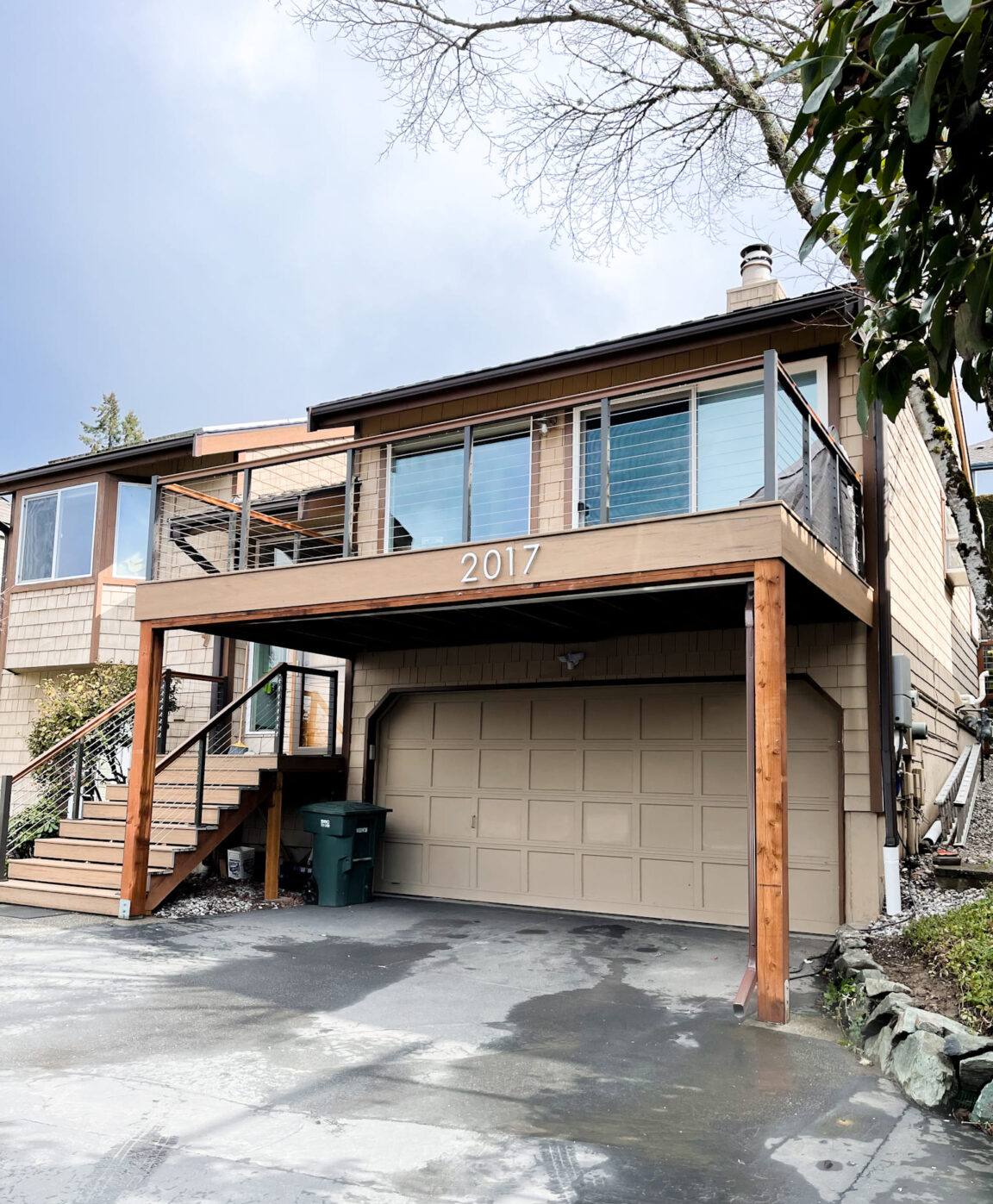
What Primed Wood Siding Gets Right
It's worth being fair to the product before explaining our reservations. Primed wood siding:
- Costs less upfront than fiber cement, cedar, or most engineered wood products
- Can be finished in any paint color, with no need to match a manufacturer's palette
- Has a traditional, familiar wood-lap profile that reads as "classic" on certain home styles
- Is lightweight and straightforward for an experienced crew to cut and install
For a homeowner in a dry, moderate climate who plans to stay on top of repainting on a strict schedule, those are legitimate advantages. Our concerns aren't about the product's design — they're about what happens to that product once it's exposed to a Pacific Northwest winter, year after year.
Why Seattle's Climate Is Especially Hard on Primed Wood
Driving Rain and Long Wet Seasons
Seattle doesn't just get rain — it gets long stretches of low-intensity, wind-driven rain that finds its way into every seam, nail hole, and butt joint on a wood siding installation. Primer is a base coat, not a waterproof membrane. Once wind-driven moisture gets behind or into the wood fiber at a seam or cut end, primed wood has nowhere fast to dry out between storms, especially from November through April.
Salt Air Off Puget Sound
Homes closer to the Sound and the region's waterways deal with a steady low-level salt exposure that accelerates coating breakdown. Salt-laden air pulls moisture into painted wood surfaces faster than it would in an inland climate, which shortens the interval between repaints and increases the odds of blistering, cracking, and peel at the primer-to-topcoat bond.
Moss Season
King County's moss season is real and it's long. Moss and algae thrive on the north- and shade-facing walls of homes throughout the wet months, holding moisture directly against the siding surface for weeks at a time. On fiber cement that's a cosmetic nuisance you can wash off. On primed wood, sustained moss contact is a direct path to trapped moisture, coating failure, and eventually rot in the wood fiber underneath.
None of these three conditions is unique to Seattle on its own. Together, for months at a stretch, they're a tough combination for any painted wood product to shrug off indefinitely.
The Maintenance Burden Homeowners Underestimate
The primer coat on wood siding is a starting point, not a finished product — it still needs a quality topcoat, and that topcoat needs to be maintained on a schedule that most homeowners don't plan for when they're comparing sticker prices. In our region, that typically means:
- Repainting on a noticeably shorter interval than in drier climates
- Regular inspection of caulked joints, which shrink and crack as wood moves seasonally
- Prompt attention to any exposed or unpainted cut ends, especially at corners and trim
- Periodic moss and algae removal on shaded elevations before it takes hold
- Spot repainting of high-exposure walls sooner than the rest of the house
Skip any of those for a season or two — which is easy to do — and the damage compounds. Wood that's been sitting under failed paint and trapped moisture doesn't just need a fresh coat; it often needs board replacement, which costs more than staying ahead of it would have.
Moisture, Rot, and Paint Failure: A Straight Comparison
This is the core of our decision. We're not installing a product with a manufacturing defect — we're weighing how a solid wood substrate behaves against moisture versus how an engineered fiber cement substrate behaves, in this specific climate.
| Factor | Primed Wood Siding | James Hardie Fiber Cement |
|---|---|---|
| Base material | Solid-sawn wood fiber, absorbs and releases moisture | Cement, sand, and cellulose fiber — dimensionally stable, doesn't swell or rot |
| Finish | Factory primer, site-applied topcoat required | Factory-baked ColorPlus finish, engineered for UV and moisture |
| Repaint interval in our climate | Often every 3-6 years depending on exposure | Typically well beyond a decade before repainting is needed |
| Response to trapped moisture (moss, shade) | Can lead to rot if not addressed promptly | Does not rot; non-combustible cement base |
| Upfront cost | Lower | Higher, but with a longer service life before major maintenance |
| Manufacturer warranty structure | Varies by mill; often limited or prorated | Strong transferable limited warranty backing the ColorPlus finish and substrate |
None of this means primed wood is destined to fail — plenty of it is still standing on older homes in this area. It means the margin for error is thinner, the maintenance is more frequent, and the consequences of falling behind are more expensive to fix than they are with a fiber cement system.
Installation Sensitivity: Why This Product Punishes Shortcuts
Wood siding is far less forgiving of installation details than most homeowners assume. Every cut end needs to be back-primed and sealed before it goes up, not after. Flashing details at windows, doors, and butt joints have to be done correctly the first time, because a wood substrate doesn't tolerate repeated wetting behind an improperly lapped joint. Nail placement matters more, because over-driven or misplaced fasteners create entry points for water that primer alone won't stop.
The problem is that these are exactly the kind of details that get rushed on a lower-cost material by crews trying to hit a price point. We'd rather not install a product where a small installation shortcut turns into a homeowner's expensive rot repair five years down the road — particularly in a climate that gives moisture every opportunity to find that shortcut.
Warranty Reality
Warranties on primed wood siding vary a lot by mill and are frequently limited to material defects, not workmanship, and often prorated over time — meaning the coverage shrinks the longer you own the home. That's a meaningful gap when the real risk with wood siding isn't a manufacturing flaw, it's moisture management over years of Seattle weather. We'd rather stand behind an installation with a manufacturer warranty structure built around long-term coastal performance than one that offers thin protection against the exact failure mode this climate creates.
What We Install Instead
We install James Hardie fiber cement siding exclusively, across every job in Seattle and King County. It's a decision built on the same climate factors covered above: Hardie's HZ5 product line is engineered specifically for the freeze-thaw and moisture conditions of our region, the ColorPlus factory finish is baked on rather than field-applied, and the cement-based substrate simply doesn't rot, swell, or feed moss the way wood fiber does. It's also non-combustible, which matters more each year as wildfire smoke and ember exposure become a bigger regional concern even west of the Cascades.
We're not claiming Hardie is maintenance-free — no exterior product is. But the maintenance it requires is dramatically lighter than a painted wood system, and the material itself doesn't degrade the way wood does when Seattle's wet season runs long, which some years it does.
Questions to Ask Before Choosing Any Wood-Based Siding
If you're still weighing primed wood, cedar, or another wood-based product against fiber cement, these are the questions worth getting straight answers to before you commit:
- What repaint interval should I realistically plan for on this specific wall exposure?
- Is the warranty limited to material defects, or does it also cover workmanship?
- How are cut ends, corners, and butt joints being sealed during installation?
- Who is responsible for moss and algae removal, and how often does it need to happen?
- What does board replacement cost if rot develops at a joint or corner in year six or seven?
- Does my home's exposure — shade, wind direction, proximity to water — make this a harder application than average?
If you already have primed wood siding on your home and you're trying to figure out whether it's still salvageable or heading toward a replacement, we're happy to take a look and give you a straight assessment — not a sales pitch for the material we install. If you're building new, doing a full re-side, or comparing options after storm or moisture damage, we'd welcome the chance to walk your property, talk through what your specific exposure looks like, and put together a free, no-pressure estimate for a Hardie installation.