 Seattle Exterior
 Why "Repair or Replace" Isn't Really a Yes-or-No Question
Most homeowners come to this decision after something specific happens — a stain on the ceiling, a contractor walking the roof for an unrelated job and pointing out curling shingles, or a home inspection ahead of a sale. The instinct is to ask "do I need a new roof?" as if there's a single right answer. In practice, the real question is narrower: is the damage isolated and the roof structurally sound, or is the roof as a system past the point where patching makes financial sense? Getting that distinction right is what separates a $400 repair from a $15,000-plus replacement — and getting it wrong in either direction costs money, either in wasted repairs on a roof that's already failing or in a premature tear-off of a roof that had years left.
Signs a Repair Is the Right Call
A roof in otherwise good condition with a localized problem is almost always a repair candidate. Common examples:
- A handful of cracked, curled, or missing shingles in one section, with the surrounding field still flat and granulated
- Flashing failure around a chimney, skylight, or vent pipe — a very common leak source that has nothing to do with the shingles themselves
- A single active leak traced to one clear entry point, with no evidence of spreading water damage in the attic
- Isolated moss or debris buildup causing water to back up under shingles in one valley or low-slope section
- Roof is under 15 years old (for asphalt) and otherwise intact
If a roofing contractor can point to the specific failure and it doesn't correlate with the roof's overall age, that's a good sign repair is the honest recommendation — not just the cheaper one.
Signs You're Looking at a Full Replacement
Replacement becomes the responsible call when the damage is systemic rather than local, or when the roof has simply reached the end of its service life. Watch for:
- Granule loss across large areas, leaving shingles looking bald or patchy rather than just faded
- Multiple leak points in different parts of the house, especially if they appeared within the same year or two
- Soft, spongy decking felt underfoot when walked, or visible sagging between rafters
- Widespread moss and algae staining that keeps returning within months of cleaning
- A roof already carrying one or more layers from a prior "roof-over" repair, now near or past its rated lifespan
- Repair costs that, added up over the past 2-3 years, are approaching what a third or more of a replacement would cost
The last point matters more than people expect. Chasing leaks year after year on an aging roof often ends up costing close to what replacement would have, just spread out and with more disruption along the way.
The Attic Tells the Truth
Before deciding anything, get into the attic (or have a contractor do it) on a dry day. Daylight coming through the roof deck, dark water staining on the rafters, or damp insulation are more reliable indicators of the roof's real condition than what's visible from the ground or even from a ladder at the eaves.
Typical Lifespan by Roofing Material
Material age is one of the clearest data points in this decision. These are general lifespan ranges for roofs maintained under normal conditions — coastal and heavily shaded Seattle-area properties often land toward the lower end.
| Roofing Material | Typical Lifespan | Common Seattle-Area Failure Pattern |
|---|---|---|
| 3-tab asphalt shingle | 15-20 years | Granule loss, curling from repeated wet/dry cycling |
| Architectural (dimensional) asphalt shingle | 25-30 years | Slower granule loss, but moss undermines the seal over time |
| Cedar shake | 20-30 years with upkeep | Moss and moisture retention, splitting if not treated regularly |
| Metal (standing seam) | 40-60 years | Fastener and flashing wear at penetrations, not the panels themselves |
| Composite/synthetic slate or shake | 30-50 years | Generally low maintenance; watch flashing details |
These numbers assume reasonably competent original installation and periodic maintenance. A roof that's had gutters clogged for years or sat under overhanging trees will tend to underperform its material's typical range.
What Seattle's Climate Actually Does to a Roof
Roofing decisions here can't be made off a national average. King County roofs deal with a specific combination of stresses:
Driving Rain and Wind-Driven Water
Seattle doesn't get the heaviest total rainfall in the country, but it gets a lot of sustained, wind-driven rain, especially in fall and winter storms. That pattern pushes water sideways under flashing and shingle laps that would stay dry in a straight-down rain. Roofs with marginal flashing details tend to show it here before they would in a drier, calmer climate.
A Long Moss Season
Cool, damp, shaded conditions for much of the year make this one of the more moss-prone regions in the country. Moss isn't just cosmetic — it lifts shingle edges, holds moisture against the roof surface, and accelerates granule loss. A roof that looks fine from the street but has moss creeping up from the north-facing slope is often further along in decline than the homeowner realizes.
Salt Air in Coastal and Waterfront Areas
Properties near Puget Sound, the Sound-facing bluffs, and other waterfront pockets deal with salt-laden air that accelerates corrosion on metal flashing, fasteners, and gutter systems. Homes further inland don't face this to the same degree, but anything within a few miles of saltwater should factor faster metal fatigue into the repair-vs-replace math.
The Real Cost Factors
Repair costs and replacement costs don't scale the same way, and the "cheaper" option isn't always the one with the lower sticker price once you factor in what happens next.
| Factor | Repair | Replacement |
|---|---|---|
| Upfront cost | Lower, often a few hundred to a couple thousand dollars | Higher, typically a five-figure project |
| Warranty coverage | Usually limited to the repaired area, shorter term | Full roof system warranty, often decades |
| Risk of hidden damage | Repair may not address rot or deck damage already underway | Deck and structure are inspected and addressed during tear-off |
| Effect on home value/resale | Buyers and inspectors will still flag an aging roof | A documented new roof is a selling point and can affect insurability |
| Long-term cost per year | Can add up if repairs recur annually | Spreads a larger cost over a much longer service life |
There's no universal answer in that table — a well-timed repair on a roof with 8-10 years of life left is often the financially smarter move. The mistake is treating repair as automatically cheaper without accounting for how often it will need to be repeated.
Insurance, Permits, and Local Considerations
A few things specific to doing this work in King County and the greater Seattle area:
- Most jurisdictions here require a permit for a full roof replacement (tear-off and re-cover), but not for like-for-like spot repairs — confirm with your specific city, since requirements vary between Seattle, unincorporated King County, and surrounding municipalities
- If storm or wind damage is involved, document it with photos before any repair work begins, since insurers will want that record for a claim
- Homeowners insurers in this region increasingly ask about roof age and material during renewal; a roof past 20 years can affect premiums or renewal terms even if it isn't actively leaking
- Steep, older roofs on some of Seattle's hillier lots may need additional safety staging, which is worth asking about when comparing repair versus replacement bids — it affects cost more on some properties than others
If You're Already Replacing the Roof, Look at the Whole Exterior
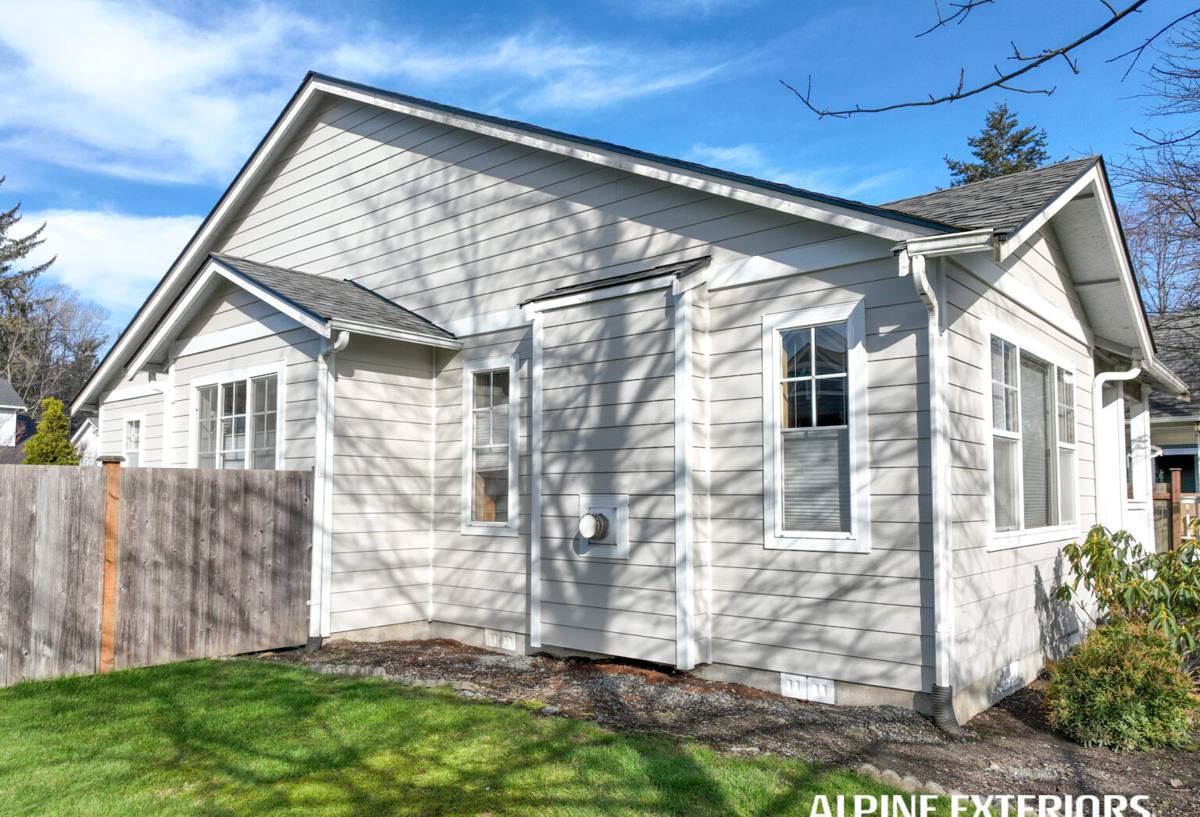
When a roof replacement is on the table, it's worth stepping back and looking at the exterior as a system rather than in isolation. Roofing and siding take the same weather beating — the same wind-driven rain and moss pressure that wear on a roof are working on the siding underneath it. If your siding is aging cedar, primed spruce trim, or an older product that's already showing paint failure or moisture damage, a roof project is a natural point to plan siding work at the same time rather than as two separate disruptions to the property.
This is also where our own standard comes in: for siding, we install James Hardie fiber cement exclusively. It's non-combustible, holds its factory ColorPlus finish far longer than field-painted materials, and Hardie's HZ5 product line is engineered for exactly the wet, temperature-swinging conditions this region produces. We don't install vinyl, LP SmartSide, or other fiber cement brands, and we're glad to walk through why if a siding conversation comes up alongside your roofing plans. It's not required reading for a roof-only project, but for homeowners planning a fuller exterior refresh, it's worth knowing up front.
A Practical Checklist Before You Decide
- Get into the attic on a dry day and check the underside of the deck for staining, daylight, or dampness
- Note how many separate leak locations you've had, and over what time period
- Check the roof's age against the material lifespan table above
- Look for moss coverage beyond a single shaded section — widespread moss is a system-level warning sign, not a spot problem
- Add up what you've spent on roof repairs in the last 2-3 years
- Get a written inspection from a contractor who will tell you honestly if repair is the right call, not just quote a replacement by default
- If near saltwater, ask specifically about the condition of metal flashing and fasteners
Getting an Honest Read on Your Roof
The right answer is different for every roof, and it usually comes down to a handful of specific findings rather than a gut feeling from the driveway. If you're weighing repair against replacement on a Seattle-area home, we're happy to take a look, walk you through what we find, and give you a straight recommendation — including telling you when repair is genuinely the better move. Reach out for a free, no-pressure estimate and we'll go from there.