 Seattle Exterior
 Ballard's Roofs Work Harder Than Most
Ballard sits close enough to Puget Sound and Salmon Bay that homes here deal with a version of Seattle weather that's a notch tougher than inland neighborhoods. The marine air carries salt and moisture that settles into roofing materials year-round. Add Seattle's long stretch of driving, wind-pushed rain and a moss season that can run eight or nine months out of the year, and you've got a roofing environment that punishes shortcuts. An asphalt shingle roof installed the way it's supposed to be installed will handle all of this for decades. One installed with the wrong underlayment, poor flashing, or no attention to ventilation will show problems in a fraction of that time.
We work on Ballard roofs regularly, and the patterns repeat: north and west-facing slopes that stay damp longer, older homes with attic ventilation that was adequate in 1965 but isn't today, and roofs where moss has been scraped off instead of treated at the source. None of this is unique to any one house — it's the neighborhood's climate acting on its housing stock.
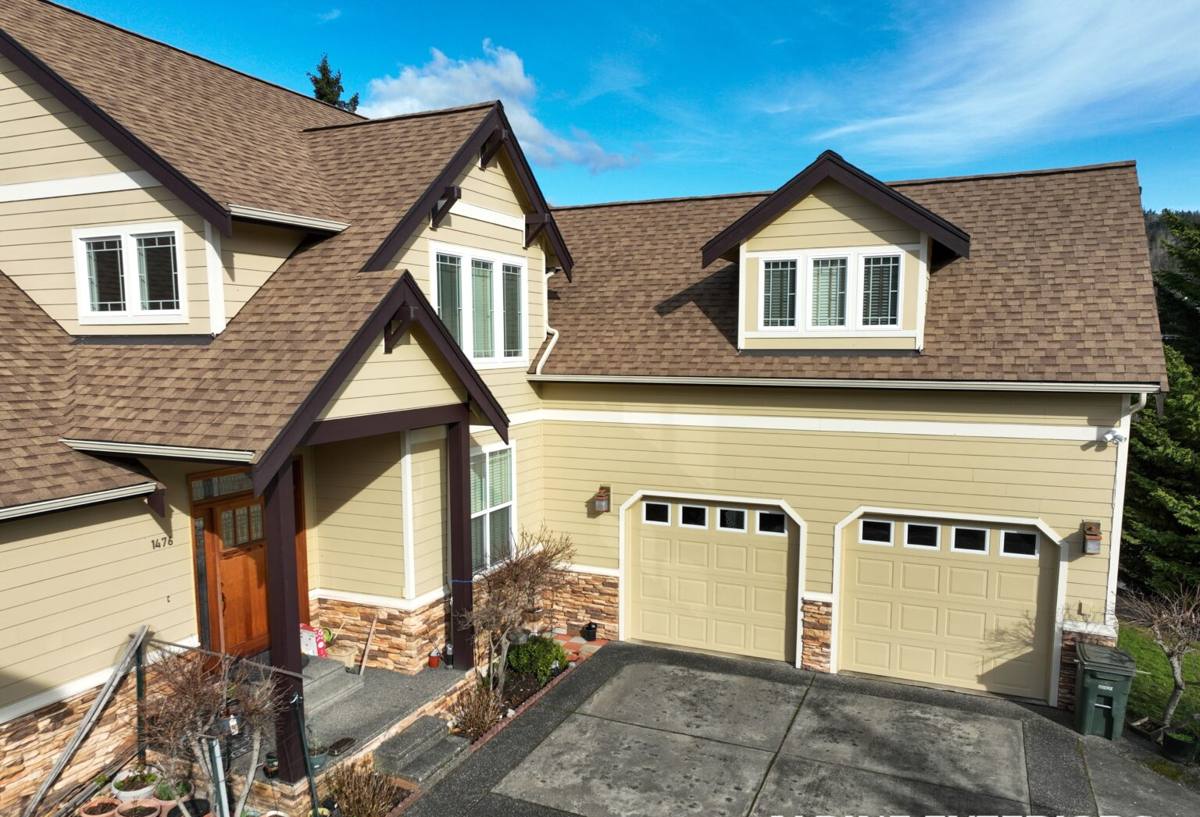
What Ballard's Climate Actually Does to a Shingle Roof
Salt Air and Metal Fasteners
Homes within a mile or two of Salmon Bay and the Sound get low-level salt exposure in the air. It's not the same as an oceanfront property, but it's enough to accelerate corrosion on unprotected metal — flashing, nail heads, and gutter hardware. Over years, corroded fasteners loosen their grip on shingles, and corroded flashing develops pinholes right where water needs it to seal.
Driving Rain, Not Just Rain
Seattle rain is rarely a hard downpour, but it's frequently wind-driven, which pushes water sideways and under shingle edges, up under ridge caps, and into any gap in flashing around chimneys, skylights, and dormers. A roof that would be fine in a calmer climate with straight-down rain can leak in Ballard if the details at edges, valleys, and penetrations aren't done correctly.
Moss Season
Shade, moisture, and mild temperatures are exactly what moss needs, and Ballard's tree cover combined with its long wet season gives moss most of the year to establish itself. Moss holds moisture against the shingle surface, lifts shingle edges as it grows, and works its way under tabs and around nail heads. Left alone, it shortens the life of an otherwise sound roof by years.
What a Correct Asphalt Shingle Installation Includes
An asphalt shingle roof is a system, not just a layer of shingles. Every component below matters, and skipping any one of them is where most premature failures start.
- Deck inspection and repair — soft, delaminated, or water-damaged sheathing gets replaced before anything goes on top of it.
- Ice and water shield at eaves and valleys — a self-adhering waterproof membrane in the areas most exposed to wind-driven rain and ice damming.
- Synthetic underlayment across the full deck — a secondary water barrier that outperforms old felt paper in wet climates.
- Corrosion-resistant flashing — proper step flashing at walls and chimneys, and continuous flashing at valleys, in materials that hold up to marine air.
- Correct nailing pattern — the right number of nails, placed in the manufacturer's nailing zone, driven flush (not overdriven or underdriven).
- Balanced attic ventilation — intake at the eaves and exhaust at the ridge, sized to the attic's square footage.
- Ridge cap shingles rated for the field shingle — matched for wind exposure, not just whatever's on the shelf.
Any one of these done wrong won't necessarily show up as a leak in year one. It shows up in year five or seven, as granule loss, curling, or a leak that seems to come from nowhere because it's actually traveling along the underlayment from a flashing failure somewhere else on the roof.
Choosing a Shingle for a Ballard Roof
Most Ballard homes are well served by either a standard architectural (laminate) shingle or a heavier-weight architectural shingle with a higher wind rating. Basic 3-tab shingles are less common on new installs today because their flatter profile and lighter weight give wind and driving rain more to work with at the edges.
| Shingle Type | Typical Lifespan | Best Fit For |
|---|---|---|
| 3-tab asphalt | 15–20 years | Budget-driven projects, simple rooflines, less wind exposure |
| Standard architectural (laminate) | 25–30 years | Most Ballard homes — good wind rating and moisture resistance for the money |
| Premium/heavyweight architectural | 30–50 years | Exposed or elevated lots, homes near the water, longer-hold owners |
Algae-resistant granules (sometimes listed as a warranty feature) are worth having on any Ballard roof — they slow the growth of the dark algae streaking you see on older roofs, though they don't eliminate the need for moss management on shaded slopes.
Common Problems We Find on Ballard Roofs
When we inspect an older asphalt shingle roof in this neighborhood, a handful of issues come up again and again:
- Moss colonies on north-facing and shaded slopes, lifting shingle tabs at the edges
- Granule loss concentrated on slopes that catch the most wind-driven rain
- Corroded or undersized flashing around chimneys and dormers, original to the house
- Blocked or missing soffit vents, causing trapped moisture in the attic
- Nail pops from a mix of house settling and corrosion, telegraphing through the shingle surface
- Gutter and downspout systems undersized for the volume of rain the roof actually sheds
Most of these are fixable without a full replacement if caught early. Left unaddressed, they compound — a blocked vent leads to trapped attic moisture, which shortens shingle life from underneath, which shows up as premature granule loss that no one would otherwise expect for another decade.
Our Process for a Ballard Roofing Project
1. Inspection and Honest Assessment
We walk the roof, check the attic for ventilation and moisture signs, and look at flashing, valleys, and penetrations individually rather than judging the roof by its age alone. We'll tell you plainly if a repair is enough, or if a full replacement is the better long-term value.
2. Tear-Off vs. Overlay
We tear off down to the deck on almost every project we take on in this climate. Overlaying a new layer of shingles over an old one traps moisture, hides deck damage, and voids many manufacturer warranties — it's a shortcut that costs more later than it saves now.
3. Deck Repair and Underlayment
Any damaged sheathing gets replaced. Ice and water shield goes down at eaves and valleys, synthetic underlayment covers the rest of the deck.
4. Flashing and Ventilation First
New flashing goes in before shingles, not patched around old flashing. Ventilation gets corrected to a balanced intake/exhaust system sized for the attic, not just whatever vents were already there.
5. Shingle Installation
Shingles go down to manufacturer nailing specs, with attention to valleys, ridge lines, and any wall or skylight transitions — the places where almost every roof leak actually originates.
6. Cleanup and Final Walkthrough
We clean the property, magnet-sweep for stray nails, and walk the finished roof with you before calling the job done.
Cost Factors for Asphalt Shingle Roofing in Ballard
Every roof is different, so we won't quote a number without seeing yours, but these are the variables that move the price up or down:
| Factor | Why It Matters |
|---|---|
| Roof size and pitch | More square footage and steeper pitches take more material and labor time |
| Number of existing layers | Tear-off of two layers costs more in labor and disposal than one |
| Deck condition | Rotted or delaminated sheathing needs replacement before new shingles go down |
| Ventilation upgrades | Adding proper intake/exhaust vents where none existed adds labor and materials |
| Roof complexity | Valleys, dormers, chimneys, and skylights all add flashing work |
| Shingle class chosen | Standard architectural vs. premium heavyweight shingles carry different material costs |
| Access | Tight lots, tall roofs, or limited staging area can add time and equipment cost |
Moss Prevention and Ongoing Maintenance
Given how long moss season runs here, a roof that isn't maintained will grow moss again even after a full tear-off and replacement. A short annual routine keeps a Ballard roof performing the way it's supposed to for its full lifespan:
- Have shaded and north-facing slopes checked for early moss growth each fall, before winter rains set in
- Keep gutters and downspouts clear so water isn't backing up under the shingle edge
- Trim back overhanging branches that keep a slope shaded and damp longer than it needs to be
- Have flashing around chimneys and dormers checked every few years, since these are the first places corrosion shows up
- Confirm attic ventilation isn't blocked by insulation, storage, or debris
- Address moss with a proper low-pressure treatment — never a pressure wash, which strips granules and shortens shingle life
Why It Matters to Hire a Crew That Already Works in Ballard
A roofing crew that mostly works drier, inland climates can install a technically correct roof and still miss the details that matter here — the extra attention to flashing at wall transitions, the ventilation math that accounts for a shaded, moisture-heavy lot, or the judgment call on when a repair is genuinely enough versus when it's a temporary patch on a bigger problem. Crews who work Ballard and the greater Seattle and King County area regularly see these houses through their whole life cycle — repairs, maintenance calls, and eventually full replacements — and that repetition is what keeps a roof performing for its full rated lifespan instead of failing early.
If you're dealing with moss buildup, granule loss, a slow leak you can't source, or you're just due for a roof replacement and want it done right the first time, we're happy to take a look. Reach out for a free, no-pressure estimate — we'll walk the roof, tell you honestly what it needs, and give you a clear picture before any work begins.