 Seattle Exterior
 Redmond sits on the east side of Lake Washington in King County, a community shaped as much by its tree cover and lake-adjacent microclimates as by its growth as a tech hub. Neighborhoods here range from older established streets with mature Douglas fir and cedar canopies to newer developments built out over the last two decades, plus a good mix of homes near Lake Sammamish and the Sammamish River valley. That variety matters for exterior work, because a house tucked under heavy tree cover in Education Hill ages very differently than one on an open lot near Bear Creek or Redmond Ridge.
What all of them share is the Pacific Northwest's long wet season. Redmond isn't a coastal community exposed to direct salt spray the way some Puget Sound-facing neighborhoods are, but it gets the same driving rain, the same short winter daylight, and — thanks to all that tree cover — often worse moss and algae pressure than more open parts of the Seattle metro. That combination of shade, moisture, and organic debris is the real climate story for Redmond exteriors, and it's what we plan around on every job in this area.
What Redmond's Climate Actually Does to a House
King County gets roughly eight months a year where surfaces stay damp more often than dry. In Redmond specifically, tree-shaded lots slow down drying time even further — a north-facing wall under a stand of conifers can stay wet for days after a storm passes, while a sunnier lot a half mile away dries out in hours. That difference shows up directly in how siding, trim, roofing, and decking age.
- Moss and algae: Shaded roofs and north-facing siding develop moss and algae growth faster here than in drier, sunnier parts of the region. Left unaddressed, moss holds moisture against roofing material and paint film far longer than open air ever would.
- Wood rot and swelling: Wood siding, trim, and fascia that stay damp for extended stretches are prone to swelling, cracking, and rot — especially at butt joints, corners, and anywhere caulk has failed.
- Gutter and drainage strain: Fir and cedar needles, cones, and leaf litter clog gutters faster in wooded Redmond neighborhoods than in more open subdivisions, and clogged gutters send water where it doesn't belong — behind siding, into fascia, and down foundation walls.
- Slow drying cycles: Even quality paint and caulk break down faster when a surface rarely gets a real chance to dry between rain events, which is common under Redmond's tree canopy from fall through spring.
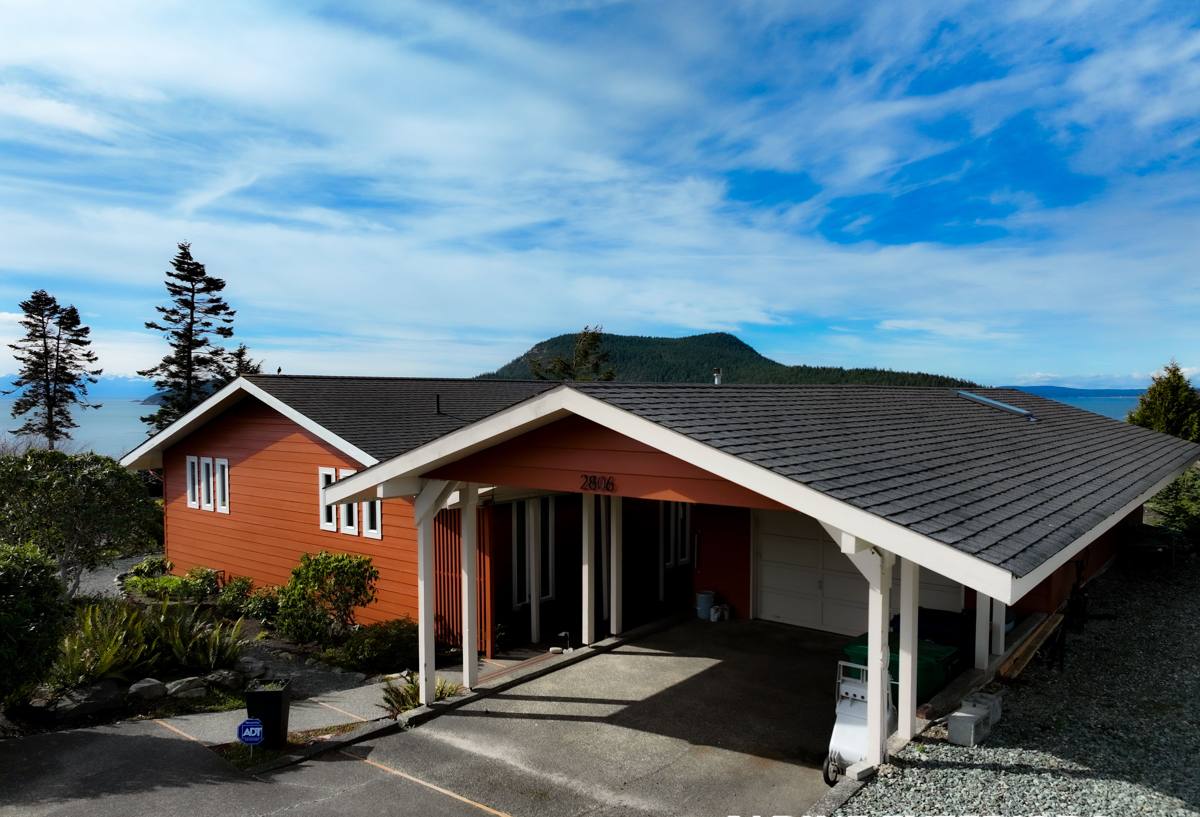
Siding: Why We Only Install James Hardie
Seattle Exterior Contractor installs James Hardie fiber cement siding exclusively. We don't install vinyl, LP SmartSide, Cemplank, Allura, primed spruce, or cedar siding, and we think Redmond homeowners deserve a straight explanation of why.
Wood siding — whether cedar or engineered wood products like LP SmartSide — depends on an intact factory or field-applied coating to keep moisture out. In a climate where surfaces under tree cover can stay damp for days at a time, any gap in that coating (a nail pop, a hairline crack, a joint where caulk has failed) becomes an entry point for water. Wood swells, and once it swells and dries repeatedly, paint adhesion fails faster and the door opens for rot. That's not a defect in the product so much as a mismatch between wood's moisture sensitivity and Redmond's slow-drying, shaded conditions.
Vinyl siding holds up fine against moisture itself, but it isn't rigid, and it isn't fire-resistant. It can warp under concentrated heat (grills, dryer vents, reflected sun off certain windows) and it telegraphs waviness in the wall behind it rather than hiding minor imperfections. Fiber cement competitors like Cemplank and Allura are legitimate products, but James Hardie engineers its HardieZone lines specifically for regional moisture and temperature patterns, backs installations with a strong transferable warranty, and applies its ColorPlus factory finish under controlled conditions rather than relying on field-applied paint that has to cure correctly on-site, in the rain, on a Redmond job.
For us, standardizing on one product means our crews install it the same correct way every time — proper clearances, correct fastening, factory-finished edges sealed at cuts — rather than juggling installation specs for six different materials. That consistency is where long-term performance actually comes from.
What James Hardie Gets Right for This Area
- Fiber cement doesn't absorb water the way wood does, so freeze-thaw and prolonged dampness don't warp or swell it the way they can wood siding.
- It's non-combustible, which matters given the wildfire smoke and dry-summer risk periods the broader Puget Sound region has seen in recent years.
- ColorPlus factory finish is baked on under controlled conditions and typically holds color longer than field-applied paint exposed to Redmond's damp, low-sun winters.
- HardieZone HZ5 products are engineered for Pacific Northwest-type climates specifically, rather than a one-size-fits-all national spec.
Roofing in Redmond's Shaded, Wet Conditions
Roofs in Redmond's wooded neighborhoods take on moss and organic buildup faster than roofs in more exposed areas of King County. That buildup isn't just cosmetic — moss mats hold water against shingles, and over years that shortens the effective life of the roofing material and increases the odds of granule loss and leaks at valleys and penetrations.
We look at a few things specific to Redmond conditions on every roofing job:
- Ventilation adequacy, since poor attic ventilation combined with a shaded, slow-drying roof deck accelerates moisture problems from the underside as well as the top.
- Valley and flashing condition, which take the brunt of concentrated runoff during heavy Northwest storms.
- Moss and debris load, and whether gutter and downspout capacity is actually sized for the tree cover on that specific lot.
- Underlayment and edge details that matter more here than in drier climates, where a marginal install might go unnoticed for years.
Windows: Sealing Out a Long Wet Season
Older windows in Redmond homes — particularly aluminum-frame single or early dual-pane units common in houses built before the 1990s — tend to show their age through condensation between panes, drafts, and failed seals around the frame. In a climate with as much sustained rain and humidity as Redmond sees, a compromised window seal doesn't just cost you on heating bills; it becomes a slow moisture path into the wall assembly behind the siding.
When we replace windows as part of a broader exterior project, we pay close attention to flashing integration with the siding system — window-to-wall transitions are one of the most common failure points we find on older Redmond homes, especially where a remodel or addition wasn't tied back into the original weather barrier correctly.
Decks: Built for Shade and Standing Moisture
A lot of Redmond decks sit under partial tree cover, which keeps them cooler in summer but also means they rarely get a full day of direct sun to dry out after rain. That combination accelerates mildew growth, speeds up wood decay at ledger boards and post bases, and makes gap spacing and drainage detailing more important than they'd be on a fully exposed deck.
Whether you're building new or replacing an aging deck, the details that matter most in Redmond's climate are the ledger board flashing (where the deck attaches to the house — a common rot point if not properly flashed), joist protection, and board spacing that allows real airflow underneath rather than trapping moisture against a shaded lawn or planting bed.
Why a Local Crew Matters Here
Redmond's mix of older, tree-covered lots and newer developments means no two exterior projects look quite the same. A crew that works across King County regularly knows which neighborhoods run heavier on moss, where drainage tends to be a fight, and how to sequence work around the region's wet season rather than fighting it. That local pattern recognition is hard to replace with a generic national playbook, and it's part of why we treat every Redmond estimate as its own project rather than a copy-paste of the last one.
Cost Factors for Redmond Exterior Projects
Every home is different, but a few factors consistently move the price on Redmond projects specifically:
| Factor | Why It Matters in Redmond |
|---|---|
| Tree cover / access | Heavily wooded lots can mean more setup, cleanup, and care around landscaping during siding or roofing work. |
| Existing moisture damage | Rot found once old siding or roofing is removed adds sheathing or framing repair costs not visible during the initial estimate. |
| Roof pitch and complexity | Steeper or more complex rooflines common in newer Redmond developments affect labor time and safety staging. |
| Window count and flashing condition | Older homes with degraded flashing need more careful integration work than a straightforward window swap. |
| Deck ledger and structural condition | Decks with hidden ledger rot cost more to fix properly than a straight resurface or board replacement. |
What to Ask Before Hiring an Exterior Contractor in Redmond
- Are they licensed and insured in Washington State, and can they provide proof without hesitation?
- Do they specialize in exterior work, or is siding/roofing/decks a side offering to another trade?
- Will they explain the specific product lines they install and why, rather than offering a vague "we do it all" answer?
- Do they address moisture management and flashing details specifically, not just the finish material?
- Can they walk you through how they sequence work around wet-season conditions in King County?
- Will they put the scope, materials, and warranty terms in writing before work starts?
Getting Started
If you're weighing a siding replacement, a roof that's showing its age, aging windows, or a deck that needs attention, we're happy to take a look and give you a straight assessment of what your Redmond home actually needs versus what can wait. Reach out for a free, no-pressure estimate — the form below gets you started.