 Seattle Exterior
 Why Ballard's Climate Is Hard on a Roof
Ballard sits close enough to Salmon Bay, Shilshole Bay, and the greater Puget Sound that salt-laden air is a real factor in how a roof ages here — not just a talking point. Add King County's long, wet fall-through-spring stretch of driving rain, plus the deep shade and mature tree canopy found in a lot of Ballard's older residential blocks, and you get a roofing environment that punishes cheap materials and sloppy detailing faster than most inland Seattle neighborhoods. A roof that would hold up fine in a drier, sunnier part of the country can start showing corrosion, moss colonization, and leak points within a few years out here if it wasn't built for this specific combination of moisture and salt exposure.
Metal roofing, done correctly, handles this climate better than most other roofing materials available to homeowners today. But "metal roofing" isn't one product — it's a category, and the wrong choice within that category can still fail in a marine climate. This page is about what actually works on Ballard homes, and what a correct installation looks like.
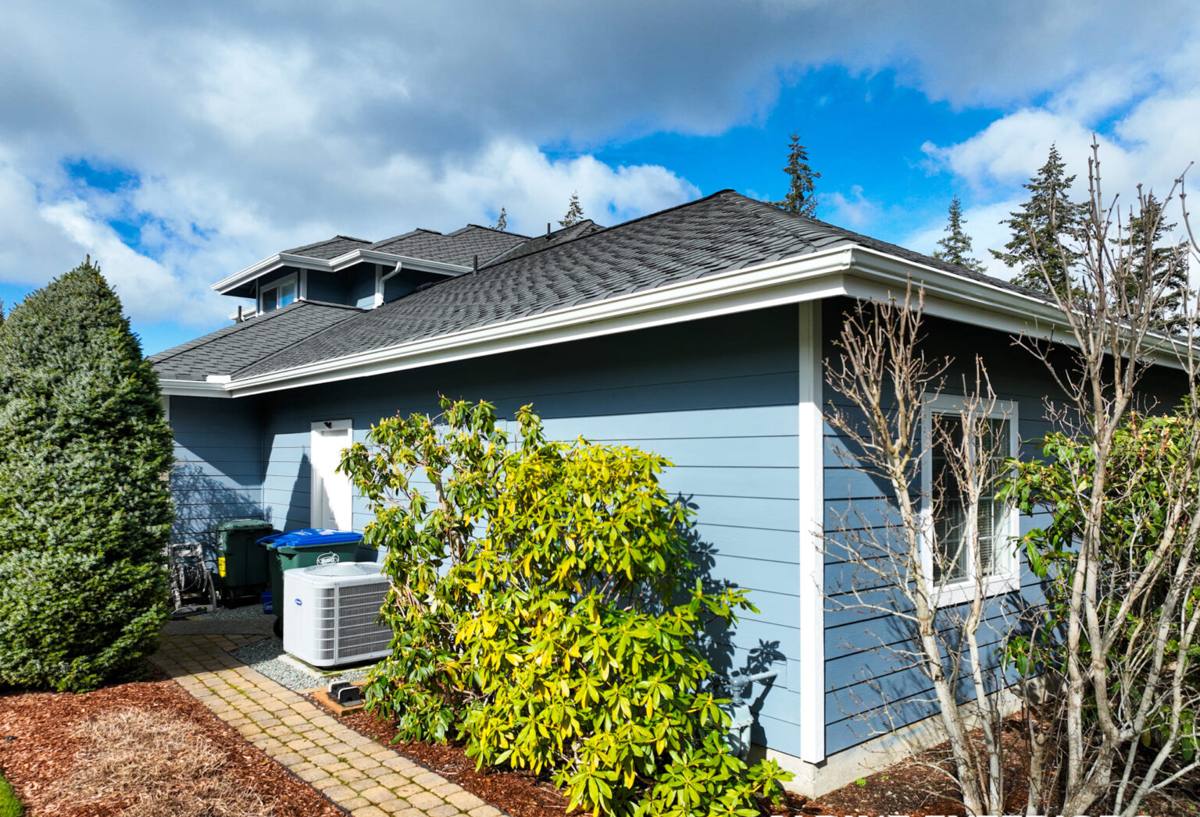
What Salt Air and Moss Season Actually Do Over Time
Salt Air and Corrosion
Airborne salt accelerates oxidation on any exposed metal — fasteners, flashing, panel edges, and cut lines where the protective coating has been compromised. Homes closer to the water see this more aggressively than homes further inland in Ballard, but the whole neighborhood sits close enough to Puget Sound that it's a factor worth planning for on every metal roof we install here, not just the ones a few blocks from the shoreline.
Moss, Algae, and Trapped Moisture
Ballard's tree cover and consistently damp air create ideal conditions for moss and algae growth, especially on north-facing slopes and shaded sections of roof that don't get much direct sun to dry out between rain events. On asphalt shingles, moss roots into the granules and lifts them, shortening the roof's life. Metal roofing gives moss nothing to root into — the surface itself resists colonization — but debris, needles, and organic buildup can still collect in valleys and against obstructions if a roof isn't detailed with proper drainage paths, so design still matters even with a moss-resistant material.
Driving Rain and Wind-Driven Water
Seattle's rain isn't usually a downpour — it's a long, low-intensity soak that often comes in sideways during storms off the Sound. That kind of weather finds every weak seam, under-lapped flashing detail, and poorly sealed penetration over time. A metal roof's real weather resistance comes almost entirely from how it's flashed and sealed at transitions, not just from the panel material itself.
Metal Roofing Options That Make Sense in Ballard
Not every metal roofing system is a good fit for this climate or for the range of home styles found in Ballard, from early-1900s craftsman bungalows to newer infill construction. Here's how the common options compare for a marine, high-moisture environment like this one.
| System | Salt/Moisture Performance | Best Fit For |
|---|---|---|
| Standing seam (concealed fastener) | Excellent — no exposed fastener heads to corrode, continuous seams shed water well | Most Ballard homes, especially those closer to the water or with lower-slope sections |
| Exposed-fastener metal panel | Good if installed with corrosion-resistant fasteners and gaskets, but fasteners are the first thing to age in salt air | Budget-conscious projects, outbuildings, garages |
| Stone-coated steel | Good — coating protects the steel core, mimics shake or tile appearance | Homes wanting a traditional look with metal's durability |
| Aluminum panel systems | Excellent — aluminum doesn't rust, making it a strong choice in coastal-influenced air | Homes closer to Salmon Bay/Shilshole where salt exposure is highest |
For most Ballard projects, we steer homeowners toward standing seam in either steel or aluminum, with the choice between the two coming down to budget and proximity to the water. Aluminum costs more but sidesteps rust entirely, which matters more the closer a home sits to salt water. Steel panels with a quality factory finish and proper coating hold up well too, as long as cut edges are treated and fasteners are matched correctly — mixing incompatible metals (like the wrong fastener alloy against a steel panel) sets up galvanic corrosion that can undermine an otherwise good installation.
What a Correct Metal Roof Installation Involves
The panel is the part homeowners see. Most of what actually determines whether the roof performs in Ballard's climate happens underneath and around it.
Underlayment
We use synthetic underlayment rated for the full service life of the roof, with self-adhered ice-and-water membrane at eaves, valleys, and any low-slope transitions where wind-driven rain is most likely to get pushed backward under the panels.
Flashing and Transitions
Chimneys, skylights, dormers, and wall-to-roof transitions are where the majority of roof leaks actually originate — not the open field of the roof. Correct step flashing, counter-flashing, and sealed penetrations matter more on a home exposed to sideways rain than they do in drier climates.
Fasteners and Metal Compatibility
In a salt-air environment, fastener choice isn't a minor detail. We use fasteners and flashing metals that are compatible with the panel material to avoid galvanic corrosion, and we don't cut corners with mismatched hardware just because it's cheaper or on hand.
Ventilation
Proper intake and exhaust ventilation keeps moisture from condensing on the underside of the roof deck — a real risk given how much of the year Ballard spends under damp, cool conditions. A well-ventilated attic also helps the roof deck dry out between rain events instead of staying perpetually damp.
Panel Layout and Drainage
We plan seam direction and panel runs so water sheds cleanly off the roof rather than pooling near valleys or against dormers — details that matter more on the lower-slope sections common on some of Ballard's newer construction.
Our Process, Start to Finish
- On-site assessment — we look at your existing roof structure, slope, shading, and proximity to the water to figure out which metal system and finish actually make sense for your home.
- Written estimate — a clear breakdown of material, labor, and any tear-off or deck repair needed, with no vague allowances buried in the fine print.
- Deck inspection during tear-off — if there's hidden rot or moisture damage under the old roofing, we show it to you before covering it up, not after.
- Underlayment and flashing installation — the part that determines whether the roof actually keeps water out.
- Panel installation — installed to the manufacturer's specifications for fastener spacing, seam engagement, and thermal movement allowance.
- Final walkthrough and cleanup — including a magnetic sweep for stray fasteners and debris removal from gutters and the yard.
What Affects the Cost of a Metal Roof in Ballard
| Factor | Why It Matters Here |
|---|---|
| Panel material (steel vs. aluminum) | Aluminum costs more upfront but eliminates rust risk near the water |
| Roof complexity | Dormers, valleys, and multiple roof planes common on older Ballard homes add flashing labor |
| Tear-off and deck condition | Older homes sometimes have deck damage from years of moss-related moisture that needs repair before new roofing goes on |
| Access | Narrow lots and tight setbacks common in Ballard can affect staging and material handling |
| Coating/finish quality | A better factory finish (like PVDF-based coatings) resists fading and chalking longer in UV and salt air |
We don't quote a number without seeing the roof — pitch, layout, and existing deck condition swing the price too much to guess. What we can tell you honestly is that metal roofing costs more upfront than asphalt shingles, and in a climate like this one, the tradeoff tends to pay off in reduced maintenance and a much longer service life.
Maintaining a Metal Roof in a Marine Climate
Metal roofing is low-maintenance compared to shingles, but "low" isn't "none," especially with the tree cover and moisture Ballard sees. A little attention once or twice a year goes a long way:
- Clear needles, leaves, and debris from valleys and against any roof-wall transitions where organic material tends to collect
- Check gutters and downspouts are flowing freely, especially after fall leaf drop
- Look (or have us look) at sealant around penetrations every couple of years — sealant is the one component that ages faster than the metal itself
- Rinse off heavy pollen, soot, or salt film if your home is close to the water, using a soft approach rather than a pressure washer directly on seams
- Watch for any panel fasteners that back out or show early rust streaking, and have them addressed before water finds a path in
Why Local Experience in Ballard Matters
A roofing crew that regularly works in Ballard already understands the practical realities of this specific neighborhood — narrow lots, older framing that sometimes needs extra attention during tear-off, the mix of home styles from converted bungalows to newer builds, and the specific corrosion and moss patterns tied to being this close to Puget Sound. That's different from general roofing knowledge that treats every Seattle-area job the same way. It shows up in the details: fastener choice near the water, ventilation planning under heavy tree cover, and flashing work sized to the way rain actually hits roofs in this part of King County.
If you're weighing metal roofing for a Ballard home, we're happy to take a look and walk you through what your specific roof needs — no pressure, no upsell. Reach out for a free estimate using the form below.