 Seattle Exterior
 Building Decks for Columbia City's Climate
Columbia City sits in one of Seattle's older, tree-canopied neighborhoods, where mature landscaping, shade, and King County's long wet season combine to create tough conditions for outdoor structures. A deck here doesn't fail because the design was wrong on paper — it fails because the materials, fasteners, and drainage details weren't chosen for what actually happens to wood and composite decking through a Pacific Northwest winter, spring, and fall.
Between the driving rain that blows in sideways during a Puget Sound storm, the moss and algae that creep across any shaded or north-facing surface, and the salt-laden marine air that moves through the region off the Sound, exterior wood structures in Seattle take on moisture loads that most national deck-building guidance simply doesn't account for. A deck built to a generic spec sheet from a manufacturer in a dry climate will often show problems here within two or three seasons — cupping boards, rusted fasteners, soft spots at the ledger, and slick, moss-covered surfaces that become a real slip hazard.
We build decks in Columbia City with those local realities in mind from the first framing decision, not as an afterthought.
What Columbia City Homes Typically Need
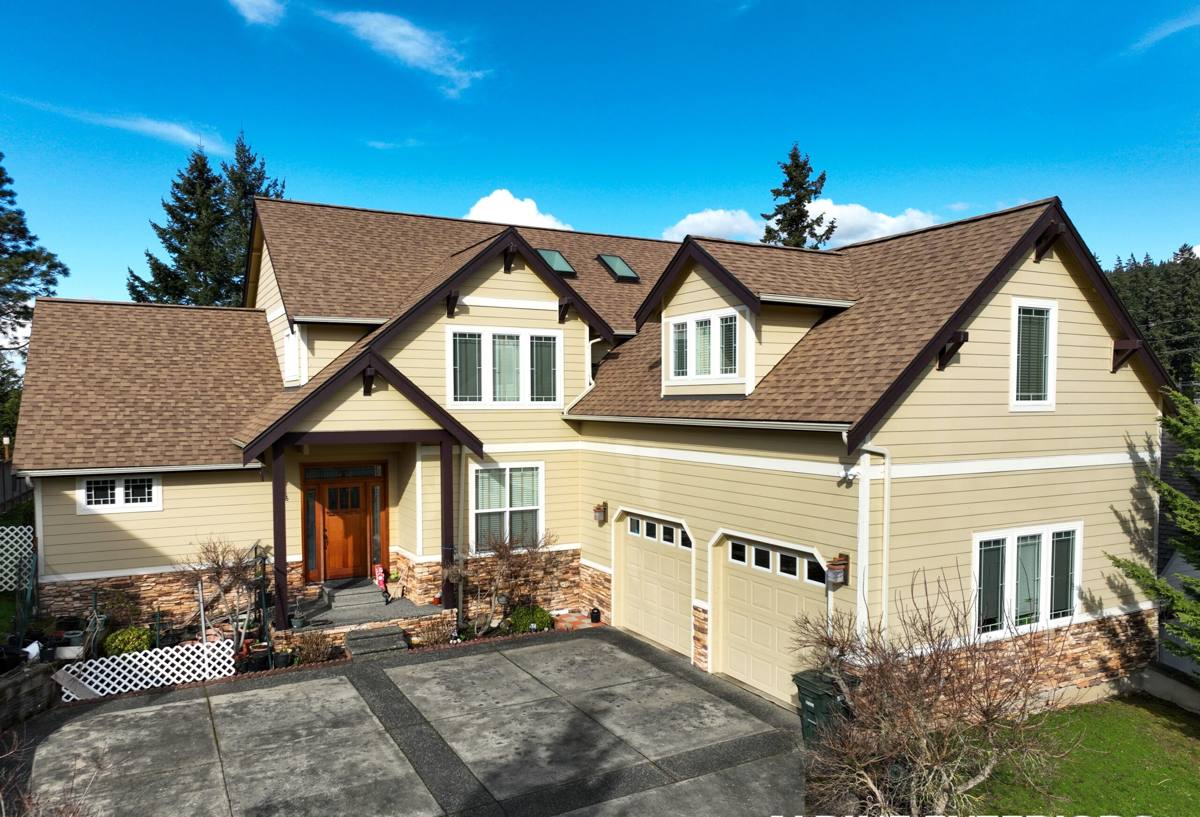
The housing stock in Columbia City ranges from early-1900s bungalows and Craftsman homes to newer infill construction, often on lots with mature trees, sloped yards, or limited direct sun. That mix creates a few recurring patterns we see on deck projects in this neighborhood:
- Shaded or partially shaded decks that stay damp longer after rain and are more prone to moss and algae growth
- Older homes where the ledger board attachment to the house needs careful evaluation before a deck can be safely reattached or expanded
- Sloped or uneven lots requiring engineered footings and post heights rather than a simple flat-ground build
- Limited side-yard or backyard access, which affects how materials and equipment get to the build site
- A mix of older wood decks being replaced and new decks being added to homes that never had one
None of these are unusual problems, but each one changes how the deck should be framed, fastened, and finished. Treating a Columbia City lot the same way you'd treat a flat, open, full-sun lot elsewhere in King County is where a lot of deck problems start.
Moisture Is the Real Design Constraint
Everything about a good deck in this region comes back to managing moisture: how fast water sheds off the surface, how well air can move underneath and around framing, and how resistant the fasteners and connectors are to corrosion over years of damp exposure. A deck that looks identical to one built in a dry climate can perform very differently here if those details were skipped.
Decking Material Options
There's no single "best" decking material — the right choice depends on your budget, how much upkeep you want to do, and how much sun or shade the deck gets. Here's how the common options actually compare for a Columbia City yard.
| Material | Upfront Cost | Maintenance | Moisture & Moss Behavior |
|---|---|---|---|
| Pressure-treated wood | Lowest | Needs cleaning and re-sealing every 1-2 years | Absorbs moisture readily; prone to moss in shaded areas without upkeep |
| Cedar | Moderate | Periodic staining/sealing to maintain appearance and resist rot | Naturally more rot-resistant than PT wood, but still needs sealing in our climate |
| Composite decking | Higher | Occasional washing; no staining or sealing | Sheds water well; some boards can still develop surface algae in deep shade if not cleaned |
| PVC/capped composite | Highest | Lowest — mostly rinsing | Best moisture resistance of the group; least prone to moss retention |
We'll walk through these trade-offs honestly during your estimate. If a homeowner wants pressure-treated wood to keep costs down, we'll tell them exactly what maintenance schedule keeps it performing well here — we're not going to talk anyone into a product they don't want, but we also won't let a client choose a material without understanding what it actually takes to keep it looking good through a Seattle winter.
Framing and Fasteners: Where Deck Failures Actually Start
Most deck problems we get called out to repair in this region don't start at the decking boards — they start underneath, where nobody looks. A few details matter more here than in drier climates:
Ledger Board Attachment
The ledger board — where the deck attaches to the house — is the single most safety-critical connection on the structure. On older Columbia City homes, this means properly flashing the connection so rainwater can't get behind the ledger and into the house framing, and using lag bolts or through-bolts rated for the load rather than relying on nails.
Fastener Corrosion Resistance
Standard fasteners corrode faster in our humid, marine-influenced air, especially in coastal-adjacent King County neighborhoods. We use hot-dipped galvanized or stainless hardware rated for treated lumber contact so screws and joist hangers don't fail years before the decking itself does.
Airflow Underneath the Deck
A deck built low to the ground with poor ventilation underneath traps moisture against the framing, which is exactly the setup that produces rot and mold in a wet climate. Proper post height, joist spacing, and ground clearance let air move through and dry the structure out between rain events.
Footings on Sloped or Soft Ground
Many Columbia City lots aren't perfectly flat. Footings need to be sized and set to local frost depth and soil conditions, not just poured to a generic depth, especially on a slope where drainage and soil movement are bigger factors.
Design Choices That Fight Moss and Slickness
Moss isn't just cosmetic — a mossy deck surface gets genuinely slippery in the rain, and moss that's allowed to sit holds moisture against the boards. A few design decisions reduce how much of a problem this becomes over the life of the deck:
- Orienting board spacing and drainage gaps so water sheds off the surface instead of pooling
- Choosing decking profiles with grooved or textured surfaces in shaded areas for better grip when wet
- Trimming back overhanging branches where possible to let more light and airflow reach the deck surface
- Sizing gaps between boards correctly so debris doesn't pack in and hold moisture
- Considering composite or capped material in the shadiest parts of the yard, where wood maintenance is hardest to keep up with
None of this eliminates moss entirely in a shaded Seattle yard — that's just the climate we live in — but the right build makes a real difference in how often you're out there scrubbing the surface.
Our Process for a Columbia City Deck Project
- On-site assessment. We look at your lot's slope, sun exposure, existing structure (if replacing a deck), and how the house's ledger and drainage are set up.
- Honest material and design conversation. We walk through decking material options, layout, railing style, and any code or permit requirements for your specific project.
- Written estimate. A clear scope and price before any work starts — no surprise add-ons for basics that should have been included from the start.
- Permitting. Many deck projects in Seattle require a permit depending on size and height; we handle that process rather than leaving it to the homeowner to sort out.
- Demolition (if applicable). Careful removal of an old deck, checking the ledger and framing underneath for hidden rot before rebuilding.
- Framing and structural work. Properly flashed ledger, corrosion-resistant fasteners, correctly sized footings, and adequate under-deck airflow.
- Decking, railing, and finish work. Installed to the drainage and spacing details that matter in a wet climate.
- Final walkthrough. We go over maintenance expectations for whatever material you chose, so there are no surprises a year in.
What a Correct Deck Job Actually Involves
It's worth being direct about this: a deck is a structural project, not just a surface installation. A crew that only focuses on how the decking boards look on top, without getting the ledger, footings, fasteners, and drainage right underneath, is building something that will look fine for a season or two and then start showing problems that are expensive to fix later — often more expensive than doing it right the first time would have cost.
A correct job means the structural bones are sized for your actual lot and load, the connection to your house is properly flashed and bolted, the hardware is rated for long-term wet exposure, and the surface material was chosen with an honest conversation about what upkeep it requires in this climate — not just what looks best in a sample photo.
Maintenance Checklist for Puget Sound Decks
Whatever material you choose, a little seasonal attention goes a long way in King County's climate. This is the kind of checklist we walk clients through after a build:
- Clear leaves and debris from between boards regularly, especially in fall
- Sweep or rinse off moss and algae growth before it builds up, particularly in shaded corners
- Check that gutters and downspouts aren't draining directly onto or under the deck
- Inspect fasteners and railing connections annually for corrosion or loosening
- Re-seal or re-stain wood decking on the schedule appropriate to that material — don't wait until it's visibly gray and dry
- Keep an eye on the ledger board area for any signs of moisture intrusion where the deck meets the house
Why a Crew That Already Works Columbia City Matters
Building a deck that holds up here isn't about a secret technique — it's about not skipping the details that matter for this specific climate: flashing the ledger correctly, using the right fasteners, sizing footings for local soil and slope conditions, and being honest about what each decking material will actually require from you over time. A crew that regularly works Seattle and King County neighborhoods like Columbia City has already seen what fails here and builds to avoid it from day one, rather than learning those lessons on your project.
We're familiar with the permitting expectations, the range of lot conditions in this neighborhood, and the maintenance realities of a long Pacific Northwest wet season. That local familiarity shows up in fewer surprises during the build and a deck that's still performing well well past the first few winters.
If you're planning a new deck or replacing one that's showing its age, we're happy to come take a look and give you a straightforward, no-pressure estimate — just fill out the form below.