 Seattle Exterior
 Building Decks for Ballard's Marine Climate
Ballard sits close to the water, and that proximity shapes everything about how a deck ages here. Salt-laden air off Puget Sound and the ship canal accelerates corrosion on fasteners and hardware faster than it would a few miles inland. Add Seattle's long, wet fall-through-spring stretch and the moss and algae growth that comes with it, and you have a climate that is genuinely harder on outdoor structures than most homeowners realize until their deck starts showing problems in year three or four instead of year ten.
A custom deck built for Ballard isn't just a platform with railings. It's a system of framing, fasteners, decking, and drainage details chosen specifically to shed water fast, resist corrosion, and stay walkable when it's covered in wet moss half the year. We build decks across King County, but the specifics of a Ballard job — proximity to salt air, exposure, tree cover, and drainage — change real decisions about what goes into the ground and what goes on top of it.
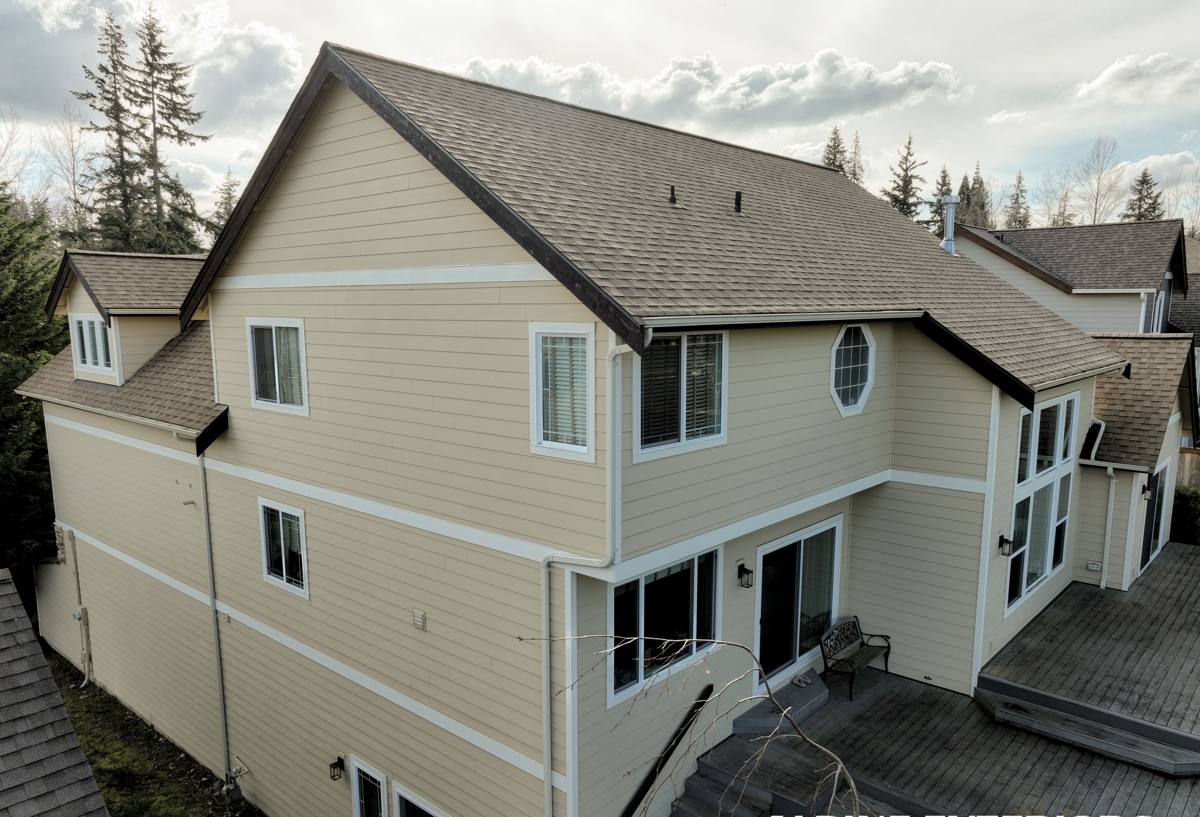
What Ballard's Climate Does to an Ordinary Deck
Salt Air and Corrosion
Homes closer to the water see faster breakdown of standard galvanized hardware — joist hangers, screws, bolts — than homes even a mile or two inland. Once corrosion starts on a structural fastener, it's not cosmetic; it's a slow loss of load capacity. This is one of the most common issues we find on older Ballard decks during inspections: fasteners that look fine from a distance but are pitted and weakening underneath.
Driving Rain and Standing Water
Seattle rain isn't always gentle. Wind-driven rain off the Sound pushes water sideways into ledger connections, under poorly flashed rim joists, and into any gap where end grain is exposed. Decks that don't shed water efficiently end up with soft spots, delaminating fastener holes, and rot starting from the inside of a board rather than the surface.
Moss, Algae, and the Long Wet Season
Shaded yards and tree cover, common in Ballard's older residential blocks, keep decking damp for days after rain stops. That moisture, combined with organic debris, is exactly what moss and algae need. Beyond the slip hazard, moss holds water against the board surface, which shortens the life of both wood and composite decking if the wrong profile or finish was chosen.
What a Correctly Built Ballard Deck Requires
- Stainless or heavy-duty coated fasteners and hardware rated for coastal/marine exposure — not standard galvanized, which corrodes faster in salt air
- Proper ledger flashing with a drainage gap or standoff system so water sheds away from the house band board instead of soaking it
- Joist tape or a sealed top-cut on every joist to stop water from wicking into end grain, the single most common rot starting point
- Decking with a grippy, textured surface profile that stays safer underfoot when wet or mossy
- Ventilation underneath the deck so airflow can dry out the framing between rain events instead of trapping moisture
- A footing and post-base detail that keeps wood from sitting in contact with wet soil or standing water
Skip any one of these and the deck will still look fine on installation day — the failures show up two, five, or eight years later, which is exactly why cutting corners on a deck build is such an expensive mistake to inherit from a previous contractor.
Choosing Materials: What We Recommend and Why
There's no single right material for every Ballard project — it depends on budget, sun exposure, tree cover, and how much upkeep a homeowner actually wants to do. Here's how the common options compare for this specific climate:
| Material | Moisture/Moss Behavior | Maintenance | Best Fit |
|---|---|---|---|
| Pressure-treated lumber | Needs sealing to resist moss staining and cupping | Annual cleaning, periodic re-sealing | Budget-conscious builds, sunnier lots |
| Cedar | Naturally rot-resistant but still absorbs moisture; can gray or spot in shade | Regular cleaning and oiling to keep color and grip | Homeowners who want a natural look and will maintain it |
| Composite decking | Won't rot, but needs a textured, moss-resistant profile — smooth composites get slick fast in shade | Occasional washing, no sealing or staining | Shaded yards, low-maintenance priorities, long-term owners |
| PVC decking | Fully moisture-resistant, resists staining well | Lowest maintenance of the group | High-exposure or heavily shaded sites where upkeep is a dealbreaker |
We don't push one material on every job. What we push is matching the material to the actual site conditions — a deck under a mature tree canopy needs a different surface than one in full sun, even on the same street.
Framing and Fasteners: The Part Nobody Sees Until It Fails
Most deck problems in this region aren't decking problems — they're framing and fastener problems hiding under a deck that still looks good on top. For Ballard specifically, we treat the substructure as the priority:
- Hardware rated for coastal exposure on every structural connection, not just the visible ones
- Ledger boards properly flashed and separated from the house wall to prevent trapped moisture against the siding
- Joist protection on all cut ends and top surfaces, since end grain is where rot starts fastest
- Post bases that keep wood posts elevated off concrete or soil contact
This is also where we see the most corner-cutting from past builds. A deck can pass a casual look and still have standard hardware rusting away underneath, which is one of the most common findings when we're called out to assess an older deck before a remodel or addition.
Drainage, Grading, and Moss Prevention by Design
You can't fully stop moss spores from landing on a deck in a wet Pacific Northwest climate, but you can design a deck that doesn't hold onto moisture long enough for moss to take hold. That means correct board spacing for drainage, a surface profile that doesn't trap grime in deep grooves, and — where the site allows — enough clearance and airflow underneath to let things dry out between storms. On shaded lots, we'll also talk through realistic expectations: even a well-built deck under heavy tree cover will need periodic cleaning, and no material eliminates that need entirely.
Our Process for a Ballard Deck Build
- On-site assessment — we look at sun/shade exposure, tree cover, drainage slope, and how close the site is to open water or salt air exposure
- Design and material selection — sized and laid out for how the space will actually be used, with material recommendations matched to the site's real conditions
- Permitting — we handle the permit process through the City of Seattle for jobs that require it, so the homeowner isn't stuck navigating that alone
- Build — substructure first, with coastal-rated hardware and proper flashing details, then decking, railings, and finish work
- Final walkthrough — we go over maintenance expectations specific to the material chosen, so there are no surprises about upkeep down the road
Why Local Deck-Building Experience Matters in Ballard
A crew that only occasionally works this close to the water will default to standard-spec hardware and standard installation details, because that's what works in drier, inland parts of the country. A crew that regularly works Ballard and similar Seattle neighborhoods builds in the corrosion resistance, drainage detailing, and moss-conscious material choices by default — not as an upsell, but because we've seen what standard-spec builds look like five years later in this climate. That local pattern recognition is the difference between a deck that needs major repair in year five and one that's still solid at year twenty.
Maintenance: What Ballard Homeowners Should Actually Expect
Even a correctly built deck needs some seasonal attention in this climate. A realistic maintenance rhythm looks like:
- Clear leaves and debris from between boards each fall before the wet season sets in
- Rinse or lightly scrub visible moss or algae buildup, especially on shaded sections
- Check railings and stair connections annually for looseness
- Re-seal or re-stain wood decking on the schedule appropriate to that product — composite and PVC skip this step entirely
- Keep gutters and downspouts near the deck clear so runoff isn't dumping extra water onto or under the structure
If you're weighing a new deck, a rebuild, or just want a straight answer on whether your current deck's framing is holding up, we're happy to take a look. Reach out for a free, no-pressure estimate — we'll walk the site, talk through what actually makes sense for your yard's exposure and budget, and give you a straightforward assessment before you decide anything.