 Seattle Exterior
 Building Decks That Hold Up in Kirkland's Climate
Kirkland sits close enough to Lake Washington and the Puget Sound air mass that its homes deal with a specific combination of moisture problems: near-constant damp air, driving rain that comes in sideways off the water during winter storms, and a moss season that can stretch from October well into May. A deck built with generic framing details or the wrong fastener spec might look fine the first summer and start showing rot, staining, or soft spots within a few years. Building a deck correctly here isn't about using fancier materials than anywhere else — it's about respecting how much water this region throws at a structure and how long that water sits before it dries.
We've worked on homes throughout Kirkland long enough to know which details actually matter locally: ledger board flashing that won't let water track back into the house rim joist, joist spacing and hardware that account for our damp-then-dry freeze cycles, and surface materials that don't turn into a moss farm by January. This page walks through what a properly built Kirkland deck actually requires, not a generic national checklist.
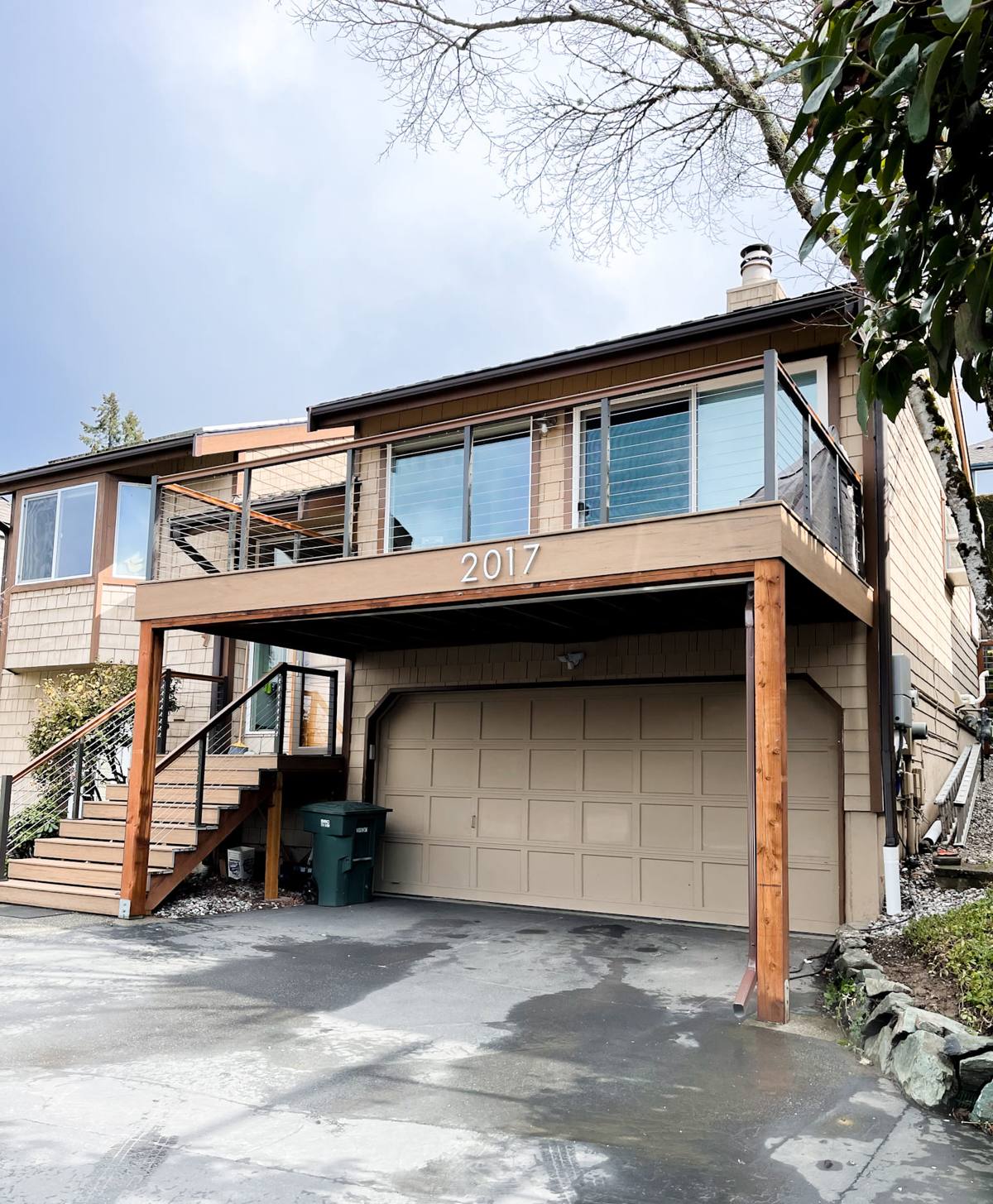
What Kirkland's Weather Does to an Improperly Built Deck
Most deck failures we get called out to repair in this area trace back to a handful of recurring causes, all tied to moisture:
- Ledger board rot — where the deck attaches to the house is the single most common failure point when flashing is missing, undersized, or installed in the wrong order relative to the house's own weather barrier.
- Trapped moisture under decking boards — tight board spacing or the wrong decking profile holds water against the joists long after a rainstorm has passed, which is common with our extended wet stretches.
- Moss and algae buildup — north-facing decks, or decks shaded by mature trees (common on older Kirkland lots), stay damp for days at a time, and moss takes hold on surfaces that don't drain or dry quickly.
- Corroded fasteners — cheap or mismatched hardware corrodes faster than the wood around it in a marine-influenced climate, eventually causing loose railings or squeaking, shifting boards.
- Undersized footings in expansive or wet soils — some Kirkland lots have clay-heavy or poorly draining soil that shifts seasonally; footings poured too shallow or without proper drainage can heave slightly over time.
None of these are exotic problems. They're the predictable result of building a deck the same way you'd build one in a dry climate, then hoping it holds up somewhere that gets months of steady rain.
What a Correctly Built Deck Requires Here
Ledger Attachment and Flashing
The ledger board — the point where the deck ties into the house — is where water intrusion does the most expensive damage, because it's hidden and it's connected directly to the home's structure. A correct installation uses proper flashing integrated with the house's existing water-resistive barrier, not just caulk over a lag-bolted board. We also confirm the ledger connection is engineered for the actual load, not just bolted on by feel.
Framing and Fastener Selection
Joists, beams, and posts need to be sized for the actual span and load, and every piece of hardware — joist hangers, structural screws, post bases — should be rated for outdoor, damp-climate exposure. In a region where a deck sits wet more often than it sits dry, mismatched or under-rated fasteners are one of the cheapest things to get right and one of the most expensive things to fix later.
Drainage Beneath the Deck
Water needs somewhere to go. That means proper board spacing for the decking material chosen, grading beneath the deck so water doesn't pool against posts or footings, and in some cases an under-deck drainage system if the space below is meant to stay usable and dry.
Footings Sized for Kirkland Soil
Footing depth and diameter should match both the structural load and the soil conditions on your specific lot. Some King County lots have soil that holds moisture and shifts seasonally more than others — this is a case-by-case judgment made on-site, not a one-size answer.
Surface Material Suited to Moss Season
The decking surface itself has the biggest visible impact on how the deck looks and performs through a wet winter. We'll cover material trade-offs in the next section, but the short version: whatever you choose, it needs to shed water and resist moss growth without demanding a maintenance routine you won't actually keep up with.
Decking Material Options and Trade-Offs
There's no universally "best" decking material — there's the right material for your budget, your maintenance appetite, and how much sun versus shade your deck actually gets. Here's how the common options compare for a Kirkland property specifically.
| Material | Moss/Moisture Behavior | Maintenance | Typical Lifespan |
|---|---|---|---|
| Pressure-treated wood | Absorbs moisture; needs sealing to resist moss and staining | Annual cleaning and periodic sealing/staining | 15–20 years with upkeep |
| Cedar | Naturally moisture-resistant but still needs surface care in shaded, damp spots | Periodic sealing or staining to hold color and resist graying | 15–20 years with upkeep |
| Composite decking | Sheds water well; still needs occasional cleaning to prevent surface moss film | Low — occasional washing, no staining or sealing | 25–30+ years, varies by product warranty |
| PVC/capped polymer | Best moisture shedding of common options; minimal absorption | Low — periodic washing | 25–30+ years, varies by product warranty |
On heavily shaded lots — which describes a fair number of Kirkland properties with mature landscaping — we lean toward recommending composite or capped polymer decking, simply because it holds up better against months of standing shade and damp without demanding constant attention. On sunnier, more exposed lots, a well-sealed wood deck can perform very well and gives a warmer, more traditional look many homeowners prefer. We'll walk your specific site conditions with you rather than pushing one material by default.
Railings, Fasteners, and Hardware
Railings and stairs take as much weather exposure as the decking surface, and they're a safety component, not just an aesthetic one. We use fasteners and connectors rated for exterior, damp-climate use throughout — not just at the ledger. Loose railings and squeaking stair stringers are almost always a sign that standard interior-grade or mismatched hardware was used somewhere it shouldn't have been.
Our Process for Kirkland Deck Projects
- On-site assessment — we look at your lot's sun exposure, shade pattern, soil condition, and how the deck will tie into your home's existing structure and drainage.
- Material and design conversation — we walk through decking, railing, and layout options based on your budget and how much upkeep you actually want to do, not a one-size pitch.
- Permitting — most deck construction and reconstruction in Kirkland requires a permit through the City of Kirkland; we handle that process so the structure is inspected and legally sound.
- Framing and structural work — footings, posts, beams, joists, and ledger flashing installed to spec, with attention to the drainage and fastener details covered above.
- Decking, railing, and finish work — surface material installed with correct spacing and fastening, railings set, and any stairs or additional structures completed.
- Final walkthrough — we go over the finished deck with you, including realistic maintenance expectations for your specific material and site conditions.
Maintenance That Actually Matters Here
A deck's long-term performance in this climate depends as much on upkeep as on how it was built. A simple, realistic maintenance checklist for a Kirkland deck:
- Sweep or blow off leaves and debris regularly through fall — trapped organic material holds moisture and feeds moss growth.
- Rinse the surface periodically during the wet months, especially on shaded sections, to keep moss and algae from taking hold.
- Check and re-seal or re-stain wood decking on the manufacturer or installer's recommended schedule — don't wait until it's visibly gray or worn.
- Inspect railings and stair connections once a year for looseness, which can signal fastener corrosion.
- Confirm drainage paths beneath and around the deck aren't blocked by landscaping, mulch buildup, or debris.
- Look at the ledger flashing area annually where the deck meets the house — this is the spot most worth a close look before problems become structural.
Why Local Experience Matters for This Job
Deck building looks similar on paper across the country, but the details that make a deck last are regional. A crew that builds mostly in drier climates may not default to the flashing details, fastener grades, or drainage planning that a wet, moss-prone environment like ours actually requires. Working with a contractor who already builds decks throughout Kirkland and the wider Seattle area means those details aren't an afterthought — they're the baseline. We're familiar with the City of Kirkland's permitting expectations, the soil and drainage patterns common across King County lots, and the kind of shade-and-moisture combinations that show up on established, tree-lined properties in this area.
Salt-influenced air off the Sound, driving winter rain, and a moss season that can run more than half the year aren't obstacles to a good deck — they're just conditions that have to be designed around from the start. That's the standard we build to on every Kirkland project, whether it's a new deck, a full rebuild, or a repair to something that wasn't originally built with these conditions in mind.
If you're planning a new deck or need an honest look at one that's showing its age, we're happy to come out, walk the site, and give you a straightforward assessment. Use the form below to request a free, no-pressure estimate.