 Seattle Exterior
 Fremont Decks Face a Specific Kind of Wear
Fremont sits close to the Ship Canal and Lake Union, wrapped in mature tree cover that makes the neighborhood beautiful and shady — and hard on wood. Add in the salt air that drifts off Puget Sound, driving rain off the Sound most of the year, and a moss season that can run from October well into spring, and you have a climate that never really lets a deck dry out completely. That's the core problem with deck repair in Seattle generally, but it shows up in a particular way in Fremont: shaded lots, older homes, and hillside grading that concentrates water runoff exactly where a deck's structure is most vulnerable.
We work on decks across King County, but Fremont has its own pattern of damage. Homes here tend to be older craftsman and bungalow-style houses with decks added or rebuilt over the decades, often without the flashing or drainage details that current code requires. Tree canopy keeps sun off the boards for long stretches of the day, which sounds like a benefit until you realize it also means decking and framing stay damp far longer after every rain. That combination — shade plus moisture plus age — is exactly what accelerates rot, moss growth, and fastener failure.
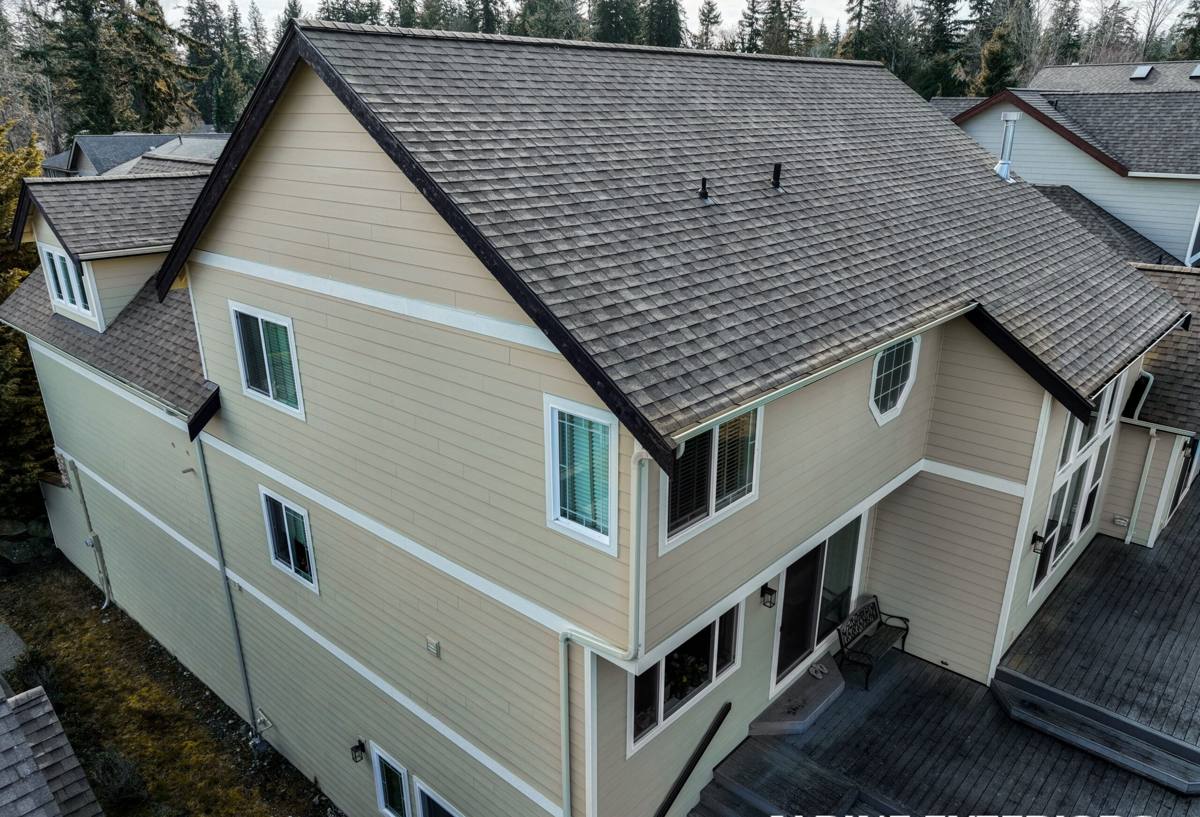
Signs a Fremont Deck Needs Repair
Most deck problems don't announce themselves with a collapse. They show up as small, easy-to-ignore signals first. If you're seeing any of the following, it's worth having someone look underneath the deck, not just at the surface:
- Soft or spongy spots in the decking boards, especially near the house or in shaded corners
- Green or black staining that keeps coming back within weeks of cleaning
- Railings or stair stringers that flex or feel loose when you grab them
- Gaps opening up between the deck and the house siding or ledger board
- Fasteners with rust streaks bleeding down the face of the boards
- Standing water that doesn't drain within an hour or two after rain stops
- A musty smell coming from underneath the deck or from a crawlspace beneath it
Any one of these on its own might be minor. Several together, especially on an older deck, usually means the damage has moved past the surface and into the framing.
Where the Real Damage Hides
The Ledger Board
The ledger is the board that bolts the deck to the house, and it's the single most common point of failure we find on repair calls. If it was installed without proper flashing — common on decks built or rebuilt before current code updates — water runs behind it every time it rains and slowly rots the framing from the inside. By the time you see staining on the siding above the deck, the ledger connection may already be compromised.
Support Posts and Footings
Fremont's hillside lots mean a lot of decks are built with taller posts and footings set into slopes where water naturally collects. Posts set directly in concrete without a proper standoff, or footings that were never poured to the frost line, are common culprits behind a deck that feels like it's settling or leaning.
Joists and Beam Connections
Moss and shade keep joist tops damp long after the surface boards look dry. Once moisture gets past the decking, it sits on the joists and beam connections, where rot can spread for a long time before anyone notices — usually because it's hidden under the boards.
Railings and Stairs
These take the most direct stress from daily use and often use smaller fasteners that corrode faster. On older Fremont decks we frequently find railing posts that were never through-bolted, just toe-nailed or screwed into rim joists that have since softened.
What a Correct Repair Actually Involves
A quick fix — swapping a few obviously rotten boards and calling it done — often just delays the real problem. A correct repair starts from the structure and works outward:
- Full inspection from underneath. We check the ledger connection, flashing, posts, footings, joists, and beam before touching the surface. This is where the actual condition of the deck lives, not on top.
- Moisture and rot mapping. We probe suspect areas to find the real boundary of damaged wood, not just what's visibly discolored. Rot often extends past where it's visible.
- Structural correction first. Any compromised framing, ledger flashing, or footing issue gets addressed before cosmetic work, since surface repairs on a weak structure just fail again.
- Fastener and connector upgrades. Old nails and undersized screws get replaced with corrosion-resistant fasteners and code-appropriate structural connectors sized for the load they're carrying.
- Drainage correction. Where water pooling caused the original damage, we address the slope, gaps, or flashing detail so the same spot doesn't fail again in two years.
- Surface repair or replacement. Only after the structure is sound do we move to decking boards, railings, and finish work.
Repair or Replace? Honest Cost Factors
Not every deck problem calls for a full rebuild, and not every repair is worth doing on a deck that's reached the end of its useful life. These are the factors that actually drive that decision:
| Factor | Leans Toward Repair | Leans Toward Replacement |
|---|---|---|
| Extent of rot | Isolated to a few boards or one framing member | Rot found at multiple structural points (ledger, posts, joists) |
| Deck age | Under 15 years, built to a reasonable standard | Original construction predates current code, or age unknown |
| Ledger condition | Properly flashed, dry behind the board | No flashing, or active water intrusion behind the ledger |
| Footings/posts | Solid, set to proper depth, no movement | Undersized, shifting, or set without standoffs |
| Overall footprint | You're happy with the current size and layout | You want a different size, shape, or added stairs/railing |
As a rough rule: if the framing and footings are sound and the damage is limited to boards, railings, or fasteners, repair is usually the honest recommendation. Once the ledger or multiple structural members are compromised, patchwork repairs tend to cost more over a few years than doing the job once, correctly.
Decking Material Trade-Offs
When we're replacing boards during a repair, homeowners usually ask about wood versus composite. There's no universally "right" answer — it depends on how much upkeep you want to take on.
| Wood (cedar/treated) | Composite | |
|---|---|---|
| Upfront cost | Lower | Higher |
| Moss/algae resistance | Needs regular cleaning and sealing in shaded, damp spots | More resistant, but still needs periodic washing in heavy shade |
| Maintenance | Annual cleaning, periodic sealing or staining | Low — mostly occasional washing |
| Repairability | Easy to replace individual boards to match | Can be harder to color-match older boards later |
| Typical lifespan | 10–20 years with upkeep | 25+ years, manufacturer-dependent |
We install both, and we'll tell you plainly which one fits your situation rather than pushing whatever's easiest for us to install. A heavily shaded Fremont deck that never fully dries out is often a better candidate for composite simply because it tolerates persistent moisture with less maintenance — but that's a maintenance conversation, not a claim that wood decking is a bad product.
Our Repair Process
The process is the same whether the job is a handful of boards or a partial rebuild:
- Inspection and estimate: We look at the deck from top and bottom, explain what we find in plain terms, and give you a written scope before any work starts.
- Scope confirmation: You'll know exactly what's being repaired, what's being replaced, and why — no surprise change orders for things we should have caught up front.
- Structural work first: Framing, flashing, and connector issues get corrected before any cosmetic work begins.
- Surface and finish work: Board replacement, railing repair, and any staining or sealing happens once the structure is sound.
- Final walkthrough: We go over the completed repair with you and flag anything worth watching or maintaining going forward.
Maintaining a Deck Through Fremont's Moss Season
Even a correctly repaired deck needs some seasonal attention in a climate like this. A short list that actually makes a difference:
- Sweep leaves and debris off the deck regularly through fall — trapped organic matter holds moisture and feeds moss
- Clean moss and algae off boards before it builds a thick mat, using a deck-safe cleaner rather than a pressure washer set too aggressively
- Keep gutters and downspouts near the deck clear so water isn't dumping directly onto or under it
- Check that gaps between boards are clear so water can drain through rather than sitting on the surface
- Reseal or restain wood decking on the schedule the product calls for — skipping a cycle in this climate shortens its life fast
- Look underneath once a year, especially at the ledger and post bases, so small problems get caught before they're expensive ones
Permits and Code Considerations
Structural deck repairs — replacing a ledger connection, altering footings, or rebuilding railings — typically require a permit and inspection under Seattle's building code, even when the footprint of the deck isn't changing. Skipping this step on structural work isn't just a paperwork issue; it can affect your homeowner's insurance and create problems when you sell the house. We handle the permitting on structural repairs so you don't have to navigate that process yourself, and we build to current code rather than just matching whatever was there before.
Why Local Experience in Fremont Matters
A contractor who mostly works drier neighborhoods east of Lake Washington sees a different failure pattern than one who works Fremont's shaded, hillside lots week in and week out. We know to check ledger flashing first on older homes here, to expect moss buildup in north-facing corners, and to look closely at footings on sloped lots where drainage concentrates. That local pattern recognition is the difference between a repair that guesses at the cause and one that actually addresses it — and it's why homeowners in this neighborhood keep calling the same crew back rather than starting over with someone new every time.
If your deck is showing soft spots, persistent moss, loose railings, or you just haven't had it looked at from underneath in a few years, we're happy to take a look. The estimate is free, there's no pressure to do more work than the deck actually needs, and you'll get a straight answer about what's structural and what can wait. Use the form below to get started.