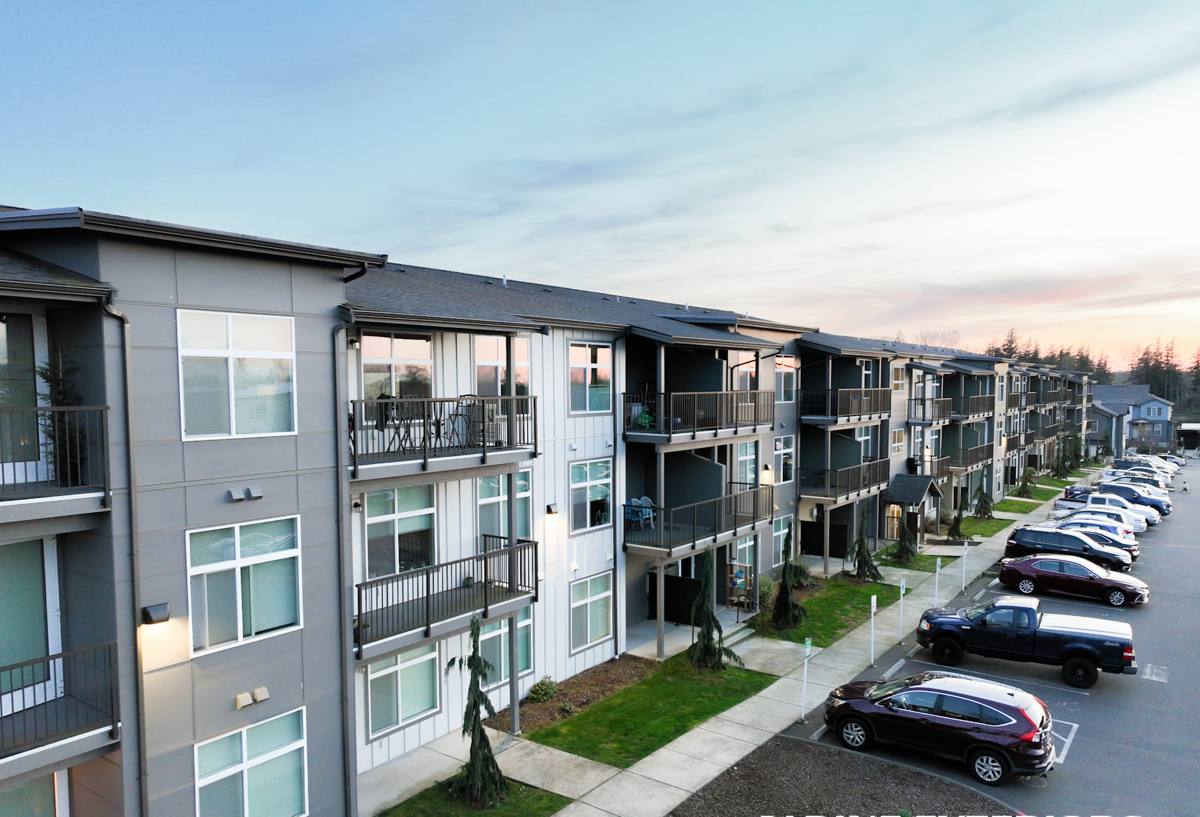
 Seattle Exterior
 Why Green Lake Homes Need Windows Built for This Climate
Green Lake sits in a part of Seattle that feels sheltered — a neighborhood ring around a freshwater lake, plenty of tree cover, a mix of older bungalows and newer infill homes. But "sheltered" doesn't mean "dry." King County's marine climate pushes damp, salt-tinged air in off the Sound and up through the region for months at a time, and Green Lake gets its full share of the driving rain that comes with it. Add a long, mossy shoulder season where surfaces rarely get a real chance to dry out, and you have a climate that is quietly hard on window assemblies, even when nothing looks wrong from the curb.
Windows fail here in specific ways. Wood sashes swell and stick. Aluminum frames from the 1970s and 80s conduct cold straight through and sweat on the inside. Vinyl units installed without proper flashing let wind-driven rain track behind the trim instead of shedding off the face of the wall. None of this is dramatic — it's slow, and that's exactly why it gets missed until there's a soft spot in the sill or a stain creeping down the interior wall.
Signs Your Green Lake Home's Windows Are Losing the Battle
- Condensation between the glass panes (a failed seal, not a cleaning problem)
- Soft or spongy wood at the sill or the bottom corners of the frame
- Visible daylight or a draft you can feel with your hand along the frame edge
- Paint that bubbles or peels specifically around the window opening, not the whole wall
- A musty smell in the room during or after heavy rain
- Moss or dark streaking building up on the exterior trim faster than the rest of the siding
Any one of these on its own might not mean much. Two or three together, especially on a window facing the prevailing weather, usually means the assembly is compromised and repainting or caulking over it will only buy a season or two.
What a Correct Window Installation Actually Involves
Window installation looks simple from the outside — take the old one out, put the new one in. The part that actually determines whether it lasts fifteen years or fails in three happens where you can't see it: the flashing, the shimming, and the sealing. In a climate like Seattle's, those details matter more than the brand of glass.
Flashing and Weather Barrier Detail
Every window opening needs a drainage plane that assumes water will get behind the siding eventually, and gives it a way out instead of a place to collect. That means sill pan flashing under the rough opening, house wrap or building paper integrated correctly with the window's nailing flange, and flashing tape lapped shingle-style so water always moves down and out, never sideways into the wall cavity. Skipping or rushing this step is the single most common reason a "new" window causes a rot problem five years later.
Sizing, Squaring, and Shimming
A window that's shimmed out of square will bind, won't lock tight, and will stress the seals around the glass unit prematurely. Getting the rough opening right, checking level and plumb on all four sides, and shimming at the right load points keeps the sash operating smoothly and keeps the manufacturer's warranty intact — most warranties have installation requirements that get voided by shortcuts here.
Sealing Without Trapping Moisture
Interior sealing should air-seal the gap between the frame and the rough opening. Exterior sealing should manage water, not trap it. The mistake we see most often on older Green Lake homes is caulk applied all the way around the exterior trim with no weep path — that traps any moisture that does get in and rots the sill from behind, invisibly, until the damage is already extensive.
Material and Frame Options for Seattle's Climate
There's no single "best" window material — the right choice depends on the home's age, your budget, and how much upkeep you want to take on. Here's how the common options actually perform in a wet, mossy, marine climate like ours.
| Frame Material | Moisture Behavior | Maintenance | Best Fit |
|---|---|---|---|
| Vinyl | Won't rot, but seams need to be installed correctly to stay watertight | Low — occasional cleaning | Most retrofit and replacement projects |
| Fiberglass | Very stable in wet/dry cycling, minimal expansion or contraction | Low | Homes wanting a longer-term, low-drama option |
| Wood (clad exterior) | Good if the exterior cladding is intact; exposed wood needs vigilant upkeep | Moderate to high | Historic or character homes where wood interior look matters |
| Aluminum | Conducts cold, prone to condensation in our damp winters | Low, but performance issues persist regardless | Rarely our recommendation for this climate |
We don't push one brand or material as universally superior — the trade-offs are real in every direction, and we'd rather explain them than oversell. Our professional standard is that whatever material you choose, the installation detail is what determines whether it performs here.
Our Process From First Call to Final Walkthrough
- Assessment: We look at each window opening individually — sill condition, existing flashing (or lack of it), and how the current unit is performing, not just its age.
- Honest scope: We tell you which windows genuinely need replacement now, which can wait, and which just need re-caulking or a hardware fix. Not every window on a rain-exposed wall needs the same treatment as one under an eave.
- Plan and quote: A written estimate covering material options, expected timeline, and what happens to existing trim and interior finish work.
- Removal and opening prep: Old units come out carefully to protect siding and interior finishes; any rot found in the process gets flagged before we cover it back up, not after.
- Flashing and installation: Sill pan, integrated weather barrier, correct shimming and squaring, then the window itself.
- Sealing and trim: Exterior sealed with proper weep paths, interior trimmed and finished to match.
- Walkthrough: We operate every window with you before we call the job done — locks, sashes, screens, everything.
Single Window Repair vs. Full-Home Replacement
One of the most common questions we get from Green Lake homeowners is whether to replace one failing window now or plan for the whole house at once. There's no single right answer, but the factors below help frame the decision honestly.
| Factor | Favors Single/Phased Replacement | Favors Full-Home Replacement |
|---|---|---|
| Age of existing windows | Mixed ages, some newer units still performing well | Most windows original and same age/type |
| Budget timing | Spreading cost over a year or more | One mobilization, one disruption period |
| Visible damage pattern | Only one or two exposed elevations showing wear | Rot or seal failure showing up across multiple rooms |
| Energy performance goals | Targeting the worst offenders first | Consistent performance and appearance across the home |
Phasing by exposure often makes sense here — start with the walls that take the most driving rain and wind, since those windows fail fastest, and plan the rest around your budget rather than doing everything at once out of urgency that isn't there yet.
Why a Crew That Already Works Green Lake Matters
Window installation isn't a one-size-fits-all trade, and a neighborhood like Green Lake has its own mix of housing stock — older single-family homes near the lake loop, denser infill construction further out, and everything in between. A crew that's already worked in the area knows what to expect opening up a wall from the 1940s versus a 2015 build, knows which elevations in this part of Seattle tend to take the worst weather, and isn't guessing at rough opening quirks for the first time on your house.
There's also a practical side: local scheduling means we're not driving across the county between jobs, and we're around afterward if a question comes up post-install. For a job where the hidden details matter more than the visible ones, familiarity with the area and the housing stock isn't a nice-to-have — it directly affects how carefully the flashing and sealing get done.
Maintenance Checklist for New Windows in a Wet Climate
A correctly installed window still benefits from basic upkeep, especially through a Seattle winter. A few minutes twice a year goes a long way.
- Clear debris and moss from the exterior sill and trim before it holds moisture against the frame
- Check that weep holes on vinyl and fiberglass frames aren't blocked by paint, caulk, or dirt
- Inspect interior and exterior caulk lines each fall for cracking or separation
- Operate every window at least once a season so hardware and weatherstripping don't seize up
- Watch for condensation between panes — it means a seal has failed, not that the window needs cleaning
- Keep gutters and downspouts clear so overflow isn't running down the wall past window openings
If you're noticing drafts, stuck sashes, or moisture issues on a home near Green Lake, we're happy to take a look and give you a straight answer about what's actually needed — no pressure, no upsell. Reach out for a free estimate using the form below.