 Seattle Exterior
 Roof Repair Built for Kirkland's Climate
Kirkland sits close enough to Lake Washington that homes here deal with a specific mix of weather stress: humid air off the water, long stretches of low-intensity rain that finds its way into anything less than a perfect seal, and a moss season that can run from fall through spring. None of that is unique to any one street or neighborhood in Kirkland — it's the baseline condition for roofs across this part of King County. What it means practically is that roofs here age differently than roofs in drier climates. The failures we see are rarely dramatic. They're slow: a lifted shingle tab that lets water track under the field, a valley that never quite sheds fast enough, moss holding moisture against the surface of the roof for months at a time.
A roof repair done right in this environment isn't just about patching the spot that's visibly leaking. It's about understanding why that spot failed in the first place, and whether the same conditions are quietly working on the rest of the roof. That's the lens we bring to every repair call in Kirkland.
Why Moss and Moisture Are the Real Enemy Here
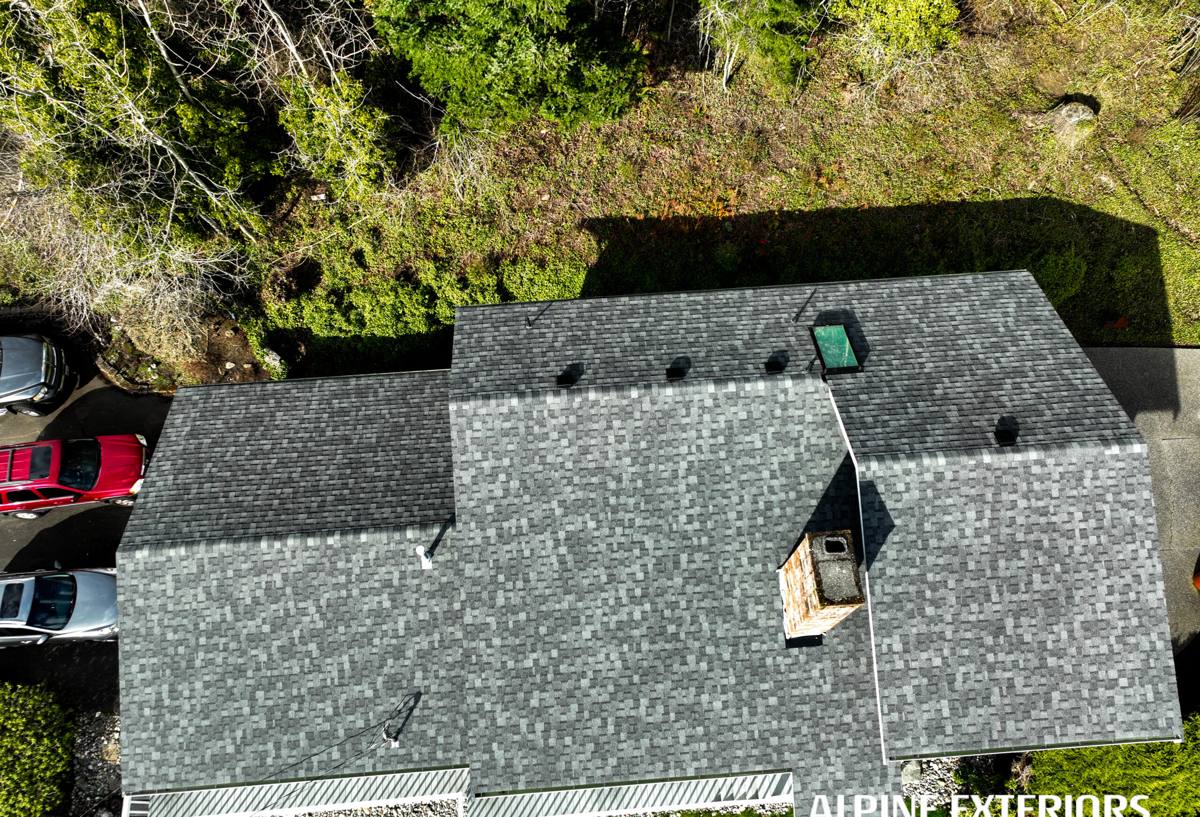
Moss gets treated like a cosmetic nuisance, but on a roof it's a moisture management problem. Moss holds water against roofing material long after a storm has passed, keeps the surface below it cooler and damper than the surrounding area, and — as it grows — can lift shingle edges and work into seams. Left alone through a wet Pacific Northwest winter, a moss colony can turn a roof that had years of life left into one that's failing early, usually starting at north-facing slopes and shaded valleys where sun exposure is lowest.
What driving rain adds to the problem
Kirkland doesn't usually get the kind of hard, short downpours that overwhelm a roof all at once. The bigger risk is sustained, wind-driven rain that pushes water sideways under flashing, around vent boots, and into any gap that a fastener or a poorly lapped shingle has left open. This is why so many "leaks" homeowners report don't come from the obvious spot on the roof — the water travels along the underlayment or decking before it shows up on a ceiling, sometimes several feet from where it actually entered.
Common Repair Situations We See in This Area
- Moss buildup on shaded or north-facing slopes causing shingle lift and granule loss
- Flashing failures around chimneys, skylights, and roof-to-wall transitions where two materials meet
- Valley wear from years of concentrated water flow, especially on older composition roofs
- Vent boot cracking from age and UV exposure, letting water in around plumbing stacks
- Wind-lifted or missing shingle tabs after a storm, leaving the underlayment exposed
- Gutter and edge issues that back water up under the first course of shingles
Most of these show up gradually. A homeowner might notice a small stain on a ceiling, a slightly higher energy bill, or moss visible from the street — none of which scream "roof repair" on their own, but all of which are worth a look before the next wet season.
What a Correct Roof Repair Actually Involves
A repair that holds up in this climate starts with figuring out the real cause, not just covering the symptom. That means getting on the roof (weather permitting) and checking the areas around the reported leak, not just the leak itself — because in a region with this much sustained rain, water rarely stays where it lands.
Our general process
- Assessment: We inspect the reported problem area and the surrounding roof plane, including flashing, valleys, and penetrations, to identify the actual entry point.
- Diagnosis and options: We explain what we found in plain terms — what's failing, why, and whether it's a contained repair or a sign of broader wear.
- Repair: We replace or re-seal only what needs it, matching materials to the existing roof where possible and re-flashing any transition points involved.
- Moss and debris clearing: If moss or organic buildup contributed to the failure, we clear it from the repair area and the immediate surroundings so the fix isn't undermined right away.
- Verification: We check the repair holds under water testing where appropriate, and walk the homeowner through what was done.
We won't seal over a symptom and call it done. If a "small leak" turns out to be decking rot or a flashing detail that was never installed correctly, we'll tell you that directly, along with what it would take to fix it properly — not push a bigger job than the situation calls for, and not hide a bigger problem to keep the invoice small.
Repair vs. Replacement: How We Think About It
Not every roof problem needs a full replacement, and not every leak can be permanently solved with a patch. The honest answer depends on the roof's age, how localized the damage is, and how much of the roofing system is still sound.
| Factor | Leans Toward Repair | Leans Toward Replacement |
|---|---|---|
| Age of roof | Under 15–20 years, otherwise in good condition | Nearing or past expected lifespan for the material |
| Extent of damage | Isolated to one area or feature (flashing, valley, vent) | Multiple areas failing independently |
| Underlying decking | Solid, no rot found on inspection | Soft spots or rot present under the surface |
| Moss/moisture history | Recent buildup, caught early | Long-term moss coverage with granule loss underneath |
| Overall goal | Extend current roof's remaining life | Reset the clock and address systemic wear |
We'll always start with the repair conversation. If the roof genuinely needs more than that, we'll say so and explain why — but we don't default to recommending replacement when a well-executed repair will do the job.
Materials and Workmanship Standards We Hold To
On repairs, we match flashing, underlayment, and shingle materials to what's already on the roof wherever possible, since mismatched materials at a repair seam are a common source of early re-failure. Where the original material is no longer available or wasn't installed to a standard we'd stand behind, we'll use a comparable product and explain the trade-off rather than quietly substituting something and hoping it doesn't come up.
We're also careful about flashing details specifically, because in a climate with this much wind-driven rain, flashing failures are one of the most common reasons a "repaired" roof leaks again within a year or two. A patch that looks fine from the ground can still be wrong underneath if the flashing wasn't properly lapped or sealed. We take the extra time on those details because it's the difference between a repair that lasts and one that's back on our schedule next winter.
Why a Local Crew Matters for This Kind of Work
Roof repair is one of those jobs where local experience actually changes the outcome. A crew that regularly works roofs around Kirkland and greater King County has a working sense of which roof orientations collect the most moss, how wind patterns off the lake tend to drive rain against certain roof faces, and what shortcuts show up most often in past repair work in this area. That context speeds up diagnosis and reduces the odds of missing a contributing factor.
It also means we're not guessing at scheduling around this region's weather windows. Roof repairs go better when they're done during a dry stretch, and knowing the seasonal patterns here helps us plan work — including moss treatment timing — around conditions instead of against them.
Simple Maintenance That Extends a Repair's Life
- Keep gutters and downspouts clear so water isn't backing up under roof edges
- Have moss treated or removed before it spreads across a full slope, not after
- Trim back overhanging branches that keep shaded roof areas damp longer
- Walk the roofline visually after major storms and note anything that looks lifted or missing
- Schedule a roof check every couple of years, even without an active leak, given how gradually damage develops here
None of this replaces a professional inspection, but it does reduce how often small issues turn into repair calls in the first place.
Get an Honest Look at Your Roof
If you're dealing with a leak, spotted moss taking hold, or just want a straight assessment of where your roof stands before the next wet season, we're glad to take a look. We'll tell you what we find, what it actually needs, and what it doesn't — no pressure, no upsell. Request a free estimate below and we'll get back to you to schedule a time that works.