 Seattle Exterior
 Why Magnolia Homes Need Siding Built for This Exact Climate
Magnolia sits on a bluff surrounded on three sides by water — Puget Sound to the west, Elliott Bay and the Ship Canal nearby. That position gives the neighborhood some of the best views in Seattle, and also some of the toughest siding conditions in King County. Homes here take on salt-laden air off the Sound, wind-driven rain that hits walls sideways instead of falling straight down, and a shaded, damp microclimate on north- and west-facing exposures that keeps moss and algae growing nearly year-round. Siding that would hold up fine in a drier inland neighborhood can fail early here — not because it's a bad product everywhere, just the wrong product for this address.
We install James Hardie fiber cement siding exclusively, and Magnolia is one of the neighborhoods where that decision matters most. This page covers what the climate actually does to siding here, what a correct Hardie installation looks like on a Magnolia home, and how our process works from first estimate to final walkthrough.
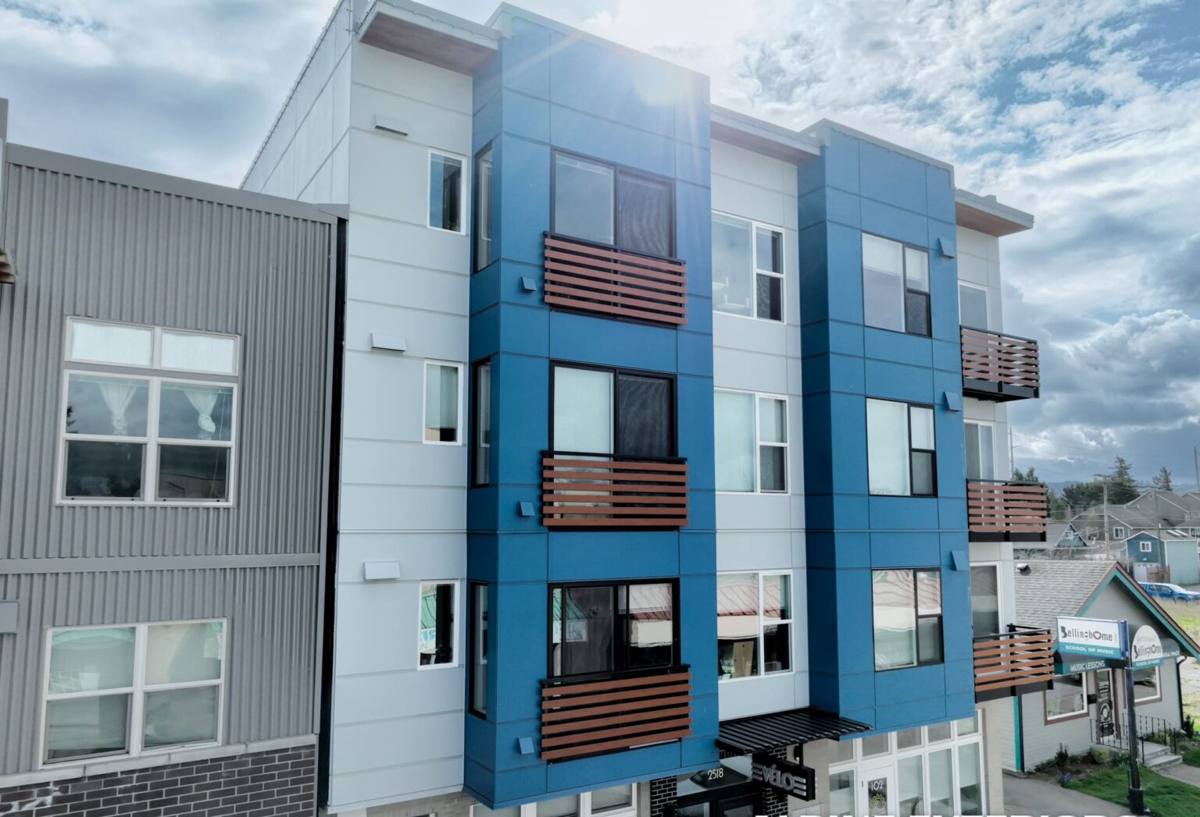
What Salt Air, Driving Rain, and Moss Season Actually Do to a Wall
Salt Air
Proximity to salt water accelerates corrosion on fasteners, flashing, and any metal trim on the exterior. It also breaks down organic and low-grade composite siding materials faster than inland exposure, dulling finishes and softening surfaces over time. Any siding system installed in Magnolia needs fasteners and flashing rated for coastal exposure, not standard interior-grade hardware.
Driving Rain
Wind off the Sound doesn't just fall on a house — it pushes rain horizontally into seams, laps, and penetrations that would stay dry in calmer weather. This is a water-management problem as much as a material problem. Even a premium siding product will let water in in if the flashing, house wrap, and seam details underneath it aren't done right.
Moss and Algae Season
Shaded exposures and persistent moisture in fall through spring create ideal conditions for moss, algae, and mildew to take hold on exterior surfaces. Siding that absorbs moisture — or that has a painted-on finish rather than a factory-cured one — gives moss something to grip and stain over a few seasons. It's a cosmetic issue at first, but sustained moisture retention against a wall is also how rot starts underneath.
Why We Only Install James Hardie
We get asked regularly about LP SmartSide, vinyl, Cemplank, Allura, primed spruce, and cedar. Every one of those has legitimate uses somewhere. We don't install any of them, and here's the honest reasoning, product by product, as it applies to a climate like Magnolia's:
- Vinyl siding is inexpensive and low-maintenance in mild weather, but it expands and contracts with temperature swings, can crack in wind-driven debris impacts, and its seams are a weak point against horizontal rain. It's also not a fire-resistant material.
- LP SmartSide is an engineered wood product. Wood-based substrates are more sensitive to sustained moisture exposure than fiber cement — a real concern on the shaded, damp sides of a Magnolia lot where things stay wet longer.
- Cemplank and Allura are other fiber cement manufacturers, and structurally they're closer to Hardie than the wood or vinyl options. Our reasoning there is less about the base material and more about finish system, warranty structure, and the fact that we've standardized our crews, flashing details, and warranty relationships around one system we know inside and out.
- Primed spruce and cedar are traditional, attractive, and require the most upkeep of any option here — periodic painting, sealing, and vigilance against moisture, insects, and rot. In a climate with this much sustained dampness, that maintenance burden is real and ongoing.
James Hardie fiber cement is non-combustible, dimensionally stable across our temperature range, and finished at the factory under controlled conditions rather than painted on site or left to weather bare. That combination is why it's the only product we put on homes.
The James Hardie System, Built for Puget Sound Exposure
Hardie makes climate-specific product lines, and for a neighborhood like Magnolia we're specifying material engineered for the Pacific Northwest's moisture profile. The ColorPlus factory finish is baked on and warrantied against fading and peeling — it doesn't rely on a field-applied paint job to hold up against driving rain and salt air. That matters here specifically because repainting a full exterior on a bluff-exposed home is disruptive and something homeowners understandably want to avoid needing to do every several years.
| Concern in Magnolia | How Correctly Installed Hardie Addresses It |
|---|---|
| Salt air corrosion | Corrosion-resistant fasteners and flashing paired with a non-organic substrate |
| Wind-driven rain | Engineered lap and joint details plus proper house wrap and flashing sequencing |
| Moss and algae | Factory finish that sheds moisture rather than absorbing it, reducing surface grip for growth |
| Fire exposure | Non-combustible fiber cement composition |
| Long-term appearance | Factory-cured ColorPlus finish backed by a transferable warranty |
What a Correct Installation Actually Involves
The siding board itself is only part of the job. Most siding failures we get called out to inspect in wet, coastal-exposed neighborhoods trace back to installation details, not the material. On a Magnolia home, the details we treat as non-negotiable include:
- Proper water-resistive barrier installed and lapped correctly before any siding goes up
- Flashing at every window, door, and roofline penetration, sequenced so water sheds outward and down, never behind the siding
- Correct fastener type, spacing, and depth per Hardie's engineering specifications — not shortcuts that void the warranty
- Proper clearance between the bottom of the siding and grade, decks, or roof lines to prevent wicking
- Caulking and sealant only where Hardie's specs call for it — over-caulking traps moisture rather than releasing it
- Attention to north- and west-facing walls, where Magnolia's shade and rain exposure concentrate moisture the longest
A crew that hasn't worked Magnolia's terrain before may not think twice about a shaded, exposed corner that needs extra flashing attention. That's the kind of detail experience with this specific neighborhood teaches you.
Cost Factors on a Magnolia Home
| Factor | Why It Affects the Project |
|---|---|
| Home size and wall complexity | More corners, gables, and dormers mean more cutting, flashing, and labor |
| Existing siding removal | Tear-off and disposal of old material, plus any sheathing repair found underneath |
| Hidden moisture damage | Rot repair behind old siding is common on long-exposed coastal walls and is priced once uncovered |
| Access and site conditions | Bluff lots, steep driveways, and tight setbacks affect staging and labor time |
| Product line and color | Hardie's various HZ product lines and ColorPlus finishes carry different material costs |
We don't quote a number until we've actually looked at the house — anyone who gives you a firm price sight unseen on a coastal-exposure home is guessing.
Why Hiring a Crew That Already Works Magnolia Matters
Magnolia's terrain — the bluff, the water exposure on multiple sides, the older housing stock mixed with newer construction — isn't identical to every other Seattle neighborhood. A contractor who mostly works drier, inland King County suburbs may not default to the flashing and moisture-management habits this neighborhood requires. A crew that's worked Magnolia specifically already knows which walls take the worst of the driving rain, where moss builds up fastest, and what condition to expect when old siding comes off a bluff-facing home.
That local pattern recognition is part of what you're paying for — not just the material, but a crew that won't need to relearn Magnolia's climate on your house.
Our Process
- On-site assessment — we walk the exterior, check current siding condition, note problem exposures, and look for signs of existing moisture damage.
- Written estimate — a clear scope and price range based on what we actually found, not a generic per-square-foot guess.
- Product and color selection — choosing the right Hardie HZ line and ColorPlus finish for the home's exposure and your preferences.
- Removal and prep — tear-off of old siding, inspection and repair of sheathing, and correct house wrap installation.
- Installation to spec — flashing, fastening, and lap details done to Hardie's engineering requirements, not shortcuts.
- Final walkthrough — we go over the finished work with you before calling the job done.
Signs Your Magnolia Home's Siding Needs Attention
- Persistent moss or dark staining that returns shortly after cleaning
- Soft spots, bubbling, or visible warping, especially on shaded walls
- Paint that's peeling or chalking faster than expected for its age
- Visible gaps at seams, corners, or trim where daylight or drafts get through
- Rising energy bills that suggest the exterior envelope isn't performing
If you're seeing any of these, it's worth having someone look before small issues become structural ones — moisture problems in a climate like this rarely stay small on their own.
If your Magnolia home's siding is showing its age or you're planning ahead for a replacement, we're happy to take a look and give you a straightforward, no-pressure estimate. Use the form below to get started.