 Seattle Exterior
 Roofing in Shoreline Isn't the Same as Roofing Somewhere Dry
Shoreline sits close enough to Puget Sound that salt-laden air reaches roof surfaces year-round, and the tree cover that makes so many streets in this part of King County pleasant also means shade, moisture, and organic debris sitting on shingles for months at a time. Add in the region's long stretch of driving rain from fall through spring, and you have a climate that is genuinely harder on a roof than most of the country deals with. A roof system that works fine in a dry, sunny climate can fail early here if it wasn't designed, ventilated, and flashed with Pacific Northwest conditions in mind.
New roof installation is one of those projects homeowners hope to do once and not think about again for decades. Getting it right the first time in Shoreline means paying attention to a handful of details that don't matter as much elsewhere: moss resistance, ventilation to manage constant moisture load, underlayment quality, and flashing at every transition where water wants to find a way in.
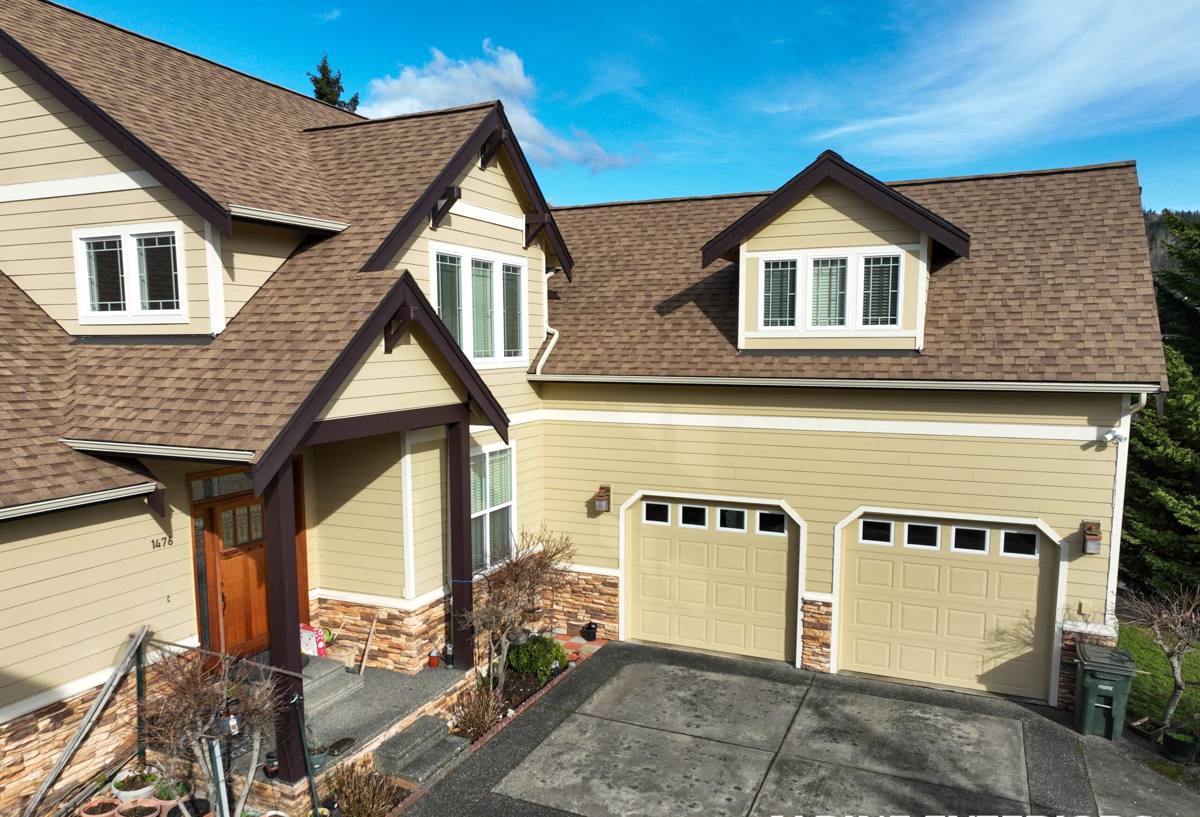
Signs Your Shoreline Home May Need a New Roof
Roofs rarely fail all at once. Usually there are warning signs for a year or two before a leak actually shows up inside the house. Homeowners in this area should watch for:
- Granules collecting in gutters or at downspout outlets, signaling the shingle surface is wearing thin
- Shingles that are curling, cupping, or losing their flat profile, especially on south- and west-facing slopes
- Heavy, persistent moss growth that keeps returning within months of cleaning
- Dark streaking or algae staining across large sections of the roof
- Soft spots or sagging when walked on, which usually points to deck damage underneath
- Daylight visible through the attic roof boards, or damp insulation after storms
- A roof that is approaching or past the manufacturer's expected service life for its material and exposure
Any one of these on its own might just mean a repair. Several together, especially on an older roof, usually means it's time to plan for full replacement rather than keep patching.
Choosing the Right Material for This Climate
There is no single "best" roofing material for every home, but in a wet, moss-prone, salt-exposed area like Shoreline, some choices hold up more predictably than others. We walk homeowners through the real trade-offs rather than pushing whatever is easiest to install.
| Material | Typical Lifespan | How It Handles This Climate |
|---|---|---|
| Standard 3-tab asphalt shingle | 15-20 years | Affordable, but thinner profile means faster granule loss under constant rain and moss exposure |
| Architectural (dimensional) asphalt shingle | 25-30 years | Heavier mat and better wind/rain resistance; the most common upgrade choice for this area |
| Algae-resistant (zinc/copper-infused) shingle | 25-30 years | Built-in moss and algae resistance, well suited to shaded, damp lots |
| Standing seam metal | 40-60+ years | Sheds moss and moisture very effectively due to smooth vertical panels; higher upfront cost |
| Cedar shake | 20-30 years with upkeep | Traditional look, but requires regular maintenance to manage moss and moisture in this climate |
For most Shoreline homes, we recommend algae-resistant architectural shingles as the default balance of cost, appearance, and low-maintenance performance. Metal roofing is a strong option for homeowners who want to minimize moss upkeep long-term and are comfortable with the higher initial investment. Cedar shake can still be the right call on the right home, but we're honest with homeowners about the maintenance schedule it requires here versus in a drier climate.
What a Correct Roof Installation Actually Involves
Tear-Off and Deck Inspection
We don't install a new roof over a failing one. A full tear-off lets us inspect the roof deck for rot, soft spots, or water damage that's invisible from above — common on older Shoreline homes where a slow leak has been going undetected. Any damaged sheathing gets replaced before anything new goes down; skipping this step is how a new roof ends up with old problems underneath it.
Underlayment and Water Protection
Given how much rain King County sees, underlayment quality matters more here than in drier regions. We use synthetic underlayment for its tear resistance and water shedding, with self-adhering ice-and-water membrane at eaves, valleys, and other vulnerable transitions where wind-driven rain is most likely to work its way underneath the shingle field.
Flashing at Every Transition
Chimneys, skylights, sidewalls, and roof-to-wall junctions are where the overwhelming majority of roof leaks originate — not the open field of shingles. Correct flashing means new metal step flashing, counterflashing, and properly lapped valley protection at every one of these points, not a bead of caulk over old, corroded flashing.
Ventilation That Matches the Home
A roof deck needs balanced intake and exhaust airflow to manage moisture from both directions — driving rain from outside and household humidity from inside. We size and place ridge vents, soffit vents, or baffles based on the specific attic, not a one-size-fits-all approach.
Ventilation and Moisture: The Detail Most Roofs Get Wrong
Poor attic ventilation is one of the most common causes of early roof failure in this region, and it's largely invisible until the damage is done. Without adequate airflow, moisture from cooking, showers, and everyday living gets trapped in the attic, condenses on the underside of the roof deck, and slowly rots sheathing from the inside — while the shingles above still look fine. Combined with the near-constant rainfall Shoreline gets for much of the year, an under-ventilated attic is working against the roof from both sides at once. Correct intake-to-exhaust balance is a code requirement, but it's also simply good practice for any roof expected to last its full warranty period here.
Moss, Algae, and Salt Air: What Long-Term Maintenance Looks Like
Even a well-installed roof in Shoreline needs some ongoing attention. Moss spores travel easily through shaded, damp neighborhoods, and salt air from Puget Sound accelerates corrosion on exposed metal fasteners and flashing over time. A few practices make a real difference in how long a new roof performs at its best:
- Keep overhanging tree limbs trimmed back to reduce shade and debris buildup on the roof surface
- Clean gutters at least twice a year so water isn't backing up under the shingle edge
- Have moss physically removed rather than pressure-washed, which can strip granules and shorten shingle life
- Consider zinc or copper strips near the ridge, which release trace metals that discourage moss regrowth as rain washes over the roof
- Use corrosion-resistant fasteners and flashing metals suited to coastal exposure
None of this replaces good installation, but it's the difference between a roof that reaches its full rated lifespan and one that needs early attention because moisture and organic growth were left unmanaged.
Our Installation Process
We keep the process straightforward and communicate at each stage, since a roof replacement disrupts a household for a few days and homeowners deserve to know what's happening and when.
- On-site assessment: We inspect the existing roof, deck condition, ventilation setup, and any problem areas, and walk through material options honestly based on the home's exposure and budget.
- Written estimate: A clear, itemized proposal so there are no surprises about scope or cost before work begins.
- Permitting: We handle the permitting required for the jurisdiction, since roofing work in this area typically requires proper permits and inspection sign-off.
- Tear-off and deck repair: Complete removal of the old roofing system and replacement of any compromised decking.
- Installation: Underlayment, flashing, ventilation components, and the new roofing material installed to manufacturer and code specifications.
- Cleanup and final walkthrough: Job site cleared of debris and nails, with a final inspection alongside the homeowner before we consider the job complete.
Why Hiring a Crew That Already Works in Shoreline Matters
Roofing crews who mostly work drier climates sometimes underbuild for what this area actually experiences — skipping ice-and-water membrane in valleys, under-ventilating attics, or specifying materials that aren't suited to constant moss exposure. A crew that regularly works in Shoreline and the surrounding King County communities has already seen how roofs in this specific climate age, what fails first, and what holds up. That local track record shows up in fewer callbacks and a roof that actually performs the way it's supposed to for its full rated life, through the wet winters and long moss seasons this area is known for.
If your Shoreline home is due for a new roof, or you're just not sure whether repair or full replacement makes more sense, we're happy to take a look and give you a straightforward, no-pressure estimate. Use the form below to get started.