 Seattle Exterior
 Ravenna's Climate Is Harder on Siding Than It Looks
Ravenna doesn't get hurricanes or hailstorms, so it's easy to assume the exterior of a home here has an easy life. It doesn't. Seattle's marine climate brings a long, low-intensity kind of punishment: months of driving rain, humid air carried in off Puget Sound, and deep tree canopy that keeps north- and side-facing walls damp and shaded for days at a stretch. Ravenna in particular has a lot of mature trees, including the wooded ravine around Ravenna Park, and that shade is a mixed blessing — it's part of what makes the neighborhood pleasant, and it's also exactly the condition that grows moss, algae, and mildew on exterior walls.
None of that damage happens in a single storm. It's cumulative. Siding that can't shed water fast enough, or that lets moisture sit against the substrate, slowly loses paint adhesion, swells at seams, and eventually lets rot start behind the surface where you can't see it. By the time it's visible from the street, the problem has usually been building for a couple of seasons already.
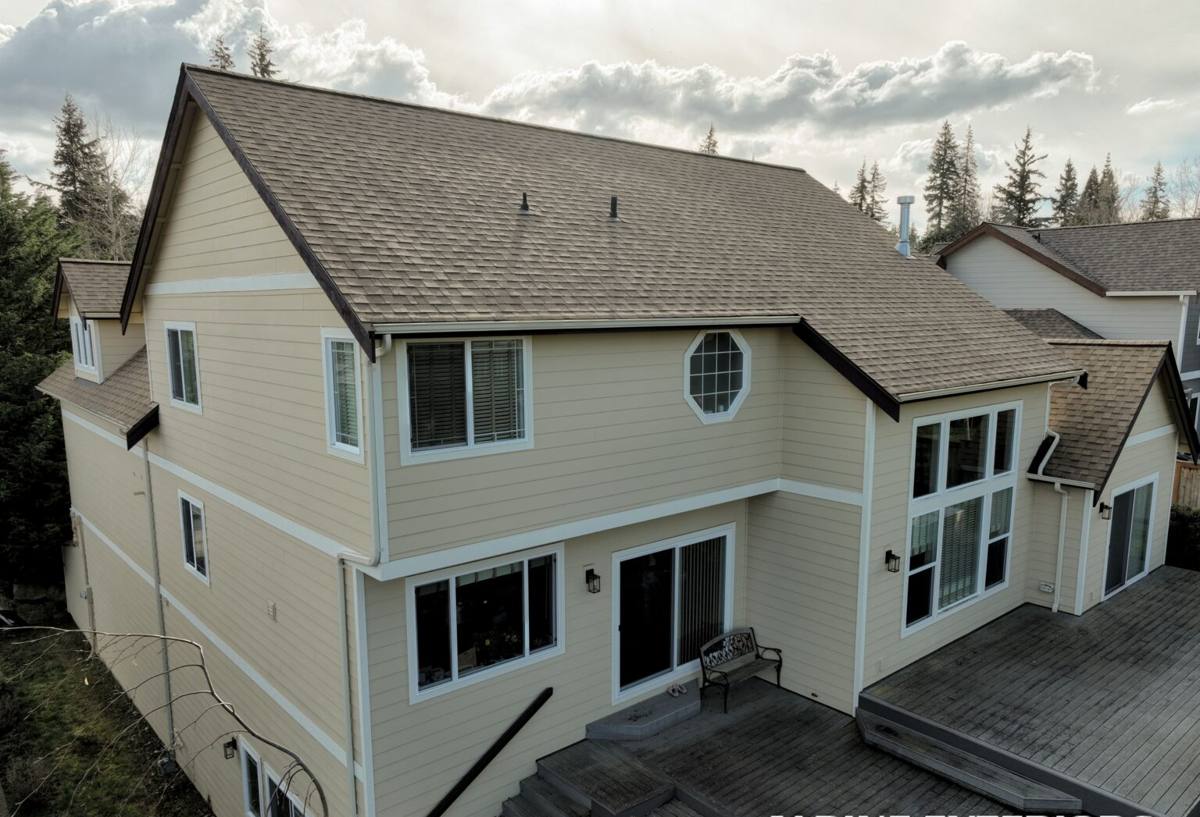
What "Moss Season" Actually Does to a Wall
King County's wet season typically stretches from fall through spring, and on shaded walls moss and algae can hang on well into summer. This matters for siding in a few specific ways:
- Moss holds moisture directly against the siding surface far longer than open air ever would, which accelerates any moisture-related failure in the material underneath.
- Organic growth breaks down factory or field-applied paint finishes faster, leading to chalking, color loss, and more frequent repainting on wood-based products.
- Gutters and flashing clogged with debris from overhanging trees redirect water onto wall sections that weren't designed to handle constant runoff.
- Salt-tinged air moving in from the Sound adds a slow corrosive effect on fasteners and metal flashing, which is easy to overlook until a fastener fails.
A siding system that's engineered for this — not just tolerant of it — is the difference between a wall that needs attention every few years and one that quietly does its job for decades.
Why We Only Install James Hardie
We standardized on James Hardie fiber cement siding and don't install vinyl, LP SmartSide, cedar, or other fiber cement alternatives like Cemplank or Allura. That's not a marketing position — it's a professional one, based on what actually holds up on Seattle exteriors year after year.
Fiber cement is non-combustible, dimensionally stable, and doesn't absorb water the way wood-based products can. James Hardie's HZ5 product line is specifically engineered for climates like ours — freeze-thaw cycles, sustained moisture, and humidity — rather than a generic national spec. The factory-applied ColorPlus finish is baked on under controlled conditions, which gives it far better adhesion and fade resistance than field-applied paint, and that matters directly in a neighborhood where shade and moss put extra stress on any painted surface.
That doesn't mean every other product is without merit. Vinyl is inexpensive and low-maintenance in dry climates. Cedar has genuine curb appeal and a long tradition in the Northwest. LP SmartSide is a legitimate engineered-wood product with a real warranty behind it. Our issue is with how those materials perform specifically under Ravenna's combination of sustained moisture, shade, and organic growth — over enough years, in enough shaded and rain-exposed sections, we've found the trade-offs stack up against them here. We'd rather install one product correctly than offer five and hope the right one gets picked.
How Hardie Compares for This Climate
| Material | Moisture behavior | Moss/algae resistance | Long-term maintenance |
|---|---|---|---|
| James Hardie fiber cement | Non-combustible, doesn't swell or rot; engineered HZ5 formulation for wet climates | Factory finish resists organic staining better than field-painted surfaces | Occasional wash; repaint interval is long due to ColorPlus finish |
| Vinyl | Doesn't rot, but can warp or crack in temperature swings and trap moisture behind it if installed poorly | Moss grows on the surface similarly; harder to repaint if it fades | Low, but limited repair options if damaged |
| LP SmartSide (engineered wood) | Treated to resist moisture, but any breach in the finish exposes wood substrate | Needs consistent field-applied coating maintenance to keep resistance up | Moderate — finish upkeep matters more over time |
| Cedar | Natural material, absorbs and releases moisture; performs best with excellent ventilation and upkeep | Most susceptible to moss and mildew without regular treatment | Highest — regular staining/sealing required |
What a Correct Installation Involves
Fiber cement siding is only as good as the install behind it. Most of the failures we get called out to inspect aren't a materials problem — they're a workmanship problem. On a Ravenna home, a correct James Hardie install includes:
- A code-compliant weather-resistive barrier installed with proper lapping, so water is directed down and out rather than trapped.
- Rainscreen or drainage gap detailing where wall conditions call for it, giving any incidental moisture a path to escape instead of sitting against the sheathing.
- Correct flashing at every window, door, and roofline intersection — this is where the majority of hidden leaks originate on older Seattle homes.
- Manufacturer-specified fastening patterns and clearances, including the gap kept between siding and grade, decks, and roof surfaces so moisture and debris don't wick upward.
- Properly sealed and caulked joints using compatible products, not generic caulk that fails under UV and moisture cycling.
Skip any one of these steps and you can end up with a wall that looks right for a few years and then fails from behind — which is a harder and more expensive repair than replacing siding that was never installed correctly in the first place.
Our Process for a Ravenna Job
1. On-Site Assessment
We look at the whole wall system, not just the visible siding — existing moisture barrier condition, trim and flashing, tree cover and shade exposure on each elevation, and any soft spots or staining that point to hidden damage.
2. Removal and Substrate Check
Once old siding comes off, we inspect the sheathing underneath. This is the point where hidden rot or past moisture intrusion shows up, and it needs to be addressed before anything new goes on the wall.
3. Weather Barrier and Flashing
We install or correct the weather-resistive barrier and flashing details around every penetration — this step matters more in a wet, shaded climate than the siding material itself.
4. Hardie Installation to Spec
Panels or lap siding go on per James Hardie's published installation guidelines, with attention to fastening, clearances, and joint treatment.
5. Final Walkthrough
We walk the finished job with the homeowner, covering what maintenance (if any) is expected and what warranty coverage applies.
Cost Factors on a Ravenna Home
Every home is different, but the variables that actually move the price on a Ravenna siding job tend to be the same ones:
| Factor | Why it matters here |
|---|---|
| Hidden moisture/rot behind old siding | Shaded, tree-covered lots see more of this than sunnier parts of Seattle — it's not discovered until removal |
| Wall complexity (dormers, multiple stories, trim detail) | Common on the older home styles found throughout established north Seattle neighborhoods |
| Access and lot conditions | Mature landscaping and narrower side yards can affect staging and scaffolding needs |
| Siding profile and ColorPlus color selection | Panel vs. lap, and standard vs. premium color options, affect material cost |
| Trim and flashing scope | Full trim replacement adds cost but is often the right call on older homes with aging flashing |
We give a written estimate after seeing the actual walls, not a phone-quote range, because the moisture and substrate condition genuinely can't be judged from a photo.
Simple Maintenance Once It's Installed
- Rinse siding gently once or twice a year, more often on heavily shaded elevations prone to moss.
- Keep gutters clear of leaf and needle debris so water isn't overflowing onto wall sections.
- Trim back vegetation and tree limbs that keep a wall section damp or in constant shade.
- Check caulking at trim and penetrations every couple of years and touch up as needed.
- Address any impact damage (branch strikes, equipment bumps) promptly rather than letting a chipped area sit exposed.
Why a Crew That Already Works Ravenna Matters
Siding installation isn't one-size-fits-all across Seattle. A crew that regularly works Ravenna and the surrounding King County neighborhoods already understands the shade patterns, the moisture exposure on tree-lined lots, and the older home construction common to this part of the city. That familiarity shows up in small decisions on the job — where extra flashing attention is warranted, which elevations need closer moisture-barrier detailing, how to work around mature landscaping without damaging it. It also means faster, more realistic scheduling around our wet season rather than guessing at weather windows from out of town.
If your Ravenna home's siding is showing moss staining, paint failure, or you're just planning ahead for a remodel, we're happy to take a look and walk you through what we find. Reach out for a free, no-pressure estimate — we'll assess your walls in person and give you a straight answer on what's needed.