 Seattle Exterior
 Deck Building in Redmond: Built for How This Area Actually Weathers
Redmond sits in the wet, wooded part of King County, and that shapes what a deck needs to survive here. Long stretches of drizzle, heavy tree canopy over a lot of lots, and short winter days that never quite dry things out all add up to a specific set of stresses on outdoor structures. A deck built to a generic national spec will show its weak points here faster than it would in a drier climate. We build decks for this region specifically, and that means designing for moisture management, airflow, and long-term wood or composite behavior from the first sketch, not bolting on fixes after the fact.
This page covers what a correct deck build looks like for a Redmond property, the decisions that matter most, and how we approach the job from first call to final walkthrough.
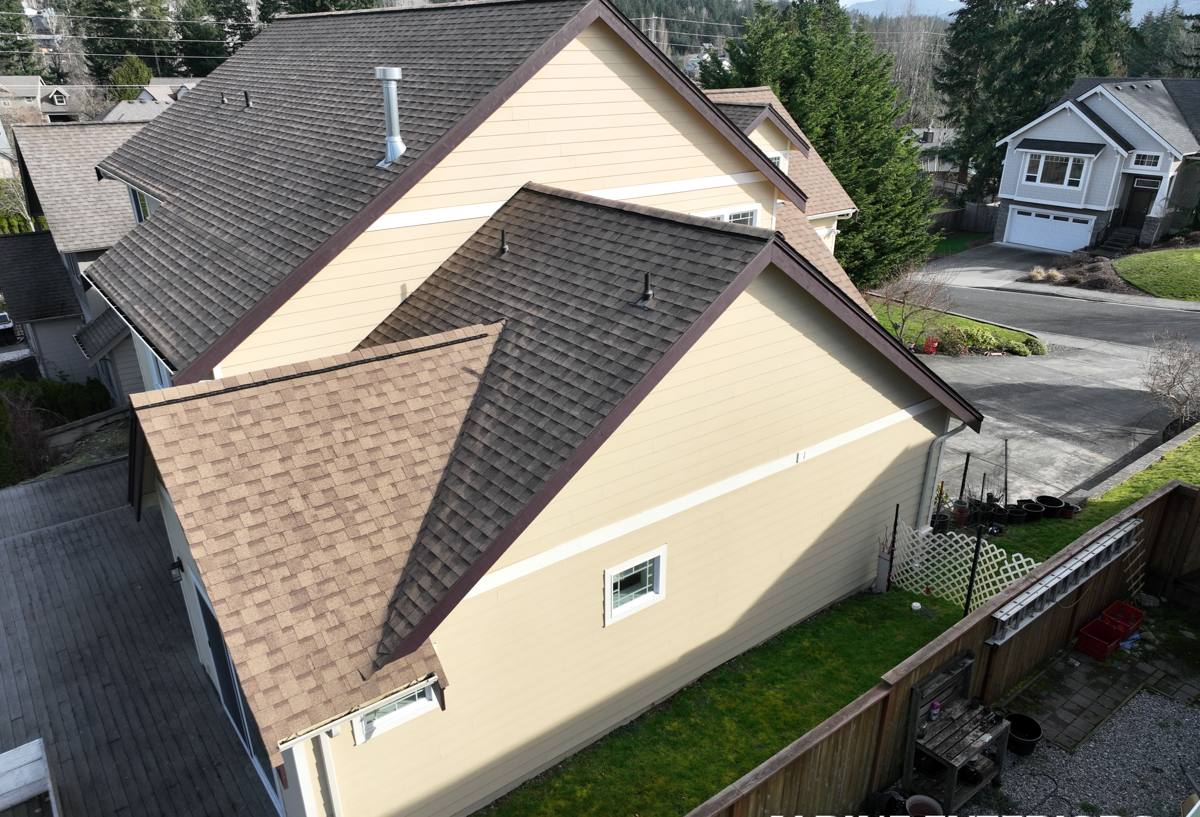
What the Local Climate Does to a Deck
The greater Puget Sound region gets a mix of driving rain, damp marine air, and long stretches without direct sun, and Redmond's tree cover and lake-adjacent humidity add to that. A few specific effects show up again and again on decks we're called out to repair or replace:
- Moss and algae growth on any decking surface that stays shaded and damp for weeks at a time, especially under mature trees or on the north side of a house.
- Trapped moisture under boards where ledger boards, joists, or fasteners weren't detailed to shed water, leading to rot years before it should appear.
- Slick, unsafe surfaces in fall and winter when moss and wet leaves combine on horizontal surfaces, particularly stairs.
- Fastener and connector corrosion on decks built with the wrong grade of hardware for a consistently damp environment.
- UV and moisture cycling on finishes and sealants, which alternate between wet and brief dry spells rather than a steady dry season, stressing coatings more than a drier climate would.
None of these are exotic problems. They're predictable, and a deck designed with them in mind from the start avoids most of the callbacks we see on decks that weren't.
Why Redmond's Tree Cover Matters Specifically
Compared to more open, sun-exposed parts of the Eastside, many Redmond properties have significant tree canopy from mature landscaping or adjacent greenbelt. That's a real asset for privacy and shade, but it also means more leaf litter, slower drying times after rain, and more consistent shade on at least part of most decks. We factor canopy coverage into material choice and board spacing on every Redmond project rather than treating it as an afterthought.
What a Correct Deck Build Involves
A deck is a system, not just a surface to walk on. Getting it right means getting every layer right, in order.
Structure First
Footings sized and set below frost depth per King County code, ledger attachment properly flashed where the deck meets the house (this is the single most common failure point we find on older decks), and joists sized for the actual span and load, not the minimum that happens to work on paper. Hardware should be corrosion-resistant hot-dip galvanized or stainless, rated for ground contact and treated lumber where applicable, not standard interior-grade fasteners.
Moisture Management
This is where a lot of budget decks cut corners, and where the wet climate here punishes that decision fastest. Correct detailing includes ledger flashing that actually sheds water away from the house framing, joist tape or caps on top of framing members to stop water from wicking into end grain, and gaps between deck boards sized to let the structure dry out between rain events instead of trapping moisture against it.
Surface Material
Whether you go with a wood species, pressure-treated lumber, or a composite/PVC decking product, the surface needs to be matched to how much sun and shade the specific deck actually gets, not a generic recommendation. A deck under heavy canopy needs different maintenance expectations and possibly a different board profile (more open grain patterns collect less debris and moss) than one in full sun.
Rails, Stairs, and Code
Guardrail height, baluster spacing, and stair geometry all fall under Washington's adopted residential building code, and Redmond's permitting office reviews plans against it. We design to code from the start rather than treating it as a final inspection hurdle, which avoids delays and rework.
Material Options: Honest Trade-Offs
There's no single "best" decking material — there's a best material for your specific site conditions, maintenance appetite, and budget. Here's how the common options actually compare for a shaded, wet-climate Redmond lot:
| Material | Upfront Cost | Maintenance in Shade/Damp | Typical Lifespan |
|---|---|---|---|
| Pressure-treated lumber | Lowest | Needs regular cleaning and re-sealing to resist moss and rot; most sensitive to shaded, damp exposure | 10–15 years with upkeep |
| Cedar or other naturally durable wood | Moderate | Better rot resistance than treated pine, but still needs periodic cleaning and finish maintenance in heavy shade | 15–20 years with upkeep |
| Capped composite decking | Higher | Low — occasional washing to clear moss/algae film, no sealing or staining | 25–30 years |
| PVC decking | Highest | Lowest — fully synthetic surface, easiest to keep clean of organic growth | 30+ years |
We don't push one product line over another as a default. We'll tell you plainly which option fits your specific lot's sun exposure, your maintenance tolerance, and your budget, including where a lower-cost wood option is genuinely the right call and where it isn't.
Why We're Selective About Certain Wood Products in This Climate
Some softwood species and lower grades of treated lumber are more prone to cupping, splitting, and moss retention specifically under the shaded, consistently damp conditions common in Redmond. That's not a knock on the product in general use — it's a trade-off in installation sensitivity and long-term maintenance burden that we factor into our recommendation for your specific site. Where a client wants that material anyway, we'll build it correctly and set honest expectations for the upkeep it'll need.
Our Process for a Redmond Deck Project
- On-site assessment — we look at sun/shade exposure, drainage, existing structure (if replacing), soil conditions, and how the deck connects to the house.
- Design and material selection — sized, laid out, and matched to your site conditions and how you'll use the space, with material trade-offs explained plainly.
- Permitting — plans prepared to meet Redmond's permitting requirements and Washington residential code; we handle the submission and inspection scheduling.
- Demolition (if applicable) — old decking and structure removed, with an honest look at what's underneath before we build on it.
- Structural build — footings, framing, ledger flashing, and moisture-management details done first and inspected before decking goes down.
- Surface and rail installation — decking, stairs, and railings installed to spec and to code.
- Final walkthrough — we go over maintenance expectations specific to your material choice and site conditions, so there are no surprises in year two or three.
Maintenance Realities for This Climate
Whatever material you choose, a deck in this part of King County needs some seasonal attention. Here's a practical checklist we give clients regardless of who built the deck:
- Clear leaves and debris from between boards and off the surface before fall rains set in — trapped organic matter is the number one cause of premature moss growth and surface staining.
- Wash the deck surface at least once a year (more often under heavy shade) to remove algae and moss film before it gets a foothold.
- Check and clear gaps between boards and around framing so water keeps draining rather than pooling.
- Inspect ledger flashing and any visible fasteners annually for signs of corrosion or water staining on the house siding above the ledger.
- Reseal or re-stain wood decking on the manufacturer's recommended schedule — skipping a cycle in this climate shows up as damage faster than in a drier region.
- Address any soft spots, popped fasteners, or wobble in railings immediately rather than waiting for the next season.
Why Local Experience Matters for This Job
A deck-building crew that already works Redmond and the surrounding Eastside knows the permitting office's expectations, the soil and drainage patterns common to the area's neighborhoods, and which structural details actually hold up under the region's rain and shade patterns rather than just the code minimum. That local track record shortens the permitting process, reduces surprises during construction, and means the maintenance advice we give you is based on what actually happens to decks in this specific climate, not a generalized national playbook.
We also know that a deck here isn't judged on how it looks on a dry August afternoon — it's judged on how it holds up through a wet November and still feels solid and safe by February. That's the standard we build to.
Get a Straight Answer for Your Property
Every lot in Redmond gets a different mix of sun, shade, and drainage, so the right deck build for your property depends on seeing it in person. If you'd like an honest assessment of what your site needs and a clear breakdown of material options and costs, use the form below to request a free, no-pressure estimate.