 Seattle Exterior
 Metal Roofing in Redmond: Built for a Wet Climate That Doesn't Let Up
Redmond sits in the heart of King County, on the Eastside, where the roof over your head spends most of the year dealing with some combination of rain, overcast humidity, and shade from mature evergreens. It's not the harshest climate in the country, but it's a relentless one. A roof here doesn't fail from one big storm — it fails slowly, from months of standing moisture, trapped debris, and moss that never really goes dormant. Metal roofing, installed correctly, handles that kind of climate better than almost any other roofing material available. Installed incorrectly, it can trap moisture in exactly the wrong places and cause problems faster than the asphalt shingle roof it replaced.
This page is about what a correctly installed metal roof looks like on a Redmond home specifically — not a generic rundown of metal roofing benefits you could read on any national roofing site.
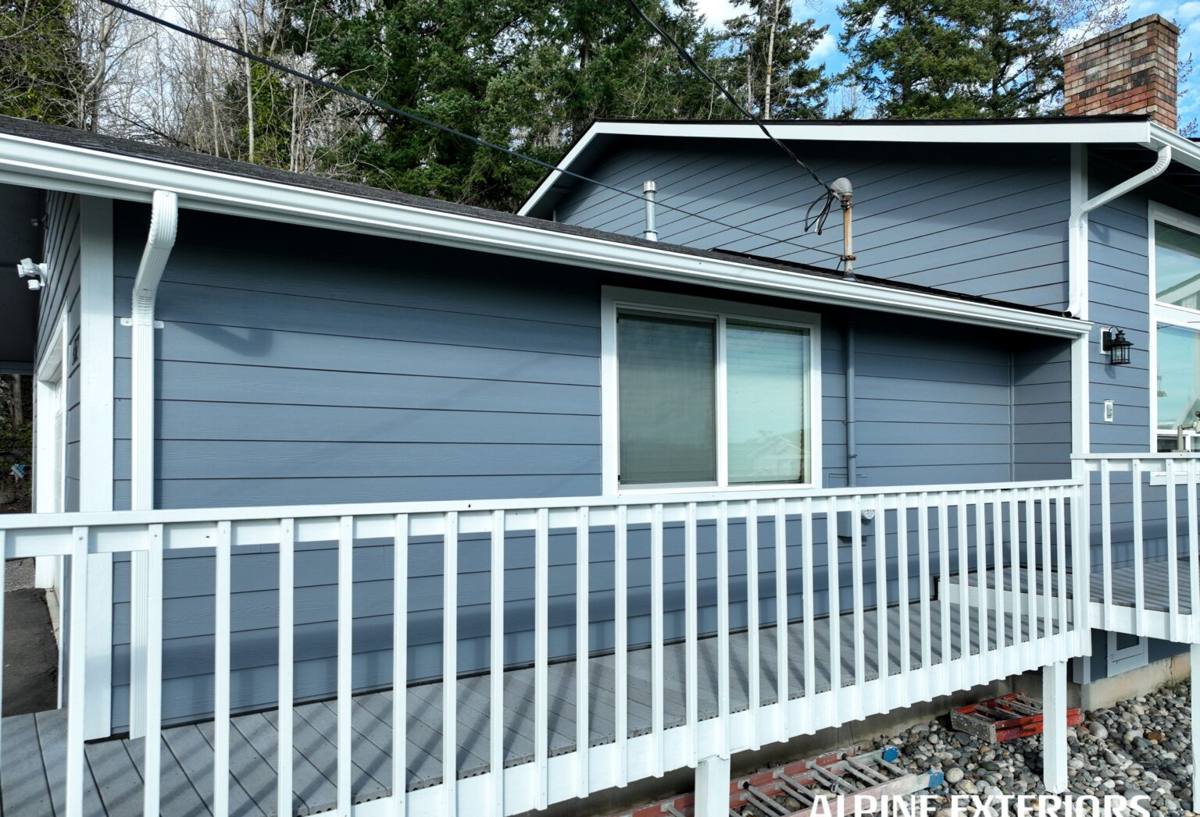
What Western Washington Weather Actually Does to a Roof
Our region's roofing problems are driven by moisture, not temperature swings. Redmond doesn't get extreme heat or brutal cold, but it does get long stretches of grey, damp weather that keeps roof surfaces wet for days at a time. A few things follow from that:
- Moss and algae get a long growing season with almost no dry-out period to slow them down, especially on north-facing slopes and anywhere tree cover blocks the sun.
- Driving rain, pushed by wind off the Sound and funneled through the hills around Lake Washington, tests every flashing detail — valleys, chimneys, skylights, and wall-to-roof transitions — far more than it tests the open field of the roof.
- Even away from the immediate shoreline, our broader Puget Sound climate carries enough moisture and mild salt influence in the air that fastener and flashing material choice matters more here than it would in a dry inland climate.
- Heavy tree canopy, common in established Redmond neighborhoods, means gutters and valleys collect needles and leaf litter that hold water against the roof surface if they're not cleared.
None of these are dramatic, one-time events. They're slow, cumulative, and they punish shortcuts — which is exactly why the quality of the installation matters more than the brand printed on the panel.
Why Metal Holds Up Well Here — When It's Done Right
Moisture Resistance
A properly installed metal roof sheds water fast and doesn't have the layered, absorbent surface that asphalt shingles have. There's less surface area for water to sit, and no shingle mat to soak up moisture and hold it against the deck. That matters a lot in a climate where roofs rarely get a long dry stretch to fully dry out between rain events.
Moss Resistance
Moss needs a rough, porous surface and consistent moisture to establish itself. A smooth painted metal panel gives it far less to grip onto than a shingle roof, and steeper metal roofs shed both water and debris faster, which limits the organic buildup moss feeds on. Metal doesn't make a roof moss-proof — nothing fully is in this climate — but it dramatically slows how fast moss becomes a problem.
Longevity Against the Elements
A quality metal roofing system, properly installed and maintained, is designed to outlast multiple cycles of asphalt shingle roofs. That's a meaningful advantage in a climate that's hard on roofing materials year-round rather than just during a short storm season.
What a Correct Metal Roof Installation Actually Involves
Metal roofing is unforgiving of shortcuts in a way asphalt shingles sometimes aren't. A shingle roof with a mediocre install might still perform acceptably for years. A metal roof with the same mediocre install can develop leaks, oil-canning, or premature fastener failure much sooner. The details matter.
Deck Inspection and Prep
Before any panel goes down, the existing roof deck needs to be inspected for rot, soft spots, and prior water damage — especially around valleys, chimneys, and any area where past leaks may have gone unnoticed. On a re-roof, this is also when we confirm whether a tear-off or, in limited cases, an overlay is appropriate.
Underlayment
In our climate, underlayment isn't a formality — it's a second line of defense that has to work when it's called on. High-temperature synthetic underlayment, with ice-and-water shield in vulnerable areas like eaves, valleys, and penetrations, gives the roof a backup barrier against wind-driven rain that gets under panels or through fastener penetrations over time.
Fastener and Flashing Material
Mixing incompatible metals causes galvanic corrosion — a slow chemical reaction between dissimilar metals that eats away at fasteners and flashing over years of exposure to our damp climate. We match fastener and flashing material to the panel system rather than grabbing whatever's on the truck, because that mismatch is one of the most common causes of premature metal roof failure we see on inspections.
Panel Layout and Expansion Allowance
Metal panels expand and contract with temperature swings, and while our region's swings are moderate, the roof still needs to accommodate that movement. Panels fastened without room to move can buckle, oil-can, or work fasteners loose over time. Correct clip spacing and fastening method depend on the specific panel system being installed.
Flashing Detail Work
This is where most metal roof leaks actually originate — not in the field of the roof, but at valleys, wall transitions, chimneys, skylights, and vent penetrations. Given how much of Redmond's rain arrives driven by wind rather than falling straight down, flashing details need to be built to handle water pushed sideways and uphill under pressure, not just water running downhill.
Ventilation
Proper attic and roof ventilation keeps moisture from condensing on the underside of the deck, which is a real risk in our humid climate if a roof system is sealed too tightly without adequate airflow.
Metal Roofing Options for Redmond Homes
Not every metal system is the right fit for every home, roofline, or budget. Here's how the common options compare for a typical Redmond property:
| System | Best For | Trade-offs |
|---|---|---|
| Standing seam (concealed fasteners) | Long-term, low-maintenance performance; steeper or more visible roofs | Higher upfront cost; requires skilled installation |
| Exposed-fastener panel | Budget-conscious projects, outbuildings, simpler rooflines | Fasteners need periodic inspection and eventual re-torquing or replacement |
| Metal shingles/shakes | Homeowners who want a traditional look with metal's durability | More seams and details than standing seam; installation quality is critical |
| Stone-coated steel | Matching neighborhood aesthetics that expect a shingle or tile profile | Heavier system; higher material cost than basic exposed-fastener panel |
We'll walk through which system fits your roof's pitch, visibility, and budget honestly — including telling you when a simpler system is genuinely the better value rather than upselling the most expensive option.
What Drives Cost on a Redmond Metal Roof
We won't quote a number without seeing the roof, but the main cost factors are consistent from project to project:
- Panel system chosen — standing seam runs higher than exposed-fastener panel
- Roof complexity — the number of valleys, penetrations, dormers, and transitions drives labor time and flashing material
- Roof pitch and access — steep or hard-to-access roofs take longer and require more safety setup
- Tear-off vs. overlay — removing an existing roof adds cost but is usually the right call for long-term performance
- Deck repair — any rot or soft decking found during tear-off needs to be addressed before panels go on
- Ventilation and insulation upgrades — sometimes bundled in if the existing attic system isn't performing well
Our Process for a Redmond Metal Roof Project
- On-site inspection. We look at the existing roof, deck condition, ventilation, and any trouble spots — moss buildup, valley wear, past leak signs.
- Honest system recommendation. We explain the trade-offs between panel systems for your specific roof rather than defaulting to the most expensive option.
- Written estimate. Clear scope, materials, and timeline before any work starts.
- Tear-off and deck prep. Removal of the old roofing and repair of any deck issues found underneath.
- Underlayment and flashing installation. The part of the job that determines whether the roof stays dry through our wet season.
- Panel installation. Correct fastening, clip spacing, and expansion allowance for the specific system.
- Final walkthrough. We review the finished roof with you and cover basic maintenance expectations.
Why a Crew That Works This Area Regularly Matters
Metal roofing installed by a crew unfamiliar with Western Washington's moisture patterns tends to have the same handful of problems: underlayment choices that don't account for how long our roofs stay wet, flashing details built for straight-down rain instead of wind-driven rain, and ventilation that doesn't match our humidity. A crew that regularly works in King County and the greater Seattle area has already seen how these systems perform — or fail — in this exact climate, not a generalized national average.
There's also a practical side: knowing King County and Redmond's permitting requirements, working efficiently around the specific weather windows our wet season leaves for roofing work, and being reachable locally if a question comes up after the job is done. That's the difference between a roof installed by a crew passing through and one installed by a crew that has a reason to stand behind the work for years.
Signs Your Redmond Roof Might Be Ready for a Metal Upgrade
- Persistent moss regrowth shortly after cleaning, especially on shaded slopes
- Shingles that are curling, losing granules, or showing bare patches
- Recurring leaks around valleys, chimneys, or skylights despite past repairs
- A roof approaching or past its expected service life with visible wear
- Interest in reducing long-term maintenance and re-roofing frequency
If you're seeing one or more of these on a home in Redmond, it's worth having a roof looked at before a small issue becomes a deck-level repair.
If you're weighing a metal roof for your Redmond home, we're happy to take a look and walk you through what your roof actually needs — no pressure, no upsell, just a straight answer. Use the form below to request a free estimate.