 Seattle Exterior
 Redmond Roofs Work Harder Than Most People Realize
Redmond sits under heavy tree canopy and gets the same wet, mild winters as the rest of King County, but the mix of shade, moisture, and mature landscaping around so many Redmond properties creates its own set of roofing headaches. Roofs here rarely fail because of one big storm. They fail slowly, from months of standing moisture, moss roots working into shingle mat, and gutters that back up under a canopy of Douglas fir and bigleaf maple. By the time a homeowner notices a stain on a ceiling, the underlying deck has often been wet for a season or longer.
A roof replacement done right for a Redmond home isn't just about swapping old shingles for new ones. It's about building a roof system that can shed constant drizzle, resist moss colonization, and keep moisture out of the attic even when the sun barely touches parts of the roof for weeks at a time. That's the standard we hold every Redmond roof replacement to.
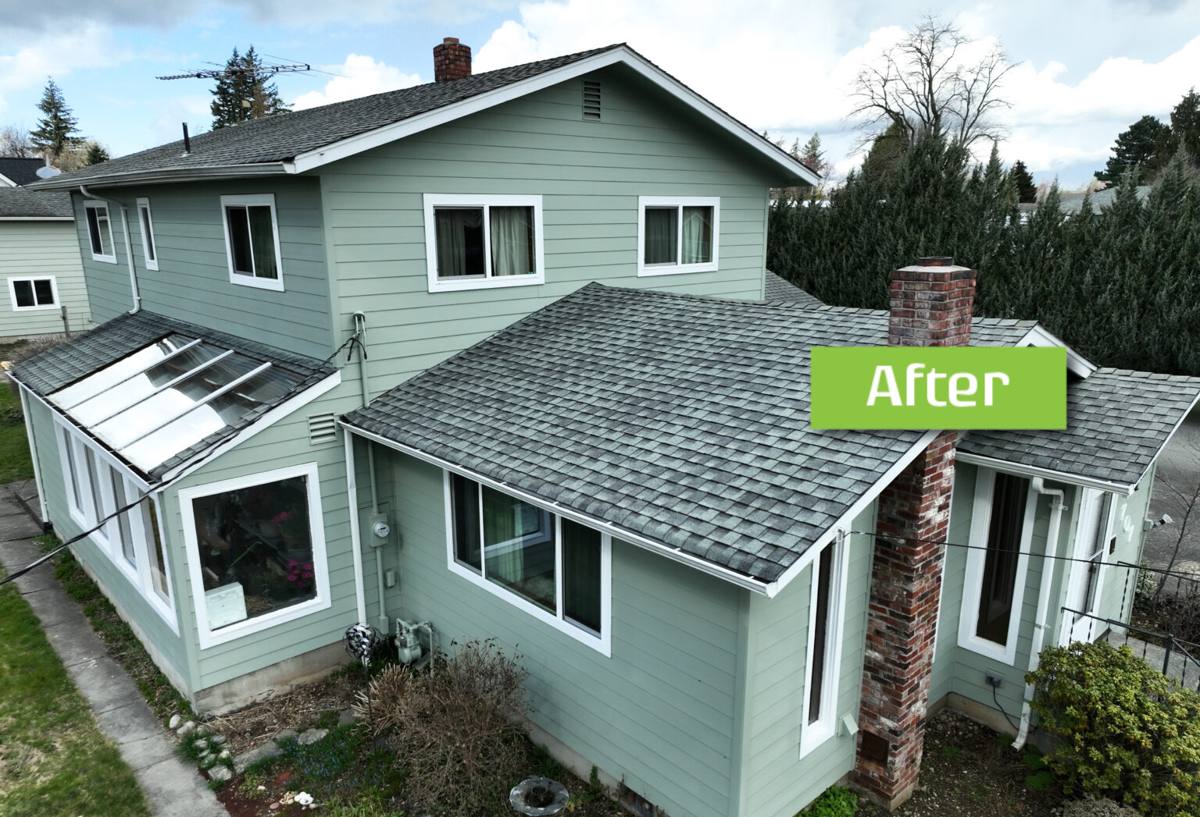
What Redmond's Climate Actually Does to a Roof
Western Washington's climate is often described in general terms, but the specific combination that hits Redmond hardest comes down to a few things:
Salt Air and Marine Moisture
Even away from the immediate waterfront, the Puget Sound region's marine air carries moisture and airborne salts that accelerate corrosion on exposed metal roofing components: flashing, fasteners, vent caps, and gutter hardware. Cheap or mismatched metal doesn't last as long here as it would in a drier inland climate.
Driving Rain
Rain in this region doesn't always fall straight down. Wind-driven rain pushes water sideways and upward under laps, ridges, and around penetrations like plumbing vents and skylights. A roof that's only detailed for vertical rainfall will eventually leak at these transition points, usually quietly, over years.
A Long Moss Season
Shade, moisture, and moderate temperatures for most of the year add up to ideal moss and algae growth conditions. On a lot of Redmond roofs, moss season is essentially year-round rather than a two-month nuisance. Moss holds water against the roofing surface, lifts shingle edges as it grows, and its root structure can work into the mat of asphalt shingles over time, shortening the roof's usable life well before its rated warranty period.
Signs a Redmond Roof Is Due for Replacement, Not Another Repair
Not every roof problem calls for full replacement, and we'll tell you honestly when a repair makes more sense. But there's a point where patching becomes a waste of money. Common signs we look for on Redmond homes:
- Granule loss heavy enough that you can see bare, shiny patches on multiple slopes
- Moss growth that keeps returning within a season or two of cleaning
- Soft or spongy decking felt underfoot during inspection, especially near valleys and eaves
- Daylight visible through the roof deck from inside the attic
- Multiple past repairs in different areas rather than one isolated problem spot
- A roof approaching or past 20-25 years old with asphalt shingles, especially with limited attic ventilation
- Consistent moisture staining on interior ceilings or in the attic near roof penetrations
What a Correct Roof Replacement Involves
A roof replacement is more than a materials swap. The parts most homeowners never see are usually what determines whether a roof lasts 15 years or 30.
Tear-Off and Deck Inspection
We remove the existing roofing down to the deck rather than layering over old material. This lets us actually see the plywood or plank sheathing underneath, which is where years of moss-related moisture and slow leaks tend to show up first as soft or delaminated wood. Any compromised decking gets replaced before new roofing goes down, not covered up.
Underlayment and Ice-and-Water Protection
Given how much wind-driven rain this region sees, we pay close attention to underlayment quality and placement, with extra protection at eaves, valleys, and around every penetration. This is the layer that keeps a roof watertight even if wind pushes water past the shingle surface.
Flashing Details
Flashing around chimneys, skylights, plumbing vents, and wall-to-roof transitions is where most leaks originate, not the open field of the roof. We use corrosion-resistant flashing appropriate for a marine-influenced climate and detail it to shed water rather than rely on caulk or sealant as a primary defense.
Ventilation
Proper intake and exhaust ventilation keeps attic moisture from condensing on the underside of the deck, which matters especially under Redmond's tree cover where roofs stay damp and cool longer than a roof in full sun. Ventilation also affects how long shingles last, since trapped heat and moisture age asphalt roofing prematurely.
Final Materials and Trim
Ridge caps, drip edge, and gutter aprons get tied together as a system so water is directed off the roof and away from the fascia and siding, not just dumped at the edge.
Roofing Material Options for Redmond Conditions
There's no single "best" roofing material for every home. The right choice depends on budget, roof pitch, how much shade the roof sits under, and how the home looks architecturally. Here's how the common options compare for a Redmond property specifically:
| Material | Moss Resistance | Typical Lifespan Here | Considerations for Redmond |
|---|---|---|---|
| Asphalt composition shingle | Moderate; benefits from algae-resistant granules | 20-30 years | Most common and cost-effective; needs regular moss maintenance under heavy tree cover |
| Metal (standing seam) | High; sheds moss more easily due to smooth surface and slope | 40-50+ years | Higher upfront cost; excellent for driving rain and long-term low maintenance |
| Cedar shake | Low without diligent upkeep | 20-30 years with maintenance | Traditional look but highest moisture and moss maintenance burden in this climate |
| Synthetic/composite shingle | Moderate to high depending on product | 30-50 years | Good middle ground on maintenance and appearance; verify warranty terms carefully |
We'll walk through these trade-offs honestly during your estimate rather than pushing whatever has the best margin. A steep, shaded roof with heavy tree cover is a different conversation than an open, sun-exposed roof on the same street.
Our Process for a Redmond Roof Replacement
1. On-Site Assessment
We inspect the roof, attic, and ventilation from the inside and out, checking deck condition, flashing points, and moss/moisture history rather than just estimating from the ground or a photo.
2. Written Scope and Options
You get a clear, written scope covering materials, ventilation changes if needed, flashing details, and a realistic cost range, with options rather than a single take-it-or-leave-it number.
3. Scheduling Around the Weather
Roofing in this region means working around rain windows. We plan the tear-off and dry-in sequence so your home isn't left exposed to open weather any longer than necessary.
4. Tear-Off, Deck Repair, and Installation
Old roofing comes off, the deck gets inspected and repaired as needed, and the new roof system goes on following manufacturer specifications for underlayment, fastening, and ventilation.
5. Cleanup and Final Walkthrough
Jobsite debris and nails get cleaned up, gutters are checked for debris from the tear-off, and we walk the finished roof with you before calling the job done.
Why It Matters to Hire a Crew That Already Works in Redmond
A roofing crew that mostly works in drier climates or hasn't dealt with this area's tree cover and moss cycle can miss things that matter: under-ventilating a shaded roof, skipping extra underlayment at vulnerable transitions, or not accounting for how much moss will regrow without proper maintenance guidance afterward. Crews that regularly work Redmond and the surrounding King County area know which details actually hold up here versus which ones look fine on installation day and fail in year three.
Local experience also means faster, more accurate estimates, since we're not guessing at how a particular roof pitch or tree canopy situation will behave over a Pacific Northwest winter. We've seen how these roofs age, and we build accordingly.
Roof Replacement Cost Factors for Redmond Homes
Every roof is different, but the factors that most commonly move the price on a Redmond replacement include:
- Roof size and number of slopes/facets
- Pitch and accessibility (steep roofs take longer and require more safety setup)
- Extent of deck repair needed once old roofing is removed
- Material choice (asphalt versus metal versus synthetic)
- Ventilation upgrades required to meet current standards
- Number and complexity of penetrations (skylights, chimneys, multiple vent stacks)
- Tree cover and moss remediation needed before or during the job
We give broad, honest ranges upfront and firm numbers after the on-site assessment, since no two Redmond roofs age the same way under the same tree line.
Maintenance That Extends Your New Roof's Life
A new roof still needs some ongoing attention in this climate, especially under tree cover. Keeping gutters clear of needles and leaves, having moss growth treated before it establishes, and getting an occasional visual check after major windstorms will do more to protect your investment than almost anything else. We're happy to talk through a simple maintenance routine specific to your property when we install your new roof.
If your Redmond roof is showing its age, or you just want an honest read on where it stands, we're glad to come take a look. Fill out the form below for a free, no-pressure estimate.