 Seattle Exterior
 Board & Batten Siding in Renton: What Local Homes Actually Need
Board and batten has become one of the most requested looks in Renton — that clean run of wide flat panels broken up by narrow vertical battens shows up on new builds off the hill and on remodels of older ramblers and split-levels alike. It reads modern, it reads farmhouse, it works on a lot of different rooflines. But the look is only half the job. In a climate that spends half the year wet, board and batten lives or dies on what's behind the panel, not just what's painted on it.
Renton sits close enough to Puget Sound and Lake Washington that homes deal with salt-tinged air on top of the standard King County soak. Add driving rain off the water, shaded lots that never fully dry out, and a moss season that can run from October into May, and you've got a siding environment that punishes anything installed loosely. We treat every board and batten job here as a moisture-management project first and a design project second.
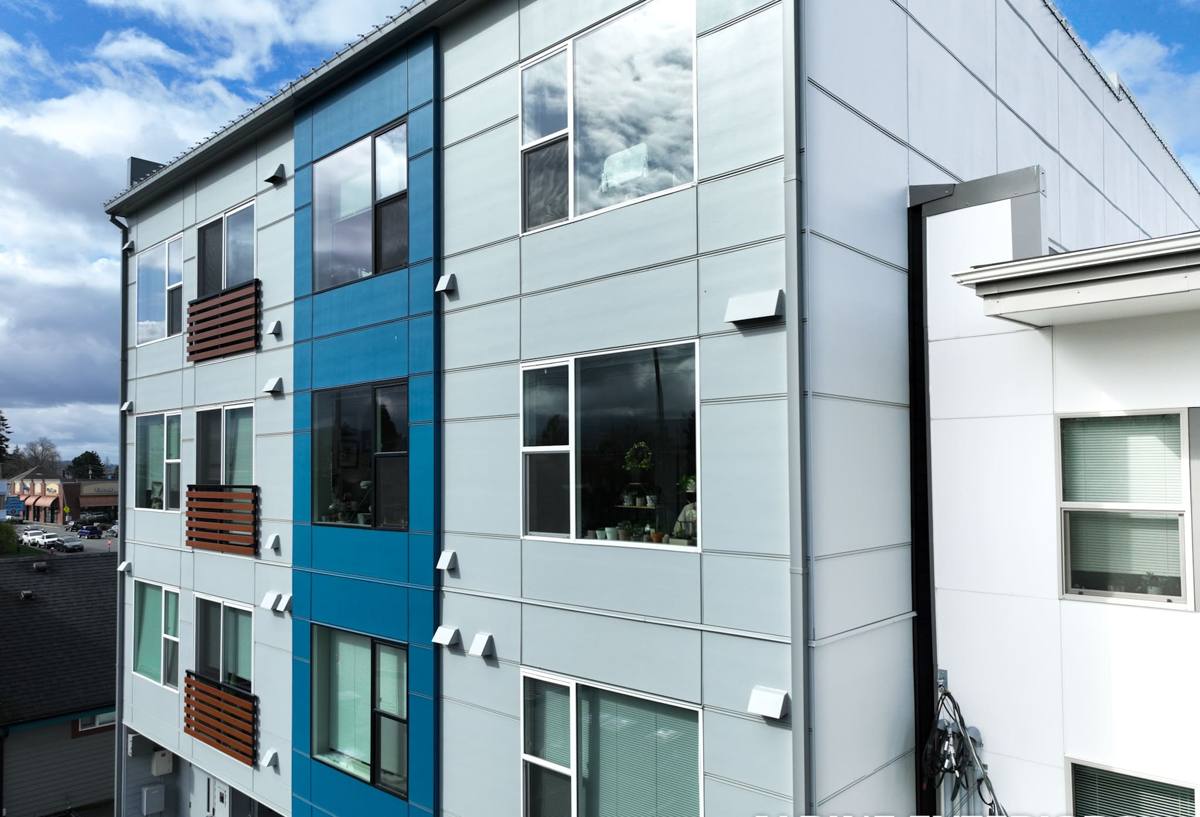
Why This Profile Is Riskier Than Lap Siding If It's Done Wrong
Traditional horizontal lap siding sheds water in overlapping courses — gravity does most of the work. Board and batten runs vertically, and the battens themselves create dozens of extra seams and fastening points running straight up the wall. Every one of those seams is a potential path for water if it's not detailed correctly. On a Renton home getting hit with sideways rain off a west or south exposure, that's not a small detail — it's the difference between siding that lasts decades and siding that traps moisture behind it within a few wet seasons.
The other issue is expansion and contraction. Cheaper or improperly cured materials move with temperature and moisture swings, and if the battens are face-nailed without room to move, you get cracking at the fastener points. We've seen it on other manufacturers' vertical siding jobs around the area — not a knock on the concept, just a reason installation quality matters more here than on almost any other siding style.
What a Correct Installation Actually Involves
- A drainage plane (weather-resistive barrier) installed shingle-style, lapped correctly at every seam and penetration
- Furring or a rainscreen gap behind the panels so water that does get behind the cladding can drain and the wall can dry
- Flashing at every window, door, and roof intersection — not caulk standing in for flashing
- Fastener placement and spacing that matches the manufacturer's engineering, not "close enough"
- Proper batten spacing and blind- or face-nailing per the product's approved fastening pattern
- Sealed and primed cut ends, especially at the bottom of the wall where splash-back is worst
Skip any one of these and the panels can look perfect for a year or two while moisture is already working behind them. That's the part homeowners can't see when they're comparing quotes, and it's the part that separates a siding job that holds up in King County weather from one that doesn't.
Why We Only Install James Hardie for This Profile
We install James Hardie fiber cement exclusively — we don't offer board and batten in vinyl, LP SmartSide, primed spruce, cedar, or other fiber cement brands like Cemplank or Allura. That's a deliberate standard, not a sales pitch, and it matters even more on a vertical profile than on standard lap siding.
Wood-based battens and boards (cedar, primed spruce, engineered wood) are the products most exposed to the exact conditions Renton throws at a wall: sustained moisture, shade, and moss. They can perform well for years with disciplined maintenance, but board and batten's narrow battens and exposed edges are where wood products show wear first — checking, swelling, and paint failure tend to start at those seams. Vinyl board and batten avoids rot but is a thin, flexible material that can show waviness on long vertical runs and doesn't hold paint if a homeowner ever wants to change the color.
James Hardie's fiber cement doesn't feed moss, doesn't rot, and is non-combustible — a real consideration with wildfire smoke seasons becoming a normal part of Pacific Northwest summers. The factory-applied ColorPlus finish is baked on and warranted separately from the substrate, which means the board and batten look holds its color instead of chalking out in a few seasons of UV and rain. For a profile with this many seams and this much surface exposed to weather, we want a material that isn't the weak point.
HardiePanel and Batten Systems for This Region
Most of our Renton board and batten jobs use HardiePanel vertical siding with HardieTrim battens over it, engineered for the HZ10 climate zone that covers Western Washington — built around resistance to moisture and cold-weather cracking rather than a hot, dry climate spec. It's the right engineering match for what this region actually does to a wall.
Cost Factors for Board & Batten in Renton
| Factor | Why It Moves the Price |
|---|---|
| Wall prep and existing damage | Rot or moisture damage found under old siding adds sheathing repair before new panels go up |
| Rainscreen/furring system | A drainage gap behind the panels adds labor and material but is the single biggest factor in long-term performance here |
| House height and access | Two-story walls, steep lots, and tight side yards (common on older Renton lots) increase labor time |
| Trim and batten density | Tighter batten spacing looks more custom but means more cuts, more fasteners, more labor |
| Color and finish | Standard ColorPlus colors are simplest; custom color-matching adds cost and lead time |
| Window and door count | Every opening needs flashing and trim detail — more openings, more precision work |
We don't quote board and batten off a square-footage rule of thumb pulled from a lap siding job. The rainscreen decision alone can be a meaningful swing in the estimate, and it's the one we push back on skipping, even when it's tempting to cut to hit a lower number.
Our Process for a Renton Board & Batten Job
1. On-Site Assessment
We walk the exterior, check for existing moisture damage, note sun and shade exposure on each wall, and look at how water currently moves off the roof and around the foundation — that tells us where the wall is already under stress before we touch it.
2. Tear-Off and Sheathing Check
Old siding comes off and we inspect the sheathing underneath. Any soft spots, rot, or hidden moisture damage gets repaired before anything new goes on — this is the point in the job where problems are cheapest to fix and easiest to hide forever if skipped.
3. Weather Barrier and Drainage Plane
We install the water-resistive barrier with correct shingle-lap sequencing and add the furring or rainscreen gap that lets the wall breathe and drain.
4. Flashing and Panel Installation
Flashing goes in at every window, door, and transition first. Panels and battens go up per Hardie's engineered fastening spec for our climate zone, with attention to expansion gaps and sealed cut ends.
5. Final Detail and Walkthrough
We check caulking, trim lines, and paint lines, then walk the finished job with the homeowner before calling it done.
Why Hiring a Crew That Already Works Renton Matters
Board and batten installation quality depends on judgment calls that don't show up in a spec sheet — how much rainscreen gap a shaded north wall actually needs versus a sun-exposed south wall, how tight to run battens near a downspout that dumps more water than the gutter was designed for, where moss pressure is going to be worst based on tree cover and sun exposure. A crew that's worked Renton roofs and walls repeatedly has already seen how King County's rain patterns behave on this housing stock — from older lake-adjacent homes to newer builds on the hill — and builds that experience into every wall we touch, rather than treating each job as a generic install.
We also know this region's inspection and permitting expectations, which keeps the job moving instead of stalling on paperwork or a failed inspection over a flashing detail.
Maintenance Reality for Board & Batten in This Climate
- Rinse the exterior annually, focusing on shaded walls where moss and algae take hold first
- Check caulking at trim and batten joints every couple of years and touch up as needed
- Keep gutters clear so overflow doesn't run down and concentrate water on specific wall sections
- Trim back vegetation and tree cover that keeps a wall shaded and damp longer than the rest of the house
- Watch for any hairline cracking at fastener points and have it looked at early rather than waiting
Done correctly with the right material, board and batten in Renton shouldn't demand much beyond this — but "correct" is doing a lot of work in that sentence, which is why the installation details above matter as much as the product choice.
If you're weighing board and batten for a Renton home, we're glad to come take a look, walk the walls with you, and put together a straightforward, no-pressure estimate — no obligation, just a clear picture of what the job actually involves for your house.