 Seattle Exterior
 Siding Installation in University District: What Local Homes Are Up Against
University District sits inside a housing stock that spans early-1900s craftsman bungalows, mid-century infill, and newer multi-family construction wedged in around the University of Washington. That mix means siding problems in this neighborhood rarely have a single cause. An older home might be carrying its second or third layer of siding over original sheathing that was never designed for today's insulation standards. A newer build might have been sided quickly during a construction boom, with shortcuts in flashing or fastening that won't show up as a problem for a few years. Either way, when it's time to replace siding here, the installation itself — not just the material — is what determines whether the next 30 years go well or badly.
We install siding across King County, but University District jobs come with their own pattern of issues tied to lot density, mature tree canopy, and the way older homes were built before modern weather-resistive barriers were standard. Understanding that pattern is most of what separates a siding job that lasts from one that needs attention again in a decade.
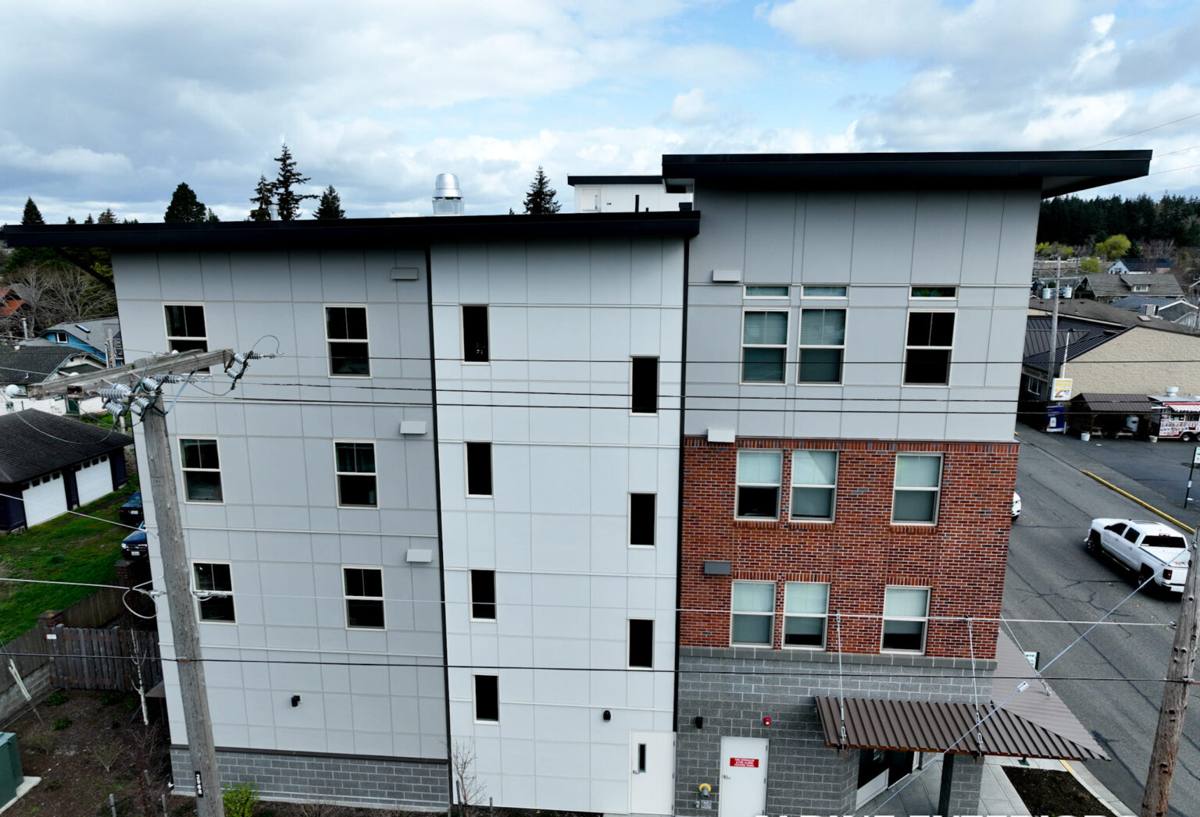
Why the Local Climate Raises the Stakes
Driving Rain and Wind-Driven Moisture
Seattle doesn't get the heaviest annual rainfall in the country, but it gets some of the most persistent — long stretches of steady, wind-pushed rain rather than short downpours. Wind-driven rain doesn't just fall on siding, it gets forced sideways into every seam, joint, and fastener penetration. Siding that isn't installed with proper overlaps, sealed joints, and a drainage path behind the cladding will eventually let that moisture in, even if the surface material itself is fine.
Moss Season and What It Does to Siding
The Puget Sound region's long wet season, mild temperatures, and shaded lots — common in a neighborhood with mature street trees — create ideal conditions for moss, algae, and mildew growth on exterior surfaces for much of the year. Beyond the cosmetic issue, moss and algae hold moisture directly against the siding surface far longer than open air would, which accelerates rot in wood-based products and can degrade paint and caulking faster than in drier climates.
Marine Air and Regional Humidity
Seattle's climate is shaped by its proximity to Puget Sound, and that marine influence — humid air, mild but persistent dampness, and a long shoulder season between "wet" and "dry" — reaches inland neighborhoods like University District as much as it does the waterfront. Siding materials and installation details that work fine in a drier climate often underperform here, which is why local installation practices matter as much as the product label.
What a Correct Siding Installation Actually Involves
Siding is a system, not a single layer. A house can have expensive, high-quality siding boards and still fail early if the system behind them is wrong. Correct installation includes:
Weather-Resistive Barrier and Rainscreen Gap
A continuous weather-resistive barrier goes over the sheathing before any siding is hung, and in our climate we install furring strips to create a drainage gap — a rainscreen — behind the siding. That gap lets any moisture that does get past the cladding drain and dry out instead of sitting against the wall assembly.
Flashing and Trim Details
Windows, doors, and every horizontal trim piece are the places water actually gets in. Correct flashing directs water outward and down, never into a seam. This is the part of a siding job that's invisible once it's finished but is the single biggest predictor of whether a home stays dry.
Fastening and Joint Treatment
Fastener type, spacing, and depth all matter — over-driven or under-driven fasteners create gaps or crack the board. Butt joints and seams need to be treated according to the manufacturer's specification, not "close enough," because every joint is a potential entry point for wind-driven rain.
Signs Your Current Siding Is Already Failing
Because moisture damage happens behind the siding before it's visible on the surface, many University District homeowners don't know there's a problem until it's significant. Watch for:
- Soft or spongy spots when you press on the siding, especially near the bottom courses
- Paint that's peeling or bubbling in a pattern, not just fading evenly
- Persistent moss or dark staining that comes back within weeks of cleaning
- Visible gaps, warping, or boards that have pulled away from the wall
- Musty smells or unexplained humidity in rooms along an exterior wall
- Siding that was installed more than 20-25 years ago without a rainscreen gap
Any one of these is worth a professional look before it becomes a sheathing or framing repair, which costs considerably more than the siding itself.
Our Installation Process
We run the same process on every University District job, adjusted for the specific house:
- Assessment. We inspect the existing siding, sheathing, and trim to identify hidden moisture damage before we quote the job, not after we've started tearing it off.
- Tear-off and sheathing check. Old siding comes off, and any soft or damaged sheathing is identified and repaired — this is where problems that were invisible from the outside get caught and fixed.
- Weather barrier and drainage gap. A continuous weather-resistive barrier and rainscreen furring go on before a single piece of Hardie board is hung.
- Flashing. Every window, door, and horizontal transition gets properly flashed and lapped to shed water outward.
- Installation. James Hardie boards, panels, or shingles go on to manufacturer fastening and clearance specifications, with joints and seams treated correctly.
- Final walkthrough. We inspect the finished job with you and cover care and maintenance specific to the product line installed.
Why We Install Only James Hardie Fiber Cement Siding
We made a decision to install one siding system, not because it's the cheapest option on the market, but because it's the one we're confident will still be performing correctly in Seattle's climate two and three decades from now. James Hardie fiber cement is non-combustible, doesn't rot or feed insects the way wood-based products can, and holds its shape and paint line far better than vinyl in temperature swings. Its ColorPlus factory finish is baked on under controlled conditions, which produces a more consistent, longer-lasting color than field-applied paint.
Hardie also engineers regional product lines — including HZ5 formulations built for cold, wet climates like ours — rather than selling one generic board everywhere. Combined with a strong transferable warranty, that's the combination we're willing to put our name behind. We don't install LP SmartSide, vinyl, Cemplank, Allura, or primed wood siding, not because those products have no merit, but because after years in this trade we've settled on the one system that gives University District homeowners the best long-term outcome for the climate they actually live in.
What Siding Installation Costs in University District
Every quote depends on the specific house, but the factors that move the price are consistent from job to job:
| Cost Factor | Why It Matters |
|---|---|
| Tear-off and disposal | Multiple layers of old siding or hidden damage add labor and disposal cost |
| Sheathing repair | Moisture-damaged sheathing found during tear-off must be replaced before new siding goes on |
| Home size and complexity | Dormers, multiple stories, and detailed trim take more labor per square foot than a simple rectangular wall |
| Siding profile | Lap siding, shingle-style panels, and board-and-batten each install differently and price differently |
| Trim and accessory work | Fascia, soffits, corner boards, and window trim are often replaced or upgraded alongside the field siding |
| Access and lot conditions | Tight lots, mature landscaping, or limited staging space in denser University District blocks can add time |
We provide a detailed, itemized estimate after an in-person assessment rather than a rough number over the phone, because the tear-off is what usually reveals the real scope of the job.
Questions to Ask Before You Hire a Siding Contractor
- Are you licensed, bonded, and insured to work in Seattle and King County?
- Will you inspect and repair damaged sheathing before installing new siding, or install over it?
- Do you install a rainscreen drainage gap, and is that included in the quote?
- Who handles flashing at windows, doors, and trim — is that in-house or subcontracted?
- What's covered under the manufacturer's warranty versus your workmanship warranty?
- Can you walk me through your process for this specific house before work starts?
Why Local Experience in University District Matters
A crew that regularly works in and around University District already understands the neighborhood's mix of older housing stock and denser infill, knows what Seattle's permitting and inspection process typically requires for exterior work, and has seen how moss, shaded lots, and driving rain actually affect siding here over time — not in theory, but on real jobs. That familiarity shows up in small decisions during the install: where to pay extra attention to flashing, how to handle a lot with limited access, and what to flag for a homeowner before it becomes a bigger repair. It's the difference between a contractor learning the neighborhood on your project and one who already knows it.
If your siding is showing signs of wear, or you're planning ahead for a replacement, we're happy to take a look and give you a straightforward, no-pressure estimate using the form below.