 Seattle Exterior
 Siding Repair Built for Queen Anne's Exposure
Queen Anne sits high above the rest of Seattle, and that elevation is a double-edged sword. The views are real, but so is the wind-driven rain that comes off the water and climbs the hill with nowhere to hide. Homes here take on moisture from more angles than houses tucked into flatter, more sheltered parts of King County, and that shows up in the siding first — at the corners, under window sills, and along any wall that faces the weather. Siding repair in this neighborhood isn't a one-size-fits-all job. It has to account for how water actually moves across a home at this elevation, and what years of salt air, driving rain, and a long moss season do to different siding materials over time.
We repair siding on Queen Anne homes regularly, and we install exclusively James Hardie fiber cement — we don't touch vinyl, LP SmartSide, cedar, or primed spruce. That single-product focus means every repair we do is informed by how Hardie behaves in this climate, and it shapes how we diagnose problems even on homes clad in something else.
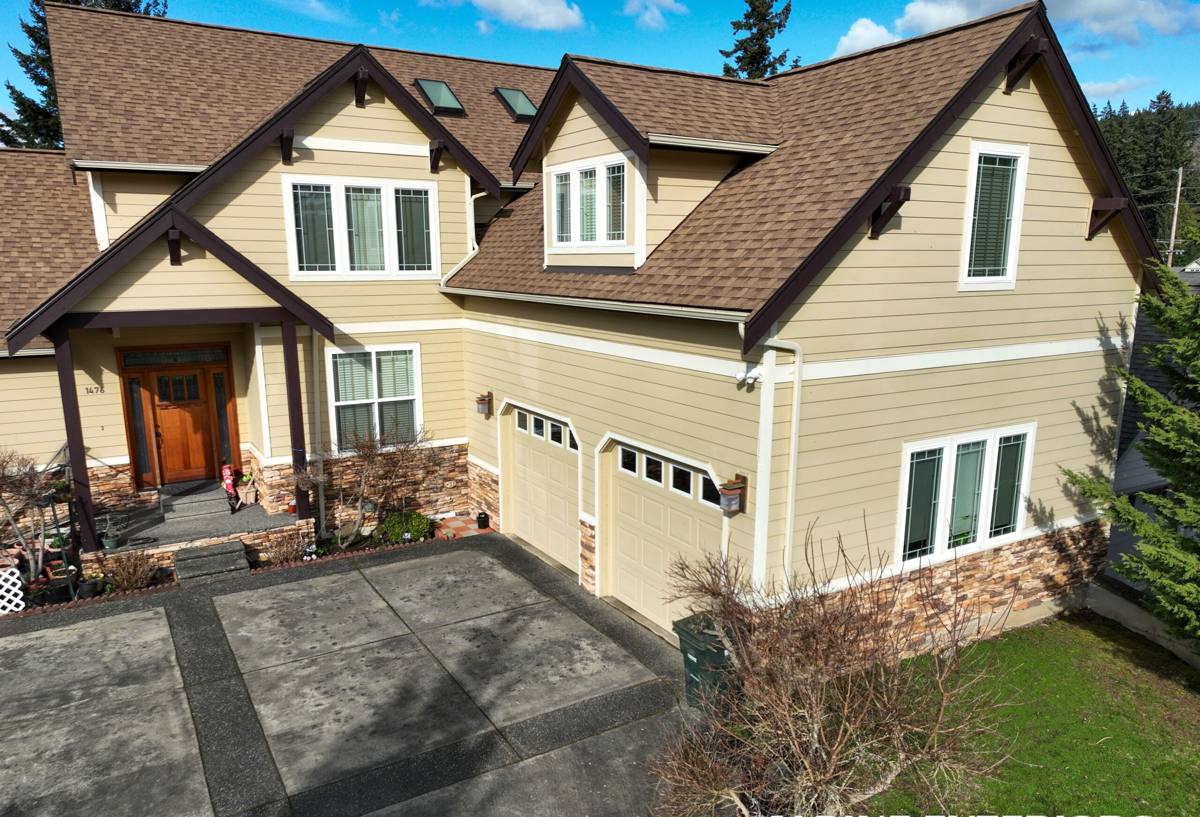
What Queen Anne's Climate Does to Siding
Salt Air and Wind-Driven Rain
Even a few miles inland from Puget Sound, homes on exposed slopes pick up airborne salt that accelerates corrosion on fasteners, flashing, and any exposed metal trim. Combined with rain that doesn't fall straight down but gets pushed sideways into seams and laps, this creates a slow, steady moisture load that most siding materials weren't built to shed indefinitely.
Moss and Prolonged Dampness
Seattle's wet season runs long, and shaded, north-facing walls — common on lots with mature trees or tight setbacks — stay damp for weeks at a stretch. Moss doesn't just look bad; it holds water against the siding surface, keeps the substrate from drying out between storms, and accelerates rot in any wood-based product. Fiber cement doesn't feed moss the way wood does, but moss still needs to be kept off the surface and out of laps and trim joints.
Temperature Swings and Material Movement
King County doesn't see extreme heat, but the freeze-thaw cycles of a Pacific Northwest winter still stress caulk joints, fastener holes, and any place where two materials meet. Repeated expansion and contraction is one of the most common reasons a repair that looked fine in summer starts failing by spring.
Common Siding Repair Issues We See in Queen Anne
- Rotted or delaminating wood/composite panels at ground level or under downspouts where water sits longest
- Cracked or buckled boards from moisture absorption and swelling, especially on older cedar or engineered wood siding
- Failed caulking around windows, trim, and butt joints that lets water behind the cladding
- Moss and algae staining on shaded elevations that traps moisture against the wall
- Corroded or popped fasteners from salt exposure and repeated freeze-thaw movement
- Damaged flashing at windows, doors, and roof-to-wall transitions, often the real source of a "siding" leak
- Impact damage from wind-blown debris, tree limbs, or storm activity
What a Correct Siding Repair Actually Involves
A quality repair is never just "swap the damaged board and caulk the edges." That approach hides the problem instead of fixing it, and on a Queen Anne home exposed to this much moisture, a shortcut repair usually fails again within a season or two.
Step 1: Find the Real Source of the Damage
Visible siding damage is often a symptom, not the cause. We check flashing, house wrap, window and door integration, and grading before we touch the siding itself. Replacing a rotted board without fixing a failed flashing detail behind it just guarantees a repeat repair.
Step 2: Inspect What's Behind the Cladding
Once damaged panels are removed, we look at the sheathing, house wrap, and framing underneath. If water has been getting in for a while, there may be hidden rot that needs to be addressed before new siding goes back on — patching over compromised sheathing is not a real repair.
Step 3: Match Material and Method Correctly
Repairs need to match the existing product's profile, reveal, and fastening pattern, or the patch will be visually obvious and behave differently in weather than the surrounding wall. Where the existing siding isn't fiber cement, we'll explain honestly what a like-for-like patch can and can't achieve, and where a full section or wall replacement in James Hardie product makes more long-term sense.
Step 4: Rebuild the Water Management Details
Proper flashing, correct lap sequencing, and sealed penetrations matter more than the siding material itself when it comes to keeping water out. This is where most amateur repairs fail — the new board looks fine, but the water path behind it was never actually corrected.
Step 5: Finish and Verify
Caulking, paint or factory-finish touch-up, and a final check that everything sheds water the way it's supposed to. We don't consider a repair finished until it looks right and performs right.
Repair vs. Replace: How We Help You Decide
Not every damaged area needs a full re-side, but sometimes patch repairs are throwing money at a wall that's past the point of spot-fixing. Here's how we think through that decision with homeowners:
| Factor | Points Toward Repair | Points Toward Replacement |
|---|---|---|
| Extent of damage | Isolated to one or two areas | Spread across multiple elevations |
| Underlying sheathing | Dry, solid, undamaged | Soft, rotted, or water-stained |
| Age of existing siding | Newer, still under warranty | Nearing or past expected service life |
| Material type | Fiber cement in good condition elsewhere | Wood, vinyl, or composite showing widespread wear |
| Cause of damage | One-time impact or isolated flashing failure | Chronic moisture exposure from design or grading issues |
We'll always give you a straight answer on which side of that table your home falls on — we're not trying to sell a full re-side when a targeted repair will genuinely hold up.
Why We Repair (and Recommend) James Hardie Fiber Cement
When repair work opens up the question of what to replace damaged sections with, our answer is consistent: James Hardie fiber cement, and nothing else. It's the only product we install, for reasons that matter specifically in this climate:
- Non-combustible material that doesn't rot, warp, or feed moss the way wood-based products can
- ColorPlus factory finish that resists the fading and chalking that repeated rain and UV exposure cause on field-painted materials
- HZ5 product engineering designed for wetter, harsher climates like the Pacific Northwest
- Strong transferable warranty that protects the investment if you sell the home
- Proven long-term performance when installed to manufacturer spec, which is the standard we hold every job to
We won't install vinyl, LP SmartSide, Cemplank, Allura, primed spruce, or cedar. Each of those has legitimate uses in the right context, but we've made a professional decision to standardize on one product system so every repair and every install meets the same bar, on every Queen Anne home we work on.
Why Hiring a Crew That Already Works Queen Anne Matters
Queen Anne's mix of older homes, hillside lots, and varied sun/shade exposure means no two repair jobs look quite the same. A crew that regularly works this neighborhood already understands which elevations take the worst of the wind-driven rain, where moss tends to build up fastest, and how Seattle's permitting and inspection process works for exterior repair work in King County. That familiarity shows up in fewer surprises mid-job and a repair that's built for how this specific hillside actually behaves in weather — not a generic fix pulled from a different climate entirely.
What to Check Before Hiring Anyone for Siding Repair
- Do they inspect what's behind the siding, or just patch what's visible?
- Can they explain what caused the damage, not just how they'll cover it up?
- Do they carry proper licensing and insurance for exterior work in Washington State?
- Will they put the repair scope and materials in writing before starting?
- Do they have experience with your specific siding material, especially if it's fiber cement?
- Are they upfront about repair vs. replacement trade-offs, or pushing one option regardless of your home's condition?
Get an Honest Look at Your Siding
If your Queen Anne home has damaged, cracked, or moss-covered siding, or you're seeing water stains that suggest something's wrong behind the wall, we're happy to take a look and give you a straight assessment — repair or replace, and why. Request a free, no-pressure estimate using the form below, and we'll walk the property with you before recommending anything.