 Seattle Exterior
 Siding Replacement Built for Shoreline's Waterfront Climate
Shoreline sits right where Puget Sound weather does its worst work on a house: salt-laden air drifting in off the water, driving rain that hits siding sideways instead of straight down, and a moss season that can run eight or nine months out of the year in shaded, north-facing yards. Siding here isn't just cosmetic — it's the first and most important line of defense between that weather and your home's framing. When it fails, it usually fails quietly, behind the surface, long before anyone notices a problem from the street.
We work Shoreline regularly, and the pattern of failure we see is consistent: siding that looked fine from twenty feet away but was holding moisture at the seams, behind trim, or under a coat of paint that had stopped doing its job years earlier. A correct siding replacement isn't about swapping old boards for new ones in the same configuration — it's about fixing the moisture path first, then installing a product engineered for exactly this kind of exposure.
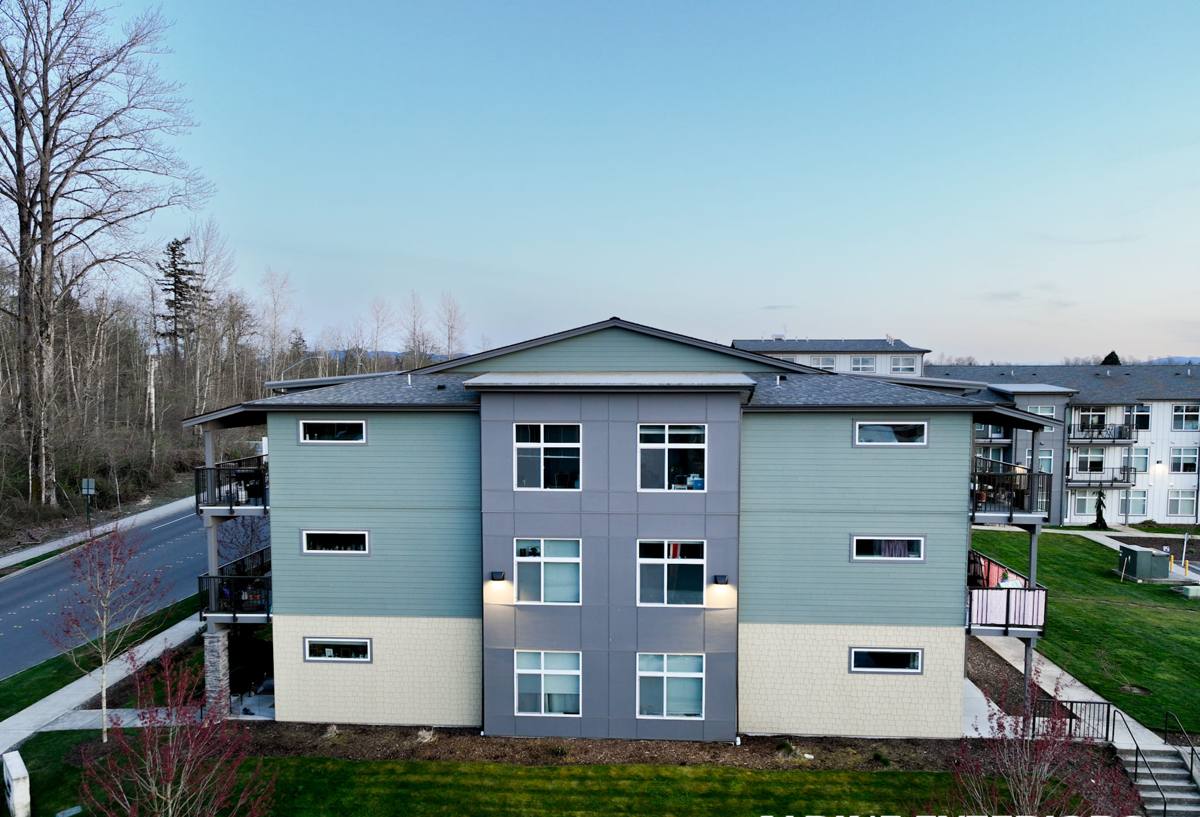
What Shoreline's Climate Actually Does to Siding
Salt Air and Corrosion
Homes closer to the Sound deal with airborne salt that accelerates corrosion on fasteners, flashing, and any exposed metal trim. Siding materials that rely on paint film alone for protection are more vulnerable here — once that film is compromised, salt-laden moisture gets a much easier path into the substrate.
Driving Rain and Wind-Driven Wetting
Puget Sound storms don't always fall straight down. Wind off the water pushes rain sideways into wall assemblies, which puts real stress on siding laps, butt joints, and anywhere two pieces of material meet. If those joints aren't detailed correctly — proper overlap, correct fastening, sealed or designed-to-shed seams — water finds its way behind the cladding instead of running off of it.
Moss, Algae, and Prolonged Dampness
Shoreline's tree cover and marine humidity keep north- and west-facing walls damp for long stretches, which is exactly the environment moss and algae need to take hold. On siding materials that absorb moisture readily, that damp organic growth isn't just an appearance issue — it holds water against the surface and speeds up whatever deterioration is already happening underneath.
Signs Your Shoreline Home Needs Siding Replacement, Not Just a Repair
- Soft or spongy spots when you press on the siding, especially near the bottom courses and around window trim
- Paint that won't hold — bubbling, peeling, or needing repainting far more often than it should
- Visible gaps, warping, or buckling in boards, particularly on the walls that face prevailing wind and rain
- Persistent moss or algae staining that comes back within a season of cleaning
- Rising energy bills with no other explanation, which can point to moisture-compromised insulation behind the siding
- Siding that's original to a home built or last re-sided more than 20-25 years ago, especially wood-based products
A repair makes sense when the problem is isolated — one damaged board, one bad seam. Replacement is the right call when the damage is widespread, when the underlying moisture barrier is compromised, or when the material itself (cedar, primed spruce, older vinyl) simply isn't built to hold up to another decade of this climate.
What a Correct Siding Replacement Involves
Tear-Off and Inspection
Old siding comes off entirely, which is the only way to actually see what's happening underneath — sheathing condition, existing moisture damage, and whether previous work was flashed and wrapped correctly. Skipping this step and installing new siding over a compromised wall just buries the problem for the next owner to find.
Weather Barrier and Flashing
A correctly installed water-resistive barrier, properly lapped and taped, along with correct flashing at every window, door, and penetration, is what actually keeps Shoreline's wind-driven rain out of the wall assembly. This layer matters more than the siding material itself — it's the backup system that has to work even if water gets past the cladding.
Material Installation to Manufacturer Spec
Fastener placement, nailing patterns, joint treatment, and clearances from grade and rooflines all have to follow the manufacturer's installation instructions exactly. This is where a lot of siding jobs go wrong — the material itself may be sound, but incorrect installation (over-driven nails, missed gaps for expansion, unsealed butt joints) creates the failure points that show up years later.
Trim, Caulking, and Finish Details
The finish work — corner trim, window and door casing, caulking at transitions — is what determines whether water sheds cleanly off the wall or finds a place to sit and soak in. It's also the detail work that separates a siding job that looks good for one season from one that looks good for twenty years.
Why We Install Only James Hardie Fiber Cement
We don't install vinyl, LP SmartSide, cedar, or primed spruce, and Shoreline's climate is a big part of why. Those materials each have real advantages in the right setting, but none of them hold up as consistently against the combination of salt air, sustained dampness, and heavy annual rainfall that Shoreline homes deal with year after year.
| Material | How It Handles This Climate |
|---|---|
| Cedar / primed spruce | Absorbs moisture, needs regular repainting and sealing, more vulnerable to moss and rot in damp, shaded conditions |
| Vinyl siding | Can warp or become brittle with temperature swings, seams rely on overlap rather than a sealed joint, color fades over time |
| LP SmartSide | Engineered wood product — performs well when installed and maintained correctly, but wood-strand core is more moisture-sensitive at cut edges than fiber cement |
| James Hardie fiber cement | Non-combustible, dimensionally stable, engineered HZ product line for Pacific Northwest moisture exposure, factory-applied ColorPlus finish resists fade and doesn't need repainting on the same cycle |
James Hardie's HZ5 product line is engineered specifically for climates like ours — freeze-thaw cycles, sustained moisture, and coastal exposure. It doesn't absorb water the way wood-based products do, which takes moss growth and rot risk largely out of the equation when the installation is done correctly. The ColorPlus factory finish also means the color layer is baked on under controlled conditions, not applied on-site where weather and temperature affect how well paint bonds and cures.
Cost Factors for Shoreline Siding Replacement
| Factor | Why It Affects Cost |
|---|---|
| Extent of hidden damage | Rot or moisture damage found during tear-off adds sheathing repair before new siding goes on |
| Home size and wall complexity | More corners, gables, and trim details mean more labor and material cuts |
| Siding profile and accessories | Lap width, trim style, and corner details affect material cost and installation time |
| Current siding material | Removal of certain materials (e.g., old stucco or multiple layers) takes more labor than others |
| Site access | Waterfront lots, steep grades, or tight side-yards common in Shoreline can affect staging and labor time |
We give real, project-specific numbers after walking the home — broad national averages don't account for what's actually happening on your walls or the access conditions of your particular lot.
Why Hiring a Crew That Already Works Shoreline Matters
Shoreline isn't a generic Seattle suburb from a siding crew's perspective — it has its own mix of waterfront exposure, mature tree canopy, and King County permitting requirements that a crew unfamiliar with the area has to learn on your project instead of arriving already knowing. A crew that regularly works Shoreline homes already understands which walls typically take the worst weather exposure, how local moss and moisture patterns behave through the seasons, and what correct flashing and barrier detailing looks like for this specific environment.
That local experience shows up in the details that matter most — the ones you can't see once the siding is back on the wall.
Our Process for a Shoreline Siding Replacement
- On-site inspection and honest assessment of whether the home needs repair or full replacement
- Tear-off with a full look at sheathing and existing moisture conditions
- Repair of any compromised sheathing or framing found during tear-off
- Installation of a correctly lapped and taped weather-resistive barrier and flashing at every penetration
- James Hardie fiber cement installation to manufacturer specification
- Trim, caulking, and finish work, followed by a final walkthrough
If you're weighing a siding repair against full replacement, or you've noticed moss, soft spots, or paint failure on your Shoreline home, we're happy to take a look and give you a straight answer — no pressure, no upsell. Reach out for a free estimate using the form below.