 Seattle Exterior
 Storm Damage Roofing in University District: What Makes This Neighborhood Different
University District sits in one of the more tree-heavy, older-housing pockets of Seattle, and that combination shapes what "storm damage" actually looks like on a roof here. You've got a mix of early-1900s craftsman bungalows, postwar houses, and multifamily rental buildings serving the University of Washington community, many with roofs that have been re-covered at least once and flashing details that were adequate when they were installed but haven't kept pace with today's wind and rain loads. Add in mature big-leaf maples, cedars, and other overhanging canopy common to the neighborhood's older lots, and you have a setup where storms don't just test the roof covering — they test every seam, valley, and penetration underneath it.
Seattle's weather pattern doesn't produce the kind of catastrophic hail or tornado damage you'd see in other parts of the country. What it produces instead is a steady grind: driving rain pushed sideways by wind gusts, saturated ground that loosens tree roots and drops limbs, and long stretches of damp, shaded conditions that let moss and organic growth work into roofing material year-round. On a University District roof, storm damage is often less about a single dramatic event and more about a series of smaller hits — a gust that lifts a shingle tab, a branch that cracks a few tiles, a wind-driven rain event that finds the one seam that was already marginal — that compound over a season.
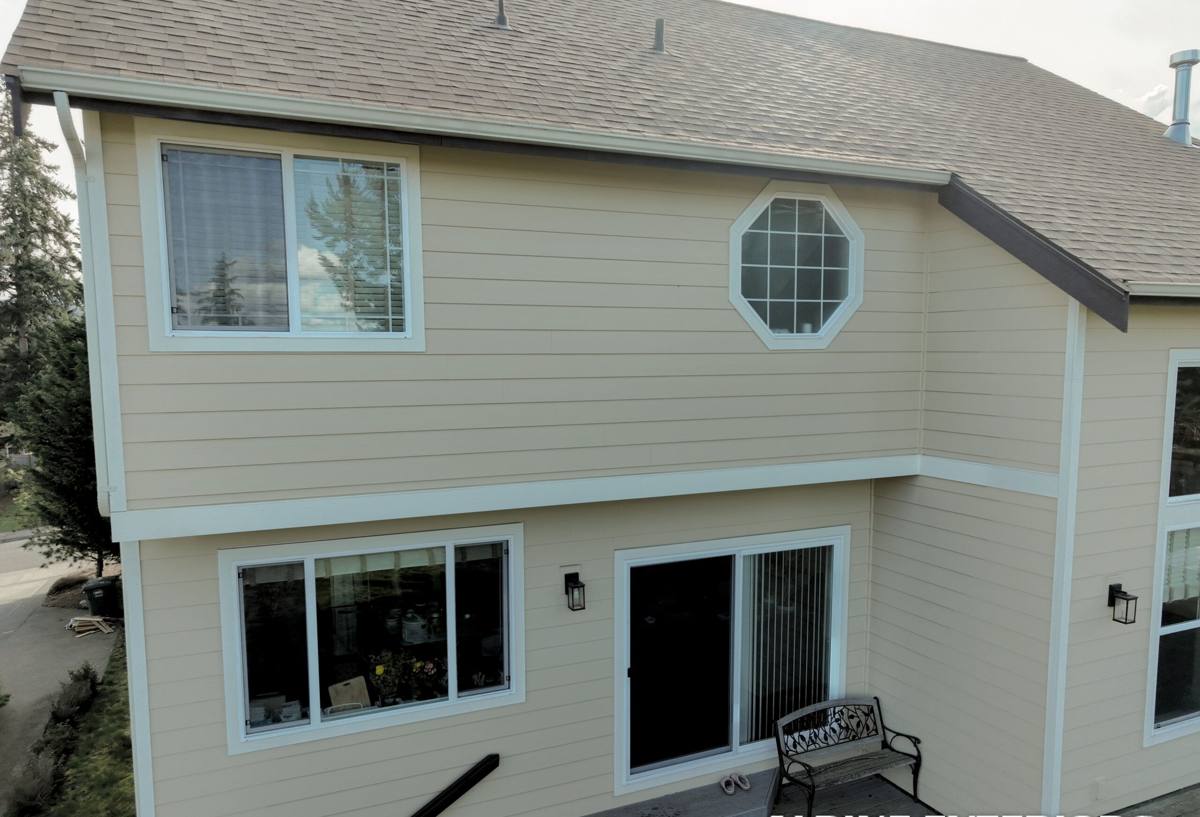
Common Storm Damage We See in U-District Homes
Wind and Wind-Driven Rain
Seattle storms rarely bring the sustained straight-line winds you'd get in the Midwest, but they do bring gusty, direction-shifting wind combined with heavy rain — a combination that's harder on a roof than either element alone. Wind lifts shingle edges and loosens nail seals; the rain that follows finds its way under the lifted edge and into the underlayment or decking before anyone notices a problem. This is especially common on roofs facing prevailing storm direction, and on lower-slope sections common on older U-District additions and porch roofs, where water has less help draining and more time to find a way in.
Tree Debris and Falling Limbs
Mature trees are one of the defining features of this neighborhood, and they're also one of the more predictable sources of storm damage. Wind and saturated soil are a bad combination for older trees, and even a moderate storm can bring down limbs onto a roof. Damage ranges from obvious — cracked or punctured shingles, dented gutters, a hole in the decking — to subtle, like a branch that scrapes across a roof plane during a windstorm and abrades the granule surface of the shingles without breaking anything outright. That kind of abrasion damage shortens the life of the roofing even though nothing looks visibly "broken" from the ground.
Moss and Long-Term Moisture Damage
This isn't damage from a single storm, but storms make it worse. University District's tree cover means extended shade on many roof planes, and shade plus regular rain is exactly what moss needs to establish. Moss holds moisture against the roofing surface long after a storm has passed, works its way under shingle tabs and into shake or tile joints, and accelerates rot in the decking below. A roof that's already carrying a moss load going into storm season is far more likely to develop leaks from wind and rain events that a clean, well-maintained roof would shrug off.
How to Tell If Your Roof Needs Storm Repair
Most storm damage isn't obvious from the ground, and homeowners often only find out about it when a leak shows up inside — by which point the damage has usually been sitting for a while. After any significant wind or rain event, it's worth doing a quick check for these signs:
- Shingle tabs or pieces in the yard, gutters, or on the ground near the foundation
- Visible gaps, lifted edges, or curling on roof planes you can see from the ground or a second-story window
- New or worsening water stains on interior ceilings, especially near chimneys, skylights, or where roof planes meet
- Gutters pulling away from the fascia, sagging, or overflowing during rain
- Granules collecting in gutters or at downspout outlets — a sign of abrasion or aging shingles
- Moss or dark streaking that's noticeably thicker or spreading faster than in past seasons
- Soft spots or give when walking near a chimney, vent, or skylight (a sign of decking damage — do not walk the roof yourself if you suspect this)
Any one of these on its own might be minor. Two or three together, especially after a storm, is a good reason to have someone look before the next round of rain.
What a Correct Storm Damage Repair Actually Involves
Inspection First, Not Just a Patch
A repair that only addresses the spot you can see from the ground is a repair that's likely to fail again in the next storm. The right approach starts with getting on the roof and checking the surrounding field, not just the obviously damaged section — wind and rain damage tends to weaken material beyond the visible break point, and a branch strike often loosens fasteners well outside the point of impact. We also check the decking underneath any area with suspected water intrusion, because shingles can look intact while the wood below has already started to soften.
Matching Materials, Not Just Covering the Hole
Patching storm damage with mismatched shingles or an incompatible underlayment creates a weak point that shows up later — either as a visible seam that fails first in the next storm, or as a warranty problem if the repair doesn't match the manufacturer's installation specs. Where an exact color match isn't available (common on older roofs where the original product line has been discontinued), we'll walk you through the realistic options rather than guessing and hoping it blends in.
Flashing and Underlayment Get the Same Attention as the Shingles
Most storm leaks that keep coming back after a repair trace back to flashing — around chimneys, skylights, vent pipes, and roof-to-wall transitions — not the shingle field itself. Flashing is metal, it moves differently than roofing material in temperature swings, and it's the first thing to work loose in repeated wind events. Any storm repair we do checks flashing condition and underlayment integrity in the repair zone, not just the shingles on top, because covering a compromised flashing detail with new shingles just delays the next leak.
Repair vs. Replacement: Cost Factors
Not every storm-damaged roof needs a full replacement, but knowing which situation you're in matters for both your budget and your timeline. These are the factors that typically drive the decision:
| Factor | Favors Repair | Favors Replacement |
|---|---|---|
| Extent of damage | Isolated to one or two roof planes or a small area | Damage spread across multiple planes or the whole roof |
| Age of existing roof | Roof is under 10-12 years old | Roof is near or past its expected service life |
| Decking condition | Decking is sound under the damaged area | Decking shows rot or soft spots in multiple locations |
| Material availability | Matching material is still available | Original product is discontinued and mismatch would be significant |
| Moss/moisture history | Roof has been reasonably maintained | Heavy, long-term moss load has already degraded material broadly |
| Insurance scope | Adjuster scope matches a repair | Adjuster scope or damage extent supports full replacement |
We'll always tell you honestly which category your roof falls into. A repair that's going to need to be redone in two years isn't a good use of your money, but a full replacement isn't the right call either when a targeted repair will genuinely hold.
Our Process for University District Storm Repairs
1. On-Site Assessment
We inspect the roof in person — not just the damage you called about, but the surrounding area, flashing points, and attic access where visible, to understand the full scope before quoting anything.
2. Clear, Written Scope
You get a straightforward explanation of what's damaged, what needs to happen to fix it correctly, and what it costs — no pressure to upsize the job, and no vague line items.
3. Documentation for Insurance, If Needed
If you're filing a storm damage claim, we document the damage with photos and a written scope that your insurer's adjuster can work from. We're not a public adjuster and we don't negotiate your claim for you, but we make sure the roofing side of the paperwork is accurate and complete.
4. The Repair Itself
Work is done to match the existing roofing system as closely as possible, with flashing and underlayment addressed alongside the visible shingle damage, and decking replaced wherever it's compromised rather than covered over.
5. Final Walkthrough
Before we consider the job done, we walk the repair area with you (from the ground or accessible vantage points) and explain what was done and what to watch for going forward.
Why a Local Crew That Knows University District Matters
A roof in University District behaves differently than a roof in a newer, more open Seattle suburb, and a crew that works this neighborhood regularly knows that going in. We know that heavy tree canopy means moss and debris are recurring issues, not one-time surprises. We know that many of the homes here have layered roofing history — additions, dormers, porch roofs tied into the main structure at odd angles — where storm damage often shows up at a transition point rather than in the open field of the roof. And we know that with a large rental and student-housing population in the neighborhood, property owners often need repairs scheduled and explained clearly, sometimes coordinated around tenants, without the job dragging on.
None of that is complicated, but it's the kind of local knowledge that saves time and prevents callbacks. A crew unfamiliar with the neighborhood's older roof framing and tree-driven maintenance issues can miss the actual cause of a leak and fix the symptom instead.
Insurance and Storm Damage Claims
Many storm repairs in King County end up going through homeowners insurance, particularly when a fallen limb causes the damage or when wind uplift affects a large area. If you're considering a claim, a few things are worth knowing upfront: insurers typically distinguish between sudden storm damage and gradual wear (including moss-related deterioration), so documentation of the specific storm event matters. We can provide a written estimate and photos to support your claim, but the claim decision itself is between you and your insurer. Being upfront with your adjuster about pre-existing roof condition, including any moss or age-related wear, will generally serve you better than having it surface as a dispute later.
Get a Free, No-Pressure Estimate
If a recent storm has left you with missing shingles, a new leak, or just some uncertainty about whether your roof came through okay, we're happy to take a look. There's no cost and no pressure to move forward — just a straight answer about what, if anything, needs to be done. Use the form below to request a free estimate for your University District home.