 Seattle Exterior
 Roof Replacement Built for Wallingford's Climate
Wallingford sits close enough to Puget Sound and Lake Union that roofs here deal with a specific combination of stresses: salt-tinged air moving in off the water, long stretches of driving rain through fall and winter, and a moss season that can run eight months or more thanks to the tree canopy on many of the neighborhood's older streets. None of that is unique to Wallingford on its own, but the combination is tougher on roofing than what you'd see in a drier, more open part of King County. A roof replacement done right here has to account for all three, not just whichever one happens to be visible when we show up for the estimate.
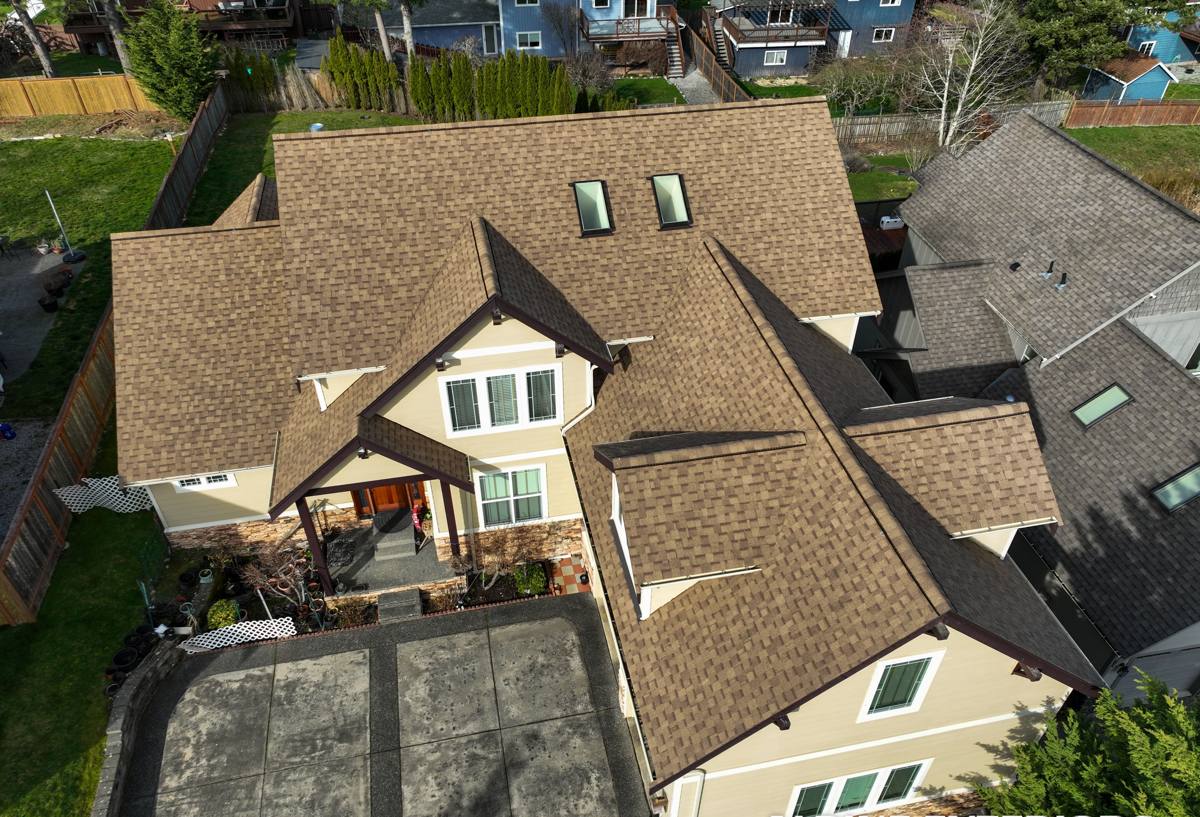
A lot of the housing stock in Wallingford is older — craftsman bungalows, older two-story homes, some with additions or dormers bolted on over the decades. That means roof geometry is often more complex than a simple gable, with more valleys, more penetrations, and more places where water and moss can collect if the original work was only average. Replacing a roof here is as much about getting the details right as it is about the shingles themselves.
How Seattle's Climate Actually Wears Down a Roof
Moss and Organic Growth
Moss doesn't just sit on a roof looking bad — it holds moisture against the surface long after the rest of the roof has dried out, and its root structure works into shingle granules and seams over time. On shaded lots, especially north-facing slopes or roofs under mature trees, moss can shorten the usable life of a roof by years if it's never addressed.
Driving Rain and Wind-Driven Moisture
Seattle rain isn't usually violent, but it's persistent, and King County storms regularly bring enough wind to drive rain sideways into laps, flashings, and fascia. A roof that's watertight in a light drizzle can still leak under wind-driven rain if flashing details and underlayment weren't installed with that in mind.
Salt Air and Metal Fatigue
Proximity to the Sound means a slow, steady exposure to salt-laden air that accelerates corrosion on exposed metal — flashing, fasteners, vents, and gutter hardware. It's a gradual effect, but over 20-plus years it shows up as rust streaks, pitted metal, and fasteners that back out or fail early.
Signs a Wallingford Roof Needs Replacement, Not Just Repair
Not every roof problem means a full replacement. But there's a point where patching becomes a losing game — you're spending money to delay the inevitable instead of solving it. Some signs that tip a roof from "repair" into "replace" territory:
- Granule loss heavy enough that shingles look bald or shiny in patches, especially on south and west-facing slopes
- Moss coverage across a large portion of the roof rather than isolated patches, particularly if it's been there more than a season or two
- Soft or spongy decking felt underfoot during inspection, which signals moisture has already gotten past the shingles
- Multiple past repairs in different areas rather than one contained problem
- Shingles curling, cracking, or losing their seal, especially on a roof already past 20 years old
- Daylight visible through the attic decking, or consistent staining on interior ceilings after rain
If a roof is showing two or more of these at once, replacement is usually the more honest recommendation than another round of patchwork.
What a Correct Roof Replacement Actually Involves
A roof replacement is more than stripping old shingles and nailing down new ones. The parts that don't show once the job is finished are usually the parts that determine whether the roof performs well in a Seattle winter five and ten years from now.
Full Tear-Off and Deck Inspection
We remove the existing roofing down to the decking so it can actually be inspected, not just assumed sound. Any water-damaged or delaminated sheathing gets replaced before anything new goes down — covering over compromised decking is one of the more common shortcuts that causes problems later.
Underlayment and Ice/Water Protection
Given how much rain this region sees, underlayment choice and coverage matters more here than in drier climates. Eaves, valleys, and areas prone to ice damming or wind-driven rain get additional water barrier protection, not just the minimum required by code.
Flashing at Every Penetration
Chimneys, skylights, vent stacks, and wall-to-roof transitions are where most leaks actually originate — rarely the open field of shingles. Correct flashing detail at each of these points is non-negotiable, and it's also the part of a roof job that's easiest to rush if a crew is moving fast.
Ventilation
Proper intake and exhaust ventilation keeps the attic space at a temperature and humidity level that doesn't cook shingles from underneath or trap moisture that feeds moss and rot. On older Wallingford homes where the attic wasn't designed with modern ventilation standards in mind, this often needs to be corrected during a replacement, not left as-is.
Material Options and Trade-Offs
There isn't one "best" roofing material for Wallingford — there's a best material for a given roof's exposure, budget, and how long the homeowner plans to stay in the house. Here's how the common options compare on the factors that matter most in this climate:
| Material | Moss/Moisture Behavior | Maintenance | Typical Lifespan |
|---|---|---|---|
| Architectural asphalt shingle | Good with proper ventilation and periodic moss treatment | Low to moderate | 25–30 years |
| Standing seam metal | Sheds moisture well; minimal moss purchase on smooth panels | Low, but coastal salt air requires quality coatings/fasteners | 40–50+ years |
| Cedar shake | More moisture-sensitive; needs consistent airflow underneath to avoid rot | Higher — periodic treatment and inspection | 20–30 years with upkeep |
| Synthetic/composite shingle | Good moisture resistance, less organic material for moss to grip | Low | 30–50 years depending on product |
We don't install cedar shake as a first recommendation on shaded, moisture-heavy lots — not because it's a bad product, but because its moisture sensitivity and maintenance needs are a poor match for a shaded Wallingford lot with limited airflow. That's a professional judgment about fit, not a knock on the material itself. On open, sun-exposed roofs it performs differently than it does under a tree canopy.
Our Replacement Process
- On-site inspection — we walk the roof and attic, not just look from the ground, and check decking condition, ventilation, and flashing points
- Written scope and material recommendation — specific to that roof's exposure and the home's construction, with honest options at different price points
- Tear-off and deck repair — old material removed, decking inspected and replaced where needed before anything new is installed
- Underlayment, flashing, and ventilation correction — the parts of the job that determine long-term performance
- Shingle or panel installation — installed to manufacturer spec, not just "close enough"
- Final walkthrough — we go over the finished roof and the warranty coverage with the homeowner before calling the job done
Permits, Older Homes, and Steep Pitches
Roof replacement in Seattle typically requires a permit, and we handle that as part of the job rather than leaving it to the homeowner. Older Wallingford homes sometimes have roof pitches, valleys, or additions that weren't built to current standards, and that can affect both the scope of work and how ventilation or flashing needs to be corrected during replacement. We flag anything like that during the inspection, before it becomes a surprise mid-project.
What to Ask Before Hiring a Roofing Crew
Roof replacement is a big enough investment that it's worth vetting a contractor beyond price alone. A few questions worth asking any crew bidding the job:
- Will the decking actually be inspected and repaired if needed, or is that an assumption built into the price?
- What underlayment and ice/water barrier coverage is included, and where specifically?
- Who pulls the permit, and is that included in the quote?
- What's the manufacturer's warranty versus the workmanship warranty, and what's the difference?
- Does the crew regularly work in this neighborhood, or is this their first job on a roof with this kind of pitch or age?
Why Local Wallingford Experience Matters
A crew that already works in Wallingford and the surrounding Seattle neighborhoods knows what the tree cover does to moss growth on a north-facing slope, what a typical craftsman roof deck looks like once it's opened up, and how King County permitting works for a straightforward re-roof versus one involving structural changes. That familiarity shows up in fewer surprises mid-job and a scope that reflects the roof's actual conditions rather than a generic estimate written from the driveway.
If your roof is showing its age or you're just not sure whether it's a repair or replacement situation, we're happy to take a look. The estimate is free, there's no pressure attached to it, and you'll get a straight answer either way — use the form below to get started.