 Seattle Exterior
 Asphalt Shingle Roofing Built for Rainier Valley's Weather
Rainier Valley sits in one of Seattle's older, tree-lined residential pockets, and that means two things for a roof: a long wet season that never really lets up from October through May, and a lot of shade cover that keeps roof surfaces damp longer than homes out in the open. Add in the marine-influenced air that moves through the Puget Sound region and King County's moss-friendly climate, and you have conditions that are hard on asphalt shingles if the install wasn't done with this specific neighborhood in mind. We work on roofs in Rainier Valley regularly, and the patterns repeat: moss creeping in on the north-facing slopes, granule loss around valleys and eaves where water concentrates, and flashing that was never sealed properly for driving rain coming in sideways off a storm.
This page covers what a correctly installed or replaced asphalt shingle roof looks like for this specific area, not a generic overview. If you own a home in Rainier Valley and are trying to figure out whether your roof needs attention now or can wait, this should give you a straight answer to work from.
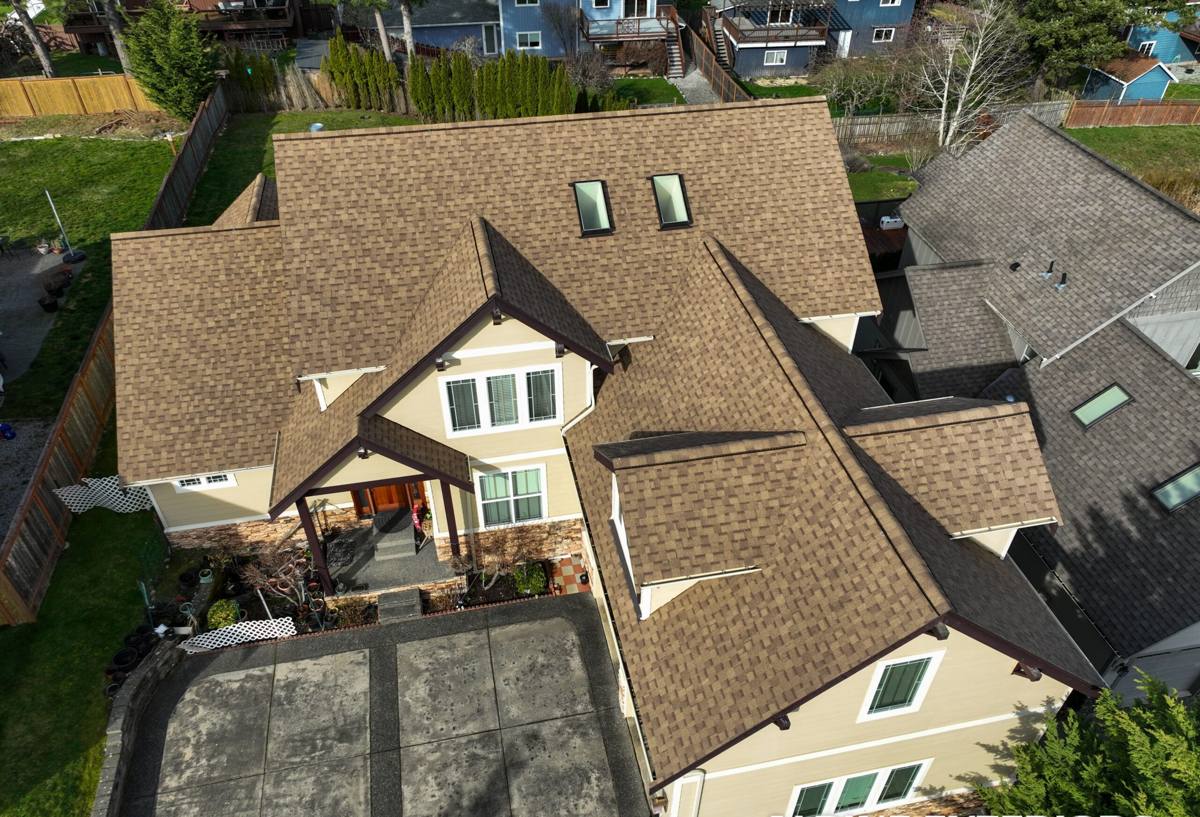
What Rainier Valley's Climate Actually Does to a Shingle Roof
Moss and Organic Growth
Moss is the single biggest shortener of shingle life in this part of Seattle. It's not cosmetic — moss holds moisture against the shingle surface long after the rest of the roof has dried, which accelerates granule loss and can lift shingle edges over time as the moss mat grows underneath them. Roofs with heavy tree cover, north-facing slopes, or low-slope sections are the most exposed. A roof that's shedding moss every year but never gets treated will age faster than its rated lifespan, regardless of the shingle brand.
Driving Rain and Wind-Driven Moisture
Seattle doesn't just get steady rain — it gets rain pushed sideways during winter storms, which finds its way into any gap in flashing, underlayment, or shingle overlap that a calmer climate might tolerate. Roofs here need underlayment and flashing details built for wind-driven water, not just water falling straight down.
Temperature Swings and Granule Wear
King County doesn't see the extreme heat cycling that breaks down shingles in other regions, but the constant damp-to-dry cycling still wears at the asphalt mat and granule adhesion over the decades. Combined with moss and debris buildup, this is why a 25-30 year shingle in this climate often needs real attention by year 15-20, especially without regular maintenance.
What a Correct Asphalt Shingle Job Looks Like Here
A roof that's going to hold up under Rainier Valley conditions needs more than shingles nailed to plywood. The details that matter most in this climate:
- Ice-and-water shield at eaves and valleys — these are the spots where snowmelt, moss dams, and pooling water do the most damage, and they need a self-adhered membrane, not just felt.
- Synthetic underlayment across the full roof — holds up to prolonged damp exposure far better than old-style felt, which can degrade before the shingles do.
- Proper flashing at every penetration — chimneys, vents, skylights, and wall-to-roof transitions are where driving rain gets in. Step flashing and counterflashing need to be installed correctly, not just caulked over.
- Balanced attic ventilation — trapped moisture from below is just as damaging as rain from above, and poor ventilation shortens shingle life from the underside.
- Shingle nailing pattern matched to wind exposure — under-nailed shingles are the ones that lift first in a winter windstorm.
Skipping any one of these doesn't show up as a problem on day one. It shows up as a leak in year eight, when the underlayment or flashing was the weak point all along and the shingles just happened to be sitting on top of it.
Choosing the Right Shingle for This Neighborhood
Not every asphalt shingle product is a good match for a wet, shaded, moss-prone climate. We steer homeowners toward products with algae-resistant granules (sometimes labeled AR or with a moss/algae warranty) as a baseline for this area — standard shingles without that treatment tend to show streaking and moss growth noticeably sooner under Rainier Valley's tree cover and damp winters. Architectural (dimensional) shingles also tend to outperform basic three-tab shingles here, both in wind resistance and in how well they shed water at overlaps.
| Shingle Type | Typical Lifespan Here | Best Fit For |
|---|---|---|
| 3-Tab Asphalt | 15-20 years | Budget-driven projects, simpler rooflines |
| Architectural (Dimensional) Asphalt | 25-30 years | Most Rainier Valley homes — better wind and water performance |
| Algae-Resistant Architectural | 25-30 years | Shaded lots, north-facing slopes, homes with existing moss history |
| Impact-Resistant Asphalt | 30+ years (rated) | Homes wanting extra durability and potential insurance considerations |
We won't push a premium product where it isn't needed, but on a shaded lot with a moss history, spending a bit more on algae-resistant shingles up front is usually cheaper than re-treating or replacing a standard roof years early.
Our Process for Rainier Valley Roofing Projects
1. On-Site Inspection
We walk the roof and attic, not just look from the ground. That includes checking for existing moss growth, soft decking, flashing condition, ventilation, and how the roof has handled water at valleys and eaves.
2. Honest Scope — Repair vs. Replace
If a repair genuinely solves the problem, we say so. If the roof is past the point where patching makes sense, we'll explain why in plain terms — usually tied to decking condition, how much of the roof is affected, or how many past repairs have already been done.
3. Written Estimate
You get a clear breakdown of materials, labor, and what's included — tear-off, underlayment, flashing, disposal — before any work starts. No vague allowances.
4. Installation
Full tear-off to the decking when replacing (we don't recommend layering new shingles over old in this climate — it traps moisture and voids most manufacturer warranties), deck inspection and repair as needed, then underlayment, flashing, and shingles installed to manufacturer and code specification.
5. Final Walkthrough
We review the completed roof with you, including any maintenance notes specific to your property — tree cover, drainage points, or areas worth checking after a big storm.
Maintenance That Actually Extends Roof Life Here
Given the moss and moisture pressure in this area, a shingle roof in Rainier Valley benefits from a different maintenance rhythm than a roof in a drier climate:
- Gutter and downspout cleaning at least twice a year — clogged gutters back water up under the shingle edge.
- Moss removal (not power-washing, which can strip granules) as soon as growth appears, rather than waiting for a full season of buildup.
- Zinc or copper strips near the ridge on moss-prone roofs, which reduce regrowth between cleanings.
- Periodic flashing checks around chimneys and skylights, since these are the first spots to fail under driving rain.
- Attic ventilation checks, especially in older Rainier Valley homes where ventilation may not have been updated since original construction.
Why It Matters That We Already Work in Rainier Valley
A crew that only sees a neighborhood once doesn't build a feel for how its roofs actually age. Working Rainier Valley regularly means we've seen how the tree cover on certain streets accelerates moss, how older homes in the area tend to be ventilated, and which flashing details tend to fail first on the roof styles common here. That's not a substitute for inspecting your specific roof, but it does mean we're not guessing at what "normal wear" looks like for this part of Seattle — we're comparing it against roofs we've actually worked on nearby.
It also means faster response when something goes wrong. A storm that causes flashing failures or shingle lift tends to hit a whole neighborhood at once, and being local means we're not driving across the county to get to you.
Signs Your Rainier Valley Roof Needs a Look
| What You See | What It Usually Means |
|---|---|
| Moss patches on north-facing slopes | Early-stage growth — treatable now before it lifts shingles |
| Granules collecting in gutters | Normal in small amounts; heavy accumulation signals aging shingles |
| Dark streaking across the roof | Algae growth — cosmetic now, but a sign the surface stays damp too long |
| Curling or lifted shingle edges | Nearing end of service life or wind/moisture damage underneath |
| Water stains on interior ceilings | Active leak — needs prompt inspection regardless of roof age |
If you're seeing any of these on a Rainier Valley roof, or it's simply been a while since anyone's looked at it, we're happy to come take a look. Estimates are free and there's no pressure to move forward — just a straight assessment of where your roof stands and what, if anything, it needs.