 Seattle Exterior
 Renton's Climate Is Hard on a Roof — Here's Why
A roof in Renton doesn't fail the same way a roof in a dry climate fails. It's not one big storm that does the damage — it's the slow, repeated cycle of moisture that never fully lets up. King County sees months of steady rain, humid air off Puget Sound, and long stretches where a north- or east-facing roof slope may not see direct sun for days. That combination is what wears out asphalt shingles here: granule loss from constant wetting and drying, moss and algae taking hold in shaded valleys, and water finding its way through any flashing detail that wasn't done correctly the first time.
Salt-laden air moving inland off the Sound accelerates corrosion on exposed metal — nail heads, flashing, vent caps — faster than most homeowners expect. And the long moss season, which can run from fall through spring in shaded, tree-covered lots common around Renton, is one of the top reasons we get called out for "just a repair" that turns into a full shingle replacement. None of this means asphalt shingles are the wrong choice for this area — they're the most common roofing material in the region for good reason — but it does mean the installation details matter more here than they would somewhere drier.
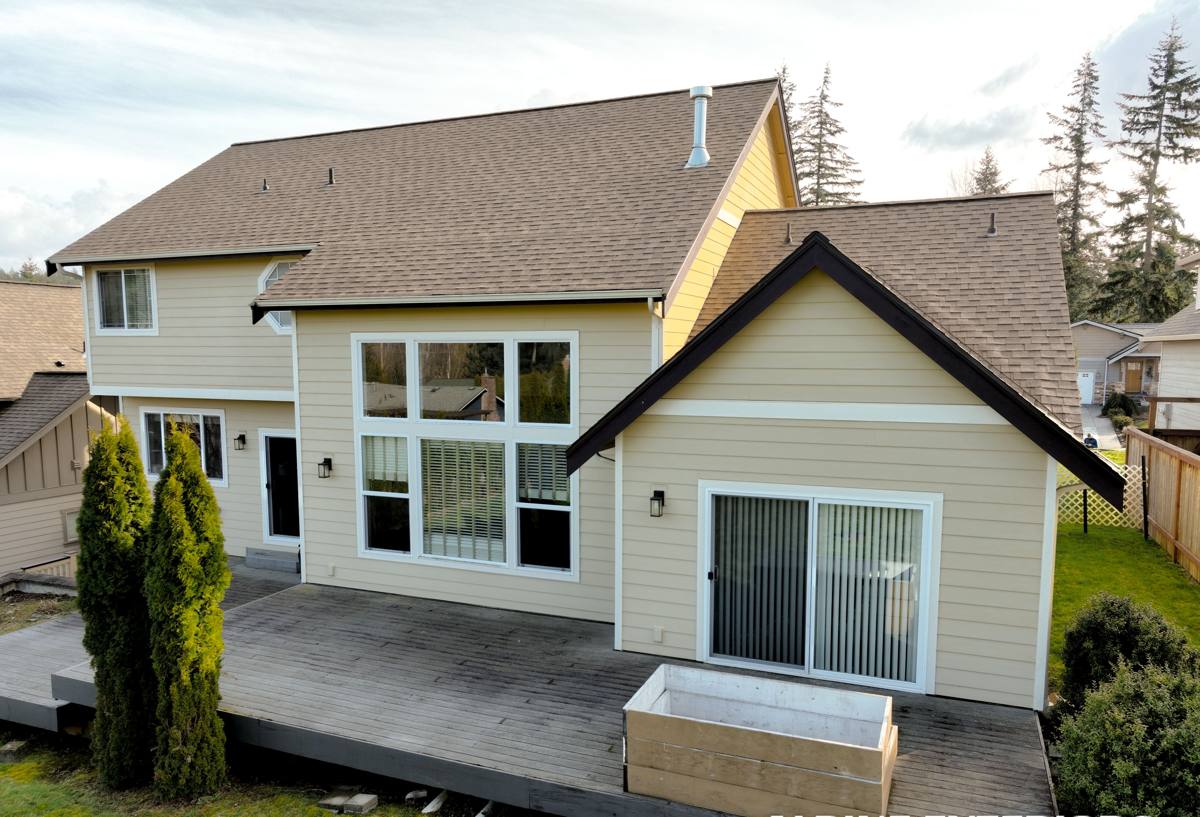
What a Correct Asphalt Shingle Roof Actually Involves
A shingle roof is a system, not a single layer. When any part of that system is skipped or done poorly, the shingles on top can look fine for a year or two and still fail early. A correct installation includes:
- Full tear-off to the deck on replacements — layering new shingles over old traps moisture and voids most manufacturer warranties
- Deck inspection and repair — soft, rotted, or delaminated sheathing gets replaced before anything new goes down
- Ice-and-water shield at eaves, valleys, and around penetrations, where wind-driven rain is most likely to work its way under shingles
- Synthetic underlayment across the full deck as the roof's real second line of defense against moisture
- Properly lapped and sealed flashing at chimneys, walls, skylights, and roof-to-wall transitions — the single most common source of leaks we find on older Renton roofs
- Correct nailing pattern — the right number of nails, placed where the manufacturer specifies, not just "enough to hold it down"
- Balanced attic ventilation so moist air escapes instead of condensing under the deck
Any one of these steps done wrong can cut years off a roof's life, regardless of how good the shingles themselves are.
Choosing the Right Shingle for a Renton Home
Not every asphalt shingle is built the same, and the differences matter more in a wet, shaded climate than they would in a dry one. The biggest factor for this area is algae and moss resistance — most manufacturers now offer shingles with copper- or zinc-infused granules specifically to slow the growth that's so common on Pacific Northwest roofs. Wind rating also matters more than people assume; Renton doesn't see hurricanes, but seasonal windstorms off the Sound can lift poorly fastened shingles, and a higher wind rating combined with correct installation is what actually prevents that.
| Shingle Tier | Typical Lifespan | Best Fit For |
|---|---|---|
| 3-Tab (economy) | 15–20 years | Rentals, budget-driven projects, flat resale timelines |
| Architectural (standard) | 25–30 years | Most Renton homes — better wind rating, dimensional look, algae-resistant options |
| Premium / Designer Architectural | 30–50 years | Homeowners prioritizing curb appeal and longer warranty coverage |
We don't push one brand over another as a marketing angle — the more important variable is almost always installation quality, not which name is printed on the wrapper. What we do steer clients away from is any shingle without algae-resistant granules on a shaded, tree-covered lot, simply because the maintenance burden and appearance issues that follow aren't worth the small upfront savings.
Color and Heat Considerations
Darker shingles hide moss growth less well and can show streaking sooner in a climate this wet. Lighter and mid-tone colors tend to show algae staining less dramatically, which is worth factoring in if low-maintenance appearance matters to you as much as performance.
How We Approach a Renton Roofing Job
Every job starts the same way, whether it's a small repair or a full replacement:
- On-site inspection — we get on the roof (not just a drive-by look) and check the deck, flashing, ventilation, and shingle condition together, since problems in one area usually affect the others
- Written estimate — a clear scope of work and price, with material options explained honestly, including trade-offs
- Scheduling around weather — asphalt shingles need dry conditions and a minimum temperature to seal properly; we plan installation windows with our wet season in mind rather than forcing a job into bad weather
- Tear-off and deck prep — old material removed, deck inspected and repaired as needed before anything new is installed
- Installation — underlayment, flashing, and shingles installed to manufacturer spec, not shortcut spec
- Site cleanup — magnetic sweep for nails, debris hauled off, property left the way we found it
- Final walkthrough — we go over the finished roof with you before calling the job done
Ventilation and Moisture — The Part Homeowners Don't See
Attic ventilation gets overlooked because it's invisible from the ground, but it's one of the biggest factors in how long a roof lasts in this climate. Without enough intake and exhaust airflow, moisture from daily living — showers, cooking, laundry — gets trapped in the attic, condenses on the underside of the roof deck, and creates the damp conditions that rot sheathing and encourage mold from the inside out, not just moss on the outside. In a region with as much ambient humidity and rainfall as King County, a roof with poor ventilation will show problems years before it should, no matter how good the shingles are.
When we replace a roof, we check existing ventilation and recommend corrections — additional intake vents, a ridge vent, or baffles to keep insulation from blocking airflow — as part of the job, not as an expensive add-on discovered later.
Warning Signs Worth a Call
Most roof problems in this area start small and get expensive when they're ignored through a wet season. Watch for:
- Granules collecting in gutters or at downspout outlets
- Dark streaking or green-black moss buildup, especially on shaded slopes
- Shingles that look cupped, curled, or lifted at the edges
- Daylight visible through the attic roof deck
- Water stains on interior ceilings, especially after a windy rainstorm
- Missing or damaged shingles after a windstorm
- Sagging in any part of the roofline
Catching any of these early is almost always cheaper than waiting for a leak to show up inside the house.
Why a Crew That Already Works Renton Matters
Roofing permit requirements, inspection expectations, and typical construction details vary by jurisdiction, and a crew that regularly works in Renton and the rest of King County already knows what local inspectors look for and how to schedule around our wet-season weather windows. That local familiarity also means faster response when something needs a second look after a storm — we're not driving in from across the state to look at a roof we've never seen before.
It also means straight talk about what your roof actually needs. We're not going to recommend tearing off a roof that has a few more good years left in it, and we're not going to patch something that genuinely needs full replacement just to make a quick sale. Long-term relationships in this area depend on the work holding up through a few wet seasons, not just looking good on installation day.
Getting the Most Life Out of Your Roof
Once a new roof is in, a little upkeep goes a long way in this climate:
- Keep gutters clear so water isn't backing up under the shingle edge
- Have moss treated or gently removed before it works into the shingle surface — pressure washing shingles directly can strip granules and shorten their life
- Trim back overhanging branches to reduce shade, debris, and moss-friendly conditions
- Have the roof looked at after any significant windstorm, even if nothing looks obviously wrong from the ground
- Schedule a periodic check-up every few years rather than waiting for a leak to prompt the call
If you're weighing a repair against a replacement, or just want an honest read on where your roof currently stands, we're happy to take a look. The estimate is free, there's no pressure attached to it, and you'll get a straight answer about what your roof actually needs — use the form below to get started.