 Seattle Exterior
 University District Roofs Face a Longer, Wetter Test Than Most
If you own a home in University District, you already know the roof over your head works harder than a roof in a drier climate ever would. Seattle's marine weather means long stretches of steady rain rather than short heavy storms, and that steady moisture finds every weak seam, every under-nailed shingle, and every clogged valley over time. Add in the mature tree canopy common around University District — big leaf maples, conifers, and older ornamental trees on tight urban lots — and you get constant shade, dropped needles and leaves, and a moss season that can run from fall through spring.
None of that means asphalt shingle roofing is a poor choice here. It remains the most practical, cost-effective option for the vast majority of King County homes, including the older craftsman bungalows, post-war cottages, and multiplex conversions that make up much of University District's housing stock. What matters is that the roof is designed and installed with this specific climate in mind — not treated like it's going on a house in a dry inland market.
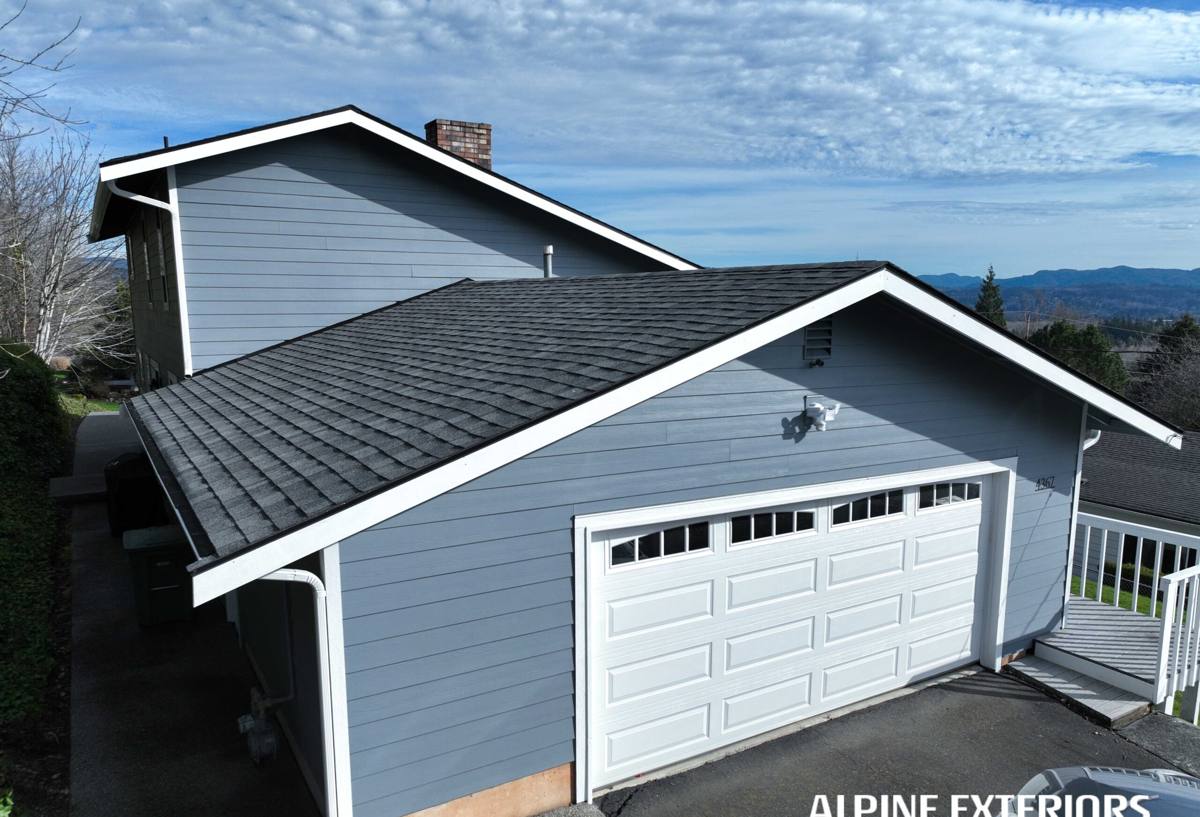
What "Correct" Asphalt Shingle Roofing Looks Like Here
A shingle roof that's rated to last 25-30 years on paper can fail in half that time if it's installed without accounting for Pacific Northwest conditions. A correct installation for this area includes several details that are easy to skip and expensive to skip on:
Underlayment and Water Barrier
Synthetic underlayment holds up far better than old-style felt against months of sustained dampness, and it should run the full deck, not just the field. Ice and water shield belongs at eaves, valleys, and around every penetration — chimneys, vents, skylights — since those are the spots where wind-driven rain gets pushed backward under shingles instead of running straight down.
Ventilation
Attics that can't breathe trap moisture from the inside, which condenses on the underside of the deck and rots it from below — independent of anything happening on the shingle surface. Balanced intake at the eaves and exhaust at the ridge is not optional in this climate; it's part of what keeps the deck itself dry enough for the shingles to do their job.
Fastening and Exposure
Nail placement and shingle exposure need to match both the manufacturer's spec and the local wind exposure of the specific roof. A roof tucked among mature trees has different wind loading than one that's more exposed, and nailing patterns should reflect that rather than a one-size-fits-all approach.
Choosing the Right Shingle for This Neighborhood
Most University District homeowners are choosing between a handful of asphalt shingle tiers. Here's how they generally compare for this climate:
| Shingle Type | Typical Lifespan | Moss/Algae Resistance | Best Fit |
|---|---|---|---|
| 3-tab (economy) | 15-20 years | Lower unless treated | Budget-driven projects, rental properties |
| Architectural / laminate | 25-30 years | Moderate to good with algae-resistant granules | Most owner-occupied homes; best value-to-durability balance |
| Algae-resistant (AR) laminate | 25-30 years | Good — copper/zinc granules slow streaking | Shaded lots and north-facing slopes prone to staining |
| Class 4 impact-rated | 30+ years | Good, varies by product | Homes wanting maximum durability and possible insurance credit |
Architectural shingles with algae-resistant granules are usually the sensible default for a shaded, damp lot — the upgrade cost over standard laminate is modest relative to the reduction in staining and moss colonization over the roof's life. Straight 3-tab shingles still have a place, particularly on rental or investment properties where the math favors a lower upfront cost, but we'll always tell you honestly where that trade-off shows up down the road rather than oversell it.
Moss, Algae, and the Maintenance Reality of Shade-Heavy Lots
Moss doesn't just sit on top of a shingle roof — it works into the granule surface, holds moisture against the shingle mat, and over years can lift tabs and shorten the roof's usable life. On a shaded University District lot, a roof that's never been treated or cleaned can develop visible moss growth within a few seasons, especially on north-facing slopes that see the least sun.
The fix isn't aggressive pressure washing, which strips granules and does real damage. It's a combination of correct product choice up front (algae-resistant granules), zinc or copper strips at the ridge on new installs, and periodic gentle cleaning — soft wash, not high pressure — plus keeping gutters and valleys clear of the leaf and needle litter that gives moss something to root in. We'll walk you through a maintenance rhythm that fits your specific lot and tree cover rather than a generic schedule.
Signs Your University District Roof Needs Attention
A lot of roof damage in this climate develops slowly and quietly. Here's what we tell homeowners to watch for between inspections:
- Granules collecting in gutters or at downspout outlets — a sign shingles are wearing thin
- Dark streaking or green/black patches, especially on shaded or north-facing slopes
- Visible moss growth, particularly where it's thick enough to hold standing moisture
- Curling, cupping, or cracked shingle edges, most common on older or south-facing sections
- Soft spots or sagging when walked or viewed from a ladder
- Water stains on interior ceilings or in the attic, even faint ones
- Daylight visible through the roof deck from inside the attic
- Flashing that's rusted, lifted, or separated around chimneys and vents
Any one of these on its own might just mean a repair. Several together, or damage concentrated in one area, usually means it's worth a full inspection before it becomes a bigger interior problem.
Repair or Replace: How We Help You Decide
Not every roof problem in University District calls for a full tear-off, and we don't push replacement when a repair will genuinely hold. Roughly speaking:
- Repair usually makes sense when damage is localized — a section of storm-damaged shingles, a flashing failure, an isolated leak — and the rest of the roof is in reasonable shape with years of service life left.
- Replacement usually makes sense when the roof is past or near the end of its rated life, damage is spread across multiple slopes, the deck itself has soft spots, or repeated repairs are starting to add up in cost.
We'll give you a straight answer on which situation you're in, including the reasoning, so you're deciding with real information rather than guesswork.
Our Process, Start to Finish
Every asphalt shingle roofing job we do in University District follows the same basic sequence, adjusted for the specific house:
- On-site assessment — we inspect the existing roof, deck condition, ventilation, and any problem areas, not just from the ground but from the roof itself when it's safe to do so.
- Written estimate — clear scope, materials, and pricing before any work begins, with options explained rather than a single take-it-or-leave-it number.
- Tear-off and deck inspection — old material comes off, and we check the deck underneath for rot or damage before anything new goes down, since that's the one thing you can't fix after the fact.
- Underlayment and flashing — synthetic underlayment, ice and water shield at vulnerable points, and new or reconditioned flashing at every penetration.
- Shingle installation — installed to manufacturer spec for nailing pattern and exposure, matched to the wind and shade exposure of your specific roof.
- Ventilation check — intake and exhaust balanced so the attic can actually dry out between rain events.
- Cleanup and walk-through — magnetic sweep for nails, debris hauled off, and a final walk-through so you know exactly what was done.
Why a Crew That Already Works University District Matters
University District has a distinct mix of housing — older single-family homes near the neighborhood core, converted multiplexes, and student rental properties, many on narrow lots with limited access and mature trees close to the roofline. A crew that regularly works this neighborhood knows how to stage material and equipment on a tight urban lot, how to work around low branches and property lines without causing damage, and what King County and City of Seattle permitting and inspection expectations actually look like for a re-roof, so there are no surprises mid-project.
That local familiarity also shows up in smaller ways — knowing which older homes in the area are more likely to have original, undersized ventilation that needs correcting during a re-roof, or recognizing early moss and algae patterns typical of the shaded, tree-heavy lots common throughout the neighborhood. It's the difference between a roofing crew that shows up once and a crew that understands the conditions your specific roof deals with year after year.
If your University District roof is showing wear, dealing with moss, or you're just due for an honest inspection, we're happy to take a look. Request a free, no-pressure estimate using the form below and we'll walk you through exactly what we see and what your options are.