 Seattle Exterior
 Why West Seattle Windows Wear Differently
West Seattle sits on a peninsula with long, open exposure to Puget Sound, and that changes what a window has to survive here compared to a house a few miles inland. Salt-laden air off the water accelerates corrosion on hardware, screens, and unprotected metal components. Driving rain, pushed sideways by wind off the Sound, tests every seal, sill, and flashing detail far harder than a typical vertical rainfall would. And the long, damp moss season that defines a Pacific Northwest fall through spring means anything shaded or north-facing stays wet longer, inviting rot at wood sills and trim if a window wasn't detailed correctly to begin with.
None of that means West Seattle homes need exotic solutions. It means the basics — material selection, flashing, and installation sequencing — have to be done right the first time, because a marginal job that might limp along in a drier climate will show its weaknesses here within a few wet seasons.
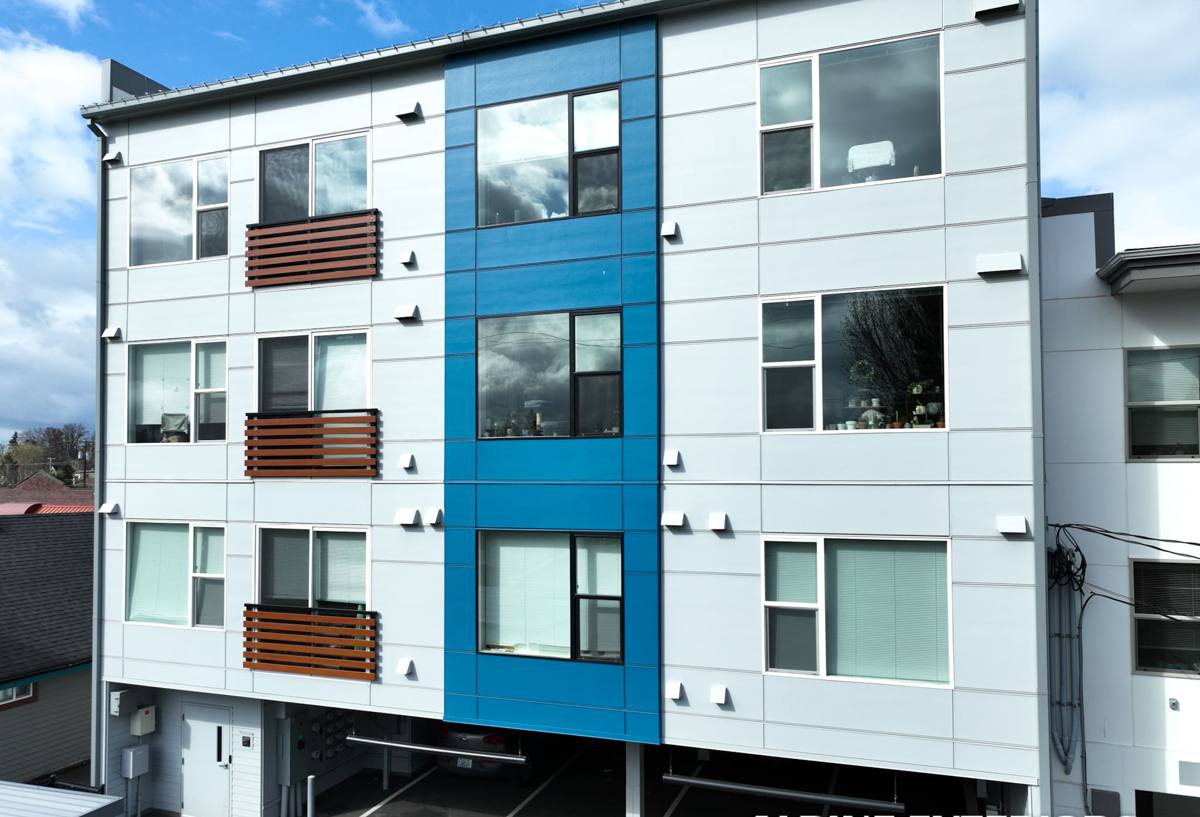
What "Custom" Actually Means for This Neighborhood
"Custom windows" doesn't have to mean unusual shapes or high-end architecture, though we do plenty of that. More often in West Seattle it means matching a window to a house that wasn't built to modern standard sizes. Many homes here are older craftsman bungalows, 1940s-60s ramblers, and mid-century houses with window openings that predate today's off-the-shelf sizing. A true custom or made-to-size unit fits that existing opening correctly, rather than forcing a standard size in with excessive shimming, foam, or trim tricks that create weak points for water intrusion later.
Common Custom Situations We See
- Older openings with non-standard rough dimensions that don't match current stock sizing
- View-oriented homes on the bluffs or near the water wanting larger picture or bay windows toward the Sound
- Additions or remodels where new window lines need to match original historic profiles
- Homes with masonry, stucco, or original wood siding where the window frame depth has to be matched precisely
- Corner or multi-window configurations that need coordinated sightlines rather than mismatched off-the-shelf units
Material Choices That Hold Up Near the Water
We install several window materials and don't push one brand as a cure-all. Each has real tradeoffs, and in a salt-air, high-moisture environment those tradeoffs matter more than they would somewhere drier.
| Material | How It Handles Salt Air & Rain | Maintenance Load |
|---|---|---|
| Vinyl | Won't corrode or rust; performs well in coastal-adjacent air | Low — occasional rinsing to clear salt film and debris |
| Fiberglass | Very stable dimensionally, resists warping from wet/dry cycling | Low — durable finish, minimal upkeep |
| Aluminum-clad wood | Good look and thermal performance, but the exterior clad joints need careful sealing to keep water off the wood core | Moderate — watch clad seams and joints over time |
| All-wood | Classic appearance, but wood is most vulnerable to the sustained damp of moss season without diligent upkeep | High — repainting, caulking, and rot inspection on a schedule |
We're honest that all-wood windows, while beautiful, carry the most maintenance burden in this specific climate. We'll still install them when a homeowner wants that look or needs to match a historic home's character — we just make sure the client understands the upkeep commitment going in, rather than finding out the hard way at year five.
Hardware and Glass Details That Matter Here
Stainless steel or corrosion-resistant hardware is worth the small upcharge on a home with regular salt-air exposure — standard-grade fasteners and hinges will show pitting and staining years before they should. On the glass side, dual-pane units with a warm-edge spacer system resist condensation better through our long wet season, and a low-E coating tuned for our climate helps with both winter heat retention and glare control off the water on the days it clears up.
Signs Your Current Windows Are Losing the Fight
- Fogging or a permanent haze between panes — the seal has failed and the insulating gas is gone
- Wood sills or frames that feel soft, spongy, or show dark staining, especially on north- or west-facing walls
- Visible mildew or moss growth on the frame itself, not just nearby siding
- Drafts you can feel on a windy day, particularly with west-facing units that catch weather off the Sound directly
- Hardware that's corroded, sticky, or won't latch tightly anymore
- Paint that's bubbling or peeling off wood trim faster than the rest of the house
- Noticeably higher heating bills in a room with older single-pane or early dual-pane glass
Any one of these on its own might just mean a repair. Several together, especially on the weather-exposed side of the house, usually means it's time to talk about replacement before the surrounding framing gets involved.
How Our Installation Process Works
- On-site assessment. We measure existing openings, check for hidden rot or moisture damage around the frame, and talk through what you actually want out of the windows — views, ventilation, energy performance, matching existing trim.
- Material and configuration selection. We walk through the tradeoffs above in plain terms and help you land on a material and style that fits your budget and your home's exposure.
- Precise measurement and ordering. Custom units are built to your actual opening, not a nominal stock size, which is what keeps the installation tight and the seals reliable.
- Removal and opening prep. We check the framing and sill for any hidden water damage once the old unit is out — this is often the first real look anyone's had at that part of the wall in decades.
- Flashing and sealing. This is the step that decides whether a window survives driving rain off the Sound. Proper flashing tape, sill pans where called for, and correctly lapped building paper or house wrap all go in before the new window ever touches the opening.
- Setting and shimming. The window is leveled, plumbed, and shimmed correctly so it operates smoothly and the reveal is even — this affects both function and how the trim sits later.
- Insulation and interior/exterior trim. Gaps get insulated (not overpacked, which can bow frames), then trim is finished to match the home.
- Final walkthrough. We check operation on every window, confirm locks and hardware, and go over basic care with you before we consider the job done.
Working Around West Seattle's Housing Stock
A lot of our West Seattle work involves older houses where the wall assembly behind the trim hasn't been touched since original construction. We don't assume a clean, modern wall cavity — we check for it. On homes near the bluffs or with direct water exposure, we also pay extra attention to sill pan flashing and end-dam details, since those are the spots that fail first under sustained wind-driven rain.
What Drives the Cost of a Window Project
| Factor | Why It Matters |
|---|---|
| Material (vinyl vs. fiberglass vs. clad-wood vs. all-wood) | Biggest single driver of unit cost and long-term maintenance |
| Custom sizing vs. standard sizing | Non-standard openings require made-to-order units, which cost more than stock sizes |
| Number and size of openings | Larger picture or bay windows cost more than standard double-hung units |
| Condition of the existing opening | Hidden rot or water damage found during removal adds repair scope |
| Glass package | Low-E coatings, gas fills, and impact-rated glass add cost but also performance |
| Trim and finish work | Matching historic profiles or unusual siding takes more labor than a standard reveal |
We give straightforward, itemized estimates so you can see exactly where the money is going, and we'll flag upfront if we expect hidden framing issues based on the home's age and exposure — better to plan for it than get surprised mid-project.
Living With Custom Windows Here: Maintenance That Actually Helps
Even a well-installed window benefits from a little seasonal attention in this climate. Rinsing frames and tracks periodically clears salt residue before it can pit hardware or dull finishes. Keeping gutters and nearby vegetation trimmed back reduces the sustained dampness that feeds moss and mildew around frames. Checking exterior caulking once a year, especially after a rough winter, catches small gaps before they become water paths. None of this is heavy work, but skipping it is how a good window installation loses five or ten years of service life to a slow, avoidable moisture problem.
Why a Locally Experienced Crew Matters
Window installation looks similar everywhere on paper, but the details that keep a window watertight are climate-specific. A crew that mostly works drier inland markets may not default to the flashing and sealing details that matter most against Puget Sound's driving rain, or may not think to flag wood species and hardware choices that struggle with sustained salt air. Working regularly in West Seattle and around King County means we've seen how different eras of home construction here hold up — and hold water — over time, and we build the installation around that, not around a generic national spec sheet.
If you're weighing a window project for a West Seattle home, we're happy to take a look and give you a straightforward, no-pressure estimate — just fill out the form below and we'll get in touch.