 Seattle Exterior
 Ballard's Climate Is Harder on Siding Than It Looks
Ballard sits close enough to Puget Sound that homes here deal with a specific combination of stresses: salt-laden air moving off the water, wind-driven rain that hits walls sideways instead of just falling straight down, and a long, damp shoulder season every fall and winter where surfaces rarely get a chance to fully dry out. None of that is dramatic on its own, but stacked together year after year, it's exactly the kind of slow, cumulative exposure that separates siding that lasts three decades from siding that starts failing at year twelve.
The salt air is the piece people underestimate most. It doesn't just affect boats and railings — it accelerates corrosion on exposed fasteners, staples, and any metal trim that wasn't rated for coastal-adjacent exposure. Combine that with near-constant moisture and you get the ingredients for streaking, soft trim, and paint failure on siding that was never built to handle marine-influenced weather in the first place.
Then there's moss and algae. King County's wet season stretches long, and any wall facing north or shaded by mature trees or neighboring structures stays damp far longer than it should. That's a moss and mildew invitation. On absorbent or poorly sealed siding materials, that moisture doesn't stay on the surface — it works into the substrate, and that's where real damage starts.
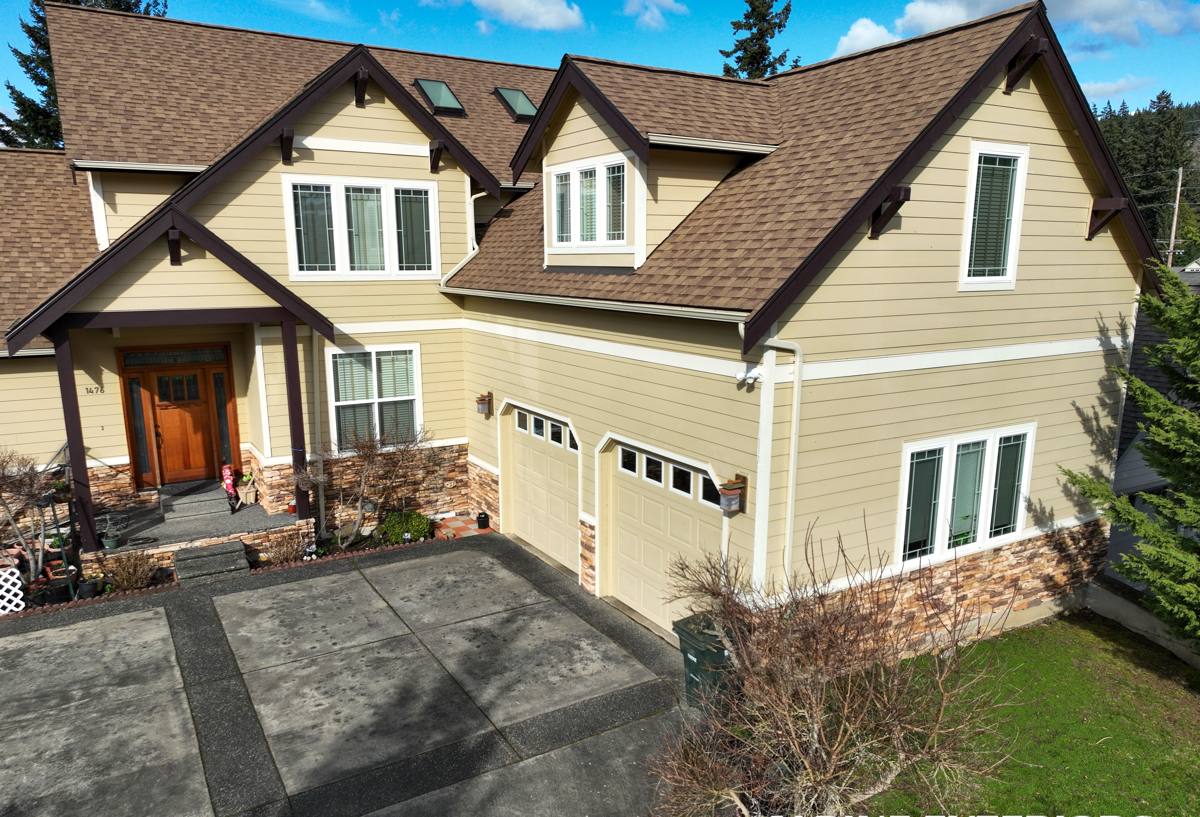
Why We Standardized on James Hardie for Homes Like This
We install James Hardie fiber cement siding exclusively. We don't install vinyl, LP SmartSide, Cemplank, Allura, primed spruce, or cedar, and that's a deliberate standard, not a sales pitch. Every one of those alternatives has a real weak point when it's asked to perform in a wet, salt-influenced, moss-prone environment like Ballard's over the long haul — whether that's moisture absorption at the substrate, seam and caulking maintenance, or a factory finish that doesn't hold up to years of damp shade.
James Hardie fiber cement is non-combustible, dimensionally stable when it gets wet, and finished at the factory with ColorPlus technology — a baked-on finish that resists fading and holds its color far longer than field-applied paint. It also carries a strong transferable warranty when installed to Hardie's specifications, which matters because siding warranties are only as good as the installation behind them.
None of that means fiber cement is magic. It still has to be detailed correctly — flashed correctly, fastened correctly, gapped correctly — or it will develop the same moisture problems as any other product. The material gives you a much wider margin for error and a much longer service life in this climate, but the installation is still where jobs succeed or fail.
HZ5 Versus Standard Product Lines
James Hardie engineers its siding by climate zone. HZ5 products are built for regions with more moisture, freeze-thaw cycling, and humidity — which is why we spec HZ5 for Ballard rather than a warmer-zone product. The difference shows up in the substrate formulation and how the product handles moisture cycling over time, not just in the surface finish.
What a Correct Hardie Installation Actually Involves
A James Hardie job that's going to hold up on a Ballard home isn't just nailing boards to the wall. The details that actually determine whether siding lasts are mostly invisible once the job is done:
- A code-compliant water-resistive barrier and properly lapped house wrap behind the siding, not just whatever was already there
- Correct flashing at every window, door, and horizontal trim transition — the single most common failure point on older Ballard homes we inspect
- Manufacturer-specified fastener spacing and placement, with fasteners rated for the exposure rather than whatever was on hand
- Proper clearance between the bottom of the siding and grade, decks, and roof lines so water has somewhere to go
- Correct gaps at butt joints and trim, sealed with a sealant rated for the application — not caulked tight, which traps moisture instead of shedding it
- Factory-cut and factory-primed edges kept intact wherever possible, since field-cut edges need to be sealed per Hardie's instructions to maintain warranty coverage
Skip any one of these and the wall behind the siding can be taking on moisture for years before it ever shows on the surface. By the time a homeowner notices soft trim or a stain bleeding through, there's often already rot in the sheathing underneath.
How Our Process Works on a Ballard Job
We start with a walk-around inspection of the existing siding and the wall assembly behind it where accessible — not just a visual estimate from the driveway. On older homes especially, we're checking for existing moisture damage, soft spots at trim and window sills, and any areas where past patch repairs may be hiding a bigger problem.
From there we put together a scope that covers the water-resistive barrier, flashing details, the specific Hardie product line and profile that fits the home, and color selection from the ColorPlus palette. We walk homeowners through the plan before any material is ordered, so there aren't surprises about what's being replaced versus what's being reused.
During installation, our crew follows Hardie's fastening and clearance specifications as a baseline, not a suggestion — that's what keeps the manufacturer's warranty intact and what actually determines how the siding performs through Ballard's wet seasons. We do a final walkthrough with the homeowner at completion to review the work and go over basic care.
Common Problems We Find on Existing Ballard Siding
Because we work in this neighborhood regularly, we see the same handful of issues repeatedly on homes that are due for new siding:
| What We Find | Why It Happens Here |
|---|---|
| Moss and algae staining on north-facing walls | Extended damp shade during Puget Sound's long wet season |
| Soft or delaminating trim near rooflines | Failed flashing allowing water behind the trim over years |
| Corroded fasteners bleeding rust streaks | Standard fasteners not rated for salt-air exposure |
| Cracked or missing caulking at joints | UV and moisture cycling breaking down sealant faster than inland areas |
| Paint failure and chalking on painted wood or hardboard siding | Field-applied finishes degrading faster under sustained damp conditions |
None of these are unusual for the area — they're just the predictable result of a wet marine climate meeting siding or details that weren't specified for it. It's exactly why the material choice and the installation details matter more here than they might in a drier inland climate.
What a Ballard Siding Project Typically Involves Cost-Wise
Every home is different, but the same handful of factors tend to drive cost on a Ballard project more than anything else:
| Factor | How It Affects the Job |
|---|---|
| Extent of hidden moisture damage | Sheathing or framing repairs found once old siding comes off add scope |
| House height and access | Two- and three-story sections and tight side yards near property lines increase labor time |
| Trim and detail work | Craftsman and bungalow-style trim common in the area takes more time than plain lap siding |
| Product line and profile | HZ5 lap, shingle, and panel profiles are priced differently based on material and labor |
| Color and finish selection | Standard ColorPlus colors versus custom or premium finishes affect material cost |
We give homeowners a firm, itemized quote after the initial inspection so there's no guessing which of these factors applies to their home.
Maintaining James Hardie Siding in This Climate
One of the advantages of fiber cement is that it needs far less upkeep than wood or painted hardboard, but "low maintenance" isn't "no maintenance," especially with Ballard's moss season working against you. A simple seasonal routine goes a long way:
- Rinse siding with a garden hose (not a pressure washer, which can force water behind panels) once or twice a year, especially shaded and north-facing walls
- Check gutters and downspouts before the wet season so water isn't overflowing directly onto siding below
- Trim back vegetation and tree limbs that keep a wall surface shaded and damp longer than the rest of the house
- Look at caulking and sealant joints annually and have any cracked or missing sealant addressed before the rainy months
- Address any moss growth early with a gentle wash rather than letting it establish and hold moisture against the surface
Keeping up with a routine like this is a big part of what lets Hardie siding reach its full service life instead of just its warranty minimum.
Why Hiring a Crew That Already Works Ballard Matters
Siding installation is local knowledge as much as it is technical skill. A crew that regularly works homes in this neighborhood already knows which wall orientations hold moisture longest, what older Ballard homes tend to have hiding behind their original siding, and how to detail flashing and clearances for a climate that doesn't forgive shortcuts. That's different from a crew installing siding here for the first time and treating it like any other job.
It also matters for accountability. A local crew is reachable if something needs to be checked on down the road, and understands that a warranty is only as good as the installer standing behind it. That's the standard we hold ourselves to on every Ballard project we take on.
If you're weighing a siding replacement or just want an honest read on the condition of what's on your home now, we're happy to take a look. Reach out for a free, no-pressure estimate using the form below.