 Seattle Exterior
 Roof Repair Built for Bellevue's Climate
Bellevue sits close enough to Puget Sound and Lake Washington that homes here deal with a specific combination of problems: salt-tinged air moving in off the water, driving rain that comes in sideways during winter storms, and a moss season that can run eight months out of the year under the tree cover common in Eastside neighborhoods. None of that is unique to Bellevue by itself, but the combination is what wears down roofs faster than homeowners expect. A roof that would last three more years in a drier climate can develop real problems here if small issues go unaddressed.
Roof repair in King County isn't just about patching what's visibly broken. It's about understanding how wind-driven rain finds its way under shingles, how moss holds moisture against roofing material long after a storm has passed, and how the freeze-thaw cycles we get most winters can widen small cracks into real leaks. A repair that doesn't account for those forces tends to fail again within a season or two.
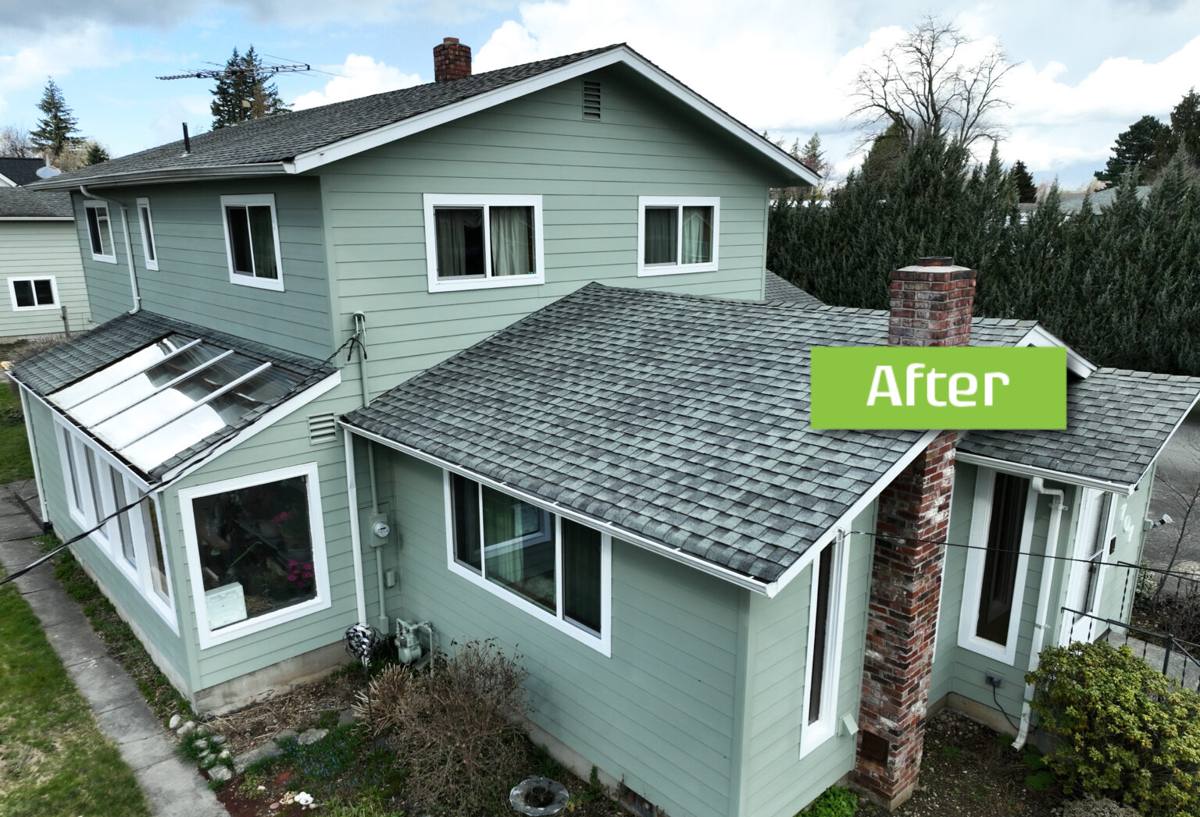
What Bellevue Roofs Are Up Against
Moss and Organic Growth
Moss is probably the single biggest driver of roof repair calls we get from Bellevue homeowners, especially on north-facing slopes and roofs shaded by mature trees. Moss doesn't just look bad — it holds water against the roofing surface, works its way under shingle edges as it grows, and can lift shingles enough to let water through during heavy rain. Left alone long enough, moss growth accelerates granule loss on asphalt shingles and can rot the wood decking underneath.
Driving Rain and Wind-Driven Leaks
Storms coming off the Sound often bring rain at an angle rather than straight down. That matters because a lot of roofing details — flashing laps, vent boots, ridge caps — are built to shed water moving vertically. Wind-driven rain can push moisture up and under those details in ways a straightforward downpour won't, which is why leaks in this region often show up around chimneys, skylights, and valleys rather than in the open field of the roof.
Salt Air and Metal Fatigue
Homes closer to the water deal with a slow, steady corrosive effect on exposed metal — flashing, fasteners, gutter hardware, and vent caps. It's a gradual process, but it means metal components on a Bellevue roof often need attention before the shingles or underlying membrane do. A repair that swaps out old flashing for standard-grade material without accounting for this can mean redoing the work sooner than it should need.
Freeze-Thaw and Seasonal Stress
King County doesn't get the deep freezes of colder climates, but we do get enough freeze-thaw cycling each winter to stress roofing materials that already have small cracks or gaps. Water gets into a hairline opening, freezes, expands, and makes the opening bigger. It's a slow process until suddenly it isn't — which is why we tell homeowners not to wait on small, ugly-but-not-leaking problems.
Signs a Bellevue Home Needs Roof Repair
- Dark streaks, green or black patches, or visible moss growth on the roof surface
- Granules collecting in gutters or at the base of downspouts
- Water stains on interior ceilings, especially near chimneys, skylights, or where roof planes meet
- Shingles that are curling, cupping, or visibly lifted at the edges
- Soft or spongy spots on the roof deck when walked on
- Daylight visible through the attic roof boards
- Rusted, loose, or missing flashing around vents, chimneys, and valleys
- Higher-than-usual heating bills, which can point to attic moisture or insulation compromised by a slow leak
Any one of these on its own might be minor. Several together usually mean water has already found a way in, even if there's no visible leak yet.
What a Correct Repair Actually Involves
A roof repair done right starts with figuring out the actual source of the problem, not just the point where water is showing up inside the house. Water can travel along rafters or decking for several feet before it drips somewhere visible, so a leak over a bedroom closet might originate at a valley or vent penetration several feet away. That's why we start every repair with a full inspection of the roof surface and the attic, not just a patch job at the ceiling stain.
Our repair process typically includes:
- Inspection — roof surface, flashing, penetrations, and attic decking, checked for the actual entry point and for any hidden rot or damage nearby
- Diagnosis — identifying whether the issue is isolated (a damaged shingle, failed flashing) or a symptom of broader wear that repair alone won't solve long-term
- Moss and debris removal — cleared safely, without pressure-washing methods that strip granules or damage shingle integrity
- Repair of the affected area — matching materials as closely as possible, replacing compromised decking if water has caused rot, and resealing or replacing flashing where needed
- Preventive measures — where it makes sense, addressing the conditions that caused the damage (tree overhang, poor attic ventilation, aging flashing nearby) so the same repair isn't needed again next season
We'll also tell you honestly if what you're describing sounds like it's outgrown repair. A roof with widespread granule loss, multiple failed sections, or decking damage in several areas is often better served by a partial or full replacement — patching a roof that's structurally near the end of its life just delays a bigger cost and risks more interior damage in the meantime.
Repair vs. Replacement: How to Think About It
| Factor | Points Toward Repair | Points Toward Replacement |
|---|---|---|
| Age of roof | Under 15 years (asphalt) | Approaching or past expected lifespan |
| Extent of damage | Isolated to one area or component | Spread across multiple sections |
| Decking condition | Solid, no rot found | Soft spots or rot in multiple areas |
| Granule loss | Localized | Widespread, shingles look bare in patches |
| History of repairs | First or second repair | Repeated repairs to the same areas |
| Moss coverage | Light, recently developed | Heavy, long-standing, embedded in shingle layers |
This table is a general guide, not a diagnosis — the honest answer usually depends on what we find once we're actually up on the roof.
Materials and Standards We Work To
For repairs, matching the existing roofing material matters more than it might seem. A mismatched shingle or an incompatible flashing metal can create a weak point that fails faster than the surrounding roof, or one that looks visibly different in a way that hurts resale value. We source materials that match the type, weight, and where possible the color of what's already on the roof.
On flashing and metal components, we lean toward corrosion-resistant materials on homes closer to the water or otherwise exposed to salt air, even if it costs a bit more upfront than standard galvanized options. It's a maintenance-and-longevity tradeoff we're upfront about — the goal is a repair that holds up through several Puget Sound winters, not just through the next dry season.
Why a Local Crew Matters for This Kind of Work
Roof repair is one of those services where local experience genuinely changes the outcome. A crew that works Bellevue and the broader Seattle area regularly knows which roof styles and ages are common in which neighborhoods, how tree cover in a given area tends to drive moss growth, and which flashing details tend to fail first under our specific wind and rain patterns. That's knowledge you build by working the same climate and housing stock over and over — not something a crew unfamiliar with King County's weather picks up on a single job.
There's also a practical side: a local crew can respond faster when a storm causes damage that needs attention before the next round of rain, and can schedule repair work around our wetter months more realistically than a contractor coming from outside the area.
Maintenance That Extends the Life of a Repair
A good repair lasts longer when it's paired with basic seasonal upkeep. We recommend:
- Clearing gutters and downspouts at least twice a year, more often if the property has significant tree cover
- Trimming back branches that overhang the roof to reduce moss growth and debris buildup
- Scheduling a moss treatment or removal before it becomes heavy, rather than after
- Having the roof checked after any major windstorm, even if no leak is visible yet
- Keeping attic ventilation clear, since poor airflow contributes to moisture problems from the inside as much as weather does from the outside
Getting an Honest Assessment
If you're dealing with a leak, visible moss, storm damage, or just want a professional look at a roof that's getting older, we're happy to come out, get up on the roof, and give you a straight answer about what it actually needs — repair, more extensive work, or nothing urgent at all. We serve Bellevue and the surrounding Seattle-area communities in King County, and estimates are free with no pressure to move forward. Reach out using the form below and we'll get a time on the calendar.