 Seattle Exterior
 Why University District Decks Wear Differently
The University District sits under one of Seattle's heavier tree canopies — big-leaf maples, cedars, and other mature growth that shade yards for most of the day. That shade is part of what makes the neighborhood pleasant to live in, and it's also exactly what shortens the life of an outdoor deck. Shaded wood dries slower after every rain, and King County gets a lot of rain to dry from. The result is a longer moss season than you'll find on a sun-exposed lot, more standing moisture on horizontal surfaces, and faster breakdown of anything that wasn't built or finished with that reality in mind.
Add in the neighborhood's older housing stock — a mix of early-1900s homes, mid-century additions, and a fair number of decks that were bolted onto a house years after it was built — and you get a specific set of problems. We see ledger boards attached without proper flashing, joists sized for a smaller deck than what ended up on top of them, and footings that were never poured deep enough for how wet this ground stays through the winter. None of that is unusual for the area. It's just what happens when a deck gets built without accounting for this particular climate and this particular kind of lot.
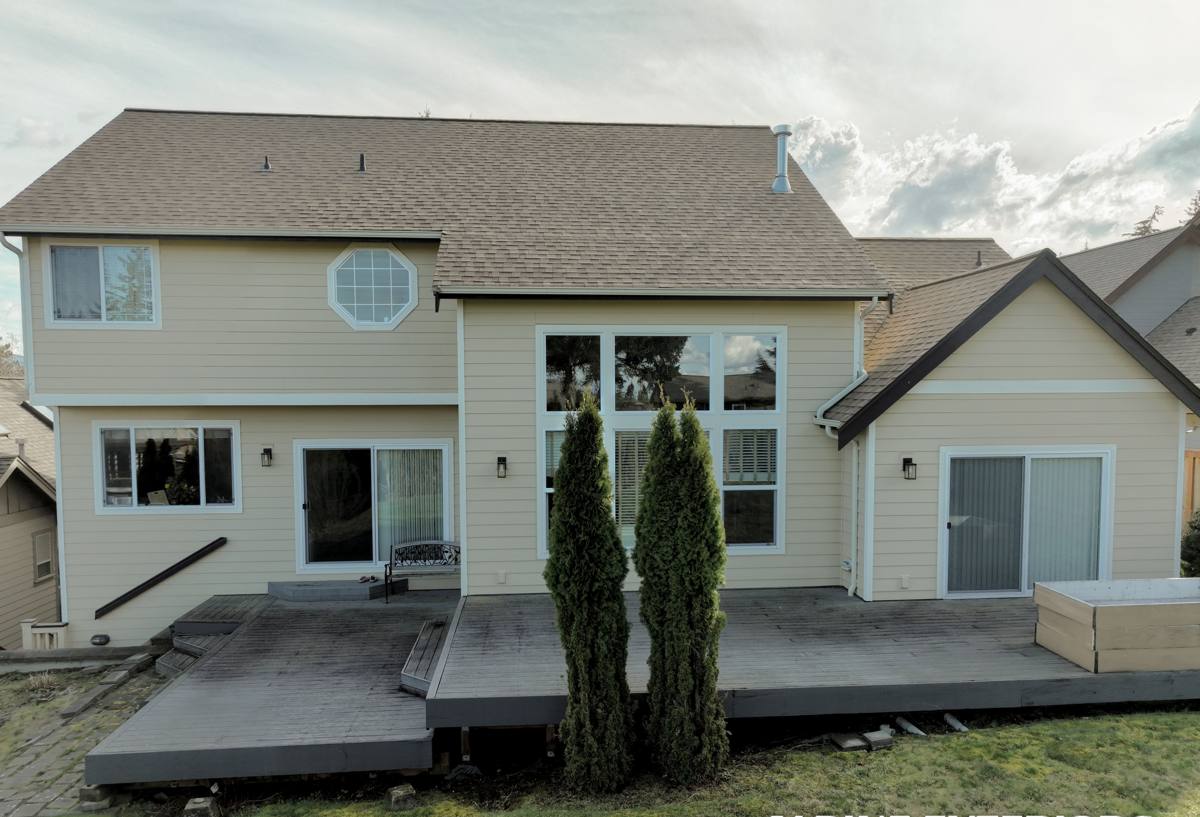
What a Deck Actually Needs to Hold Up Here
A deck built correctly for the University District isn't dramatically different from a well-built deck anywhere in the Pacific Northwest, but a few details matter more here because of the shade and moisture load:
- Ledger flashing that actually sheds water — the ledger board (where the deck attaches to the house) is the single most common failure point on older decks. Proper flashing keeps water from tracking behind the siding and into the rim joist.
- Footings poured below frost and saturation depth — soil that stays wet longer shifts more. Footings sized and set correctly keep the whole structure from settling unevenly over time.
- Joist spacing matched to the decking material, not the other way around — composite and PVC boards often need tighter joist spacing than solid wood to avoid sagging.
- Gaps and airflow underneath — a deck built low to the ground with no ventilation traps moisture and speeds up rot, especially under tree cover where the ground rarely fully dries.
- Stainless or coated fasteners — cheaper fasteners corrode faster in a climate this consistently damp, and a rust-streaked deck is usually a fastener problem, not a wood problem.
Choosing the Right Decking Material for a Shaded Lot
Material choice matters more under tree cover than it does on an open, sunny lot. Here's how the common options actually compare once you factor in Seattle's rain and this neighborhood's shade:
| Material | How it handles shade & moisture | Moss/algae tendency | Maintenance |
|---|---|---|---|
| Cedar | Naturally rot-resistant but stays damp longer under tree cover | Moderate — needs regular cleaning | Re-stain/seal every 2-3 years |
| Pressure-treated pine | Budget-friendly, absorbs moisture more than cedar | Higher if not sealed | Annual inspection, sealing every 1-2 years |
| Composite | Doesn't rot, but early composite products could trap surface moisture | Lower with modern capped composites | Periodic washing, no staining |
| PVC decking | Fully synthetic, sheds water well | Lowest of the common options | Occasional washing |
There's no single "right" answer for every yard. A sun-exposed deck on a corner lot might do perfectly well in cedar with regular maintenance. A deck tucked under mature trees is where we're more likely to recommend a capped composite or PVC board, simply because it spends less time holding onto moisture between rain events. We'll walk your specific lot with you and explain the trade-offs honestly rather than push whatever has the best margin.
A Note on Cost
Decking material cost varies by board width, brand, and railing style, so we won't quote a number here that wouldn't hold up once we see your project. In general, wood costs less upfront and more over time in maintenance; composite and PVC cost more upfront and less in upkeep. Framing, footings, and any structural repair from a prior deck are usually a bigger swing factor in total cost than the decking material itself.
How We Build a Deck, Start to Finish
1. Site Walk and Design
We look at drainage on the lot, how much sun the space actually gets through the year, what the house's siding and framing can support, and what you actually want to use the deck for. In a neighborhood with a lot of shaded, sloped, or narrow backyards, the design has to work with the lot, not against it.
2. Permitting
Most new decks and any significant rebuild in Seattle require a permit through the city. We handle that process rather than leaving it to you, and we build to the code requirements that apply at the time of permitting — not to whatever was standard when the last deck on your lot went up.
3. Demo and Footings
If we're replacing an existing deck, we check what's underneath before we commit to a plan — sometimes the footings are reusable, often they aren't sized for what's being built now. New footings go in below the depth this region's wet soil requires.
4. Framing
Ledger flashing, joist hangers, and beam sizing all get set up front, since this is the structure everything else depends on and the part that's hardest to fix later without tearing the deck back apart.
5. Decking, Railing, and Fasteners
Boards go down with the spacing and fastener type appropriate to the material, with attention to drainage gaps so water moves off the surface instead of sitting on it.
6. Final Walkthrough
We go over the finished deck with you, explain what maintenance it needs and when, and answer questions before we consider the job done.
Permits and Code in Seattle and King County
Deck permitting requirements depend on the size, height, and attachment method of the deck, and Seattle's requirements aren't identical to unincorporated King County's. Rather than guess at your specific situation here, we pull the actual requirement for your address and structure before work starts. Skipping this step is one of the more common ways homeowners end up with a deck that causes problems at resale — an unpermitted structure is a flag that comes up in inspections.
Living With Moss Season
Under the tree cover common in this neighborhood, moss and algae growth on a deck surface is close to unavoidable at some point in the year — the question is how much it affects the deck long-term. A few habits keep it from becoming a structural issue rather than just a cosmetic one:
- Sweep leaves and debris off the deck surface regularly through fall, especially in the gaps between boards where they trap moisture.
- Keep gutters and downspouts near the deck clear so runoff isn't landing directly on the decking.
- Clean visible moss or algae before it gets thick enough to hold water against the board surface.
- Check railing posts and stair stringers each year for soft spots, since these often show rot before the decking itself does.
- Reseal wood decking on the schedule appropriate to the product — waiting until it looks bad usually means you've waited too long.
Why a Crew That Knows This Neighborhood Matters
A deck built from a generic spec sheet doesn't account for a lot that's shaded nine months of the year, an older home with framing that predates current code, or the specific way water moves across this kind of ground. We work throughout Seattle and King County, and the decks that hold up best in this area are the ones designed around University District conditions from the start — not a standard build with a few adjustments after something starts failing.
Signs an Existing Deck Needs Attention
If you're not sure whether your current deck needs a repair or a full rebuild, a few signs point toward the more serious end:
- Soft or spongy spots anywhere in the decking, railing posts, or stairs
- Gaps or rust streaking around fasteners
- A ledger board area that stays damp longer than the rest of the deck
- Visible sag between joists
- Persistent moss or algae that comes back within days of cleaning
Any one of these on its own might be a small repair. Several together usually mean the structure underneath has been compromised, and it's worth having someone look at it before it gets worse over another wet season.
If you're planning a new deck or dealing with an older one that isn't holding up, we're happy to take a look and give you a straightforward, no-pressure estimate — just fill out the form below.