 Seattle Exterior
 Bellevue Siding Takes a Different Kind of Beating
Homes around Bellevue and the greater Seattle area deal with a specific combination of weather that's harder on exterior siding than most homeowners realize. Salt-laden air moving in off the water, driving rain that comes in sideways during winter storms, and a moss season that stretches for months all work on a home's exterior at the same time. Individually, none of these are dramatic. Together, over years, they find every weak point in a siding system — a gap in caulking, a nail that backed out, a corner where water collects instead of running off.
That's the nature of siding repair work in this region. It's rarely one big failure. It's usually several small ones that add up, and the fix depends entirely on catching them before they turn into sheathing damage or interior water intrusion. This page covers what siding repair actually looks like for homes in the Bellevue area, what we look for, and how we approach the job.
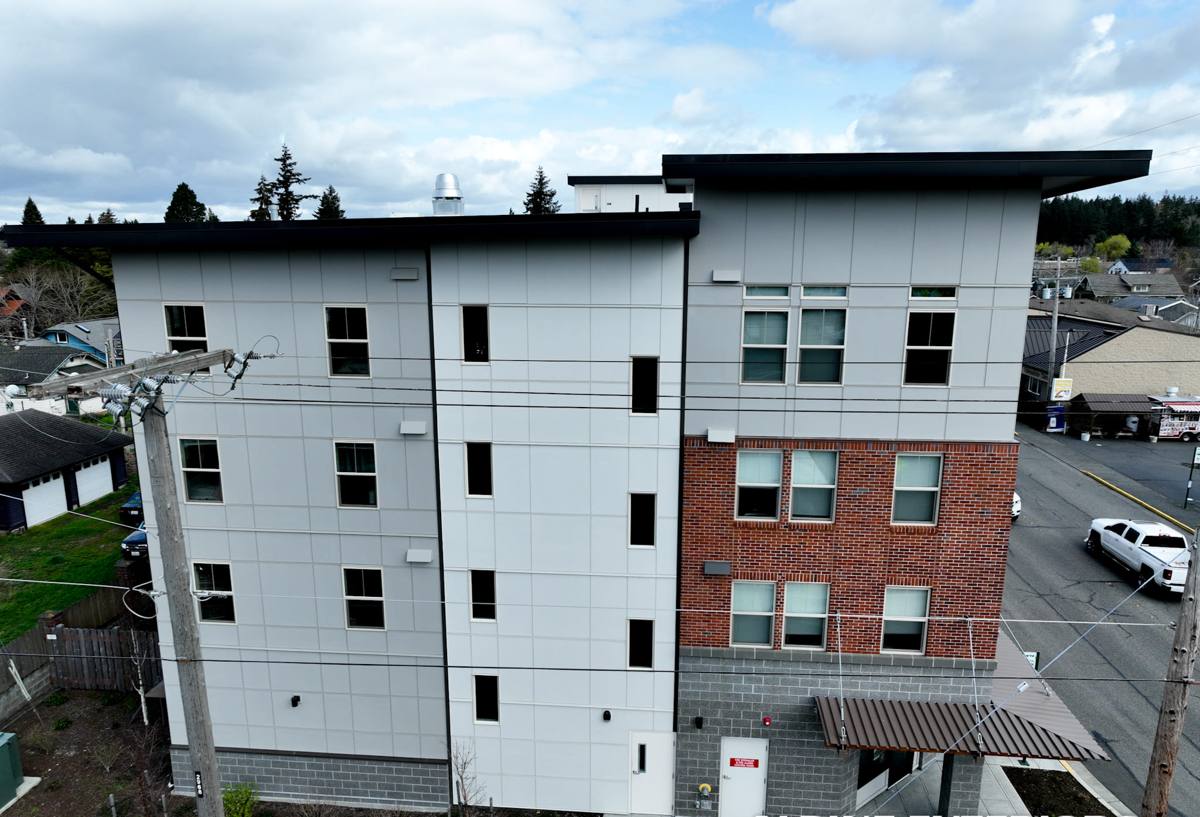
Common Signs Your Siding Needs Repair
Most homeowners don't call about siding until something looks obviously wrong, but the earlier signs are usually visible if you know where to look. Walk the perimeter of your home a couple times a year and watch for these:
- Cracked, chipped, or splitting boards — especially near corners, window trim, and anywhere siding meets a different material
- Soft or spongy spots when you press on the siding, which usually means moisture has reached the substrate underneath
- Persistent dark streaking, moss growth, or algae in shaded and north-facing sections
- Gaps opening up at seams, butt joints, or where caulking has shrunk and pulled away
- Bubbling, peeling, or fading paint in isolated patches rather than across the whole wall
- Visible staining or discoloration on interior walls near exterior corners — often the first sign homeowners notice, and it usually means the problem has been developing outside for a while
Any one of these on its own might just need a small fix. Several of them together, especially clustered in one area, usually means water has been getting behind the siding for a while and the repair needs to address what's underneath, not just what's visible.
What's Actually Going On Under the Damage
Moss and Trapped Moisture
Moss doesn't just look bad — it holds moisture directly against the siding surface for extended periods, which is exactly what siding is designed to avoid. On wood-based products, that constant dampness is what leads to rot. On any siding material, moss buildup at seams and laps can force water past joints that were never designed to sit wet for weeks at a time. Long moss season here means this isn't a once-a-year problem; it's a slow, ongoing one that needs periodic attention, not a single cleaning.
Failed Caulking and Open Joints
Caulking is a wear item, not a permanent seal. Sun exposure, temperature swings, and constant damp-dry cycling break it down over time, and once it cracks or pulls away, driving rain finds the opening. This is one of the most common repair calls we get — not because the siding itself failed, but because the sealant around it did, and nobody caught it in time.
Impact and Age-Related Cracking
Landscaping equipment, ladders, falling branches, and general age all cause physical cracks in siding boards. On their own, a crack or two isn't an emergency, but every crack is a new entry point for water. Left alone through one wet Pacific Northwest winter, a hairline crack can turn into a section of soaked, failing material.
Repair or Replace? How We Actually Decide
Not every damaged section needs a full re-side, and we don't try to talk homeowners into more work than the house needs. But there's a point where patch repairs stop making sense and a fuller replacement of a wall section (or the whole exterior) is the more honest recommendation. Here's how we generally think about it:
| Situation | Usually Repair | Usually Replace |
|---|---|---|
| Damage location | Isolated to one or two boards or a single wall section | Spread across multiple walls or the full exterior |
| Underlying sheathing | Dry, solid, no rot found on inspection | Soft, delaminating, or rotted in multiple spots |
| Cause | Isolated impact, worn caulking, one failed section | Systemic issue — bad original install, chronic moisture path, failed house wrap |
| Age of siding | Well within expected service life | At or past the end of its realistic lifespan |
| Material match | Matching material or acceptable color/profile match available | Discontinued product, no reasonable match possible |
We'll tell you plainly which category your home falls into, and why — including when the honest answer is that a patch repair will hold up fine and a full replacement would be spending more than the situation calls for.
Our Bellevue Siding Repair Process
Because we already work in the Bellevue area regularly, our process starts with a real inspection, not a quick guess from the driveway.
- Full exterior walkthrough. We check every elevation, not just the section you called about — damage often shows up in more than one spot once we start looking closely.
- Probe for hidden moisture. Soft-spot testing and moisture checks around suspect areas tell us whether we're dealing with surface damage or something that's reached the sheathing.
- Identify the actual cause. A cracked board is a symptom. We look for what let water in — bad flashing, failed caulking, a poor original install detail — so the same spot doesn't fail again in two years.
- Written scope and honest recommendation. You get a clear explanation of what needs to happen, what it will cost, and why — including if the right answer is "this is a small fix," not an upsell.
- Repair using matching materials and correct technique. Proper flashing, correct fastening, and sealant rated for this climate — not just a quick patch over the problem.
Why We Only Repair With James Hardie Materials
We install exclusively James Hardie fiber cement siding on this home's exterior, and that standard carries over into repair work. When we're patching or replacing a section, we use Hardie product — including matching to the existing ColorPlus factory finish where possible — rather than mixing in a different material that will age, fade, or perform differently than the surrounding siding.
There's a practical reason for this beyond consistency. Hardie's HZ5 product line is engineered for the freeze-thaw and moisture conditions typical of the Pacific Northwest, which means a repaired section performs the way the rest of your siding does — not as a weak point that fails again the next wet season. Fiber cement is also non-combustible, which matters for any exterior repair work near roof lines, decks, or areas close to a neighboring structure.
If your home currently has vinyl, LP SmartSide, cedar, or another non-Hardie product and needs repair, we'll still give you an honest assessment of the existing material and what your realistic options are. We just won't install anything other than Hardie ourselves, and we'll explain why plainly rather than talk around it.
What a Correct Repair Actually Involves
A siding repair that's done right is invisible in five years — not just today. That means:
- Removing enough surrounding material to actually see and fix the cause, not just cover the visible crack
- Correcting or replacing damaged house wrap and flashing underneath, not just re-siding over it
- Using fasteners and spacing to Hardie's published installation specs, since improper fastening is one of the most common causes of repeat failures
- Matching factory-finished color and profile so the repair doesn't stand out as a patch job
- Sealing joints with a caulking product suited to sustained damp conditions, not a generic all-purpose sealant
Skipping any of these steps is how you end up calling a contractor back out for the same spot two winters later.
Before You Call: A Quick Homeowner Checklist
- Note where the damage is on the home (which side, roughly how high, how many boards)
- Check for any soft spots by pressing gently — don't force it, just note where it flexes
- Look inside on the corresponding interior wall for staining, especially near window and door headers
- Note how long the issue has been visible, even roughly — it helps us judge how far moisture may have traveled
- Avoid caulking over the problem yourself before an inspection — it can trap moisture in and hide the real extent of the damage
Why a Local, Bellevue-Familiar Crew Matters
Siding repair is one of those jobs where local experience actually changes the outcome. A crew that regularly works homes in and around Bellevue and the broader Seattle area already knows what this region's rain patterns, moss cycles, and salt-tinged air do to an exterior over time — which sections of a home typically take the worst of it, and which failure patterns show up again and again in King County construction from different eras. That's the difference between a repair that's cosmetic and one that actually solves the underlying moisture problem.
It also means faster response and a crew that isn't guessing at material availability or code details specific to this area. We show up knowing what King County homes typically need, not learning it on your dime.
If you're seeing early signs of siding damage or already know you have a problem area, we're happy to take a look and give you a straight answer — repair or replace, no pressure either way. Reach out for a free estimate using the form below.