 Seattle Exterior
 Why Siding Wears Out Faster on the Eastside
Bellevue sits in a climate that's harder on exterior building materials than most homeowners realize. The marine air that moves in off Puget Sound keeps humidity elevated most of the year, driving rain works its way sideways into wall assemblies during winter storms, and the tree canopy that makes so many Bellevue neighborhoods desirable also means shade, damp leaf litter, and a long moss season that can run from October through April. None of this is dramatic on any single day. It's cumulative. Siding that looks fine in year three can be hiding trapped moisture, softened substrate, or failed caulk joints by year twelve.
King County's building stock adds another layer to this. Bellevue has homes from nearly every decade of its growth — older wood and early composite siding from before better weather-resistive barrier practices were standard, vinyl from the 80s and 90s that's now brittle and fading, and newer construction where the siding itself may be fine but the flashing details underneath were rushed. Diagnosing which situation you're in matters more than the siding's age alone.
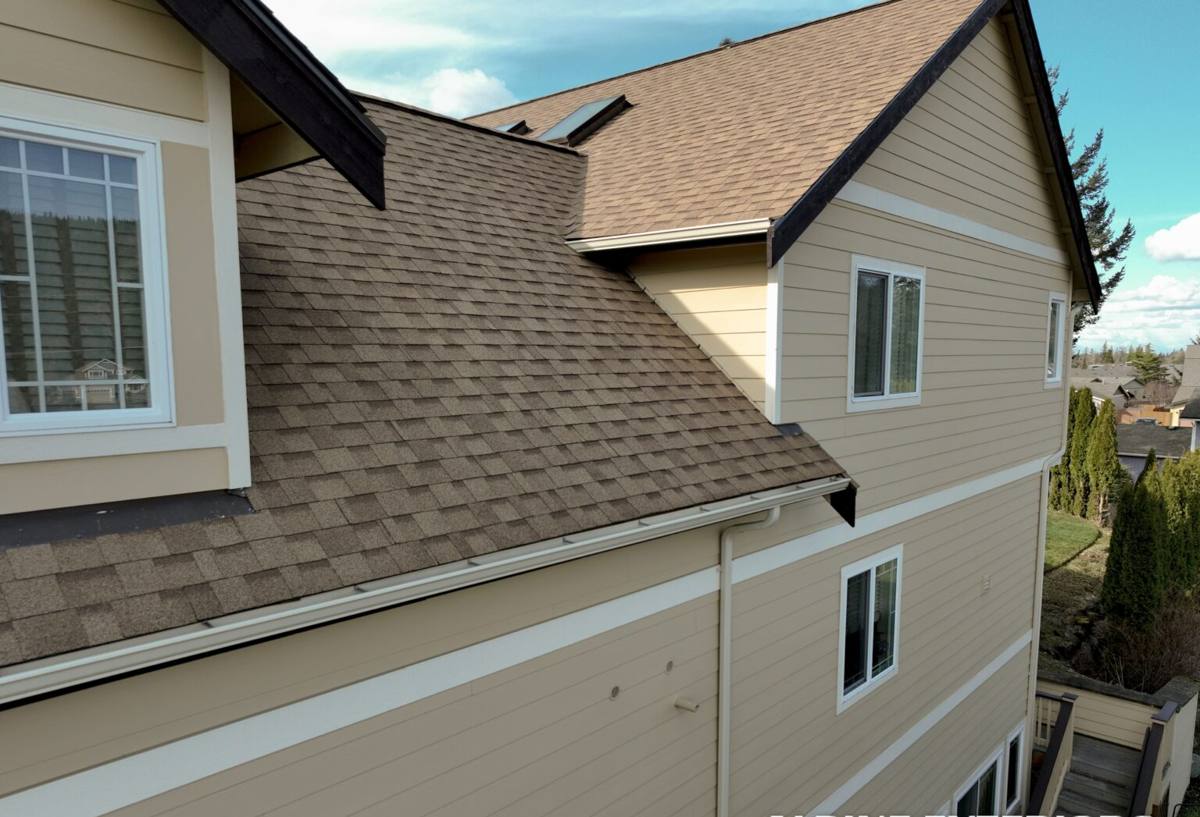
Signs a Bellevue Home Needs Siding Replacement
Some of these signs are obvious from the driveway. Others take a closer look, especially on north-facing walls and anywhere landscaping sits close to the house.
- Soft or spongy spots when you press on the siding, especially near the bottom courses
- Persistent moss or algae growth that returns within weeks of cleaning
- Visible cracking, buckling, or warping panels
- Paint that won't hold — peeling, bubbling, or needing repainting every few years
- Gaps or separation at seams, corners, and window trim
- A musty smell in an adjacent interior room, which can indicate moisture behind the wall
- Rising energy bills that aren't explained by anything else in the home
One or two of these on their own might just mean a repair. Several together, especially on a home over 15-20 years old, usually mean the whole wall system should be evaluated rather than patched.
Repair vs. Full Replacement
Not every problem calls for a full tear-off. If damage is isolated to one wall or a small area and the rest of the siding is sound, a targeted repair can be the honest answer. We'll tell you that when it's true. Full replacement makes sense when damage is spread across multiple elevations, when the underlying moisture barrier has failed in more than one spot, or when the siding material itself (certain composite products, older masonite, or brittle vinyl) is past the point where patching holds up.
What a Correct Siding Replacement Actually Involves
Siding replacement is often sold as a cosmetic upgrade. Done right, it's a rebuild of the wall's weather-resistive system, and the siding itself is only one layer of that.
Tear-Off and Inspection
Removing the old siding is also when problems get found — soft sheathing, rot around window openings, insulation that's absorbed moisture, or old flashing that was never installed correctly. A crew that rushes this step, or skips it by installing over the existing siding, is setting the new material up to fail for the same reasons the old one did.
Weather-Resistive Barrier and Flashing
Underneath the siding, a properly lapped weather-resistive barrier and correctly integrated flashing at windows, doors, and penetrations is what actually keeps driving rain out of the wall. This is the part of the job you'll never see again once the siding goes back up, which is exactly why it's the part most likely to get shortcut by a crew focused on speed.
Fastening and Clearances
Fiber cement siding has manufacturer-specified fastener patterns, gaps, and ground clearances that exist for a reason — they let the material handle seasonal expansion and keep the bottom edge away from splash-back and standing moisture. Installing it like it's just another panel product is one of the most common ways a correct material ends up with a shortened lifespan.
Why We Install Only James Hardie Fiber Cement
We don't install vinyl, LP SmartSide, cedar, or other fiber cement brands, and we're upfront about why. It's not that these products have no merit — vinyl is inexpensive and low-maintenance in dry climates, engineered wood has a warmer appearance, and cedar has real aesthetic appeal for the right buyer who wants to maintain it. But in a climate that delivers sustained moisture exposure and a long moss season the way King County does, we've standardized on one product system because it holds up to that exposure with the least amount of homeowner upkeep.
What Makes Hardie Different
James Hardie fiber cement is non-combustible, which matters for both safety and insurance considerations. It's engineered in HZ product lines specifically for different climate zones, including the wetter Pacific Northwest profile. The ColorPlus factory finish is baked on under controlled conditions rather than field-applied, which is a meaningfully different proposition than repainting siding on a ladder every few years. And the warranty structure is transferable, which protects resale value in a market like Bellevue's where buyers are increasingly asking what the exterior is made of.
None of that means Hardie is maintenance-free. It still needs correct caulking at joints, periodic inspection, and repainting on a longer cycle than most people expect. What it doesn't need is the swelling, delamination, or repeated repainting cycles that push other materials into a much higher lifetime cost.
Comparing Siding Options
| Material | Moisture Behavior | Moss/Algae Resistance | Typical Maintenance |
|---|---|---|---|
| Vinyl | Doesn't absorb water but can trap it behind panels; warps under heat | Grows on surface, needs regular washing | Low, but limited repair options when damaged |
| Engineered Wood (LP SmartSide) | Can swell at cut edges and seams if not sealed and maintained | Moderate, depends on finish upkeep | Requires diligent caulk and edge maintenance |
| Cedar | Absorbs moisture; needs breathable finish to avoid trapping it | High susceptibility without regular treatment | High — refinishing every few years |
| James Hardie Fiber Cement | Dimensionally stable, doesn't swell or rot | Factory finish resists growth better than field-painted surfaces | Low — periodic caulk checks and repainting on a longer cycle |
Our Process for a Bellevue Siding Replacement
1. On-Site Assessment
We walk the whole exterior, not just the wall you called about. Bellevue's mature lots mean shade and moisture patterns vary a lot from one side of a house to another, so we look at all of it before recommending anything.
2. Scope and Product Selection
We'll spec out the right Hardie line, profile, and color for the home, and be clear about what's included — trim, flashing detail work, and any sheathing repair we expect to find once tear-off starts.
3. Tear-Off and Prep
Full removal of the old siding, inspection and repair of anything underneath, and installation of a correctly lapped weather-resistive barrier before any new siding goes up.
4. Installation to Manufacturer Spec
Fastening, clearances, and flashing done to James Hardie's published requirements — not shortcuts that look fine on install day but show up as problems in five years.
5. Cleanup and Warranty Registration
Site cleanup and registering the manufacturer warranty in your name, so the coverage is actually yours if you ever need it.
What Affects the Cost
We don't publish blanket pricing because siding replacement cost depends heavily on what's found once work starts, but these are the factors that move the number most:
- Total square footage and the number of stories
- How much of the existing wall assembly needs repair once old siding comes off
- Amount of trim, window, and architectural detail work involved
- Access and site conditions — steep lots, mature landscaping close to the house, and limited staging area all add time
- Whether the whole exterior is being replaced or only specific elevations
We give an honest range after the on-site walk, not before, because guessing before seeing the wall does homeowners a disservice.
Why Local Experience in Bellevue Matters
A crew that works King County regularly knows what a wall assembly in this climate is supposed to look like when it's done right, and what it looks like when moisture has been working on it quietly for years. That's not something you get from a national franchise rotating in crews from outside the region. It shows up in how carefully the tear-off inspection is done, how flashing is detailed around windows, and how honestly a contractor tells you what your specific home needs versus what's easiest to sell.
If you're noticing moss buildup that won't quit, soft spots, or siding that's simply reached the end of its useful life, we're happy to take a look and walk you through what we find — no pressure, no hard sell. Reach out for a free estimate and we'll give you a straight answer about what your Bellevue home actually needs.