 Seattle Exterior
 Board & Batten Siding, Built for How Bellevue Homes Actually Live
Board and batten has become one of the most requested siding profiles in Bellevue over the past several years, and it's easy to see why. The vertical lines read as modern farmhouse on a new build in Somerset or as clean, understated contemporary on a remodel closer to downtown. It's a strong look. But the profile itself is only half the story — what's behind those boards and battens, and how they're fastened, flashed, and finished, determines whether that look survives a Bellevue winter or starts showing problems by year three.
Bellevue sits close enough to Lake Washington and the greater Puget Sound basin that homes here deal with a specific combination of conditions: salt-tinged air moving off the water, long stretches of driving rain pushed sideways by wind, and a moss season that can run from fall through late spring in shaded, north-facing yards. Board and batten siding, because of its vertical seams and reliance on battens to shed water, is less forgiving of shortcuts than standard horizontal lap siding. We install it often in this area, and we build every job around what the local climate actually does to a wall assembly, not just what looks good on installation day.
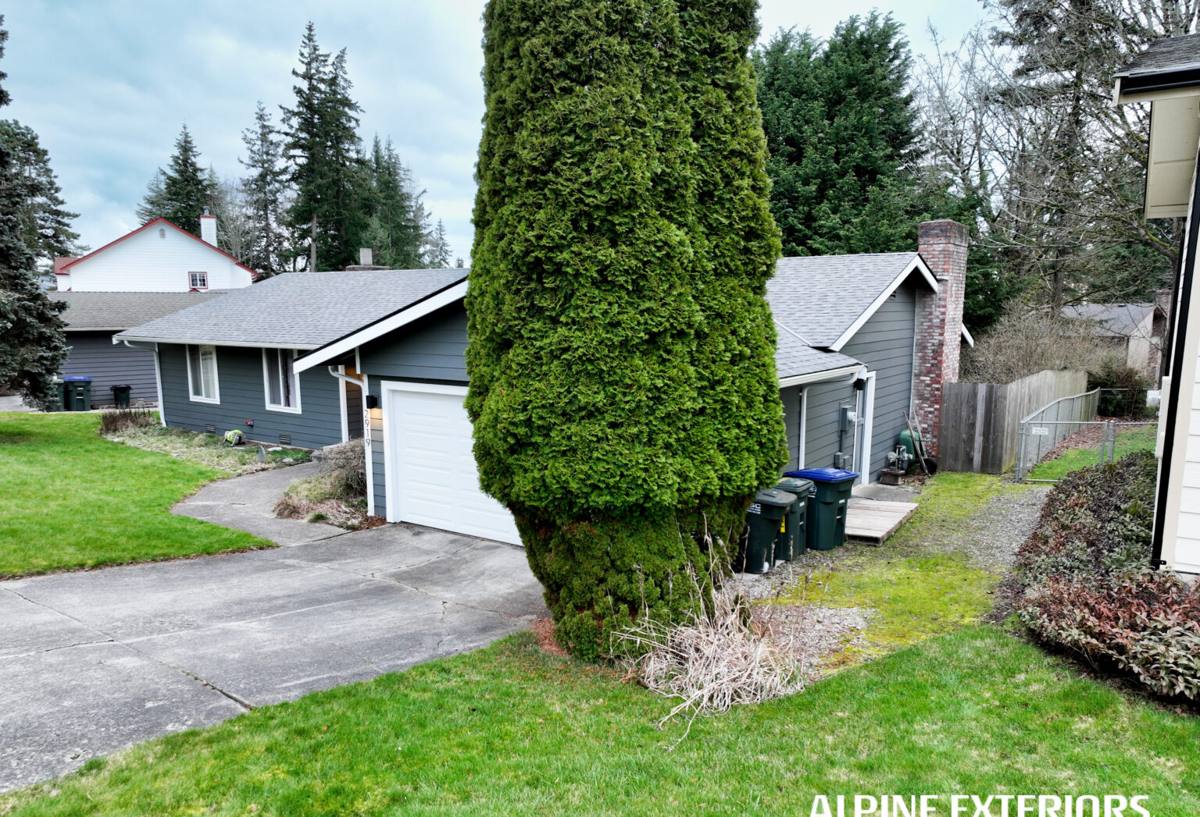
What Bellevue's Climate Asks of a Board & Batten Wall
Driving Rain and Wind-Driven Moisture
Vertical siding profiles create more seams running down the wall than horizontal lap siding does, and every one of those seams is a potential entry point if it isn't detailed correctly. During a wind-driven rain event — common on exposed lots and anything with lake or valley exposure — water doesn't just run down the face of the siding, it gets pushed sideways and can work its way behind panel edges that weren't properly lapped, taped, or backed with a drainage plane.
A Long, Damp Moss Season
King County's mild, wet winters are ideal growing conditions for moss and algae, especially on siding that stays shaded or sits close to mature trees and hedges, which describes a lot of established Bellevue neighborhoods. Moss holds moisture against the surface far longer than a dry wall would ever see on its own, and on a siding material that isn't factory-sealed on every side, that constant dampness is what eventually leads to swelling, soft spots, or paint failure at the seams.
Salt Air and Lake Effect
Homes closer to Lake Washington and the broader waterfront areas deal with airborne moisture and mild salt exposure that accelerates the breakdown of coatings not designed for it. It's a gentler version of what coastal homes face, but over a decade or two it still matters — especially for fasteners, trim, and any paint film that wasn't factory-applied under controlled conditions.
Why the Siding Material Behind the Look Matters
Board and batten can be built out of several materials, and the choice matters more here than in a drier climate. Vinyl board and batten is affordable and low-maintenance in the sense that it doesn't need painting, but it's a thin material that can warp or oil-can in temperature swings and doesn't hold up well to impact — and repairs on discontinued colors can be difficult to match years later. Wood or engineered-wood board and batten looks authentic and can be beautiful, but it's the most maintenance-intensive option in a climate like Bellevue's: cut edges, fastener holes, and any gap in the paint film become an entry point for the exact moisture conditions described above, and repainting on a schedule isn't optional, it's required.
We made the decision to install James Hardie fiber cement exclusively — not vinyl, not primed wood, not engineered wood siding — because it's the product we've found holds up to Bellevue's specific mix of rain, moss, and temperature swings with the least long-term maintenance burden. It's not that the alternatives don't work anywhere; it's that for the climate we build in, the trade-offs didn't make sense for our name to be on the job.
The James Hardie System We Use for Board & Batten
HardiePanel Vertical Siding with Trim Battens
For the board and batten look, we build the wall using HardiePanel vertical siding as the field material, with Hardie trim boards installed as the battens over the panel seams. This is a full fiber-cement system rather than a thin overlay — the panel itself is doing structural weather-resistance work, and the battens are both functional (covering and protecting the seams) and part of the finished look.
ColorPlus Factory Finish
Where the project calls for it, we use Hardie's ColorPlus finish — a coating baked onto the panel and trim at the factory under controlled conditions, rather than field-painted on site. It resists fading and chipping better than a site-applied coat, comes with its own finish warranty, and means the color match between panel and batten is consistent rather than dependent on weather conditions the day it's painted.
HZ5 Engineering for the Pacific Northwest
James Hardie engineers its HZ product lines for specific climate zones, and the Pacific Northwest falls under the HZ5 formulation — built with this region's moisture and temperature patterns in mind. That's a meaningful difference from a generic fiber cement product not engineered for a specific climate zone, and it's part of why we don't treat "fiber cement" as a single interchangeable category.
What a Correct Board & Batten Installation Involves
The finished look of board and batten hides almost everything that determines whether it will perform. A correct installation includes:
- A continuous weather-resistive barrier installed behind the panels, with no gaps or punctures left unsealed
- A rain screen or properly furred-out gap where conditions call for it, so any moisture that does get behind the panel can drain and dry rather than sitting against the wall
- Panel seams correctly lapped or flashed, never simply butted and caulked as the only line of defense
- Battens fastened on a layout that lands on framing, not just decoratively placed over the seam
- Proper flashing at every horizontal transition — window and door heads, roof-to-wall intersections, and the base of the wall
- Fasteners driven to Hardie's specified pattern and depth, since over- or under-driven fasteners are one of the most common causes of early failure
- Factory-cut and factory-primed edges used wherever possible, with any field cuts sealed per manufacturer instructions
Any one of these steps skipped can look fine for a season or two. The problems that show up from a rushed board and batten job — staining at the seams, soft spots at the base, paint failure along the battens — usually take a year or more of Bellevue's wet seasons to become visible, which is exactly why the installation details matter more than they seem to on day one.
Our Process for Board & Batten Projects in Bellevue
- On-site assessment. We walk the home, check the existing wall assembly, look at drainage and grading around the foundation, and talk through what's driving the project — a full re-side, a remodel, or an addition that needs to match.
- Removal and wall prep. Existing siding comes off, the sheathing is inspected for hidden moisture damage, and any repairs are made before anything new goes up. This step is where problems from a prior installation usually surface.
- Weather barrier and drainage plane. A continuous, properly lapped weather-resistive barrier goes on first, with rain screen furring added where the wall assembly calls for it.
- Panel and batten installation. HardiePanel goes up first, followed by the battens, fastened and flashed to manufacturer specification at every seam, corner, and penetration.
- Trim, flashing, and final detailing. Window and door flashing, corner trim, and base details are finished and checked before anything is called complete.
- Walkthrough. We go over the finished job with the homeowner directly, not through a subcontractor.
What Board & Batten Siding Costs in Bellevue
Board and batten typically runs somewhat higher than standard lap siding on the same home, mainly because of the added batten material and labor for the extra fastening and flashing detail. Exact numbers depend on the project, but the factors below are what actually move the price:
| Cost Factor | Why It Matters |
|---|---|
| Home size and wall area | More square footage means more panel, more battens, and more seams to flash correctly |
| Existing siding removal | Tear-off and disposal, plus any sheathing repair found underneath, adds time before new siding can start |
| Trim and architectural detail | Multiple gables, dormers, or a complex roofline mean more cuts, more flashing points, and more labor |
| Number of stories and access | Second- and third-story work, steep lots, or tight side yards common in established Bellevue neighborhoods affect staging and crew time |
| Finish selection | ColorPlus factory finishes cost more up front than field-primed material but reduce future repainting |
We price every project after seeing the home in person — a phone estimate for board and batten isn't reliable given how much the trim detail and wall condition can vary house to house.
Why a Crew That Already Works Bellevue Matters
Bellevue isn't a uniform climate or a uniform set of building requirements. Lots near the water deal with more wind-driven moisture than lots further inland; older neighborhoods often have HOA design guidelines that specify siding profiles, colors, or trim widths; and King County permitting and inspection expectations are things a crew either already knows or has to learn on your project. A contractor who works this area regularly isn't guessing at rain screen requirements for a shaded, moss-prone lot, or scrambling to find out what an HOA architectural committee will and won't approve for a board and batten elevation. That familiarity shows up less in the sales pitch and more in how few surprises come up mid-project.
If you're weighing board and batten for a Bellevue home, we're glad to take a look and talk through what the house actually needs — no pressure, no generic quote pulled from a square-footage calculator. Reach out for a free estimate and we'll walk the property with you.