 Seattle Exterior
 Board & Batten Siding in Kirkland: A Look Built for the Eastside
Board and batten has become one of the most requested siding profiles on the Eastside, and it's easy to see why. The vertical lines read as clean and modern on newer builds, but the same profile also suits the farmhouse and craftsman remodels that are common throughout Kirkland's older neighborhoods. It works as a full exterior or as an accent on gables, dormers, and entry features paired with horizontal lap siding elsewhere on the home. For Kirkland homeowners planning a siding project, board and batten is rarely just a style choice — it's also a chance to fix whatever the home's current siding has been struggling with.
That's the part we want to walk through here: not just why the look works, but what a board and batten system actually needs to hold up long-term in this climate, and why we only install it in one material.
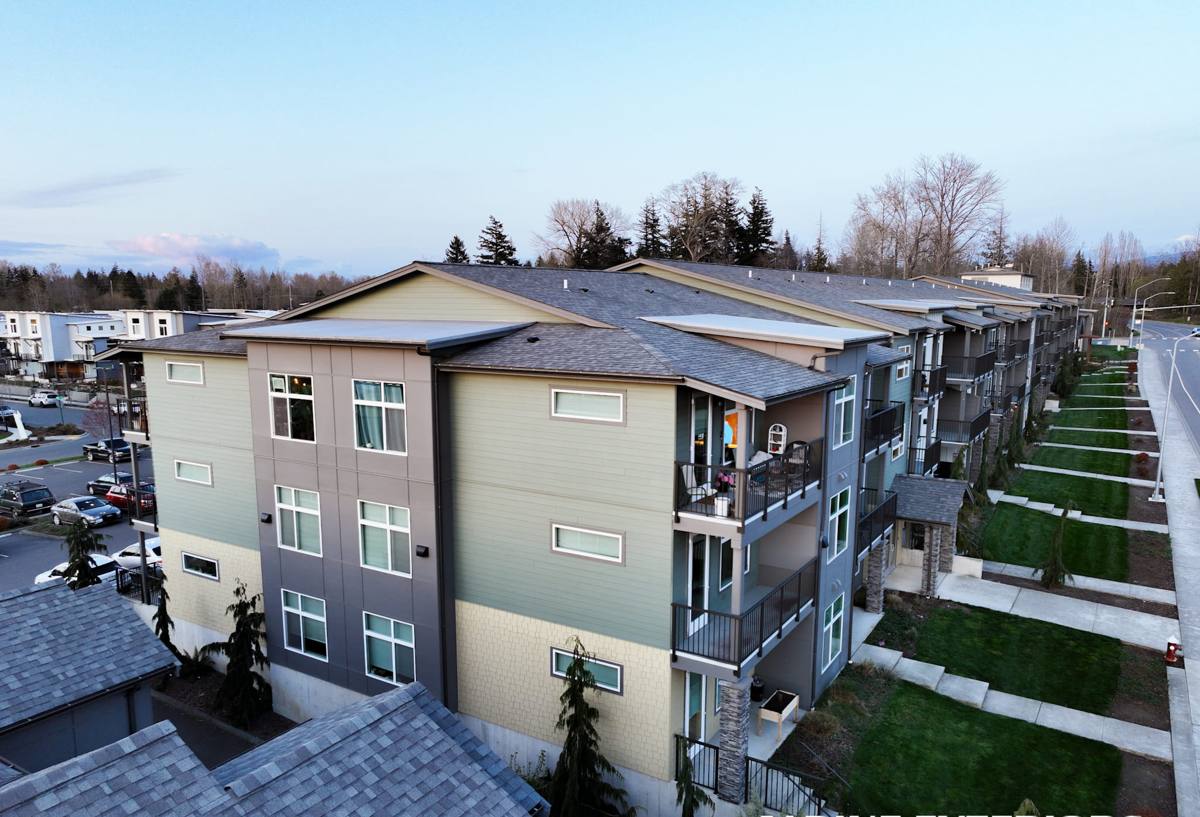
What Kirkland's Climate Actually Does to Vertical Siding
Kirkland sits inside the greater Puget Sound climate — marine air, driving rain that comes in sideways during winter storms, and a moss and mildew season that can stretch for months given the region's shade and humidity. That combination is tougher on vertical siding profiles than most homeowners expect, for a simple reason: board and batten has more seams, more vertical joints, and more places for water to find a way behind the cladding if it isn't detailed correctly.
On a horizontal lap profile, gravity does a lot of the work moving water down and away from the wall. On board and batten, water runs down the face of the boards and battens and can collect at horizontal breaks, window and door transitions, and the bottom termination near the foundation. In a climate with this much year-round precipitation, that detailing isn't optional — it's the difference between siding that looks good for two decades and siding that traps moisture behind the wall within a few wet winters.
What this means in practice
- Every board and batten job needs a correctly lapped weather-resistive barrier behind it, not just house wrap stapled up quickly.
- Flashing at windows, doors, and any horizontal siding transition has to be installed in the right shingle-lap order — not just caulked over gaps.
- Bottom edges near grade, decks, and patios need real clearance and drainage, since that's where splash-back and standing moisture do the most damage.
- Material choice matters more here than in drier climates — a product that swells, cups, or absorbs water at the joints will show it faster in Kirkland than almost anywhere else in the country.
Why We Only Install Board & Batten in James Hardie Fiber Cement
We install James Hardie fiber cement exclusively — we don't offer vinyl board and batten, engineered wood options like LP SmartSide, or primed wood battens, even though all three are available and sometimes cheaper up front. That's a deliberate standard, not a sales position, and it matters more on this specific profile than on almost any other siding style.
Vertical batten joints are exactly where lower-grade materials tend to fail first. Vinyl board and batten panels are thin and flex against the wall, which leaves visible waviness once the sun hits them and doesn't hold paint or color well over time. Engineered wood and primed wood battens are the ones most vulnerable to the moisture problem described above — end grain at cut battens is where these products absorb water fastest, and once swelling starts at a joint, it doesn't reverse. In a climate with Kirkland's rain volume and moss season, that's a maintenance burden we're not willing to put on a homeowner's wall.
James Hardie fiber cement doesn't have that vulnerability. It's dimensionally stable, so board and batten joints stay tight instead of gapping or cupping. It's non-combustible, which matters given the wildfire smoke seasons the region has seen in recent summers. And the ColorPlus factory finish is baked on and warranted against fading, rather than a field-applied paint job that has to be redone as maintenance. We use Hardie's HZ5 product line, engineered specifically for climates like ours — freeze-thaw cycling, sustained moisture exposure, and the kind of weather Kirkland actually gets, not a generic national spec.
What Correct Board & Batten Installation Actually Involves
Board and batten looks simple from the street — vertical boards, battens over the seams — but the installation sequence has more steps than most other siding profiles, and skipping any of them is where problems start.
The build-up, in order
- Weather-resistive barrier — installed and lapped correctly, with all penetrations sealed before any siding goes up.
- Furring strips (where applicable) — vertical board and batten often benefits from a rainscreen gap behind the panels, giving water a drainage path and letting the wall assembly dry instead of trapping moisture against the sheathing.
- Flashing at every horizontal break — window heads, door heads, transitions to other siding profiles, and any horizontal trim.
- Field panels installed plumb and fastened per manufacturer spec — Hardie has specific fastener patterns and spacing for board and batten, and shortcuts here show up as cracking or fastener pull-through later.
- Battens installed over panel joints — with the correct gap and fastening method so the batten covers the seam without trapping water behind it.
- Caulking and sealant at penetrations only — not as a substitute for proper flashing, which is a shortcut we won't take.
Every one of those steps is where a rushed crew can save time and where a home eventually pays for it in the form of a callback — or, more likely, a moisture problem that isn't visible until it's expensive.
Our Process for Kirkland Board & Batten Projects
We start with an on-site assessment of the existing siding and wall assembly, not just a measurement for a quote. That includes checking for existing moisture damage, evaluating the current weather barrier if it's exposed during tear-off, and confirming clearances at grade, decks, and roof-to-wall intersections — all common trouble spots on Kirkland homes given the region's rain volume.
From there we walk through the board width, batten spacing, and color options that fit the home's architecture, whether that's a full board and batten exterior or an accent application. Once the scope is set, we handle tear-off, any sheathing repair the assessment turned up, the full weather barrier and flashing system, and the Hardie installation itself — followed by a final walkthrough before we consider the job done.
We work throughout Kirkland regularly, which means we already know the permitting expectations, the common wall conditions in the area's housing stock, and the parts of a job — like drainage near retaining walls or shaded north-facing walls that stay damp longer — that a crew unfamiliar with the area might not think to ask about.
Board & Batten Compared to Other Siding Options
Homeowners considering board and batten in Kirkland usually cross-shop it against other profiles and materials. Here's how the honest trade-offs stack up.
| Option | Look | Moisture Performance Here | Long-Term Maintenance |
|---|---|---|---|
| James Hardie board & batten | Clean vertical lines, modern or farmhouse | Dimensionally stable, engineered for this climate (HZ5) | Low — factory finish, no repainting cycle |
| Vinyl board & batten | Similar look, less crisp up close | Panels can warp and flex; joints show waviness over time | Low cost but shorter realistic lifespan here |
| Wood or engineered wood battens | Most authentic traditional look | Most vulnerable to swelling at cut ends and joints | Highest — regular repainting and moisture monitoring |
| Hardie horizontal lap (alternative) | More traditional, less distinct | Fewer vertical joints, slightly simpler drainage path | Low — same factory finish system |
Board and batten isn't the lowest-maintenance profile in fiber cement — horizontal lap has fewer joints — but in the right material it's a fully durable option, and for a lot of Kirkland homes it's the profile that actually fits the architecture.
What Drives Cost on a Kirkland Board & Batten Job
Every home is different, so we won't quote a number without seeing the wall condition, but a few factors consistently move the price on this specific profile:
- Tear-off and substrate condition — if the existing siding is hiding moisture damage, sheathing repair adds cost but isn't optional.
- Rainscreen or furring strip installation — adds labor but meaningfully improves drainage performance in a climate like Kirkland's.
- Full exterior vs. accent application — board and batten as a gable or entry accent costs less than a full-home application.
- Trim and transition complexity — homes with multiple roof-to-wall intersections or siding-profile transitions take more flashing detail work.
- Board width and batten spacing — wider reveals and custom spacing affect material takeoff and layout time.
What to Ask Before Hiring for Board & Batten in This Climate
Because this profile is less forgiving of shortcuts than standard lap siding, it's worth being specific with any contractor you're vetting:
- Do you install a rainscreen or drainage gap behind board and batten, or panels direct to the wrap?
- What's your flashing detail at horizontal breaks and window/door transitions — walk me through it, not just "we caulk it"?
- What fastener pattern and spacing do you use, and is it to the manufacturer's published spec?
- Have you installed this profile on other homes in Kirkland or nearby, and what wall conditions did you run into?
- What does the warranty cover — material, finish, and labor — and is it transferable if the home sells?
A straight answer to each of those tells you more about the crew than any brochure will.
Ready for an Estimate
If you're weighing board and batten for a Kirkland home — a full exterior or an accent application — we're glad to come take a look, walk the wall conditions with you, and give you a straight answer on scope and cost. There's no pressure and no obligation; use the form below to request a free estimate.