 Seattle Exterior
 Building Decks for Capitol Hill's Particular Climate
Capitol Hill sits close enough to Puget Sound and Lake Washington that homes here deal with a mix most inland neighborhoods don't: salt-tinged air, long stretches of driving rain, and shaded lots where moss and algae take hold and never fully let go. A deck built with generic assumptions — the kind you'd use in a dry climate — starts showing problems within a season or two. Fasteners bleed rust, boards cup and check, and joists that never quite dry out start to soften from the inside before anyone notices.
Building correctly for this neighborhood means treating moisture as the default condition, not the exception. Every decision, from footing depth to fastener grade, gets made with the assumption that the structure will be wet more often than it's dry, and that it needs to shed water and dry out quickly when the rain finally breaks.
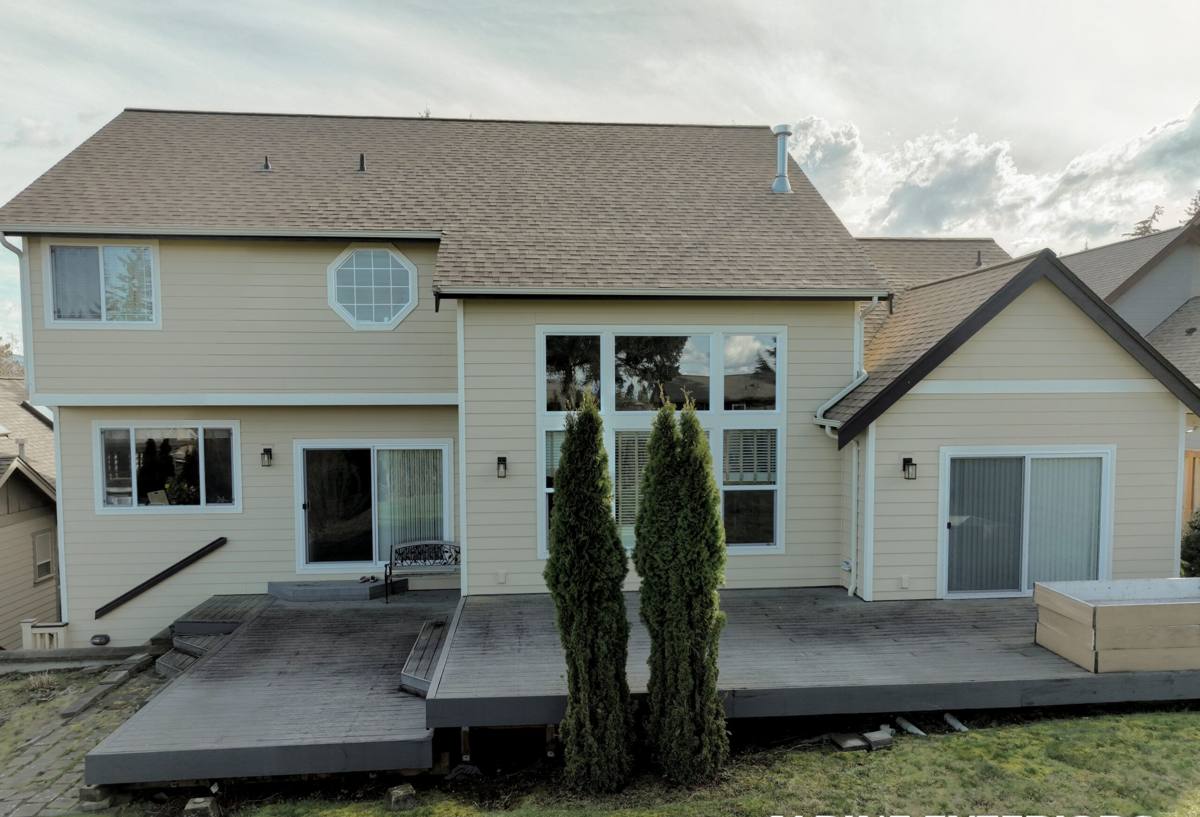
What Capitol Hill Homes Actually Need From a Deck
Drainage First, Everything Else Second
A deck that can't shed water fast enters a slow decline. Standing water on decking boards feeds the moss and algae that Seattle's damp winters are famous for, and trapped moisture underneath a deck is what rots joists and ledger connections from a spot you can't see until it's a real repair. Correct grading below the deck, a slope built into the frame rather than relied on from the boards alone, and gaps sized to let air move are basic requirements here, not upgrades.
Materials That Tolerate Salt Air and Shade
Salt-laden air accelerates corrosion on anything ferrous, and shaded lots — common on tree-covered Capitol Hill blocks — stay damp longer after every rain, which is exactly the environment moss wants. That combination narrows the field of hardware and decking that actually performs long-term versus what merely looks fine on installation day.
Structure That Matches the Lot
Capitol Hill is a hillside neighborhood with a lot of older homes, meaning decks frequently attach to century-old framing, sit on sloped or uneven grade, or need to clear a walkout basement or retaining wall. None of that is a problem for a properly engineered deck, but it does mean the structural plan has to respond to the actual lot rather than a standard flat-yard layout.
What a Correct Deck Build Involves
Ledger Attachment and Flashing
Where the deck ties into the house is the single most common point of failure on any deck in this climate, and it's also the easiest to get wrong invisibly. Proper flashing — installed so water is directed out and away from the house rather than behind the siding — combined with correctly sized and spaced lag bolts or through-bolts into sound framing is non-negotiable. On older Capitol Hill homes, that framing sometimes needs to be assessed and occasionally reinforced before the ledger goes on at all.
Footings Sized for Real Ground Conditions
Footings need to reach below the frost line and bear on undisturbed, competent soil. On hillside lots, that can mean deeper or differently placed footings than a textbook flat-lot layout, and on some Capitol Hill properties it means checking for fill soil or old construction debris before pouring. Skipping this step is how decks end up with slow, uneven settling a few years in.
Framing, Fasteners, and Hardware
Stainless steel or heavily coated, corrosion-rated fasteners and structural hardware are worth the modest upcost in this climate — standard galvanized hardware can start streaking and weakening well before the wood around it is due for replacement. Joist hangers, post bases, and any structural connector should be rated for the moisture exposure the deck will actually see, not the minimum the manufacturer allows for dry climates.
Guardrails, Stairs, and Code Compliance
Any deck more than a short distance off the ground needs a code-compliant guardrail, and stairs need consistent rise and run with a graspable handrail. These aren't places to cut corners for cost, both because they're inspected and because they're the parts of a deck most directly tied to somebody's safety.
Choosing a Decking Material for This Climate
There's no single right answer here — the right material depends on how much upkeep you want to take on, your budget, and how much shade and moss exposure your specific lot gets. Here's how the common options actually compare once King County weather is factored in:
| Material | Moisture & Moss Behavior | Maintenance Needed | Typical Lifespan |
|---|---|---|---|
| Cedar | Naturally rot-resistant but still absorbs moisture; gets slick with algae if not cleaned | Annual cleaning and re-sealing/staining | 15-20 years with upkeep |
| Pressure-treated pine | Chemically resistant to rot but prone to checking and cupping in wet-dry cycles | Regular cleaning, periodic staining | 10-15 years |
| Composite decking | Doesn't rot, but can stay damp on the surface longer, which needs regular cleaning to stop moss growth | Periodic washing, no staining or sealing | 25-30 years |
| PVC decking | Fully synthetic, sheds water fastest of the group, least hospitable surface for moss | Occasional washing | 25-30+ years |
We install all of these and will walk through the honest trade-offs for your specific lot — a heavily shaded backyard behaves differently than an open, sun-exposed deck, even a block apart.
Cost Factors Homeowners Should Understand
Every deck estimate is really a handful of separate decisions stacked together. Understanding what drives cost helps you see where your money is actually going and where there's real flexibility.
| Factor | Why It Moves the Price |
|---|---|
| Decking material | Composite and PVC cost more upfront than wood but need far less long-term maintenance spending |
| Height and structure | Elevated decks, multi-level designs, or decks over a walkout need more framing, footings, and guardrail |
| Site access and slope | Hillside lots and tight urban yards common on Capitol Hill can add labor for material handling and excavation |
| Permitting | Larger or elevated decks require permitting and inspection, which adds time and a fee but protects you long-term |
| Railing and stair detailing | Custom railing styles and multiple stair runs add material and labor beyond a basic guardrail |
How Our Process Works
On-Site Assessment
We start by walking the actual lot — checking grade, drainage, existing structure if there's a deck to replace, and how the space is used — before talking materials or layout. On a hillside neighborhood like Capitol Hill, this step catches issues a phone estimate never would.
Design and Material Selection
We work through layout, decking material, and railing style with you, laying out the real trade-offs in maintenance and cost rather than steering you toward whatever's easiest for us to install.
Permitting
Seattle decks above a certain size or height typically require a permit through the city's building department, and we handle that process as part of the job rather than leaving it for you to sort out. Getting this right matters at resale — an unpermitted deck can become a real problem during a home sale inspection.
Construction
Footings, framing, decking, and railing get built in sequence with inspections at the required stages. We keep the site reasonably contained given how tight some Capitol Hill lots are, and we communicate timeline changes rather than letting you guess.
Final Walkthrough
We walk the finished deck with you, cover basic care for whatever material you chose, and make sure everything meets what was discussed at the start.
Maintaining a Deck Through a Seattle Winter
The single biggest driver of how long any deck lasts here isn't the initial build quality alone — it's whether it gets basic seasonal attention. A few habits go a long way:
- Sweep leaves and debris off the decking regularly in fall; trapped organic matter is what feeds moss and holds moisture against the boards
- Clean the surface at least once or twice a year with a deck-safe cleaner to break up algae and moss before it gets established
- Check that gaps between boards stay clear so water can drain through rather than pool
- Inspect the ledger board area and any flashing once a year for signs of water staining or gaps
- Re-stain or re-seal wood decking on the manufacturer's recommended schedule — don't wait for it to look obviously dry
- Look at fasteners and hardware periodically for rust streaking, especially on decks closer to the water where salt air is more present
- Keep gutters and downspouts near the deck clear so runoff isn't dumping directly onto or under the structure
Why a Crew That Already Works Capitol Hill Matters
Capitol Hill isn't a uniform, flat suburban grid — it's a dense, hillside neighborhood with a real mix of older homes, tight lots, and shared property lines, and every one of those factors changes how a deck gets designed and built. A crew that regularly works this specific part of Seattle already knows how to handle sloped-lot footings, how to work around tight side-yard access, and what King County and city permitting actually expects for this kind of terrain. That experience shows up as fewer surprises mid-project, not as a sales pitch.
It also means we're not guessing about how the local climate treats different materials — we've seen how cedar ages on a shaded Capitol Hill lot versus an open one, and how composite decking holds up after a few wet winters here. That's the kind of judgment that only comes from doing this work in this specific place, repeatedly.
Get a Straightforward Estimate
If you're thinking about a new deck or need to replace one that's showing its age, we're happy to come take a look and give you an honest read on what your lot needs. Use the form below to request a free, no-pressure estimate.