 Seattle Exterior
 Siding Installation in Capitol Hill: What the Neighborhood Is Up Against
Capitol Hill is one of Seattle's densest, most walkable neighborhoods, and its housing stock reflects more than a century of building: Victorian- and Craftsman-era homes shoulder to shoulder with brick apartment buildings, mid-century infill, and newer construction squeezed onto narrow lots. Whatever the vintage, every one of these homes sits inside the same Puget Sound weather pattern, and that pattern doesn't go easy on exterior siding. Salt-tinged air drifting in off the Sound, rain that gets driven sideways by wind more often than it falls straight down, and a moss season that stretches across most of the year on shaded, tree-lined blocks all put steady pressure on whatever material is covering a wall. None of it announces itself in a single storm. It's the accumulation over years that decides whether a home's siding is still doing its job at year fifteen or already failing.
We install siding throughout Seattle and King County, and Capitol Hill's mix of mature tree canopy, close-set lots, and older housing stock is exactly the kind of environment where the wrong material, or a shortcut installation, shows its problems earliest.
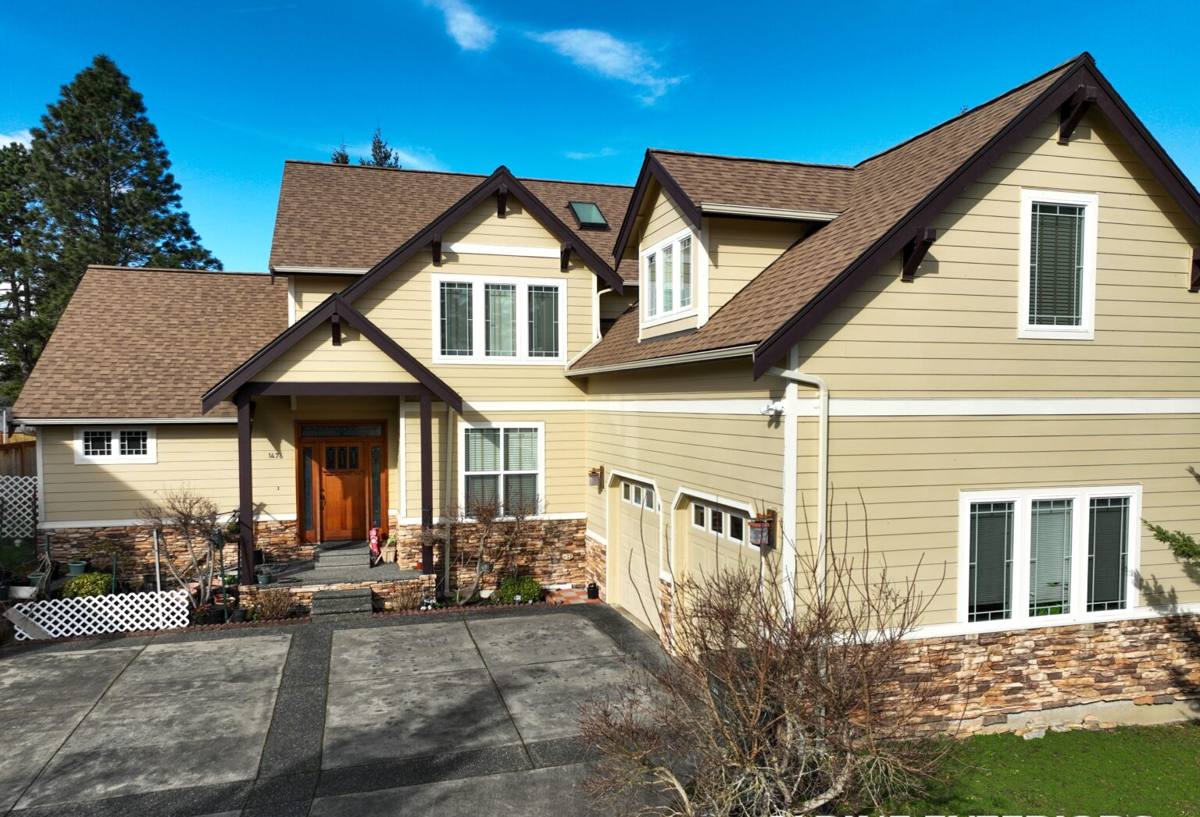
What Salt Air, Driving Rain, and Moss Do to a Wall
Marine Air and Corrosion
Seattle sits on Puget Sound, and homes across the city, Capitol Hill included, are exposed to a steady, mildly corrosive drift of marine air even well away from open water. That exposure works slowly on exposed fasteners, hardware, and lower-grade finishes. It rarely shows up as a dramatic failure. Instead it shows up years later as rust bleed at nail heads, degraded caulking, or a paint finish that's chalked and faded well ahead of its expected life.
Wind-Driven Rain
Rain in this region doesn't just fall, it gets pushed. Wind-driven rain finds its way into lap joints, trim seams, and wall penetrations from angles a siding system built for a calmer, drier climate was never really tested against. A more exposed wall can take on water in places a sheltered, tree-covered lot two blocks over never would, which is part of why flashing and clearance details matter as much as the material itself.
A Long Moss and Mildew Season
Mild temperatures, consistent dampness, and Capitol Hill's mature street trees add up to extended moss and mildew growth, especially on north-facing walls and anywhere shade keeps a surface from drying out between rain events. Moisture-absorbent siding materials become a growth surface over time, and the problem usually starts in spots homeowners check least: behind a hedge, under an eave, along the shaded side of a garage or addition.
Why We Install Only James Hardie Fiber Cement
We don't carry a lineup of siding brands and let price sort out the decision. We install James Hardie fiber cement, and only James Hardie, because of what actually holds up in a wet, marine climate like this one.
- Non-combustible core: fiber cement doesn't feed a fire the way wood-based siding can.
- Factory-applied ColorPlus finish: the color coat is cured under controlled factory conditions rather than brushed on at the job site, giving it real resistance to fading, chalking, and moisture intrusion.
- Climate-engineered HZ product lines: Hardie's HZ5 formulation is built for regions with sustained moisture and freeze-thaw cycling, a closer match to Puget Sound weather than a generic national spec.
- Dimensional stability: fiber cement doesn't swell, cup, or warp the way engineered wood can after repeated wet-season moisture cycles.
- Strong transferable warranty: Hardie backs its products with a substantial warranty, provided the installation follows spec.
We don't install LP SmartSide, vinyl siding, Cemplank, Allura, primed spruce, or cedar. Those are legitimate products, and other contractors install them competently. We made a professional decision that in a climate this consistently wet, standing behind one system we understand completely serves homeowners better than offering a cheaper alternative that quietly shifts maintenance risk onto them a decade or two down the road.
What the Alternatives Trade Off Here
LP SmartSide is an engineered wood product with a resin-treated strand core, and it can perform reasonably well in drier regions. In a marine climate with this much sustained humidity, engineered wood is more sensitive to moisture at cut edges and fastener penetrations than fiber cement is. Vinyl is affordable and generally low-maintenance, but it can warp under direct sun, crack in a cold snap, and trap moisture behind the panel if house wrap and flashing weren't installed with real care — a detail that's easy to miss just by looking at a finished wall. Cedar and primed spruce are genuinely attractive, but they need ongoing painting or sealing to keep moisture out, and in a climate that stays wet this much of the year, that maintenance schedule tends to slip, which shortens the material's real-world lifespan well below what it's technically rated for.
What a Correct Siding Installation Actually Involves
Choosing the right material is only half the job. A James Hardie installation performs the way it's engineered to only when the details underneath it are done right: correct fastener type, pattern, and spacing; proper clearance from grade, decks, and roofline; joints that are lapped and sealed to spec; and house wrap and flashing that function as one integrated water-management system rather than separate steps done in isolation. A rushed or corner-cut install is one of the most common reasons a good product ends up performing poorly, and it has nothing to do with the material itself.
Tear-Off Versus Overlay
Installing new siding directly over old material is sometimes offered as a shortcut, but it also means whatever is happening behind the existing siding — trapped moisture, soft sheathing, an outdated or missing weather-resistive barrier — stays hidden. We tear off down to the sheathing on installation projects so we can actually see what we're building on, repair anything that needs it, and install a proper house wrap and flashing system underneath the new siding rather than layering over an unknown.
Fastening, Clearance, and Flashing
Hardie panels and lap siding need specific fastener spacing and embedment to perform to spec, along with clearance above grade, roofing, decks, and hardscape so the lowest courses aren't sitting in standing moisture. Every window, door, and penetration gets flashed so water is directed out and away from the wall assembly rather than trapped behind the cladding — the single detail most responsible for whether a wall stays dry for thirty years or develops a hidden rot problem in ten.
Our Installation Process
A siding installation on a Capitol Hill home generally moves through the same stages, though the specifics shift with the house:
- On-site assessment: we walk the property, look at the existing siding, trim, and any visible moisture damage, and talk through what the project actually needs.
- Tear-off: old siding comes off down to the sheathing so the substrate can be inspected directly.
- Substrate repair: any soft, rotted, or water-damaged sheathing and framing gets repaired before anything new goes up.
- House wrap and flashing: a weather-resistive barrier is installed and lapped correctly, with flashing detailed at every window, door, and penetration.
- Hardie installation: panels or lap siding go up to manufacturer fastening and clearance specifications.
- Trim and finish work: trim, corners, and touch-up are completed and checked against the ColorPlus finish.
- Final walkthrough: we go over the finished work with the homeowner before calling the job done.
Comparing Siding Materials for a Capitol Hill Home
| Material | Moisture Behavior in This Climate | Typical Long-Term Maintenance |
|---|---|---|
| James Hardie fiber cement | Non-combustible, doesn't absorb moisture or feed rot the way wood-based products can | Low — factory finish holds up against sustained damp and marine air exposure |
| Vinyl | Doesn't rot, but can warp or crack under temperature swings and wind-driven rain over time | Low upfront, but replacement rather than repair once panels fail |
| LP SmartSide / engineered wood | Wood-based core is more moisture-sensitive at cut edges and seams than fiber cement | Moderate — edge sealing and coating upkeep matter more in sustained damp conditions |
| Primed spruce or cedar | Natural wood absorbs moisture readily and is a preferred surface for moss growth | Highest — regular repainting, caulking, and moss treatment needed to hold up |
This isn't a claim that every alternative fails on every house — it's why our own standard, for the climate we install in every day, is fiber cement put on correctly rather than a material that trades a lower price tag for a heavier maintenance load down the road.
Signs a Capitol Hill Home May Need New Siding
Most homeowners call because something specific caught their eye, not because they've been tracking every inch of their home's exterior. It's worth checking for these before a small issue turns into an expensive one:
- Moss or dark staining that returns quickly after cleaning, especially on shaded or north-facing walls
- Soft or spongy siding, particularly near the base of the wall or around window and door trim
- Paint that keeps peeling, bubbling, or chalking no matter how often it's redone
- Siding that's cupping, warping, or separating at seams
- Visible gaps at corners, trim joints, or seams where water can track in
- Rust staining below fasteners or flashing
- Rising heating bills that may point to a wall assembly that's no longer sealing properly
Any single item on that list doesn't automatically mean a full replacement. But it's worth having someone look at directly rather than assuming it'll resolve on its own, since moisture damage in this climate tends to compound rather than stay put.
What to Check Before Hiring a Siding Contractor
- Confirm an active Washington state contractor license and current insurance
- Ask exactly which siding brand and product line they install, and why
- Ask how they handle hidden substrate damage discovered during tear-off
- Ask whether they tear off down to the sheathing or install over existing siding
- Get a written scope that specifies flashing and house wrap details, not just "new siding installed"
Why a Local Capitol Hill Crew Matters
A lot of what makes an installation hold up here comes down to details a generic, out-of-area crew tends to skip past: how much wind-driven rain a given wall orientation actually takes on, where moss establishes first based on shade and tree cover, how much clearance siding needs above grade on a dense lot with limited drainage, and how flashing needs to be layered so it sheds water correctly through an entire Seattle winter rather than just passing a dry-day inspection.
A crew that installs siding across Capitol Hill and the rest of King County regularly starts to recognize these patterns from one property to the next: narrow side-yard setbacks, mature trees shading a north wall, a Craftsman's deep eaves needing different flashing than a newer build's simpler roofline. That familiarity shows up in small, on-site decisions that homeowners rarely notice directly but absolutely feel in how the exterior performs over the following decades.
If your Capitol Hill home needs new siding, or you'd just like an honest read on whether your current siding still has years left in it, we're glad to take a look. Reach out using the form below to schedule a free, no-pressure estimate.