 Seattle Exterior
 New-Construction Windows for Columbia City Homes
Columbia City has seen a steady wave of new building over the past two decades — infill single-family homes, townhome rows, ADUs, and additions going up on lots near the light rail corridor and throughout the surrounding Rainier Valley area. Every one of those projects needs windows installed correctly the first time, because new-construction windows go in before the siding closes up the wall. There's no going back to fix a flashing mistake without tearing into finished exterior work. That makes the install itself — not just the window product — the part that determines whether a home stays dry for the next 40 years.
This page covers what a correct new-construction window install looks like for a Columbia City project, what King County's climate asks of that install, and why the sequencing matters as much as the window brand you choose.
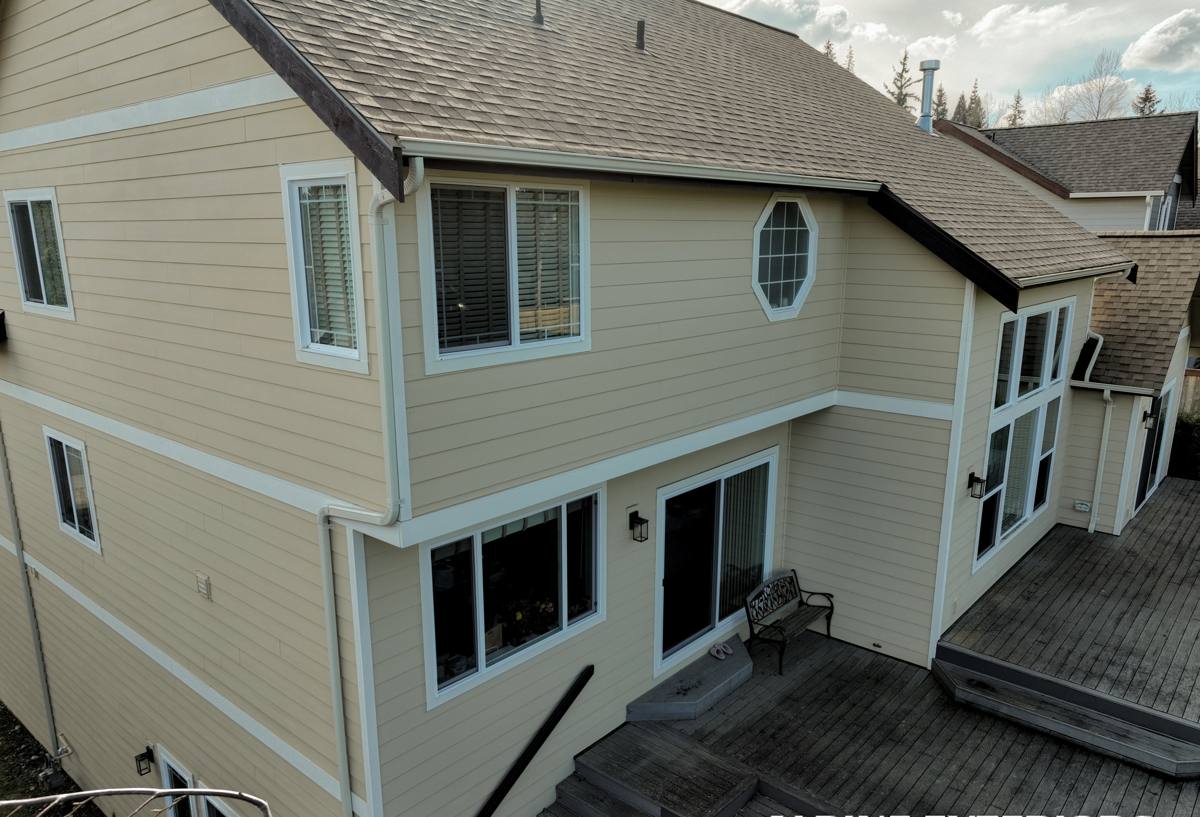
New-Construction vs. Replacement: Why the Distinction Matters
These are two different jobs, and confusing them is how water problems start.
New-Construction Windows
These have a nailing fin (also called a flange) around the perimeter of the frame. The window sits in the rough opening before siding or house wrap is finished, and the fin gets integrated into the weather-resistive barrier (WRB) and flashing system as part of the building envelope. This is the correct method for new builds, additions, and any opening where the wall is open down to the studs.
Replacement (Pocket) Windows
These have no nailing fin. They're built to slide into an existing frame that's staying in place, relying on the old frame and existing flashing for weatherproofing. Using a pocket window in a new-construction opening — or a flanged window where a pocket install is called for — is a mismatch that leads to gaps, poor flashing integration, or a frame that isn't structurally supported the way it should be.
If your Columbia City project is new construction — a new build, an addition, or an opening reframed down to the studs — you want a crew that installs flanged windows as a matter of course, not one that mostly does pocket replacements and treats new construction as a side job.
What Seattle's Climate Asks of a New Window Install
King County doesn't get extreme weather, but it gets a lot of the kind of weather that punishes small installation mistakes over time.
- Sustained rain, not just storms. Seattle's rainy season is long and steady rather than heavy and brief. A window that's 95% sealed will eventually show it — water finds the gap over months, not in one dramatic event.
- Driving rain off Puget Sound. Wind-driven rain pushes water sideways against west- and south-facing walls, which stresses head flashing and sill pans more than a straight downpour would.
- Long moss and mildew season. Shaded, damp conditions common under Columbia City's mature tree canopy encourage moss and algae growth on sills, trim, and cladding — which holds moisture against the window frame longer if drainage isn't built in correctly.
- Mild but persistent humidity. Even without freeze-thaw extremes, sustained dampness degrades poorly sealed sheathing, OSB, and framing over years rather than all at once — which is why a slow leak here often isn't caught until it's already caused rot.
None of this requires exotic materials. It requires a flashing and drainage sequence that's followed correctly, every time, on every opening.
Getting the Installation Sequence Right
A correct new-construction window install follows a specific order. Skipping or reversing a step is the single most common cause of window leaks in wet climates — far more often than the window product itself.
- Rough opening is checked for square, level, and correct dimensions before the window ever shows up on site.
- A sloped sill pan flashing goes in first, so any water that does get past the window drains back out instead of pooling on the sill.
- Window is set, shimmed, and fastened through the nailing fin per the manufacturer's schedule — not just at the corners.
- Flashing tape or flexible flashing goes over the side flanges, then the head flashing last, always shingled so water sheds downward and outward — never taped in a way that traps water behind the window.
- Integration with the WRB (house wrap or equivalent) is lapped correctly so the wall's drainage plane stays continuous, not interrupted at the window opening.
- Interior air sealing and insulation around the frame is completed separately from the exterior weatherproofing — these are two different jobs with two different purposes.
Every step in that sequence is inspectable while the wall is open. That's exactly why we photograph flashing and sill pan work before siding closes it up — it's the only real record that the job was done right, since nobody can see it again once the exterior is finished.
Choosing Frame Materials for This Climate
For new construction, you're not constrained by an existing frame, so the material decision matters more than it does on a replacement job.
| Frame Material | How It Handles Seattle's Climate | Trade-Offs |
|---|---|---|
| Vinyl | Won't rot, doesn't need repainting, handles constant moisture well | Lower cost point; limited color/finish options; can look less premium on higher-end builds |
| Fiberglass | Very stable in temperature swings, holds paint well, strong moisture resistance | Higher material cost; fewer installers stock it regionally |
| Wood-Clad | Warm interior look with a protective exterior cladding shielding the wood from rain | Cladding must be detailed correctly at joints or moisture can reach the wood core; higher maintenance long-term |
| Aluminum | Strong, slim sightlines, common on modern infill designs | Conducts heat and cold; needs a thermal break for energy code compliance in this climate |
We don't push one material as universally "best" — the right choice depends on your home's design, budget, and how much long-term maintenance you want to take on. What we do insist on is correct flashing and installation regardless of which frame material you pick, since that's what actually determines whether the window stays watertight in this climate.
Energy Code and Permitting Considerations
New-construction windows in Seattle have to meet Washington State Energy Code requirements for U-factor (how well the window resists heat transfer) as part of the building permit's energy compliance path. This gets checked at permit review and again at inspection, so window specs need to be locked in before the order goes in — not decided on-site after framing is done.
For projects within Columbia City's historic district boundaries or subject to design review, window style, proportions, and sometimes materials may also need to match guidelines set for the area. We flag this early with clients so it doesn't become a surprise mid-project — it's far easier to solve on paper than after windows are already ordered.
Coordinating with Builders, Framers, and Siding Crews
New-construction window work rarely happens in isolation. It sits in the middle of a sequence: framers finish rough openings, we install windows and flashing, then siding or cladding crews close up the wall around what we've done. If that handoff isn't coordinated, you get scheduling gaps that leave openings exposed to weather, or siding crews working around flashing details they don't fully understand.
On Columbia City projects we work directly with the general contractor or builder's schedule, showing up at the rough-opening stage and staying in sync with whoever's doing siding next — so there's no exposed gap where a rainy week can do damage before the building envelope is closed.
What to Confirm Before Work Starts
- Window specs (U-factor, size, style) are finalized and match what's in the permit set
- Rough openings have been verified against actual window dimensions, not just the plans
- A sill pan flashing detail is part of the installation plan for every opening, not just some
- Flashing sequence (sill, sides, head) and WRB integration are spelled out, not left to on-site improvisation
- Timeline is coordinated with the framing and siding crews so openings aren't left exposed
- Photo documentation of flashing work will happen before it's covered by siding
- Manufacturer's installation instructions and fastening schedule are being followed for warranty purposes
Why Local Experience in Columbia City Matters
A crew that regularly works new construction in this specific part of Seattle already understands the practical realities: how King County permitting and inspection scheduling actually flows, what design review looks like near the historic district, how tree cover and lot orientation on typical Columbia City lots affect moss and moisture exposure, and how to sequence work around this area's rainy stretches instead of getting caught by them. That's different from general installation experience — it's familiarity with this specific neighborhood's building patterns and climate exposure, built from doing the work here repeatedly.
If you're planning a new build, addition, or infill project in Columbia City and want windows installed right the first time, we're happy to walk the plans with you and give a straightforward, no-pressure estimate — just fill out the form below.