 Seattle Exterior
 Window Replacement Built for Kirkland's Climate
Kirkland sits on the Eastside of Lake Washington, inside a King County climate that is milder than the coast but no less demanding on a home's exterior. Long stretches of driving rain, low winter sun angles, heavy shade from mature trees, and a moss season that can run from fall through spring all put steady pressure on window frames, seals, and finishes. Add in the marine-influenced air that moves through the broader Puget Sound region, and you have conditions that will find every weak point in a window system over time — usually starting at the corners of the frame and the sill.
Window replacement in a climate like this isn't just a cosmetic upgrade. It's a chance to correct water management problems that builder-grade windows and older installations often get wrong. Done correctly, a new window system should shed water outward, resist wind-driven rain at the seams, and keep moisture from tracking behind the siding and into the wall cavity. Done poorly, a new window can leak worse than the one it replaced.
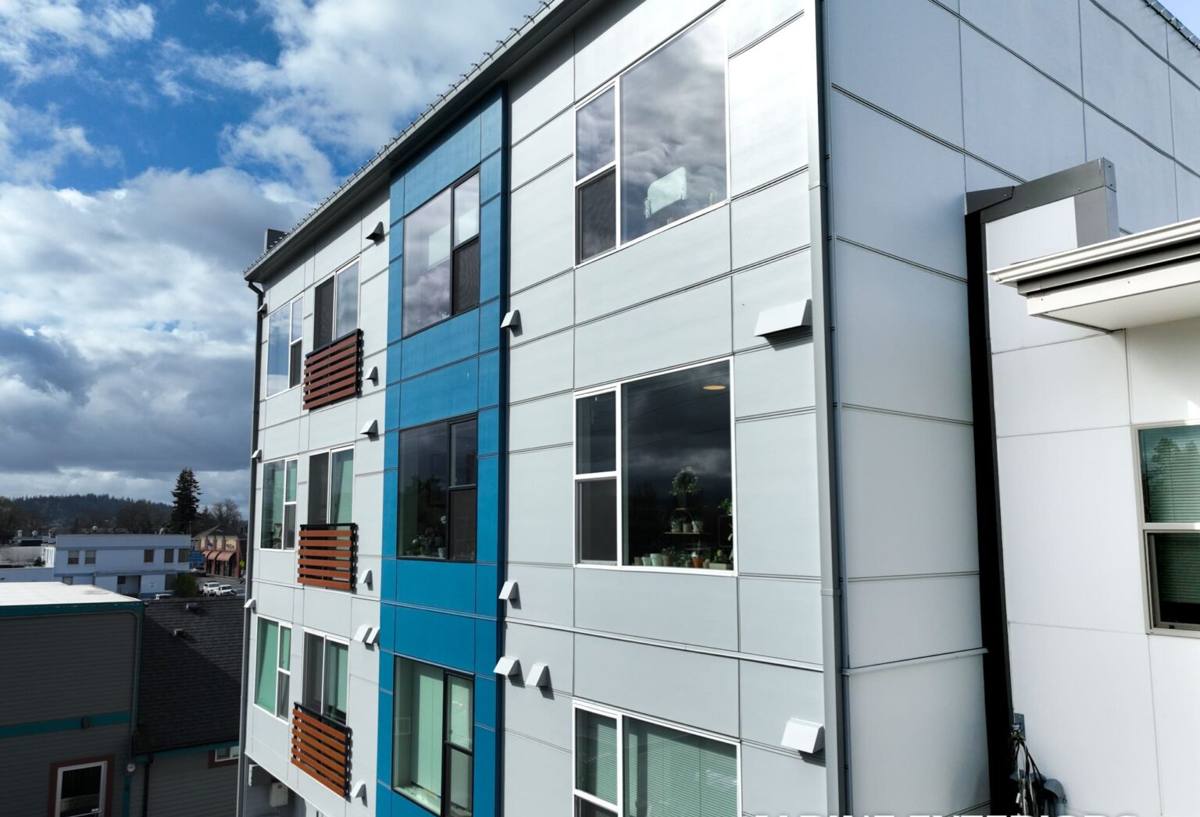
Signs Your Kirkland Home's Windows Need Replacing
Most homeowners call us after noticing one or two symptoms, not because they set out to replace windows. Common signs we see on Eastside homes include:
- Fogging or a permanent haze between panes, which means the seal on a double-pane unit has failed and the gas fill or air gap is compromised
- Soft or discolored trim and sill wood, often from years of rain intrusion at the corners
- Visible moss or dark streaking on the sill or lower frame, a sign moisture is sitting rather than draining
- Drafts or noticeable temperature difference near the window in winter
- Windows that are difficult to open, close, or lock — frames can swell or warp after repeated wet-dry cycles
- Rising heating bills without another clear explanation
Any one of these is worth a look. Several together usually mean the window and the flashing behind it need attention, not just the glass.
What a Correct Window Replacement Job Actually Involves
It Starts Before the New Window Goes In
The window unit itself is often the easy part. The work that determines whether a replacement performs for the next 20-plus years happens at the opening: inspecting the rough framing for rot or soft spots, checking the condition of the existing weather-resistive barrier, and confirming the sill is sloped to drain water outward rather than pooling under the new frame. Skipping this step is the single most common reason a "new" window ends up leaking within a few wet seasons.
Flashing Is Not Optional
In a region that sees sustained, wind-driven rain, proper flashing sequencing — sill pan, side flashing, and head flashing installed in the correct shingle-lap order — is what actually keeps water out. Caulk alone is not a flashing system; it is a backup, not the primary defense. We install flashing so that water is directed out and down at every layer, the way it would move off a roof.
Fit, Fasten, and Insulate
A window that is too tight or too loose in its opening will never perform to spec, no matter how good the glass is. Correct shimming keeps the frame square so the sash operates smoothly for years. Gaps around the frame should be insulated with a low-expansion foam or backer rod, not packed solid, to avoid bowing the frame inward.
Choosing Materials and Glass for a Marine Climate
There is no single "best" window material — the right choice depends on your home's exposure, your budget, and how much upkeep you want to take on. Here's how the common options compare for a Kirkland home:
| Frame Material | Moisture Performance | Maintenance | Typical Fit |
|---|---|---|---|
| Vinyl | Good — won't rot, handles constant damp exposure well | Low — occasional cleaning | Value-focused replacements, rentals, most exposures |
| Fiberglass | Excellent — very stable in wet/dry and hot/cold cycling | Low | Higher-exposure walls, larger openings, long-term hold |
| Wood-clad | Good on the exterior face, but the interior wood core still needs the seal maintained | Higher — periodic finish upkeep | Historic or period-style homes where wood interiors matter |
| Aluminum | Fair — prone to condensation and cold transfer unless thermally broken | Low | Limited use; mainly commercial or specific architectural needs |
On glass, we spec for our specific climate rather than a generic package. That typically means dual-pane units with a Low-E coating tuned for heat retention (not just heat rejection, which matters more in hot, sunny climates than here), argon gas fill for added insulating value, and warm-edge spacer bars, which resist condensation better at the glass edge than older aluminum spacers — a real factor during our cool, humid winters.
Our Window Replacement Process
- On-site assessment — we look at each window opening individually, not just the unit itself, and check for hidden moisture or framing issues
- Honest scope and estimate — you'll know upfront if we find something beyond a straightforward swap, like sill rot that needs repair first
- Product selection — we walk through frame material, glass package, and grille or hardware options based on your home and budget, without upselling features you don't need
- Removal and opening prep — old units come out carefully to protect surrounding siding and trim, and we address any framing or sheathing issues we find
- Flashing and installation — sill pan, flashing sequence, shimming, and fastening per manufacturer specs
- Sealing and finish work — exterior trim, caulking, and interior finish restored to match
- Walkthrough — we test operation and locks on every window before we consider the job done
Cost Factors for Kirkland Homeowners
Window replacement pricing varies with more than just the window itself. Factors that typically move the number include:
| Factor | Why It Matters |
|---|---|
| Frame material | Vinyl is generally the most budget-friendly; fiberglass and wood-clad cost more upfront |
| Number and size of openings | Larger or custom-sized windows cost more per unit than standard sizes |
| Condition of the existing opening | Hidden rot or framing repair adds labor beyond a standard swap |
| Full-frame vs. insert replacement | Full-frame replaces the entire unit including flashing; insert replacement reuses the existing frame and is often less invasive but not always appropriate |
| Access and site conditions | Second-story or hard-to-reach windows take more time and equipment |
| Trim and finish work | Matching existing exterior trim profiles can add labor if custom work is needed |
We'll always tell you honestly whether a full-frame replacement or an insert makes more sense for a given opening — insert replacement can be a good option when the existing frame is sound, but it's the wrong call if there's already moisture damage behind it.
Moss, Moisture, and Long-Term Upkeep
Kirkland's long damp season means moss and algae growth on sills, tracks, and lower trim is a matter of when, not if, if water isn't shedding properly. A correctly installed window with a sloped sill pan and clear weep paths drains before moss has a chance to establish. Once a window is in, a little seasonal upkeep goes a long way: keeping weep holes clear of debris, brushing back moss or organic buildup before it holds moisture against the frame, and doing a quick visual check of caulk lines each fall before the rains set in. None of this is complicated, but it's easy to skip — and skipping it is how a well-installed window ends up with an avoidable problem five or ten years down the road.
Why a Crew That Already Works in Kirkland Matters
Window replacement done right depends on understanding how a specific climate behaves against a specific type of construction — and King County has its own mix of home ages, siding types, and framing conventions that differ from other regions. A crew that regularly works Eastside neighborhoods already knows what to expect when they open up an older window bay: where rot tends to show up first, how local siding and trim details are typically built, and what flashing detail will actually perform through a wet Pacific Northwest winter rather than just look right on installation day. That familiarity also means fewer surprises mid-project and a faster, more accurate estimate up front.
What to Ask Before You Hire
- Are you licensed and insured to do exterior work in Washington State?
- Will you inspect the framing and sill before quoting a final price, or only after work starts?
- What's your flashing and sealing method, specifically — not just the window brand?
- Do you offer both full-frame and insert replacement, and can you explain which fits my situation?
- What's covered under warranty, and is that the manufacturer's warranty, your labor warranty, or both?
- Can you provide a written, itemized estimate before any work begins?
If you're noticing drafts, fogged glass, or moisture damage around your windows, it's worth having a local crew take a look before another wet season passes. We offer free, no-pressure estimates for Kirkland homeowners — use the form below to get started.