 Seattle Exterior
 Ravenna's Housing Stock and Why Windows Wear Out Here First
Ravenna is one of Seattle's older, more established neighborhoods, with a mix of Craftsman bungalows, Tudor-style homes, and mid-century houses tucked under mature Douglas fir, maple, and cedar canopy near Ravenna Park and the ravine. That tree cover is part of what makes the neighborhood beautiful, and it's also part of what makes window replacement here different from a newer, more open subdivision. Shaded lots stay damp longer after a storm, original wood-frame windows from decades past were never built with today's glazing or weatherproofing standards, and many homes still have single-pane or early double-pane units that have long since fogged, warped, or stopped sealing properly.
When we go out to bid a custom window job in Ravenna, we're almost always looking at a combination of original openings that have shifted slightly with the house's age, trim and siding details worth preserving, and moisture damage that isn't visible from the street. Custom windows aren't just about matching a size off a shelf — in a neighborhood like this, getting the fit, flashing, and material right the first time matters more than it does in newer construction.
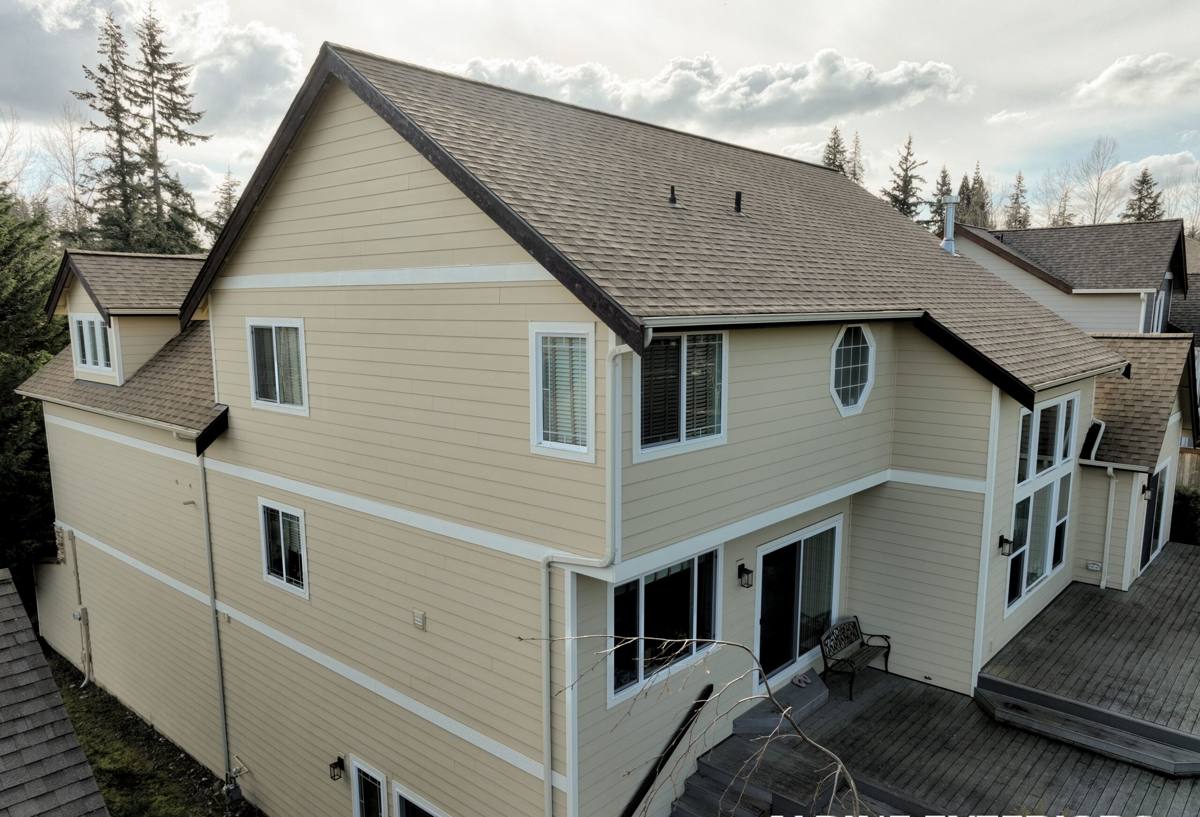
What Seattle's Marine Climate Does to a Window Over Time
King County's marine climate is mild compared to a lot of the country, but mild doesn't mean easy on a building. Salt-tinged air moving in off Puget Sound, long stretches of driving rain, and a moss season that can run from fall through spring all put steady stress on window frames, seals, and the wall assembly around them. None of this destroys a window overnight. It's cumulative — the kind of wear that shows up five, ten, or fifteen years down the road as soft trim, foggy glass, or a draft you can feel standing near the frame on a windy day.
A few specific ways this plays out on Ravenna homes:
- Driving rain pushed sideways by wind finds any gap in flashing or caulking, especially on west- and southwest-facing walls that catch the brunt of Puget Sound storms.
- Moss and algae take hold fastest on shaded, north-facing elevations and anywhere tree canopy keeps a wall damp — common throughout Ravenna's wooded lots. Moss holds moisture directly against wood trim and sills.
- Salt-laden air, even well inland from the water, accelerates corrosion on lower-grade window hardware, fasteners, and aluminum components over time.
- Condensation between panes on aging double-pane units signals a failed seal — once that happens, the insulating gas is gone and the window is only doing half its job.
None of this is unique to any one house. It's just what this climate does to every window in the region, year after year, and it's why the materials and installation details matter more here than they would in a drier part of the country.
What a Correct Custom Window Job Actually Involves
It Starts With the Opening, Not the Window
Before we talk frame material or glass package, we look at the rough opening itself. On an older Ravenna home, that opening may have settled slightly out of square over the decades. A true custom window is built to match that actual opening — not forced into a stock size — which means accurate field measurements, and often correcting rot or damage in the surrounding framing before the new unit ever goes in. Installing a window into a compromised opening is one of the most common ways a "quality" window fails early.
Flashing and Moisture Management
Given how much rain this region sees, the flashing details around a window matter as much as the window itself. Proper installation means a sloped sill pan to direct any water that gets past the exterior seal back outside instead of into the wall cavity, correctly lapped house wrap or building paper integrated with the window's nailing flange, and sealant used only where it belongs — not as a substitute for proper flashing. This is the part of the job that's invisible once the trim goes back on, and it's also the part most likely to be rushed by a crew that doesn't work in wet climates regularly.
Frame Material Trade-Offs
| Material | How It Handles Our Climate | Maintenance |
|---|---|---|
| Vinyl | Good moisture resistance, won't rot; performance varies a lot by manufacturer quality | Low |
| Fiberglass | Very stable in temperature swings and damp conditions, resists warping | Low |
| Wood (clad exterior) | Classic look for Craftsman and Tudor homes, but exposed wood needs protection from driving rain | Moderate to high |
| Aluminum | Strong and slim sightlines, but prone to condensation and corrosion near moist, salt-tinged air without thermal breaks | Moderate |
For a lot of Ravenna homes, a wood-look fiberglass or a clad-wood unit strikes the right balance between preserving the original architectural character and holding up to the weather. We'll walk through the honest trade-offs for your specific house rather than pushing one product line for every job.
How Our Process Works
- On-site assessment. We inspect existing windows, framing, and any visible water or moss damage, and take accurate measurements of each opening.
- Custom order. Windows are built to the actual opening dimensions and the style of the home — matching sightlines, grille patterns, and trim profiles where that matters for a Craftsman or Tudor exterior.
- Opening prep. Any soft or damaged framing gets addressed before installation, not covered over.
- Removal and installation. Old units come out, the opening is checked for square and prepped with proper flashing, and the new window is set, shimmed level, and secured.
- Sealing and finishing. Sill pans, flashing tape, and sealant are installed in the correct order — sealant is the last line of defense, not the first.
- Interior and exterior trim. Trim is reinstalled or replaced to match the home's existing detail as closely as possible.
- Final check. We test operation, look for gaps or draft points, and walk the job with you before we call it done.
Choosing Glass for a Damp, Shaded Neighborhood
Glass package matters as much as frame material in a climate like ours. Low-E coatings help manage heat loss during Seattle's long cool season, and argon or krypton gas fill between panes improves insulation value — both worth having on a custom window in this region. On more shaded lots common throughout Ravenna, we also pay attention to how much natural light a room is actually getting; in some cases a slightly larger glass area or a different grille pattern can make a room feel less dim without changing the home's exterior character.
Condensation resistance is worth asking about directly. A well-built double- or triple-pane unit with a quality spacer system will resist interior condensation far better in our damp winters than a budget-grade unit, even if both are labeled "double-pane" on paper.
Signs an Existing Window Needs Attention
- Fogging or a hazy film between panes — a failed seal, not something that cleans off
- Visible moss or dark staining on the sill or lower frame
- Soft or spongy wood trim around the window when pressed
- A noticeable draft near the frame on a windy day
- Difficulty opening, closing, or latching that didn't used to be there
- Paint bubbling or peeling on interior trim near the window, often a sign of trapped moisture
Any one of these on its own isn't an emergency. Several of them together, especially on a shaded or west-facing wall, usually means it's time for a real look rather than another round of caulking.
Permits and Working Within Seattle's Rules
Window replacement in Seattle can require a permit depending on the scope of the work, especially if the opening size is changing or the home is in a designated historic area. We handle that process as part of the job rather than leaving it on the homeowner to sort out, and we build the schedule around it so there are no surprises partway through the project.
Why It Matters That We Work Ravenna Regularly
A crew that only occasionally works in older Seattle neighborhoods can miss things that are second nature to one that's in Ravenna often — how these homes tend to have settled over the decades, what the original trim details usually look like, and where moisture problems tend to hide on a shaded, tree-covered lot. We're not guessing at how driving rain off Puget Sound or a long moss season will treat a given installation; it's the same climate on every job we do in this part of King County. That familiarity shows up in fewer surprises during removal and a better long-term seal once the job is done.
Keeping New Windows Performing for the Long Run
A correctly installed custom window shouldn't need much from you, but a little seasonal attention goes a long way in this climate:
- Rinse sills and tracks periodically to keep moss and organic debris from building up, especially on shaded elevations
- Check exterior caulking once a year for cracking or gaps, particularly after a hard winter
- Keep gutters clear so overflow doesn't run down onto window heads
- Trim back branches or foliage that keep a window's exterior constantly damp or shaded
- Operate each window a few times a year, even ones you rarely open, to keep hardware and weatherstripping working properly
If your Ravenna home has windows showing their age, or you're planning a renovation and want the openings done right the first time, we're happy to take a look and put together a straightforward, no-pressure estimate. Use the form below to get started.