 Seattle Exterior
 Why Kirkland Decks Take a Beating
A deck in Kirkland works harder than it looks like it should. Western Washington's marine climate means long wet seasons, humid air that lingers close to Lake Washington, and a moss season that can stretch from fall through spring. None of that is dramatic on its own, but it adds up year after year in the same places: under railings, around post bases, along the ledger board where the deck meets the house, and in the shaded corners that never quite dry out between rains.
Most deck repair calls we get in Kirkland aren't from one big failure. They're from small problems that were left alone through a few wet winters until they became structural. A soft spot near a stair stringer, a railing post that flexes more than it used to, boards that stay slick with moss well into summer — these are all early warnings, and they're a lot cheaper to fix early than late.
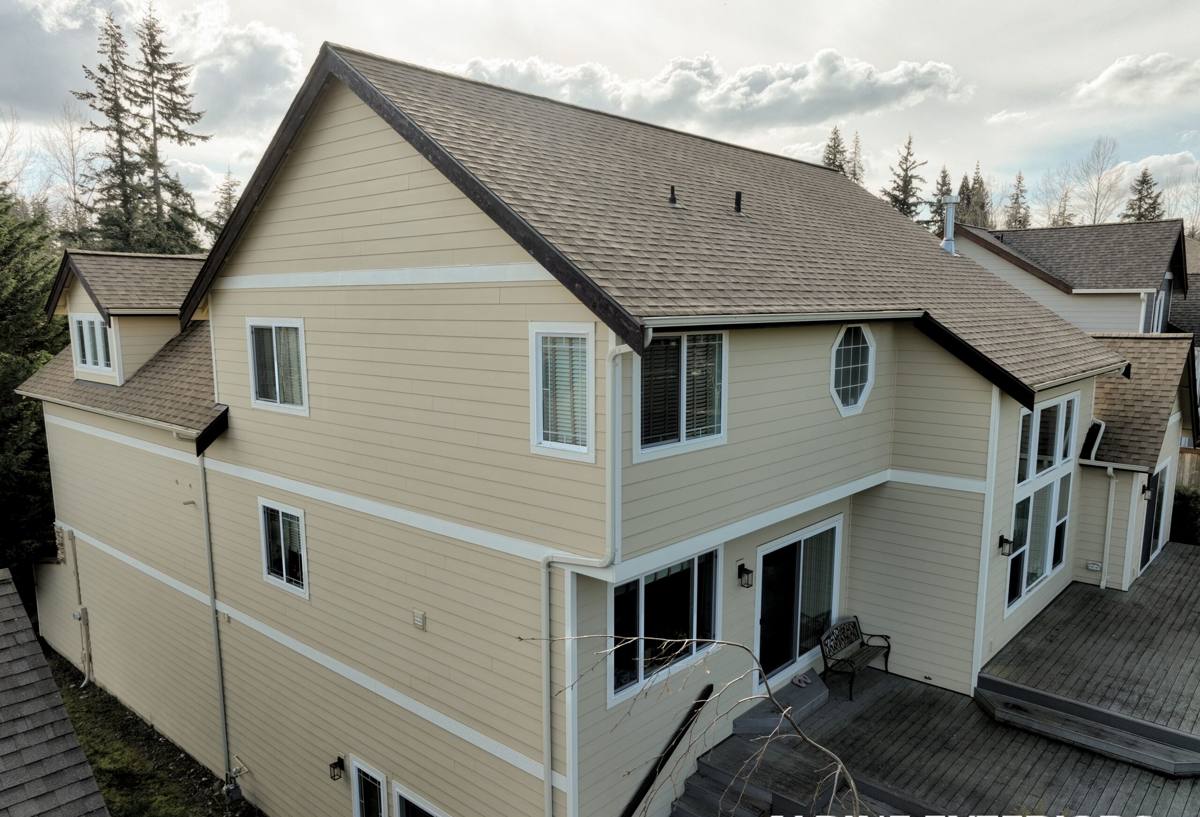
Signs Your Deck Needs Repair, Not Replacement
Most Kirkland decks don't need a full teardown. They need targeted repair of the parts that took the brunt of the moisture. Here's what we look for on a typical inspection, and what it usually means:
- Soft, spongy, or discolored decking boards — usually localized rot from trapped moisture, not a whole-deck problem
- Green or black film on boards that stays damp longer than the rest of the deck — moss and algae holding water against the wood
- A railing that wiggles when you lean on it — loose post connections or rot at the base, a real safety issue
- Rust streaks below joist hangers or fasteners — corroded hardware that's no longer doing its job
- Gaps or separation where the deck meets the house (the ledger board) — a common entry point for water into the structure
- Nail heads popping up or screws spinning freely — fastener failure, often from repeated wet-dry cycling
- Stairs that feel bouncy or uneven — stringer or footing movement worth checking before someone gets hurt
If what you're seeing matches one or two of these, you're almost certainly looking at a repair, not a rebuild. Full replacement usually only makes sense when the framing itself — the joists, beams, or ledger — has widespread rot rather than isolated spots.
What a Proper Deck Repair Actually Involves
A repair that's done right goes past the board you can see and checks what's underneath it. In our experience, the parts homeowners can't see are usually where the real problem is hiding.
The Ledger Board and Flashing
The ledger is the framing member bolted to your house that carries a large share of the deck's weight. If water has been getting behind it — often because flashing was missing, damaged, or installed before code required it — the wood behind the siding can be rotting long before it shows on the surface. Any repair near the house connection should include pulling back enough material to actually see the ledger and its flashing, not just patching what's visible.
Framing and Hardware
Joists, beams, and posts get inspected for soft spots, checked with a probe where discoloration or moss growth suggests trapped moisture, and the connecting hardware — joist hangers, post bases, structural screws — gets checked for rust and proper sizing. Undersized or corroded hardware is one of the more common issues we find on older Kirkland decks, especially ones built before current fastener standards were common.
Decking, Railings, and Stairs
Surface-level repairs — replacing individual boards, resecuring railings, rebuilding a stair stringer — matter too, but they should happen after the structure underneath is confirmed sound. Replacing a deck board over a rotted joist just moves the problem, it doesn't solve it.
Common Deck Problems We See Around Kirkland
Every neighborhood has its own pattern of deck wear, and Kirkland's is shaped by its mix of mature, tree-covered lots and proximity to Lake Washington. Decks tucked under tree canopy stay damp longer after rain and collect more organic debris, which accelerates both rot and moss growth. Decks closer to the lakefront tend to catch more direct wind-driven rain and see less midday sun to dry things out, so moisture just sits longer on horizontal surfaces.
We also see a fair number of older decks that were built to standards from decades ago — smaller footings, lighter framing, fasteners that don't hold up as well long-term. Those decks aren't unsafe by default, but when they need a repair, it's often a good moment to bring the connection hardware and footings up to a sturdier standard at the same time, rather than just replacing what failed.
Repair or Replace? How We Decide
This is the question almost every homeowner asks, and the honest answer depends on how much of the structure is still sound. We look at the extent of the damage, the age and condition of the framing, and whether the repair cost starts approaching a meaningful share of what a full rebuild would cost.
| Factor | Repair Usually Makes Sense | Replacement Usually Makes Sense |
|---|---|---|
| Extent of rot | Isolated to a few boards, one railing section, or a single post | Widespread through multiple joists, beams, or the ledger |
| Deck age | Under 15-20 years, built to a reasonable structural standard | Original framing is decades old with outdated connections |
| Footings | Solid, no settling or heaving | Undersized, shifting, or showing frost movement |
| Overall cost | Repair cost is a modest fraction of rebuild cost | Repairs would need to touch most of the structure anyway |
| Future plans | You're happy with the current size and layout | You've been wanting a different footprint or upgraded materials |
We'll always tell you plainly which side of that line your deck falls on. Repairing a structure that's genuinely past its useful life just delays a bigger expense; replacing a deck that only needs a few targeted fixes wastes money you didn't need to spend.
Our Deck Repair Process
- Inspection. We walk the full deck, check the ledger connection, probe suspect boards and framing, and test railings and stairs for movement.
- Written scope. You get a clear explanation of what's failing, what's still sound, and a straightforward repair plan — no vague line items.
- Permit check. If the repair touches structural framing, footings, or railings, we confirm what Kirkland and King County require before work starts.
- Demo of the failed sections only. We remove what needs replacing and expose enough surrounding structure to confirm nothing else is compromised.
- Structural repair. Framing, hardware, and flashing get replaced to current standards, even if the original build predates them.
- Surface repair. Decking, railings, and stairs are rebuilt or resecured to match the rest of the deck as closely as possible.
- Final check. We test railings and stairs under load and walk the finished repair with you before calling it done.
Permits, Codes, and King County Requirements
Deck repairs that involve structural framing, footings, or guardrails typically fall under King County's building code requirements, and Kirkland has its own permitting process on top of that. Cosmetic work — replacing a few decking boards, for example — often doesn't trigger a permit, but structural repairs, railing rebuilds, and stair work frequently do, especially on decks more than a couple feet off the ground.
Skipping a required permit might save a little time up front, but it creates real problems later: unpermitted structural work can complicate a home sale, cause issues with insurance claims, and in some cases require the work to be redone to pass inspection. We handle the permit process as part of the job when one is required, so you're not left guessing whether a repair was done to code.
Materials for Repair Work
Matching new material to an existing deck is its own small challenge, especially on older decks where the original decking product may no longer be available. Here's how we think about the common choices for repair sections.
| Material | Best For | Trade-Off to Know |
|---|---|---|
| Pressure-treated lumber | Framing repairs, matching older wood decks | Needs periodic sealing to resist moisture and moss |
| Cedar or other natural wood decking | Matching an existing wood deck's look | More maintenance in a wet climate; can weather unevenly next to older boards |
| Composite decking | Replacing sections where low maintenance matters more than an exact match | Color and texture won't perfectly match older, sun-faded composite runs |
| Structural hardware (hangers, screws, post bases) | Any repair touching framing | Always upgraded to current corrosion-resistant standards, not matched to old hardware |
We won't talk you into a full composite replacement if your deck only needs a wood repair, and we won't patch failing framing with lightweight hardware just because that's what was there originally. The goal is a repair that actually holds up through the next several wet seasons, not one that looks finished on day one.
What to Ask Before You Hire Someone
Deck repair is one of those jobs where a rushed or surface-level fix can look fine for a season and then fail again. A few questions worth asking any contractor before you hire them:
- Will you inspect the ledger board and framing, or just replace the boards I can see?
- Do you know whether this repair requires a permit in Kirkland, and will you pull it if so?
- What hardware will you use for framing connections, and is it rated for exterior/ground contact?
- Can you explain, in plain terms, why you'd repair versus replace in my specific case?
- Do you carry insurance, and can you provide it in writing?
A contractor who's genuinely done deck work around Kirkland for a while should be able to answer all of these without hesitation — and should be comfortable telling you when a repair is the wrong call and a rebuild makes more sense.
Why Local Experience on Kirkland Decks Matters
A crew that already works decks throughout Kirkland and the rest of King County has seen how this specific climate ages a deck — which framing details tend to fail first, which yards trap moisture longest under tree cover, and which older neighborhoods are more likely to have decks built to outdated standards. That experience means less guesswork on your inspection and a repair plan that accounts for how your deck will actually hold up through the next few wet seasons, not just how it looks the day we finish.
It also means we're familiar with Kirkland's permitting process, so structural repairs don't stall out waiting on paperwork nobody accounted for. That's a small thing until it isn't — a permit delay in the middle of the wet season can leave a deck exposed and the problem getting worse while you wait.
If your deck has soft spots, a wobbly railing, or just doesn't feel as solid as it used to, we're happy to take a look. We offer free, no-pressure estimates on deck repair work throughout Kirkland — just fill out the form below and we'll get back to you.