 Seattle Exterior
 Ravenna's Climate Is Hard on Decks
Ravenna is one of Seattle's older, more established neighborhoods, and that comes with mature tree canopy over a lot of backyards. Shade is nice in August, but it's the enemy of a wood deck the other ten months of the year. Add in Seattle's long, wet fall-through-spring stretch, occasional driving rain off Puget Sound, and the salt air that reaches inland across King County, and you've got conditions that age a deck faster than the same structure would age somewhere dry and sunny.
Moss season isn't a minor cosmetic issue here — it's a structural one. Moss and algae hold moisture against wood and composite surfaces for weeks at a time, and that constant damp is what actually breaks a deck down: soft boards, corroded fasteners, and framing that rots from the inside before anything looks obviously wrong on the surface. A deck that's ten or fifteen years old in a shaded Ravenna yard has usually taken more punishment than a deck twice its age in a drier part of the state.
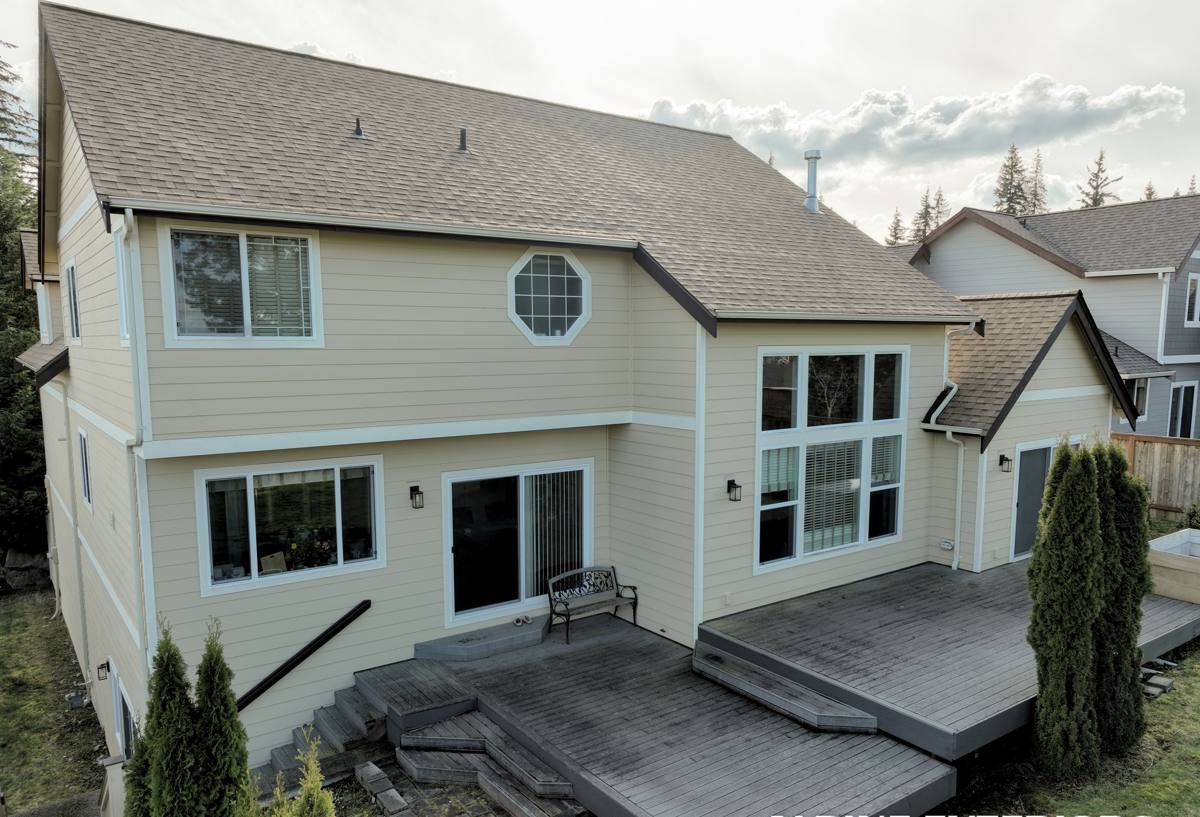
Signs It's Time to Replace, Not Repair
Not every tired-looking deck needs a full teardown. But there's a point where patching boards is just spending money to delay the same decision. We look at a few things when we're deciding whether a deck is a repair candidate or a replacement candidate:
- Soft or spongy spots when you walk the deck, especially near the house or at board ends
- Rot or crumbling wood where the deck attaches to the house (the ledger board)
- Rusted, streaking, or failing fasteners and joist hangers
- Persistent moss or dark staining that comes back within weeks of cleaning
- Posts or footings that have shifted, settled, or show visible rot at the base
- A structure built without proper flashing, which is common on older Seattle-area decks
If the problems are limited to a few boards and the framing underneath is sound, repair is the honest recommendation. If the framing, ledger connection, or footings are compromised, replacement is the only way to get a deck that's actually safe to stand on in five years.
What a Correct Deck Replacement Includes
A deck replacement isn't just pulling up old boards and screwing down new ones. The parts nobody sees are what determine whether the new deck lasts.
Ledger and Flashing
Where the deck meets the house is the single most common failure point in this climate. Water has to be directed away from that connection with proper flashing, not just caulk, which fails within a few seasons of freeze-thaw and constant moisture. We rebuild this connection correctly every time, even if it means more work than the previous builder put in.
Framing, Joists, and Hardware
We use fasteners and joist hangers rated for the treated lumber and coastal moisture conditions common around Seattle. Mismatched or standard-grade hardware corrodes fast when it's in constant contact with wet, treated wood — that reaction is a well-documented issue in the trade, not a defect of any one brand, and it's avoidable by matching hardware to lumber chemistry from the start.
Footings and Post Bases
Footings need to sit below frost depth and bear on undisturbed, properly compacted soil. Post bases should hold the post above the deck surface, not buried in soil or mulch, so water can't wick up into the end grain. This is one of the most common shortcuts we find when we tear out an old deck.
Choosing a Decking Material for a Shaded, Rainy Lot
There's no single "best" decking material — there's a best fit for your yard, your budget, and how much maintenance you actually want to keep up with. In a neighborhood like Ravenna, where shade and moisture are the main stressors, this decision matters more than it does on an open, sunny lot.
| Material | Upfront Cost | Maintenance | Behavior in Shade/Moisture |
|---|---|---|---|
| Pressure-treated wood | Lowest | Annual cleaning and periodic sealing | Prone to moss and graying fastest in shaded spots; needs the most upkeep here |
| Cedar | Moderate | Regular sealing to hold color and resist rot | Naturally more rot-resistant than pressure-treated, but still needs attention in constant shade |
| Composite decking | Higher | Occasional washing, no sealing or staining | Handles moisture well; some early-generation composites held moss more than current products — we install current-generation boards for that reason |
| PVC/capped composite | Highest | Lowest — periodic washing only | Best moisture and mildew resistance of the group; premium cost reflects that |
We're honest with clients about trade-offs rather than pushing one product. Wood costs less up front but asks for more of your time every year. Composite and PVC cost more initially but are a better fit if you want to spend weekends doing something other than deck maintenance.
What Drives the Cost
We don't publish flat prices because every deck replacement is different, but these are the factors that actually move the number:
| Factor | Why It Matters |
|---|---|
| Deck size and height | More square footage and taller structures mean more framing, more railing, and more labor |
| Decking material | Wood, composite, and PVC span a wide cost range, as shown above |
| Extent of structural damage | Rotted ledger connections, footings, or framing add repair scope beyond surface boards |
| Railing and stairs | Code-compliant railing and stair systems add material and labor |
| Site access | Tight side yards or sloped lots common in older Seattle neighborhoods can add labor time |
| Permit requirements | Larger or higher decks typically require permitting, inspection, and engineered plans |
Permits and Code in Seattle
Most deck replacements in Seattle that involve structural changes, decks over a certain height, or attachment to the house require a permit and inspection. This isn't paperwork for its own sake — it's what confirms the ledger connection, footings, and railing actually meet code before it's covered up or in use. We handle the permit process as part of the job rather than leaving it to the homeowner, and we build to the standard an inspector will actually sign off on, not the minimum that might slide by unnoticed.
Our Replacement Process
- On-site assessment. We inspect the existing deck, framing, ledger connection, and footings to confirm replacement is the right call and to scope the work accurately.
- Design and material selection. We walk through material options based on your budget, how much sun or shade the space gets, and how much upkeep you want going forward.
- Permitting. We prepare and submit what's required for your project and coordinate inspections.
- Demolition and disposal. The old deck comes out, including any rotted framing or footings that need to go, not just the visible boards.
- Structural rebuild. Ledger, flashing, framing, footings, and posts are built or replaced to current code.
- Decking, railing, and stairs. Final surfaces and safety components go in, finished to spec.
- Final walkthrough. We go over the finished deck with you and cover basic care for whichever material you chose.
Keeping Your New Deck Looking Right
A well-built deck still needs some seasonal attention in this climate, especially in a shaded yard. A short list we give every Ravenna client:
- Sweep leaves and debris off regularly in fall — trapped debris holds moisture against the surface
- Clean moss and algae buildup before it spreads, rather than waiting until it's obvious
- Keep gutters and downspouts near the deck clear so runoff isn't draining onto it
- Check railing and stair connections once a year for looseness
- For wood decks, plan on sealing or staining on the schedule your material calls for, not "when it looks bad"
- Trim back vegetation that's shading the deck surface and keeping it damp longer than necessary
Why Hire a Crew That Already Works in Ravenna
A deck built for a dry climate isn't the same as one built for a shaded King County lot with a long moss season and regular driving rain. We already know which connections fail first in this neighborhood's conditions, which materials actually hold up under tree cover, and what Seattle's permitting and inspection process expects. That means fewer surprises during the build and a deck that's built for the yard it's actually going into, not a generic spec.
If your deck is showing soft spots, chronic moss, or you're just not sure whether it's a repair or a replacement, we're glad to take a look. Fill out the form below for a free, no-pressure estimate — we'll give you a straight read on the condition of your deck and what it would take to fix it right.