 Seattle Exterior
 Renton's Climate Puts Real Stress on Exterior Walls
Renton sits at the south end of Lake Washington in King County, where marine air off the Sound meets valley humidity trapped by the surrounding hills. That combination means long stretches of driving rain in fall and winter, persistent damp shade under mature trees in older neighborhoods, and a moss and algae season that can run eight months or more on north- and west-facing walls. Add mild salt-laden air drifting inland from Puget Sound and you get siding conditions that are tougher than they look on a map.
Wood-based and wood-composite siding products absorb that moisture cycle over years — swelling, softening at seams, and feeding the moss and mildew that thrive in shaded, damp corners. Fiber cement doesn't behave that way. It's cement, sand, and cellulose fiber pressed and cured into a stable board that doesn't rot, doesn't feed fungus, and holds its shape through the wet-dry cycling that defines a Pacific Northwest year. For Renton homes, that's not a marketing point — it's the baseline requirement for siding that's going to last.
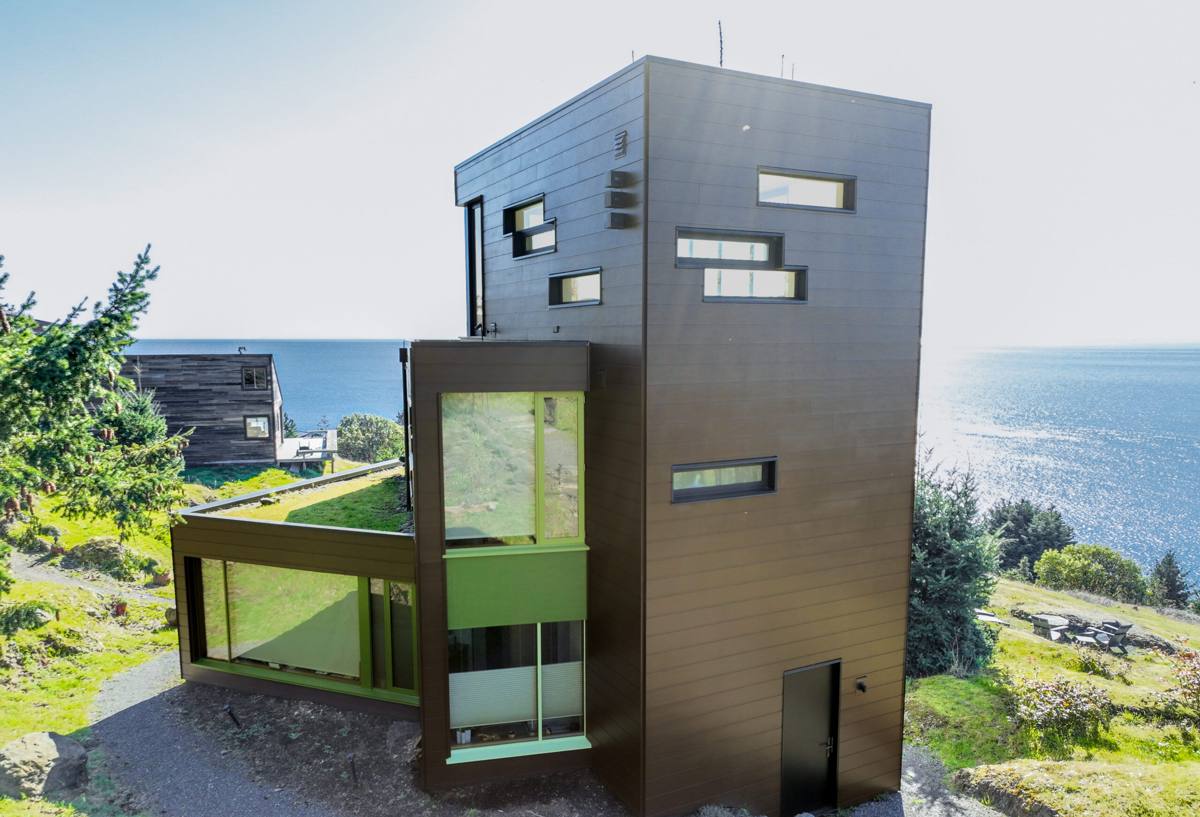
What "Correct" Fiber Cement Installation Actually Involves
Fiber cement siding is only as good as the assembly behind it. A huge share of the siding failures we get called out to inspect in this region aren't the siding failing — they're the water management behind the siding failing, while the boards themselves look fine from the curb.
Weather-Resistive Barrier and Drainage
Every wall gets a proper weather-resistive barrier, and in most cases we install a rainscreen gap behind the siding. That gap lets any moisture that does get past the cladding drain and dry instead of sitting against the sheathing — critical in a climate where walls rarely get a long dry spell to recover.
Flashing at Every Penetration
Windows, doors, hose bibs, light fixtures, deck ledgers — every penetration through the siding plane is a potential entry point. Correct flashing detail, lapped the right direction and integrated with the weather barrier, is what actually keeps water out. This is the step that gets shortcut most often on rushed jobs, and it's usually invisible until a wall starts showing damage years later.
Fastening and Gapping
James Hardie publishes specific fastener types, spacing, and butt-joint gapping for our climate zone. Fasteners driven wrong, boards installed tight with no expansion gap, or the wrong nail for the substrate all shorten the life of an otherwise good product. We follow Hardie's published fastening schedule for HZ5 climate zones, which covers most of Western Washington including Renton.
Caulking and Paint Line
Factory-finished ColorPlus boards need the right sealant at joints and trim, and unfinished-edge cuts need to be primed and sealed in the field so raw fiber cement never sits exposed to weather.
Why We Install Only James Hardie
We don't offer LP SmartSide, vinyl, Cemplank, Allura, or primed wood siding — not because those products can't be installed, but because after years of servicing homes in this climate we standardized on one system we can stand behind fully. James Hardie's fiber cement is non-combustible, engineered specifically for wet marine climates through its HardieZone system, and backed by a factory ColorPlus finish with a long, transferable warranty when installed to spec. Standardizing on one product line also means our crews aren't relearning different fastening schedules, trim details, and warranty paperwork from job to job — which is exactly the kind of inconsistency that causes callbacks.
That said, honesty matters more than brand loyalty. Hardie siding costs more upfront than vinyl or engineered wood, it's heavier to work with, and it requires a crew that respects its installation specs — cut corners on flashing or fastening and even the best siding on the market will underperform. We think that trade-off is worth it for a home that's going to sit through decades of Renton winters, but it is a trade-off, and we'll tell a homeowner that plainly.
James Hardie Product Lines for Renton Homes
Most Renton homes fall into one of a few common styles — traditional lap siding on single-family houses, some board-and-batten on newer builds and accent walls, and panel siding on garages and outbuildings. Hardie's lineup covers all of it:
- HardiePlank lap siding — the standard for most single-family homes, available in several exposure widths and textures.
- HardiePanel vertical siding — common for board-and-batten looks and accent sections.
- HardieTrim — matching trim boards for a consistent, factory-finished look at corners, windows, and fascia.
- ColorPlus Technology — a factory-baked finish that resists fading and chipping better than field-applied paint, which also cuts down on repainting cycles over the life of the siding.
All of it is manufactured to HZ5 specifications, which is the zone rating that fits our regional rainfall and humidity profile.
Our Process for a Renton Siding Job
- On-site inspection — we look at the existing siding, sheathing condition, and problem areas (shaded walls, north-facing sections, trouble spots around windows and decks) before quoting anything.
- Tear-off and sheathing check — once old siding comes off, we inspect the sheathing underneath. Soft or water-damaged sheathing gets repaired before anything new goes up; covering a compromised wall with new siding just hides the problem.
- Weather barrier and rainscreen install — the drainage plane goes in correctly before a single piece of Hardie touches the wall.
- Flashing and trim — windows, doors, and penetrations get flashed first.
- Siding installation — installed to Hardie's fastening schedule for our climate zone, with proper gapping and sealant.
- Final walkthrough — we check caulking, paint touch-up on cut edges, and confirm everything matches the quote before we call it done.
Cost Factors for a Renton Fiber Cement Project
| Factor | Why It Moves the Price |
|---|---|
| Home size and wall complexity | More corners, gables, and dormers mean more cutting, trim, and labor time |
| Sheathing condition | Rot or water damage found during tear-off adds repair work before new siding can go on |
| Siding profile and finish | Lap width, textured vs. smooth, and custom ColorPlus colors all affect material cost |
| Access and site conditions | Multi-story walls, tight lot lines, and steep grades common in Renton's hillside neighborhoods affect scaffolding and labor time |
| Trim and detail work | Full trim replacement versus reusing sound existing trim changes both material and labor cost |
We give a firm number after the on-site inspection, not before — a phone quote for siding work isn't a real quote.
Signs Your Current Siding Needs Attention
- Soft spots or visible swelling, especially near the bottom of walls or around window trim
- Persistent moss or dark streaking that comes back within a season of cleaning
- Paint that's peeling or bubbling rather than just fading
- Visible gaps, warping, or boards pulling away from the wall
- Rising energy bills that suggest the wall assembly behind the siding is no longer sealing well
- Siding that's original to a home built more than 20-25 years ago, particularly wood or older composite products
Why a Crew That Already Works Renton Matters
Renton's building department, permitting timeline, and typical housing stock — from older single-story homes near the valley to newer construction on the hillside neighborhoods — are things a crew learns by working here repeatedly, not by reading a spec sheet once. We know which wall orientations in this area tend to hold moisture longest, which older homes are more likely to have sheathing issues once the old siding comes off, and how to sequence a job around the wet months so open walls aren't sitting exposed to a King County rainstorm. That local familiarity shows up in fewer surprises mid-project and a job that's sequenced to actually fit the weather window.
Maintenance and Long-Term Care
Correctly installed Hardie siding is low-maintenance, not no-maintenance. A rinse-down once or twice a year keeps moss and algae from taking hold on shaded walls, and it's worth a visual check of caulking at trim joints every couple of years — caulk is the one component that wears out well before the siding does. Beyond that, ColorPlus finishes are built to go a long time without repainting, which is one of the bigger long-term savings homeowners see compared to field-painted siding.
If your Renton home's siding is showing its age or you're planning ahead for a replacement, we're happy to walk the property with you and give an honest read on what it needs — no pressure, no obligation. Reach out for a free estimate using the form below.