 Seattle Exterior
 Fremont's Siding Takes a Different Kind of Beating
Fremont sits close to the water, tucked along the Lake Washington Ship Canal with Puget Sound not far beyond it, and that location shapes what siding has to survive here. Moisture-laden, salt-tinged air moves through the neighborhood most of the year, driving rain comes in sideways off the water during fall and winter storms, and the tree cover and shade that make Fremont's streets pleasant also keep north- and west-facing walls damp long after a storm has passed. That combination — salt air, driving rain, and a long moss season — is exactly the recipe that wears out siding faster than homeowners expect.
We see the same pattern on Fremont houses again and again: siding that looked fine from the sidewalk but had been quietly failing behind the surface for years. Paint holds the eye, but paint isn't what keeps water out of a wall. By the time siding shows visible damage, the problem has usually been building for a while.
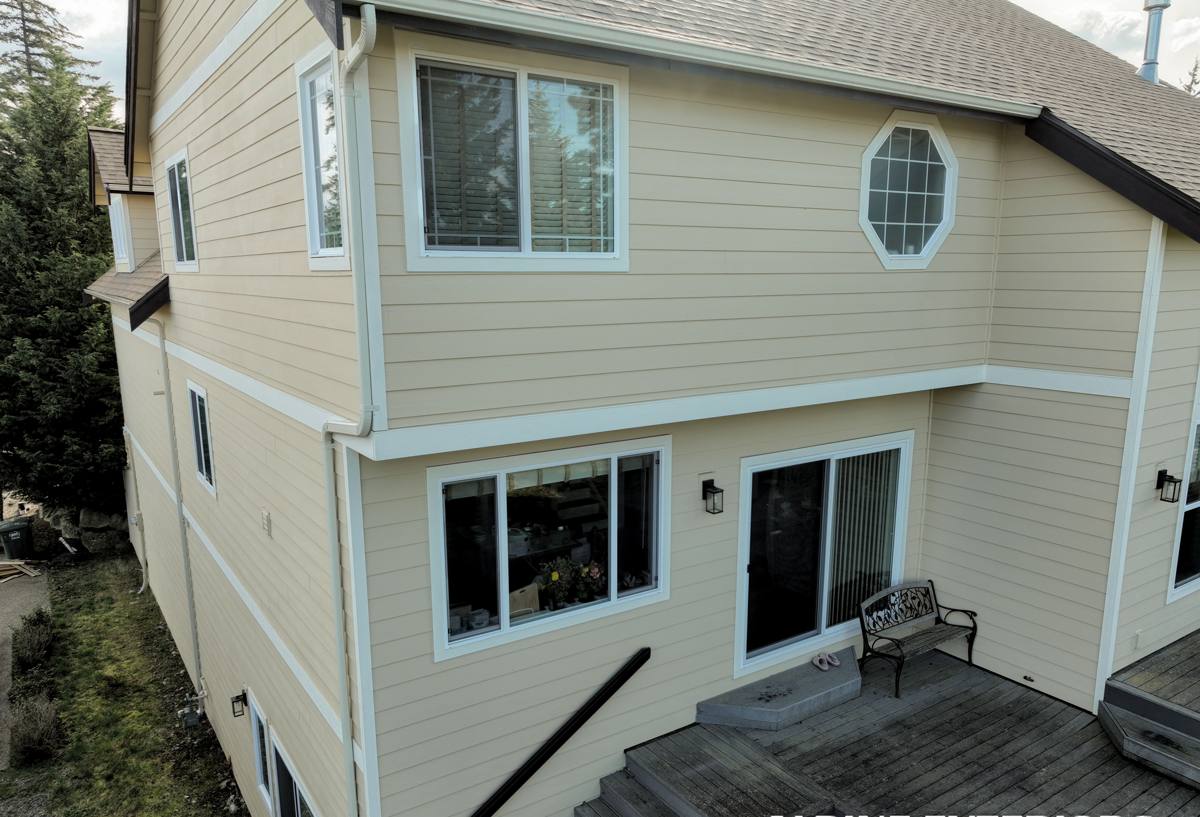
Signs Your Fremont Home's Siding Is Ready for Replacement
Not every siding problem means a full replacement, but in a climate like this, several symptoms together usually point that direction rather than toward another round of caulk and paint.
- Soft or spongy spots when you press on the siding, especially near the bottom courses and around windows
- Paint that keeps failing in the same spots within a year or two of repainting
- Persistent moss or algae growth that comes back within weeks of cleaning, particularly on shaded or north-facing walls
- Visible warping, cupping, or gaps between boards
- Cracked or separated caulk joints around trim, corners, and penetrations
- A musty smell or unexplained humidity inside along an exterior wall
- Siding material that's original to a home built before the 2000s, which in this climate is well past the point where patching makes sense
Any one of these on its own might be a repair. Several at once, especially on a home that's taken a few decades of Seattle winters, usually means the water-resistive barrier behind the siding has also been compromised — and that's not something you fix by swapping a few boards.
What a Correct Siding Replacement Actually Involves
It starts with what's behind the siding, not the siding itself
The visible siding is the last layer installed and the first one homeowners notice, but it's not the layer doing most of the water-management work. Underneath it should be a properly lapped weather-resistive barrier, correctly flashed windows and doors, and a drainage plane that lets any moisture that does get past the surface find its way back out instead of sitting against the sheathing. A full siding replacement is the one point in a home's life when a contractor can actually see and correct that hidden layer. Skipping it and just re-cladding over old, compromised sheathing is how homeowners end up paying for the same repair twice.
Tear-off reveals the real condition of the wall
Once the old siding comes off, we can see what's actually going on: whether the sheathing underneath is sound, whether previous flashing was installed correctly around windows and penetrations, and whether there's any rot that needs to be cut out and repaired before new siding goes up. On older Fremont homes — a lot of which mix original early-20th-century construction with additions and remodels from different decades — it's common to find inconsistent or missing flashing details at the seams between old and new work. That's exactly the kind of thing that stays invisible until the siding comes off.
The finish material matters, but it's not the whole job
Even the best siding material fails early if it's installed over a weak water-management system, and a mediocre material can last a long time when everything behind it is done correctly. Both parts matter. But given a choice, we'd rather start with a material that gives us margin for Seattle's climate rather than one that needs everything downstream of it to be perfect just to hold up.
Why We Install Only James Hardie Fiber Cement
We don't install vinyl, LP SmartSide, Cemplank, Allura, or primed wood siding — not because those products have no legitimate use anywhere, but because we've standardized on one product line and put our name behind it specifically for climates like Fremont's. James Hardie fiber cement is non-combustible, dimensionally stable in wet-dry cycling, and available in engineered HZ formulations built for specific climate zones, including the wet Pacific Northwest. Its ColorPlus factory finish is baked on under controlled conditions rather than field-applied, which matters directly for moss and mildew resistance — a factory finish holds up to repeated washing far better than site-applied paint, and washing is exactly what north-facing Fremont walls need every year or two.
| Factor | James Hardie Fiber Cement | Vinyl / Engineered Wood |
|---|---|---|
| Moisture response | Dimensionally stable; engineered for wet-dry cycling | Vinyl can warp with heat/cold swings; wood-based products absorb moisture at cut edges |
| Combustibility | Non-combustible | Combustible |
| Finish durability | Factory-baked ColorPlus finish, resists moss/mildew staining | Field-applied paint or color impregnation, more prone to fading and re-coating |
| Long-term maintenance | Periodic washing; repaint cycle is much longer | Regular caulking, occasional panel replacement, more frequent repainting |
| Warranty structure | Long, transferable manufacturer warranty when installed to spec | Varies widely by product and installer |
None of this means other products can't be installed correctly by somebody — it means we made a call about what we're willing to warranty our workmanship on, in this specific climate, and Hardie is what we landed on.
Our Process for a Fremont Siding Replacement
- On-site assessment. We walk the exterior, check problem areas you've flagged, and look for moisture patterns tied to sun exposure, shade, and drainage — Fremont's mix of hillside lots and mature tree cover means water behaves differently wall to wall on the same house.
- Tear-off and inspection. Old siding comes off in sections so sheathing and framing underneath can be checked for rot or prior damage before anything new goes on.
- Repair and prep. Any compromised sheathing gets cut out and replaced, not just covered over.
- Water-resistive barrier and flashing. A new weather-resistive barrier is installed and lapped correctly, with flashing detailed around every window, door, and penetration.
- James Hardie installation. Panels and boards are installed to manufacturer spec — correct fastener pattern, gapping, and clearances — which is what actually keeps the transferable warranty intact.
- Trim, caulking, and paint touch-up. Final detailing at corners and edges, using materials rated for exterior exposure.
- Site cleanup and walkthrough. We walk the finished job with you before calling it done.
What Drives the Cost of Siding Replacement in Fremont
Every home is different, so we won't quote a number without seeing the house, but a few factors consistently move the price up or down on projects in this area.
| Cost Factor | Why It Matters |
|---|---|
| Home size and wall complexity | More corners, dormers, and roof lines mean more cutting, flashing, and labor time |
| Condition of the sheathing underneath | Rot repair found during tear-off adds cost but prevents a much bigger problem later |
| Access and lot conditions | Hillside lots, tight setbacks, and limited staging space common in Fremont can affect labor time |
| Siding profile chosen | Lap siding, shingle-style panels, and board-and-batten carry different material and install costs |
| Trim and detail work | Window and door trim, corner boards, and fascia detailing add labor beyond the flat wall area |
| Existing paint or hazardous materials | Homes built before the 1980s may need testing before tear-off begins |
Why Hiring a Crew That Already Works Fremont Matters
Fremont's building stock is a genuine mix — early-1900s bungalows and craftsman homes sit next to additions, remodels, and newer infill construction, often on the same block. A crew that's worked in the neighborhood has already seen how those different eras of construction meet each other, where flashing tends to get missed at those transitions, and how the local combination of tree shade, hillside drainage, and canal-adjacent moisture plays out on real walls. That's not something a generic estimate from a contractor unfamiliar with the area accounts for.
It also matters for permitting and coordination — knowing what King County and City of Seattle inspection expectations look like for exterior work, and building a schedule that accounts for how often Pacific Northwest weather interrupts an outdoor job in the wetter months.
Questions Worth Asking Any Siding Contractor
Before hiring anyone for a siding replacement, it's worth getting straight answers to a short list of questions.
- Will you inspect and repair sheathing before installing new siding, or just cover what's there?
- What weather-resistive barrier and flashing details will you use, specifically?
- Are you a certified installer for the siding manufacturer, and does that affect the warranty?
- Is your bid itemized, or a single lump sum that hides what's included?
- What happens if rot or damage is found once tear-off starts?
- Who is doing the actual installation — your crew, or subcontracted labor?
A contractor who answers these clearly, without vague reassurance, is one worth trusting with your home.
Caring for Your Siding After Installation
James Hardie siding installed correctly needs relatively little upkeep, but "little" isn't "none" — especially in a climate that grows moss on almost anything that sits still long enough.
- Rinse siding gently once or twice a year to keep moss and organic buildup from taking hold, especially on shaded walls
- Keep gutters clear so overflow doesn't run down the siding face
- Trim back vegetation and tree limbs that keep walls shaded and damp
- Recaulk trim joints if you notice cracking or separation, before water gets behind it
- Have caulking and flashing points checked periodically, particularly after major storms
- Address any soft spots or damage quickly rather than waiting for the next dry season
If your Fremont home's siding is showing its age, or you just want a straight answer about what shape it's actually in, we're glad to take a look. Reach out for a free, no-pressure estimate — we'll walk the exterior with you, tell you what we see, and give you a clear picture of what a proper replacement would involve.