 Seattle Exterior
 Composite Decking Built for Green Lake's Wet, Shaded Lots
Green Lake is one of the shadiest, dampest pockets of Seattle to own a deck in. Between the tree canopy ringing the lake, the moisture that lingers under mature landscaping, and a marine climate that keeps King County wet from October through May, a deck here works harder than one on an open, sun-exposed lot across town. Composite decking has become the go-to choice for homeowners in this neighborhood precisely because it holds up to that combination of shade, standing moisture, and moss pressure better than wood does, without turning into a maintenance project every spring.
This page is specifically about composite decking installation and replacement for Green Lake properties — not a general decking overview. The framing decisions, board selection, and maintenance schedule that make sense here are shaped by the local conditions, and that's what we'll walk through.
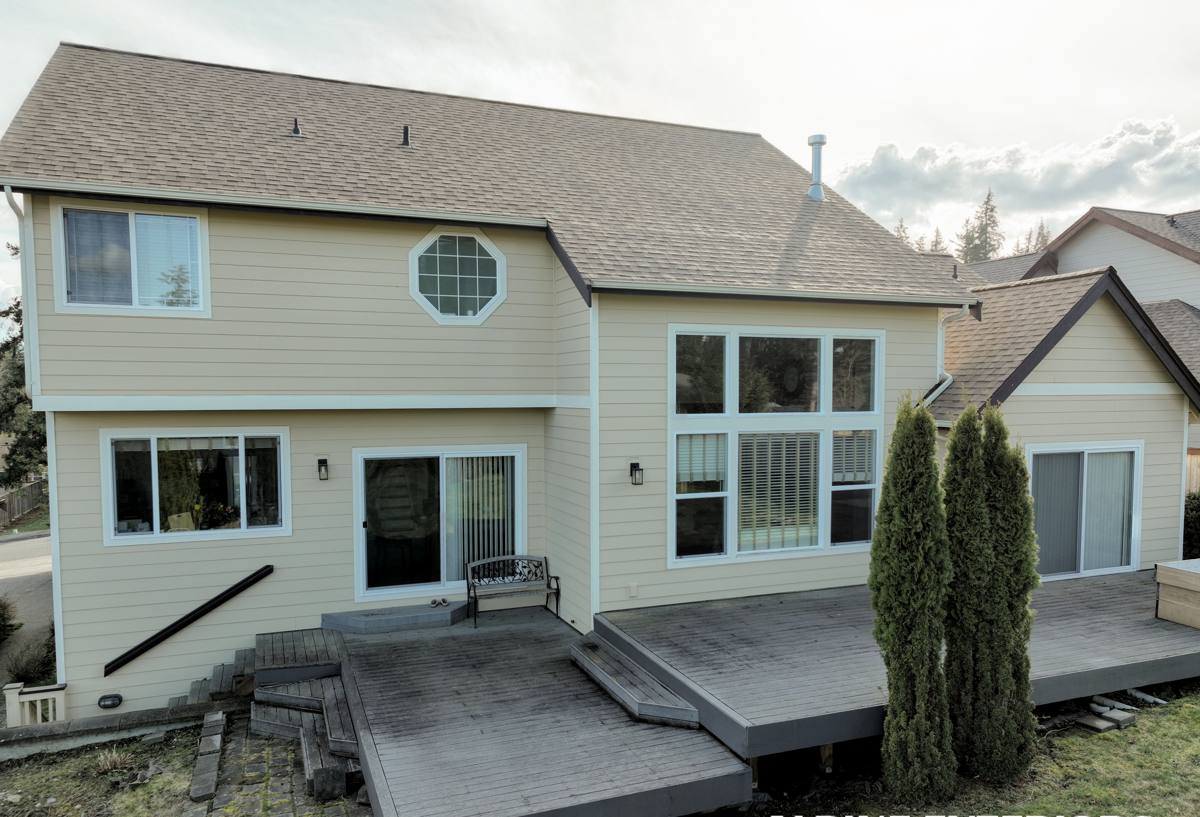
Why This Climate Is Hard on Decks
A lot of Green Lake's housing stock sits under big leaf maples, cedars, and other mature trees that were already established decades before the deck went in. That canopy is part of what makes the neighborhood pleasant to live in, but it's tough on outdoor structures in a few specific ways:
- Extended moss season. Shade plus consistent moisture means moss and algae can establish on deck boards, especially on the north and east sides of a house, well before it shows up on sun-exposed decks elsewhere in the city.
- Slow-drying surfaces. Overhanging trees block the airflow and sun exposure that would otherwise dry a deck out between rain events. Boards under canopy can stay damp for days after a storm has passed.
- Organic debris buildup. Leaves, needles, and seed pods collect between boards and in corners, holding moisture against the surface and, on wood decks, accelerating rot at the exact points where boards meet.
- Driving rain during storms. Seattle's fall and winter storms often come with wind-driven rain that gets under railings, around posts, and into ledger connections if flashing wasn't done correctly the first time.
None of this is unique to any one property — it's a function of the neighborhood's tree cover and King County's marine climate. But it does mean a deck built or installed without those conditions in mind will show problems faster here than the same deck would in a drier, sunnier part of the region.
What a Correct Composite Deck Installation Involves
Composite boards themselves are engineered to resist rot and moisture absorption far better than wood, but the decking material is only part of the job. Most of the problems we get called out to fix on composite decks — soft spots, sagging, boards popping loose, mildew staining that won't wash off — trace back to how the substructure and drainage were handled underneath, not the boards themselves.
Structure and Framing
Composite boards are heavier than wood and behave differently under load and temperature swings, so joist spacing typically needs to be tighter than a traditional wood deck built to older framing habits. We size framing to the manufacturer's span tables for the specific board profile going down, not a generic wood-deck spacing that happens to look close enough.
Ventilation and Drainage
Trapped moisture under a deck is what causes joist rot, even when the decking surface above looks fine for years. On shaded Green Lake lots, we pay particular attention to underdeck airflow, grading the ground below to shed water away from the house, and keeping the framing clear of the soil contact that speeds up rot in a wet climate.
Fasteners and Hardware
Everything below the board line — joist hangers, screws, ledger bolts, flashing — needs to be corrosion-resistant hardware rated for ground contact and coastal-influenced moisture exposure. This is a detail that's invisible once the deck is finished but determines whether the frame is still sound in fifteen years or needs to be torn out.
Composite vs. Wood vs. PVC: What We Recommend and Why
There's no single right answer for every home, but here's how the three main options compare for a shaded, moisture-heavy lot like the ones common around Green Lake:
| Material | Moisture & Moss Behavior | Maintenance | Typical Lifespan |
|---|---|---|---|
| Pressure-treated wood | Absorbs moisture, prone to moss and mildew staining in shade, can warp or split | Annual cleaning, periodic staining or sealing | 10–15 years before major repair or replacement |
| Capped composite | Moisture-resistant cap sheds water and resists moss adhesion better than wood | Periodic washing, no staining or sealing | 25–30 year manufacturer warranty range |
| PVC decking | Fully synthetic, essentially impervious to moisture | Low, similar to composite | Comparable to or longer than composite, higher material cost |
For most Green Lake homes, we recommend capped composite as the balance point: it handles the shade and moisture load of the neighborhood well, costs less than full PVC, and doesn't carry the ongoing sanding, staining, and sealing schedule that wood requires to stay ahead of moss in a climate like this. PVC is a reasonable option for homeowners who want the lowest possible maintenance and are comfortable with the added cost, but it's not a requirement to get a deck that performs well here.
Choosing Boards and Colors for a Shaded, Mossy Lot
Board selection matters more under tree cover than it does on an open lot. A few things worth thinking through before ordering material:
Color and moss visibility: Very dark boards show pollen, dust, and early moss growth less readily but can also mask the early buildup you'd want to know about and clean off. Lighter and mid-tone boards make it easier to spot moss or algae early, before it has time to establish. Neither is wrong — it's a trade-off worth discussing based on how often you want to be checking the deck.
Grain and texture: Deeper wood-grain embossing hides scuffs and debris well but can also hold onto fine organic grit from overhanging trees, which is worth an occasional rinse. Smoother, lower-texture boards clean off faster with less effort.
Capped vs. fully capped profiles: Boards capped on all four sides resist moisture intrusion at the cut ends better than boards capped only on the top and sides, which matters more on decks with a lot of custom cuts around posts, stairs, or an irregular house line.
We work with several established composite manufacturers — brands like Trex, TimberTech, and Fiberon are common choices — and help homeowners pick a board and color based on how their specific lot is shaded and how much hands-off maintenance they actually want, rather than pushing one product line across every job.
Our Process From Estimate to Finished Deck
- On-site assessment. We look at the existing structure (if there is one), the grading and drainage around it, sun and shade exposure through the day, and how the deck ties into the house.
- Structural evaluation. For replacements, we check whether the existing ledger, posts, and footings are sound enough to build on or whether they need to come out. Reusing a compromised substructure under new composite boards just moves the problem underneath where it's harder to see.
- Design and material selection. Board profile, color, railing style, and any picture-framing or border detail get decided based on the house and the homeowner's maintenance preferences.
- Permitting. Decks above certain heights or attached to the house typically require a permit through the City of Seattle. We handle that process rather than leaving it to the homeowner to sort out.
- Framing and installation. Joists, flashing, and hardware go in to the spacing and grade required for composite, followed by the decking, fascia, and railing system.
- Final walkthrough. We go over the finished deck with the homeowner, including what routine maintenance actually looks like for the specific board chosen.
Permits, Code, and Structural Checks in Seattle/King County
Attached decks above a certain height, or any deck that involves structural changes to the house, generally require a building permit in Seattle. Guardrail height, baluster spacing, and stair geometry all have to meet current code, and that code gets enforced at inspection — it's not optional trim work. Skipping the permit step might save time upfront, but it becomes a real problem at resale, when an unpermitted structure can hold up a sale or require retroactive permitting under pressure.
We also treat every replacement as a chance to correct problems that predate the current deck — an old ledger board attached without proper flashing, footings that were never sized for the actual load, or framing that was fine for wood but undersized for composite. Building code compliance and a structurally sound frame matter more to how long a deck lasts than the decking material on top of it.
Maintenance Checklist for Green Lake Homeowners
Composite decking cuts maintenance significantly compared to wood, but "low-maintenance" isn't "no-maintenance," especially under tree cover. A realistic seasonal routine:
- Sweep leaves, needles, and seed debris off the deck regularly during fall drop, especially between boards where it collects moisture.
- Rinse the deck surface a few times a year to prevent pollen film and early moss from taking hold, more often on shaded sections.
- Clean gutters and downspouts near the deck so overflow isn't draining directly onto or under the decking.
- Check underneath the deck once a year for standing water, ponding, or vegetation growing up against the framing.
- Inspect railings and stair connections annually for any movement, since hardware corrosion is the more common failure point in a wet climate than the boards themselves.
- Trim back overhanging branches where practical to improve airflow and sun exposure across the deck surface.
Why a Crew That Already Works Green Lake Matters
A lot of decking problems we see in this neighborhood aren't from bad materials — they're from a deck built to specs that would work fine in a drier or sunnier part of the region but weren't adjusted for a shaded, moisture-heavy lot near the lake. Framing spacing, drainage grading, and even board color selection all shift when you're accounting for a long moss season and tree canopy that doesn't let up.
Working regularly in Green Lake also means we're familiar with the mix of older bungalow and craftsman-era homes common in the area, how their existing framing and ledger connections tend to be built, and what permitting through the City of Seattle actually requires for a deck attached to that kind of structure. That's the difference between a deck that's simply installed and one that's installed correctly for where it sits.
What Drives the Cost of a Composite Deck
Every project is different, but the main variables that move the price on a composite deck installation are consistent:
| Factor | Why It Matters |
|---|---|
| Square footage and shape | More boards, cuts, and framing; irregular shapes and angles add labor |
| Board tier and brand | Entry-level capped composite costs less than premium or fully-capped PVC-composite hybrid lines |
| Existing structure condition | Reusing a sound frame costs less than a full tear-out and rebuild |
| Height and railing requirements | Taller decks need code-compliant guardrails, which add material and labor |
| Site access and grading | Sloped or hard-to-access lots near the lake can add time for material handling and footing work |
| Permit and inspection scope | Structural changes or new footings add permitting steps beyond a straightforward resurface |
We'll always walk through these factors specific to your property during an estimate rather than quoting off a generic per-square-foot number, since the condition of what's already there matters as much as the size of the new deck.
If you're planning a new composite deck or replacing an aging wood one in Green Lake, we're glad to come take a look and talk through what your specific lot needs. The estimate is free, there's no pressure, and you'll get a straight answer about what the job actually involves — just fill out the form below to get started.