 Seattle Exterior
 Kirkland's Climate Is Hard on Siding, Even When It Looks Fine
Kirkland sits in the Puget Sound marine climate belt — mild temperatures, but long stretches of the year where the air itself stays damp. Homes here deal with driving rain off the Sound, humidity that lingers under tree cover, and a moss and algae season that can run from fall through spring on shaded north- and west-facing walls. None of that is dramatic on its own. The problem is what happens over years of exposure: paint that looks tired long before the manufacturer's warranty says it should, caulk joints that open up and let water behind the cladding, and wood-based siding that stays damp long enough for rot to start from the inside out.
King County building stock includes a lot of homes from eras when siding wasn't engineered for this kind of sustained moisture load. When we're called out to look at failing siding in Kirkland, the pattern is almost always the same — not one catastrophic event, but slow water intrusion at a seam, a fastener, or a horizontal surface that never got the flashing detail it needed. Fiber cement siding, installed correctly, is one of the few claddings built specifically to shrug off that pattern instead of feeding it.
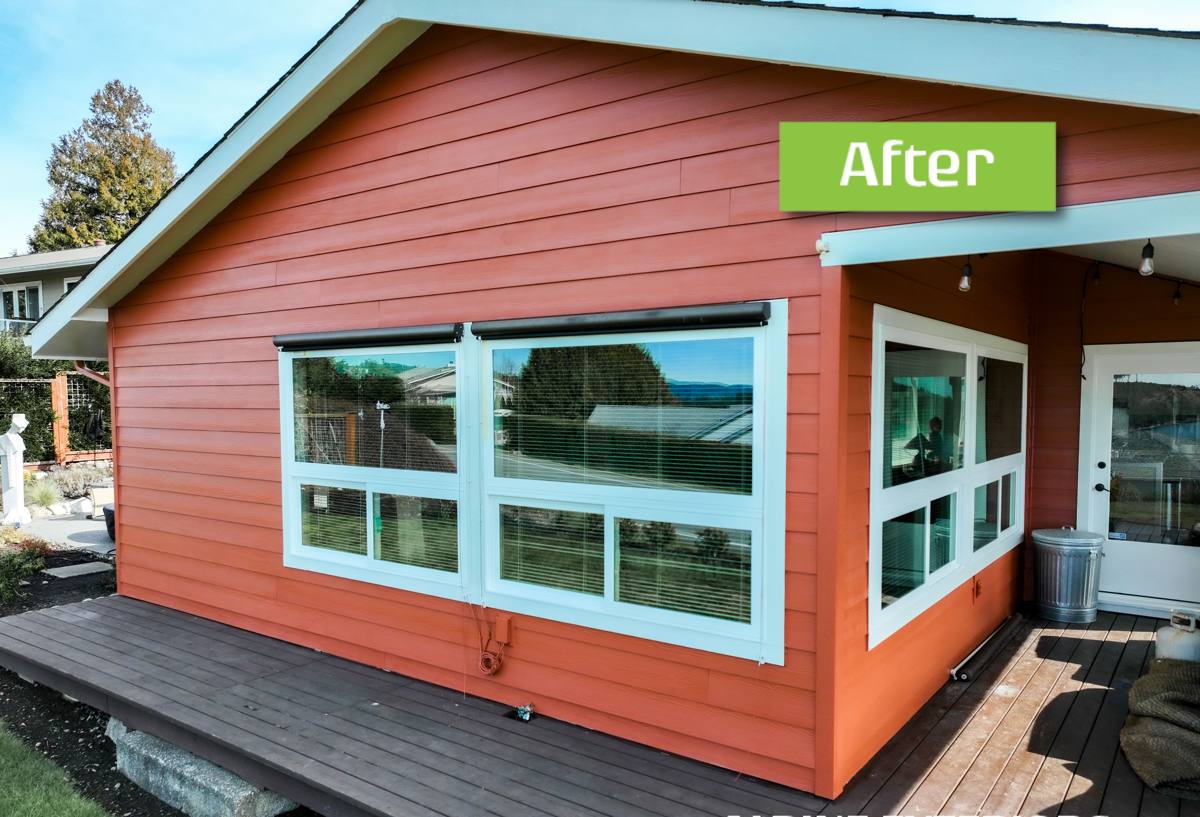
What "Correct" Fiber Cement Installation Actually Requires Here
Fiber cement siding is only as good as the water management system behind it. In a climate as wet as ours, the install details matter more than the product choice itself. A rushed or generic install can fail in this climate even with a good product on the wall.
A Real Drainage Gap
Siding needs a way to shed the water that inevitably gets behind it — through a rain screen or drainage gap between the weather-resistive barrier and the siding itself. Without it, moisture that reaches the back of the panel has nowhere to go and sits against the sheathing.
Flashing at Every Horizontal Break
Window heads, deck ledgers, roof-to-wall transitions, and butt joints are where water finds its way in. Each of these needs proper flashing and correct lap sequencing — not just a bead of sealant papering over the gap. Sealant is a backup, not the primary defense.
Fastening for Our Exposure Zone
James Hardie engineers its products by climate zone, and King County falls within the HZ5 specification, which accounts for our moisture exposure. Fastener type, spacing, and penetration depth are all part of that spec — get them wrong and you undercut the product's performance no matter how good the siding itself is.
Why We Only Install James Hardie — Not Vinyl, LP, or Cedar
We get asked why we don't offer more options. The honest answer is that we used to see too many callbacks tied to products that make sense in drier or milder climates but struggle here.
Vinyl siding is inexpensive and low-maintenance, but it's a thin plastic product that expands, contracts, and can warp with temperature swings, and it relies on lap joints and trim pieces that give water plenty of entry points over time. It also doesn't hold paint, so your color options are locked in for the life of the product.
LP SmartSide is an engineered wood product, and engineered wood — no matter how well treated — is still wood at its core. In a climate with our humidity and moss exposure, wood-based siding depends heavily on the caulking and paint film staying intact. Once that film is compromised at a cut edge or fastener, moisture has a wood substrate to work with.
Cedar and primed spruce can look beautiful, but they demand a maintenance schedule — recoating, caulking, moss treatment — that most homeowners underestimate until the siding is already showing damage. It's a legitimate product for someone willing to commit to that upkeep; it's just not what we choose to warranty our work on.
Fiber cement — specifically James Hardie's — is a cement and cellulose composite that doesn't feed moss the way wood does, doesn't warp with temperature swings the way vinyl does, and holds a factory finish far longer than field-applied paint. That's the trade-off we've decided is right for homes in this climate, and it's the only product line we stand behind.
James Hardie Product Lines That Fit Kirkland Homes
Hardie's product range covers most of the exterior styles found around Kirkland, from traditional lap siding to shingle-style accents.
- HardiePlank lap siding — the standard horizontal siding, available in several exposure widths and textures (smooth or cedar-grain), fits both traditional and contemporary Eastside homes.
- HardiePanel vertical siding — often used for modern facades or as an accent alongside lap siding, common on newer Kirkland construction.
- HardieShingle — a shingle-profile option for homes going for a Craftsman or cottage look without the maintenance burden of real cedar shingles.
- HardieTrim — fiber cement trim boards that match the siding's moisture resistance, used around windows, corners, and fascia so the whole envelope is consistent, not just the field siding.
Most of these come pre-finished with Hardie's ColorPlus technology — a baked-on, factory-applied finish that resists fading and holds up to UV and moisture far better than a field-applied paint job, with a longer finish warranty than most contractors can offer on site-applied coatings.
Our Process for a Kirkland Siding Job
- On-site assessment. We check the existing wall assembly, look for signs of moisture damage or rot behind current siding, and evaluate flashing at windows, roof lines, and other transitions.
- Tear-off and substrate check. Old siding comes off and we inspect the sheathing underneath. Any soft or water-damaged wood gets addressed before anything new goes up — covering damaged sheathing is how future problems get built in.
- Weather-resistive barrier and drainage plane. We install a proper water-resistive barrier and drainage gap suited to our rainfall, not a minimum-code shortcut.
- Flashing details. Every window, door, and horizontal transition gets flashed correctly before siding goes over it.
- Hardie installation to HZ5 spec. Fastening, clearances, and caulking follow James Hardie's climate-zone installation requirements, which is also what keeps the manufacturer's warranty intact.
- Final walkthrough and cleanup. We review the finished work with you and make sure the site is left clean.
What Drives Cost on a Kirkland Fiber Cement Job
Every home is different, so we won't quote a number without seeing the property, but these are the factors that most often move the price:
| Factor | Why It Matters |
|---|---|
| Substrate condition | Rotted sheathing found during tear-off adds repair work before new siding can go on |
| Home size and wall complexity | More corners, dormers, and roof transitions mean more cutting, flashing, and labor time |
| Siding profile and texture | Lap width, shingle-style accents, and trim details affect material and installation time |
| Story height and access | Multi-story homes and tight lot access affect staging, scaffolding, and crew time |
| Existing siding removal | Tear-off and disposal of old material (especially old wood or asbestos-era siding) adds scope |
Living With Fiber Cement Through Kirkland's Moss Season
Fiber cement dramatically reduces siding maintenance compared to wood, but "low-maintenance" isn't "no-maintenance" — especially with our moss and algae exposure on shaded elevations. A short seasonal routine keeps it performing the way it's designed to:
- Rinse shaded, moss-prone walls once or twice a year with a garden hose — avoid high-pressure washing, which can force water behind joints and damage the finish
- Keep gutters clear so overflow doesn't run directly down the siding face
- Trim back vegetation and tree limbs that keep a wall shaded and damp longer than the rest of the house
- Check caulking at trim and window joints every year or two and re-caulk if it's cracked or pulling away
- Watch for any staining or soft spots at the base of the wall near grade, decks, or downspouts — these are the first signs of a drainage problem, not a siding problem
Why Hiring a Crew That Already Works in Kirkland Matters
Siding installation done to a generic national standard often falls short of what King County's climate actually demands. A crew that regularly works Kirkland homes already knows which elevations take the worst weather exposure, how local permitting and inspection processes run, and how to work around the HOA design-review requirements that are common in many Eastside neighborhoods. That familiarity shows up in fewer surprises — the right permits pulled up front, the right flashing details without having to relearn them on your roof, and a finished job that's built for the weather it actually has to survive rather than a national average.
If your Kirkland home's siding is showing moss staining, cracked caulking, soft spots, or paint that keeps failing no matter how often it's redone, we're happy to take a look. Reach out for a free, no-pressure estimate — we'll walk the exterior with you, explain what we find, and give you a straight answer on what it would take to do the job right with James Hardie siding.